AI vs. Human Coaches: What Your Cheerleading Program Really Needs in 2026
Key Facts
- AI roleplay and drill-generation tools can typically give athletes dozens of practice scenarios before real performance pressure, versus a handful in traditional workshop settings
- Coaching time is the scarcest resource in most programs, managers and coaches alike typically spend only a few hours per athlete per month on individualized practice
- Skill proficiency generally requires far more repetitions than athletes receive in structured practice alone
- AI handles routine skill assessment to free coaches for high-touch guidance on morale and safety
- Modern AI systems, from general assistants like ChatGPT and Gemini to custom-built tools, simulate learning, comprehension and decision-making, per IBM's overview of AI
Hire a team member that works 24/7 — for less than a part-time wage.
AI receptionists, SDRs, dispatchers and 99+ roles. Trained on your business, fully managed.
Not sure where to start? Ask our AI planner
The Coaching Capacity Gap: Why Cheerleading Programs Are Stretched Thin
Cheerleading coaches are operating at capacity, juggling athlete safety, skill development, and team dynamics with limited time and resources. The reality is stark: most programs face high athlete-to-coach ratios that make individualized feedback nearly impossible to deliver consistently. Across coaching-intensive fields, managers typically spend only a handful of hours per person per month on structured practice, yet skill mastery demands far more repetition than that. Proficiency in complex skills generally requires many times the practice reps athletes actually receive, a gap mirrored in cheerleading where skill refinement demands repetitive, nuanced coaching that stretches human bandwidth thin.
This capacity gap creates a critical bottleneck in athlete development. Coaches want to provide personalized feedback on stunt execution, jump technique, and performance expression, but simply lack the hours to observe, analyze, and guide each athlete through sufficient repetition. Without enough practice scenarios, athletes enter competitions under-prepared, increasing injury risk and limiting performance potential. The solution isn't replacing human insight with automation, it's augmenting coaching capacity where it matters most. AIQ Labs helps programs build AI systems that handle routine skill assessment and generate personalized drill recommendations, freeing coaches to focus on the high-touch, adaptive guidance only humans can provide: reading athlete morale, adjusting choreography for safety, and building the trust that enables peak performance under pressure. By scaling support for repetitive tasks, AI becomes a force multiplier that lets human coaches do what they do best, mentor, motivate, and masterfully guide teams toward excellence.
Where AI Excels: Automating Routine Assessment and Scaling Practice
Cheerleading programs face the same coaching bottleneck that other high-feedback environments do: limited human hours for high-volume practice. AI changes the math by handling repetitive assessment at scale so coaches can stay focused on nuance, safety and performance artistry. As IBM notes, AI enables machines to simulate human learning, comprehension and decision-making, which is exactly what high-volume assessment requires.
AI excels at delivering unlimited, around-the-clock practice scenarios. Where a traditional workshop might offer only a handful of roleplays or reps, AI-driven practice tools can typically generate dozens of scenarios per athlete before they face real performance pressure. That volume creates muscle memory without consuming coach time.
The feedback loop becomes consistent and data-driven. Instead of variability between coaches, AI automates routine skill analysis and generates standardized, immediate feedback on form, timing and execution. Human coaches are freed from manual review to redirect limited time toward higher-value, nuanced instruction.
For programs considering a hybrid model, AI acts as a force multiplier rather than a replacement. Routine tasks such as scheduling, follow-up communication and progress logging are handled automatically, allowing coaches to focus on strategy instead of basic skills. That framework translates directly to routine assessment and training plans for athletes.
Where AI adds the most value in a cheerleading context:
- Unlimited practice reps for stunts, tumbling and motions with instant, consistent feedback
- Automated routine skill analysis that flags form deviations and progression readiness
- 24/7 scenario access so athletes can rehearse outside limited gym hours
- Data-driven dashboards that surface patterns across the team for targeted coaching
This is the balance AIQ Labs builds toward through [AI Workflow Builds](/workflow-builds) and, at larger scale, [AI Operating Systems](/ai-operating-systems): aligning AI with core coaching values and operational goals so technology supports human coaches rather than replacing them.
Coaches retain ownership of emotional intelligence, real-time adaptability and psychological safety. AI handles the scalable, repetitive assessment layer, creating more time for the interpersonal connection and adaptive guidance that define elite cheerleading programs.
Why Human Coaches Remain Irreplaceable: The Emotional and Adaptive Edge
Cheerleading coaches face a fundamental tension: while technology can streamline many aspects of training, the core of athlete development remains deeply human. This is especially true in a sport where split-second decisions, emotional resilience, and intricate team synchronization directly impact both performance and safety. AI can track jump height or tumbling form with precision, but it cannot sense when an athlete is hesitating due to fear, frustration, or a lack of trust in their stunt group.
Retention of information and the development of emotional intelligence, critical for navigating high-pressure routines, still depend on real-time human coaching. These are deeply human skills, and no algorithm can replicate the intuitive understanding a coach gains from years of reading body language, adjusting tone mid-practice, or knowing when to push and when to pause based on a team's collective energy.
This human edge becomes indispensable during complex choreography refinement or when addressing interpersonal dynamics that affect pyramid stability or synchronization. Coaches must adapt instantly to unexpected falls, miscommunications, or shifts in athlete confidence, situations where psychological safety and contextual judgment are non-negotiable. AI may offer data on repetition counts or form consistency, but it cannot create the environment where athletes feel safe to take risks, learn from mistakes, and grow as a cohesive unit.
For cheerleading programs aiming to elevate performance without compromising athlete well-being, the solution isn't choosing between AI and human coaches, it's integrating both strategically. AIQ Labs supports this balance by helping organizations implement AI tools that handle routine assessments and feedback delivery, freeing human coaches to focus on the nuanced, adaptive guidance that only they can provide. The most effective learning initiatives focus on building confidence and competence in applying skills when it matters most, a goal that remains firmly within the domain of skilled human mentorship.
The Hybrid Model: How AIQ Labs Helps Cheerleading Programs Integrate AI Without Losing the Human Touch
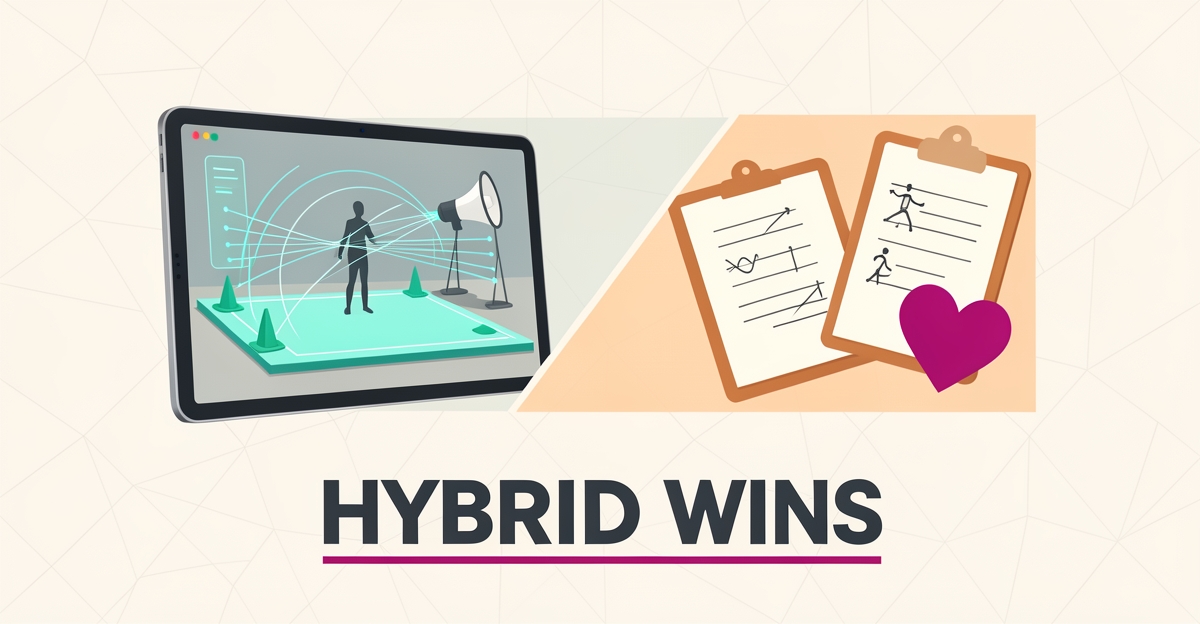
The most effective cheerleading programs in 2026 are finding that AI doesn't replace coaches, it amplifies their impact by handling routine tasks so human experts can focus on what truly matters: athlete development, safety, and creative guidance. AI excels at delivering unlimited, realistic practice scenarios and personalized feedback, allowing coaches to spend less time on repetitive skill assessment and more time on nuanced performance refinement. Where traditional methods offer only a handful of reps in a typical workshop setting, AI practice tools can typically generate dozens of scenarios per athlete before they face real performance pressure. This scalability ensures every athlete receives consistent, data-driven insights on foundational skills like jump technique, stunt timing, and tumbling form, freeing coaches to intervene where human judgment is irreplaceable.
AIQ Labs offers a structured pathway for cheerleading programs to integrate this technology responsibly. It starts with identifying the one workflow that costs your program the most, often skill tracking, scheduling, or basic feedback generation, and rebuilding it at a fixed price through [AI Workflow Builds](/workflow-builds). Programs that want routine tasks handled end-to-end can deploy [AI Employees](/ai-employees) for skill tracking, practice generation and parent communication, while larger organizations can graduate to an [AI Operating System](/ai-operating-systems): one connected layer across scheduling, video analysis and athlete records, built in phases and owned outright. Every engagement starts monthly and scales in milestones, so coaches can pilot an AI Employee on skill tracking, see results, and expand as confidence grows, with governance frameworks that preserve ethical oversight and psychological safety throughout.
This hybrid approach maximizes both reach and depth: AI handles the volume and consistency of routine coaching, while human coaches deliver the contextual understanding, empathy, and creative guidance that build championship-caliber teams. By leveraging AI for data-heavy tasks like performance trend analysis or personalized drill generation, coaches gain back hours each week to invest in athlete mentorship, safety protocols, and innovative routine design, precisely the areas where human expertise remains indispensable. The result isn't a choice between AI and human coaching, but a smarter allocation of resources where technology elevates, rather than replaces, the irreplaceable human touch at the heart of cheerleading excellence. To explore how this model applies to your program's specific workflows, take the [2-minute Fit Check](/apply) or book a free 30-minute strategy call, or reach the team at [email protected].
Still paying for 10+ subscriptions that don’t talk to each other?
We build custom AI systems you own outright. No vendor lock-in. Full control.
Not sure where to start? Ask our AI planner
Frequently Asked Questions
Can AI really help our cheerleading program when coaches are already stretched thin?
How much more practice can AI provide compared to traditional coaching methods?
Will using AI make our coaches obsolete or reduce their importance?
What specific cheerleading skills can AI help assess and improve?
Is there evidence that AI coaching actually improves performance outcomes?
How do we start integrating AI without losing the human touch our program values?
Key Takeaways
The Future of Cheerleading Coaching Is Already Here, And It's Hybrid. Cheerleading programs don't need to choose between AI efficiency and human expertise, they need both, working in concert. AI handles the volume of routine skill assessment, unlimited practice reps, and data-heavy trend analysis; human coaches deliver the safety judgment, emotional intelligence, and creative choreography that no system can replicate. Start with the one workflow that costs your program the most, prove the results, and scale from there. The programs that move first will give every athlete the individualized attention that used to be impossible, without losing the human touch that makes cheerleading what it is.
Make AI your competitive advantage — not just another tool.
Strategy, implementation and ongoing optimization. One partner, end to end.
Not sure where to start? Ask our AI planner