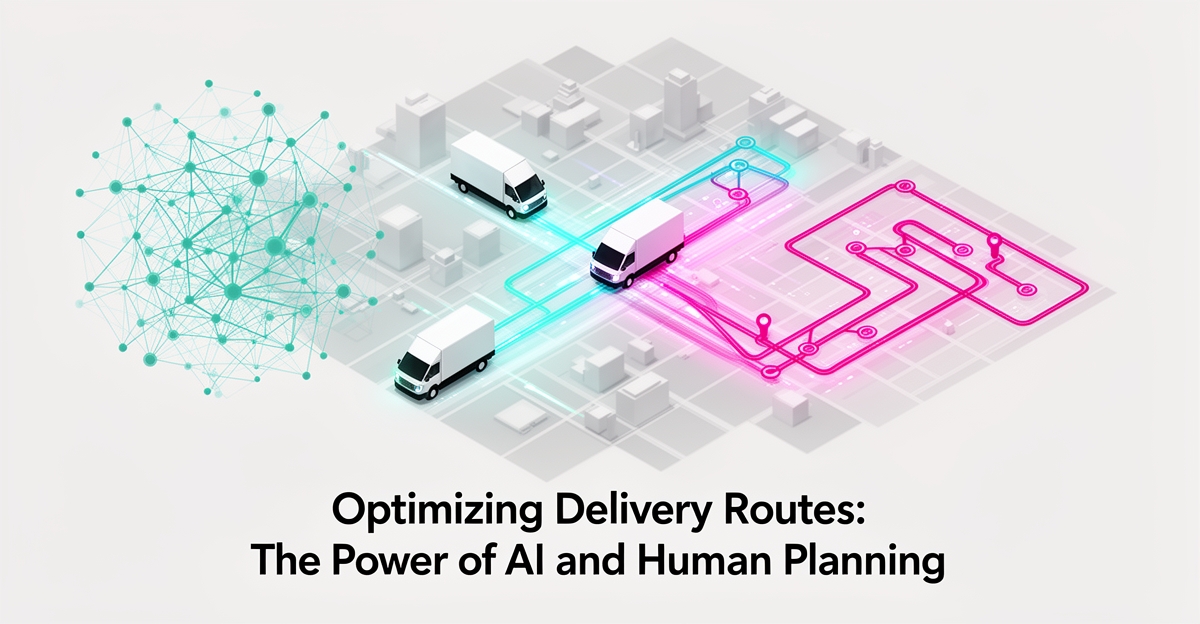
AI vs. Human Dispatchers: Which Is Better for High-Volume City Delivery Networks?
Key Facts
- AI dispatch can save 2.5+ hours of daily firefighting compared to traditional methods according to FieldCamp analysis
- A 10-tech team can save $5,000-$8,000 monthly by switching to AI dispatch per FieldCamp benchmarking
- AI enables 1 dispatcher to manage 35-50 vehicles vs. a manual ratio of roughly 1:10-12 per fleet management analysis
- AI-optimized routes can reduce fuel costs by 10-15% based on fleet management research
- Fleet management analysis reports Year 1 ROI figures as high as 280% with a 1-3 month break-even per fleet management analysis
- AI dispatch can handle 200+ decisions per day autonomously per supply chain management research
- AI dispatch can increase completed jobs by 15-20% with the same headcount per last-mile delivery innovations data
Hire a team member that works 24/7 — for less than a part-time wage.
AI receptionists, SDRs, dispatchers and 99+ roles. Trained on your business, fully managed.
Not sure where to start? Ask our AI planner
The Scaling Problem: Why Traditional Dispatch Fails at Volume
High-volume city delivery networks expose the hidden cost of manual dispatch the moment growth accelerates. What feels manageable with a small crew becomes a daily crisis as job counts climb, and the compounding inefficiencies quietly erode margins.
Traditional dispatch works as a digitized calendar at small scale. With 1-3 technicians and 6-12 jobs, schedules stay stable. From 4-6 techs and 15-25 jobs, instability appears. FieldCamp analysis of field service operations suggests the breaking point typically hits around 6-8 technicians, where manual systems become unstable, and beyond 10 techs with 40-80 jobs they frequently break.
Beyond that threshold, dispatchers stop planning and start firefighting. A 10-tech team typically spends 2.5+ hours daily on schedule adjustments alone, according to industry research on AI dispatching. That firefighting is not a one-time cost. It repeats every disruption, every late job, every traffic spike.
The scaling problem shows up as compounding operational drag:
- Route inefficiencies grow as manual planning relies on "who is closest" instead of live traffic, sequence and time windows
- Workload imbalance becomes normal, with some technicians overloaded and others underutilized
- Skills matching fails as dispatcher memory cannot track certifications, preferences and performance across a growing team
- Rebuild time explodes, with manual schedules taking 1-2 hours to create and hours more to fix after disruptions
Fleet management analysis finds AI calculates optimal routes in seconds versus 1-2 hours for manual dispatch, while also enabling one dispatcher to manage 35-50 vehicles instead of the typical manual ratio of 1:10-12.
The financial impact compounds quickly. A 10-tech team can save $5,000-$8,000 monthly by switching to AI dispatch, per FieldCamp benchmarking. The same analysis estimates manual dispatching costs fleets roughly 25% more in total operating expenses than AI-optimized alternatives, driven by fuel, overtime and administrative overhead.
This is why scale changes the decision. At 40-50 daily jobs, human dispatchers are forced into constant reactive reshuffling. AIQ Labs sees this pattern across trades and logistics clients where routine, high-volume assignment decisions overwhelm human bandwidth. When dispatch logic is the one workflow costing you the most every day, an AI Workflow Build can rebuild it end-to-end at a fixed price, handling assignment decisions at speed while your people focus on exceptions.
The result is not just time saved. It is stability returned to the network.
AI Dispatch Advantages: Speed, Scalability, and Measurable ROI
The gap between manual and AI-powered dispatch isn't theoretical — it's measured in hours reclaimed, miles eliminated, and revenue recovered. Traditional dispatch software functions as a digitized calendar that filters and displays information but leaves every assignment decision to the human, a model that produces 2.5+ hours of daily firefighting once teams exceed 6-8 technicians.
AI dispatch systems rewrite this equation by evaluating thousands of scheduling possibilities in seconds rather than hours. Where a human dispatcher spends 1-2 hours building a daily schedule and constant reshuffling to maintain it, AI builds the initial schedule in under 30 seconds and rebuilds after disruptions in 2-5 seconds. This speed advantage compounds across every operational metric: a single dispatcher can manage 35-50 vehicles compared to the typical manual ratio of 1:10-12, and AI-optimized routes eliminate unnecessary mileage to reduce fuel costs by an estimated 10-15%.
- Processes scheduling decisions in seconds while weighing 50+ variables in parallel
- Enables 1 dispatcher to manage 35-50 vehicles vs. a manual ratio of roughly 1:10-12
- Reduces drive time by an estimated 25-30% through real-time route optimization
- Delivers $5,000-$8,000 in estimated monthly savings for 10-tech teams
- Reports Year 1 ROI as high as 280% with a 1-3 month break-even, per fleet management analysis
The financial impact can be immediate and measurable. A 10-tech team typically saves $5,000-$8,000 monthly by switching to AI dispatch, per FieldCamp benchmarking, while fleet management analysis estimates annual savings of $54,000-$120,000 for a 25-vehicle fleet compared to manual dispatch, with 3-year savings reaching $162,000-$360,000. These are estimates from industry analysis rather than guarantees — your numbers depend on volume, routes, and how much of the workflow you automate.
Beyond raw efficiency, AI dispatch solves the workload balancing problem that plagues growing teams: tightening the per-tech job spread, cutting overtime, and trimming miles driven per technician per day. AIQ Labs builds AI Employees — including managed AI dispatchers — that integrate directly with your existing scheduling, GPS, and CRM systems to deliver these gains without replacing your team. They handle the thousands of micro-decisions daily at roughly 80% less cost than a human hire, so your people can focus on exceptions and customer relationships. The reported result: 15-20% more completed jobs with the same headcount, faster emergency response, and lower cost per job.
The Hybrid Approach: Combining AI Efficiency with Human Judgment
The most effective delivery networks don't choose between AI and human dispatchers—they combine both strategically. AI excels at processing thousands of routine routing decisions in seconds, while human judgment remains essential for complex scenarios and customer relationships.
Research shows that 79% of Americans strongly prefer interacting with a human over an AI agent when it comes to service quality, highlighting the enduring value of human connection in customer-facing roles. This preference becomes particularly relevant when delivery operations encounter exceptions, complaints, or situations requiring empathy and nuanced problem-solving that algorithms may not fully address.
A hybrid model leverages AI's computational strengths for high-volume, predictable tasks while reserving human expertise for edge cases that demand contextual understanding. This approach acknowledges that AI dispatch systems can save 2.5+ hours daily of firefighting compared to traditional methods, but also recognizes that 84% of consumers believe human agents are more accurate than AI in service interactions.
Implementing this balance requires clear protocols for when AI should escalate to human oversight. Successful hybrid implementations typically involve AI handling initial job assignments, route optimization, and real-time adjustments, while human dispatchers manage customer escalations, special requests, and unusual operational disruptions. This division of labor allows companies to pursue the 15-20% increase in completed jobs attributed to AI optimization without sacrificing the human touch that builds customer loyalty.
For businesses considering this approach, the key is designing workflows where AI and humans complement rather than compete with each other. AI handles the volume and velocity of routine decisions, freeing human dispatchers to focus on relationship-building, complex problem-solving, and strategic oversight—areas where their judgment creates measurable value in customer satisfaction and retention. For networks that want this division of labor built into a single connected layer across dispatch, scheduling, and customer communication, an AI Operating System built in phases — and owned outright — is the natural end state.
Still paying for 10+ subscriptions that don’t talk to each other?
We build custom AI systems you own outright. No vendor lock-in. Full control.
Not sure where to start? Ask our AI planner
Frequently Asked Questions
At what point does traditional dispatch start to break down as a delivery network scales?
How much time can AI dispatch save compared to manual scheduling for a mid-sized delivery team?
What kind of cost savings can a 10-technician delivery team expect from switching to AI dispatch?
Can one dispatcher manage more vehicles with AI dispatch compared to traditional methods?
Do customers prefer human dispatchers over AI for service interactions?
Is a hybrid approach of AI and human dispatchers recommended for high-volume delivery networks?
Where AI and Human Dispatchers Create Better Delivery Networks
The evidence points to a clear inflection point for high-volume city delivery networks: traditional dispatch typically becomes unstable beyond 6-8 technicians or 40-50 daily jobs, draining resources through constant firefighting and route inefficiencies. AI dispatch addresses this by processing thousands of scheduling decisions in seconds, enabling one dispatcher to manage 35-50 vehicles while reducing drive time by an estimated 25-30% and delivering $5,000-$8,000 in potential monthly savings for a 10-tech team. Yet consumer preference data shows 79% of Americans still favor human interaction for service quality, underscoring that the most effective approach combines AI's speed and scalability with human judgment for exceptions and relationship-building. This hybrid model returns stability to operations, can increase completed jobs by 15-20% with the same headcount, and lets teams focus on what truly drives customer loyalty. To see where your specific delivery network stands on this curve, start with the two-minute Fit Check — it leads to a free 30-minute strategy call where an AI engineer will map your bottlenecks and outline a practical path forward. No sales pitch, just clarity on your AI opportunity.
Make AI your competitive advantage — not just another tool.
Strategy, implementation and ongoing optimization. One partner, end to end.
Not sure where to start? Ask our AI planner