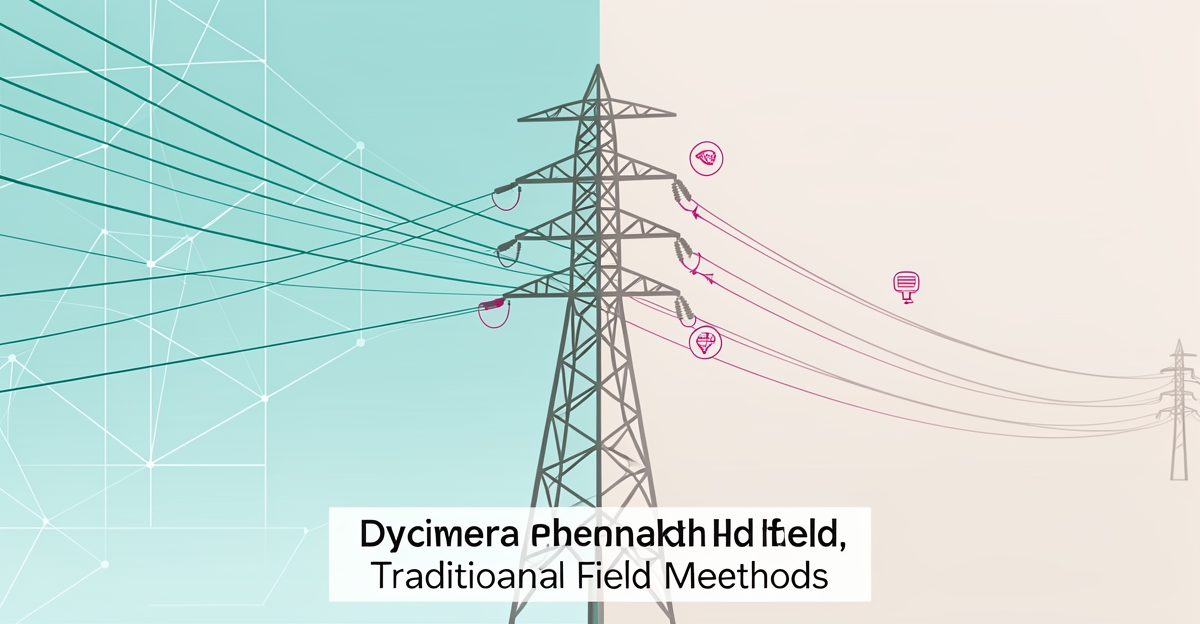
AI vs. Human Field Technicians: Which Is Better for Power Line Inspections?
Key Facts
- AI-powered inspection planning improves efficiency, accuracy, and safety of power line inspections by analyzing environmental data and past records.
- Traditional field-first inspections are time-consuming and produce inconsistent results; AI-powered planning is automated and consistent.
- AI-powered planning reduces the risk of human error and injury compared with traditional field-first methods.
- Implementation typically requires investment in infrastructure, training, and ongoing monitoring to maintain trust in AI-generated data.
Hire a team member that works 24/7 — for less than a part-time wage.
AI receptionists, SDRs, dispatchers and 99+ roles. Trained on your business, fully managed.
Not sure where to start? Ask our AI planner
The High-Stakes Problem With Traditional Power Line Inspections
Traditional power line inspections face mounting pressure due to inherent inefficiencies and safety risks that strain operational capacity. Field technicians often spend excessive time navigating difficult terrain and manually assessing infrastructure, which slows response times and increases labor costs. This inefficiency is compounded by inconsistent inspection outcomes, as human judgment varies across technicians and conditions, leading to gaps in reliability that can compromise grid stability.
Safety remains a critical concern in these hazardous environments, where technicians work at heights and near live electrical components. The reliance on manual processes heightens exposure to preventable risks, especially during adverse weather or in remote locations. These factors combine to create significant operational risk, as delays or oversights in inspections can escalate into service disruptions or equipment failures. AIQ Labs supports smarter, safer field decisions by analyzing environmental data, weather patterns, and past inspections to reduce dependence on reactive, judgment-based approaches in the field.
- Inefficient and time-consuming workflows limit inspection frequency and coverage
- Inconsistent results stem from variability in human assessment and environmental factors
- Safety exposure increases due to prolonged presence in high-risk zones
- Operational risk grows when manual oversight misses early signs of degradation
- Weather-dependent scheduling further reduces predictability and planning accuracy
These challenges underscore why traditional methods are increasingly inadequate for maintaining resilient power infrastructure in demanding operational landscapes.
Where AI-Powered Inspection Planning Outperforms the Field-First Model
Planning power line inspections from the office instead of the field changes the risk equation before crews ever leave the yard. AI-powered inspection planning shifts the work upstream, using environmental data, weather patterns, and historical inspection records to support smarter, safer field decisions.
AI-powered inspection planning and data collection can improve the efficiency, accuracy, and safety of power line inspections. By analyzing environmental data, weather patterns, and past inspections, teams can prioritize routes, avoid hazardous conditions, and reduce the risk of human error. This approach also improves the consistency of inspection results compared with traditional field-first methods.
Consistency is where planning-first models separate from reactive dispatch. Traditional field-based methods produce inconsistent results and are inefficient and time-consuming. AI-powered inspection planning delivers efficient, automated workflows with consistent results. That consistency compounds over time as historical records train better prioritization.
Safety gains come from better foresight, not just better boots on the ground. Traditional methods carry risk of human error and injury because crews encounter conditions without full context. AI planning reduces exposure by flagging high-risk spans, weather windows, and asset histories before deployment.
Decision quality improves when planning is data-driven rather than schedule-driven. AI systems can synthesize multiple inputs at once:
- Environmental data and terrain analysis to identify access constraints
- Weather patterns and forecast windows to avoid storm exposure
- Historical inspection records to prioritize aging or repeatedly flagged assets
- Past failure modes to focus attention where risk is highest
This synthesis supports smarter, safer field decisions before crews are deployed, which is the central value of AI workflow automation in field services. For utilities and contractors moving from field-first to plan-first operations, this is exactly the kind of single high-cost workflow worth rebuilding first, see how AI Workflow Builds approach it at a fixed price, in phases.
AIQ Labs builds custom AI systems that analyze environmental data, weather patterns, and past inspections to support field teams. The goal is not to replace technicians but to give them better plans, better data, and better timing.
Accuracy and reliability also benefit from planning consistency. Traditional field-based methods are prone to human error. AI-powered inspection planning applies the same logic to every route, every season, which reduces variability between crews and inspection cycles.
Challenges remain. AI-powered inspection planning typically requires significant investment in infrastructure and training, and there may be concerns about the accuracy and reliability of AI-generated data. Ongoing monitoring and evaluation are needed to maintain trust in the system.
When planning is done with AI, field time is reserved for verification and intervention, not discovery. That is the practical shift from field-first to plan-first inspection.
Why Human Technicians Still Matter in an AI-Driven Workflow
The debate over AI versus human expertise in power line inspections often misses the most important point: the future is not about choosing one over the other, but about creating a partnership where each amplifies the other's strengths. While AI excels at processing vast datasets and identifying patterns invisible to the naked eye, the nuanced judgment of a seasoned field technician remains irreplaceable for ensuring grid reliability and safety.
Field technicians provide the critical on-site judgment that AI cannot replicate. An AI might flag a potential anomaly on a transmission tower, but a human expert is needed to physically assess the situation, understand the context, and determine the true severity. This is especially true for confirming anomalies that are ambiguous or for handling unexpected edge cases, such as unusual environmental damage or novel equipment failures, that fall outside the AI's training data. The real power of AI in this context is its ability to handle the heavy lifting of data analysis, freeing up human experts to focus on these complex decisions.
This human-in-the-loop approach is essential for safety and accuracy. AI systems, while powerful, are not infallible and can sometimes generate false positives or miss subtle signs of wear and tear. A field technician's role evolves from a manual data collector to a validator and decision-maker. Their expertise is crucial for interpreting AI-generated alerts, performing hands-on verification, and making the final call on maintenance actions. This collaborative workflow ensures that the efficiency gains from AI do not come at the cost of reliability.
This collaborative model is where AI-powered workflow automation truly shines. Instead of replacing human workers, the goal is to augment their capabilities. The right AI system acts as a force multiplier for your field teams, handling routine data processing so they can focus on high-value tasks. Implementing these systems does require real commitment, infrastructure, training, and change management all matter.
A successful integration focuses on a few key areas where humans remain essential:
- Complex Problem-Solving: Diagnosing the root cause of an issue flagged by AI, which often requires hands-on investigation and deep domain knowledge.
- Anomaly Confirmation: Providing the final verification for AI-detected faults before committing expensive resources to a repair.
- Handling Edge Cases: Addressing novel or unexpected situations that the AI has not been trained to recognize.
- Safety and Compliance: Ensuring that all work is performed according to strict safety protocols, a responsibility that cannot be fully delegated to an algorithm.
Ultimately, the most effective inspection strategy is a hybrid one. AI provides the scale and analytical power, while human technicians provide the wisdom and adaptability. By focusing on AI as a tool to support, not supplant, human expertise, utility companies can build a more resilient, efficient, and safer inspection process for the future.
What It Takes to Implement AI for Smarter, Safer Inspections
Implementing AI for smarter, safer power line inspections requires more than just adopting new software, it demands strategic planning and resource commitment. The transition involves investing in infrastructure, training personnel, and establishing robust monitoring systems to ensure reliable outcomes. Success hinges on aligning technology with operational goals while addressing potential limitations proactively.
Infrastructure investment is a foundational step, as AI-powered inspection planning depends on systems capable of processing environmental data, weather patterns, and historical inspection records. This includes deploying sensors, data storage, computing resources, and integration tools that enable real-time analysis and decision support. Organizations should prioritize scalable solutions that can handle complex datasets without compromising performance or security. Without this groundwork, AI systems may struggle to deliver consistent or actionable insights in the field.
Technician training is equally critical to bridge the gap between AI capabilities and practical application. Field teams need to understand how to interpret AI-generated recommendations, validate outputs, and intervene when necessary. Training programs should emphasize collaboration between human expertise and machine intelligence, ensuring technicians feel empowered rather than replaced. Effective training typically reduces resistance to adoption and improves the accuracy of inspection results by minimizing misinterpretation of AI-driven insights.
Ongoing monitoring and evaluation complete the implementation cycle, allowing organizations to assess system performance and refine processes over time. This involves tracking key metrics such as inspection speed, defect detection rates, and safety incident reduction. Regular audits help identify gaps in data quality or model accuracy, enabling timely adjustments. By treating AI as an evolving tool rather than a one-time fix, companies can sustain improvements in efficiency and safety while adapting to changing operational demands. Continuous feedback loops are essential for maintaining trust in AI systems and maximizing their long-term value.
If you want a connected layer that ties inspection planning, dispatch, and reporting together instead of another standalone tool, that is the approach behind AI Operating Systems, one connected operating layer, built in phases, owned outright.
Still paying for 10+ subscriptions that don’t talk to each other?
We build custom AI systems you own outright. No vendor lock-in. Full control.
Not sure where to start? Ask our AI planner
Frequently Asked Questions
Can AI completely replace human field technicians in power line inspections?
What are the main safety benefits of using AI-powered inspection planning for power lines?
How does AI improve the consistency and accuracy of power line inspections compared to traditional methods?
What challenges should utilities expect when implementing AI for power line inspections?
How do human technicians add value in an AI-driven inspection workflow?
Is there evidence that AI-powered inspection planning reduces operational risks in power line maintenance?
Plan First, Inspect Smarter, Protect the Grid
Power line inspection is no longer a choice between AI and human technicians, it's about using each where they add the most value. AI-powered planning brings consistency, foresight and safety upstream by analyzing environmental data, weather patterns and historical inspections to prioritize routes and reduce exposure before crews leave the yard. Human technicians remain essential for on-site judgment, anomaly confirmation and handling edge cases that fall outside training data. The strongest outcome is a hybrid workflow where AI handles routine data processing and risk flagging, and field teams focus on verification and intervention.
If you're evaluating this shift, start by mapping your highest-risk spans and inspection bottlenecks, then assess the data and integration readiness needed to support plan-first operations. AIQ Labs builds custom AI systems that analyze environmental data, weather patterns and past inspections to support smarter, safer field decisions, with payment models built around Start Monthly, Build in Milestones, or Own It Outright. Start the 2-minute Fit Check at https://aiqlabs.ai/apply to book a free 30-minute strategy call and map your biggest bottleneck, or explore our AI Employees to see how managed AI staff can support your back-office coordination.
Make AI your competitive advantage — not just another tool.
Strategy, implementation and ongoing optimization. One partner, end to end.
Not sure where to start? Ask our AI planner