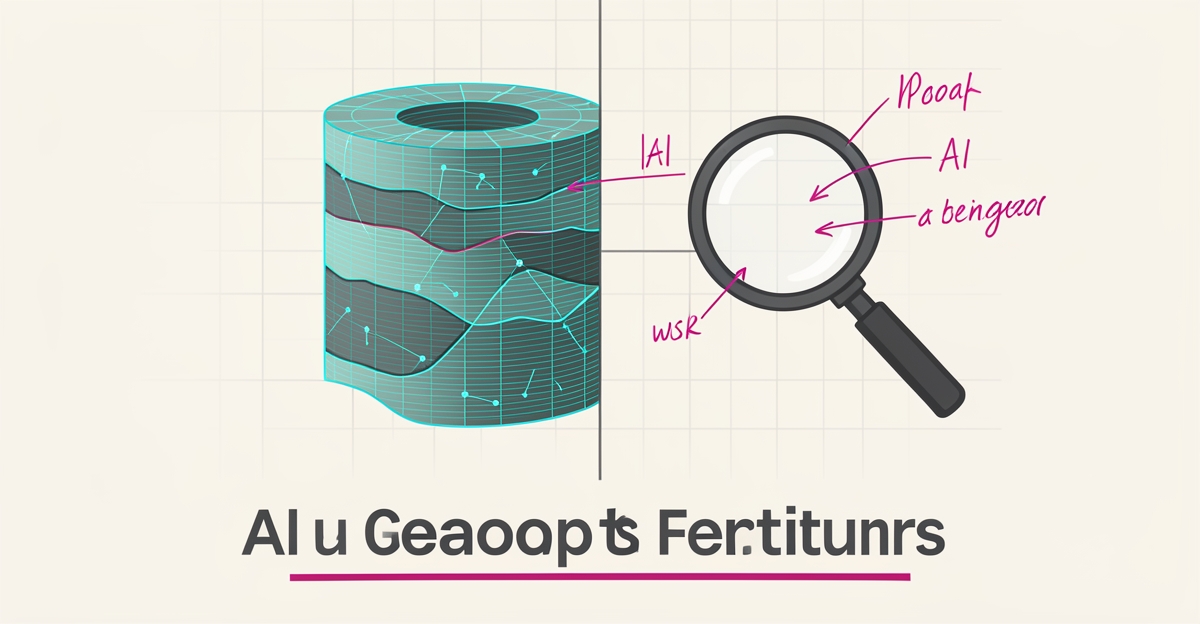
# AI vs. Human Geologists: Which Is Better for Analyzing Drilling Core Samples?
**Quick Answer:** AI speeds core sample analysis with consistency, while human geologists provide irreplaceable nuanced judgment. Augmentation, not replacement, delivers faster insights without losing interpretive depth.
## Key Facts
- Manual core logging typically consumes a large share of a geologist's workweek during peak drilling operations
- AI automation can substantially reduce manual effort in initial core sample analysis, though results vary by workflow
- Modern AI systems are built to simulate learning, problem solving, and decision-making, per IBM's overview of artificial intelligence
- AI tools augment rather than replace human expertise in tasks demanding creativity and contextual awareness
- AIQ Labs' readiness assessments identify which core analysis workflows yield the highest ROI when automated
## Table of Contents
1. [The Core Analysis Bottleneck: Speed vs. Interpretation in Drilling Operations](#the-core-analysis-bottleneck-speed-vs-interpretation-in-drilling-operations)
2. [Where AI Excels: Automation, Consistency, and Early-Stage Data Processing](#where-ai-excels-automation-consistency-and-early-stage-data-processing)
3. [Why Human Geologists Remain Irreplaceable: Expertise, Nuance, and Critical Judgment](#why-human-geologists-remain-irreplaceable-expertise-nuance-and-critical-judgment)
4. [The Augmentation Strategy: Integrating AI as a Force Multiplier in Geological Workflows](#the-augmentation-strategy-integrating-ai-as-a-force-multiplier-in-geological-workflows)
## The Core Analysis Bottleneck: Speed vs. Interpretation in Drilling Operations
Drilling operations face a growing challenge: the volume of core sample data generated exceeds the capacity for timely human interpretation. As exploration depths increase and sampling frequency rises, geologists are inundated with terabytes of visual, mineralogical, and structural data per well, much of it requiring rapid assessment to guide real-time drilling decisions. This creates a critical bottleneck where speed of analysis conflicts with the need for accurate, nuanced interpretation.
Human geologists remain indispensable for contextual judgment, especially when identifying subtle lithological variations or integrating core data with regional geological models. Yet, the sheer scale of modern drilling programs means even experienced teams struggle to maintain consistent turnaround times. Manual core logging can consume a substantial portion of a geologist's workweek during peak operations, leaving limited capacity for higher-level synthesis and risk assessment. This delay directly impacts operational efficiency, as drilling crews often wait on interpretation before proceeding to the next section.
AI-powered tools are increasingly deployed to alleviate this pressure by automating repetitive, high-volume tasks such as image segmentation, mineral identification, and fracture logging. By processing core scans in minutes rather than hours, these systems free geologists to focus on interpretation, integration, and decision-making, tasks where human expertise adds irreplaceable value. This shift doesn't replace the geologist but redefines their role, allowing them to work at the strategic level rather than the procedural one.
AIQ Labs supports this transition through readiness assessments that help drilling firms identify which core analysis workflows are best suited for augmentation, ensuring technology enhances, rather than overrides, the geologist's critical thinking. For teams that want to start with a single high-cost process, a targeted workflow build is often the fastest path to measurable gains. The goal is not automation for its own sake, but a balanced system where speed and insight coexist.
## Where AI Excels: Automation, Consistency, and Early-Stage Data Processing
AI is transforming how drilling core samples are analyzed by automating repetitive tasks and delivering consistent results at scale. In early-stage analysis, AI excels at processing large volumes of data quickly through automated data extraction, visualization, and pattern recognition, often cutting manual workload dramatically, though the exact reduction depends on the workflow. This allows geologists to focus on higher-level interpretation and decision-making rather than time-consuming data handling.
As IBM defines it, AI is technology that enables machines to simulate human learning, comprehension, and problem solving, capabilities that map well onto structured tasks like core sample analysis. Modern multimodal systems from labs like OpenAI and Google DeepMind have pushed machine perception and pattern recognition forward significantly, which translates directly to identifying mineral patterns and lithological changes in core data. These strengths enable AI to maintain consistency across thousands of samples, minimizing human variability in early-stage
AI Employees
Hire a team member that works 24/7 — for less than a part-time wage.
AI receptionists, SDRs, dispatchers and 99+ roles. Trained on your business, fully managed.
See If You’re a Fit — AI Employees from $700/mo
Not sure where to start? Ask our AI planner
logging.
- Automated data processing reduces manual effort in initial core analysis, typically by a meaningful margin in well-scoped workflows
- AI pattern recognition supports reliable detection of mineral and lithological features in core imagery
- AI-driven sensing and interpretation tools increasingly operate in near-real time in field conditions
By handling routine tasks such as image analysis, spectral data processing, and depth correlation, AI creates a consistent foundation for interpretation. This consistency is critical when comparing cores across multiple wells or time periods, where even small inconsistencies can lead to misleading conclusions. AIQ Labs supports this transition by helping geoscience teams assess their readiness to integrate AI tools that augment, not replace, human expertise, ensuring that automation enhances rather than disrupts established workflows. When deployed thoughtfully, AI becomes a force multiplier, accelerating early insights while preserving the irreplaceable role of the geologist in final interpretation.
## Why Human Geologists Remain Irreplaceable: Expertise, Nuance, and Critical Judgment
While AI excels at processing large volumes of core sample data with speed and consistency, it cannot replicate the deep contextual understanding that human geologists bring to interpretation. Even the most advanced systems, despite major advances in sensing and responding to real-world environments, still lack the nuanced judgment required for complex geological analysis. This limitation becomes especially critical when identifying subtle anomalies or interpreting ambiguous stratigraphic patterns that deviate from expected norms.
Human geologists leverage years of field experience and domain expertise to recognize irregularities that AI might overlook or misclassify as noise. Their ability to integrate multiple lines of evidence, such as mineral composition, texture, fossil content, and structural features, enables holistic interpretation that goes beyond pattern recognition. For instance, when core samples show signs of diagenetic alteration or unexpected facies changes, human experts can infer paleoenvironmental shifts or tectonic history based on subtle clues that current AI models are not trained to contextualize. This interpretive depth is essential for making accurate reservoir predictions and guiding drilling decisions.
Moreover, geological interpretation often requires critical judgment in high-stakes scenarios where data is incomplete or contradictory. Unlike AI, which operates within predefined parameters and training data boundaries, human geologists can reason abductively, consider alternative hypotheses, and apply intuition developed through hands-on experience. AI tools are best used to augment human expertise, not replace it, particularly in tasks demanding creativity, contextual awareness, and expert judgment. In core analysis, this means AI can handle initial data sorting and visualization, freeing geologists to focus on synthesis, hypothesis testing, and risk assessment.
Ultimately, the most effective core analysis workflows combine AI's efficiency with human insight. AIQ Labs supports this balanced approach through readiness assessments that help geoscience teams identify where automation adds value without compromising interpretive integrity. By augmenting rather than replacing human expertise, firms can achieve faster turnaround times while preserving the depth of understanding necessary for sound geological decision-making. This synergy ensures that technological advancement enhances, rather than erodes, the irreplaceable role of the geologist in subsurface exploration.
## The Augmentation Strategy: Integrating AI as a Force Multiplier in Geological Workflows
The most effective approach to core sample analysis isn't choosing between artificial intelligence and human expertise, it's architecting a workflow where each handles what it does best. By positioning AI as a force multiplier rather than a replacement, resource companies can accelerate interpretation timelines while preserving the nuanced judgment that only experienced geologists provide.
In this augmented model, AI systems manage the high-volume, repetitive tasks that traditionally consume valuable expert time. Modern AI systems excel at sensing and interpreting real-world environments, making them well suited for initial data processing and visualization. This capability allows AI to rapidly catalog core characteristics, such as grain size, color variations, and structural features, while generating preliminary logs that would otherwise require hours of manual measurement.
The division of labor becomes clear when examining task complexity. While AI handles pattern recognition and data organization, human geologists focus on **high-value interpretation** that demands contextual understanding. AI serves best when it augments rather than replaces human expertise, particularly in early-stage data interpretation where it can identify trends that warrant closer expert examination.
Implementing this hybrid workflow requires strategic assessment of your current capabilities. Key integration steps include:
- Automating initial core logging and photographic documentation to create consistent baseline datasets
- Deploying AI for preliminary mineral identification and alteration mapping to flag zones of interest
- Establishing protocols where geologists validate AI-generated observations before finalizing interpretations
- Creating feedback loops where expert corrections continuously improve AI accuracy
Modern AI architectures offer specialized capabilities that support this division of labor. General-purpose assistants like ChatGPT and
AI Development
Still paying for 10+ subscriptions that don’t talk to each other?
We build custom AI systems you own outright. No vendor lock-in. Full control.
See If You’re a Fit — AI Employees from $700/mo
Not sure where to start? Ask our AI planner
emibold underline decoration-amber hover:decoration-amber-deep hover:text-amber-deep underline-offset-4 transition-colors" href="https://gemini.google.com/">Gemini demonstrate how far structured reasoning and multimodal analysis have come as of late 2026. However, these systems still require human oversight for creative problem-solving and contextual reasoning, precisely the skills that define expert geological interpretation.
For small and mid-sized firms in the resource sector, navigating this transition requires more than purchasing software. It demands a structured evaluation of data readiness, team capabilities, and workflow compatibility. This is where **AIQ Labs' readiness assessment** provides critical value, helping firms identify which specific core analysis tasks will yield the highest ROI when automated while ensuring geologists retain control over interpretive decisions. Where the goal is a fully connected operation, logging, reporting, and decision support on one owned system, an AI operating system built in phases can tie these capabilities together, and managed AI employees can handle the routine data-handling work around the clock.
The transformation from manual to augmented workflows doesn't happen overnight. It requires careful change management and technical integration that respects both the power of machine learning and the irreplaceable value of geological intuition developed through years of field experience.
## Frequently Asked Questions
**Will AI replace human geologists in analyzing drilling core samples?**
No, AI is designed to augment, not replace, human geologists by handling repetitive tasks like image segmentation and mineral identification, freeing experts to focus on interpretation and decision-making where human expertise is irreplaceable. AI tools are best used to augment human expertise, particularly in tasks requiring creativity, contextual awareness, and expert judgment.
**How much time can AI save geologists during core sample analysis?**
AI can substantially reduce manual workload in initial core analysis by automating data processing, visualization, and pattern recognition, allowing geologists to focus on higher-level interpretation. The exact savings depend on the workflow, but well-scoped automation projects typically deliver meaningful time reductions.
**What specific tasks in core analysis are best suited for AI automation?**
AI excels at automating high-volume, repetitive tasks such as image analysis, spectral data processing, depth correlation, and preliminary mineral identification, which create consistent baseline datasets for human review. These structured tasks align with AI's strength in real-time sensing and interpretation of geological data.
**Why can't AI fully replace human judgment in interpreting complex core samples?**
AI lacks the nuanced judgment needed to interpret ambiguous stratigraphic patterns or subtle anomalies like diagenetic alteration, which require integrating multiple lines of evidence, mineral composition, texture, fossil content, that current models aren't trained to contextualize. Human geologists use abductive reasoning and field experience to consider alternative hypotheses, especially when data is incomplete or contradictory.
**How does AIQ Labs help companies implement AI in core analysis without disrupting workflows?**
AIQ Labs provides readiness assessments that identify which core analysis workflows are best suited for augmentation, ensuring technology enhances rather than overrides geologist expertise. The approach includes establishing validation protocols where experts review AI-generated observations and creating feedback loops to continuously improve AI accuracy.
**Is there evidence that AI improves consistency in core logging across multiple wells?**
Yes, AI maintains consistency across thousands of samples by minimizing human variability in early-stage logging, which is critical when comparing cores across wells or time periods where small inconsistencies can lead to misleading conclusions. This consistency is achieved through automated data extraction and pattern recognition, forming a reliable foundation for human interpretation.
## The Future of Core Analysis Lies in Collaboration, Not Competition
The debate between AI and human geologists misses the fundamental point: the most resilient drilling operations treat artificial intelligence as a force multiplier, not a replacement. While AI delivers unmatched speed and consistency in early-stage data processing, handling image segmentation, mineral identification, and pattern recognition at scale, it is the human geologist who provides the contextual judgment, nuanced interpretation, and critical risk assessment that determine drilling success. These systems excel at structured tasks but still require human oversight for complex decision-making.
To implement this balanced approach effectively, firms must first understand their specific readiness for integration. AIQ Labs helps resource companies navigate this transition through targeted readiness assessments that identify exactly where automation enhances your existing workflows. Start the Fit Check today to discover your highest-ROI opportunities for augmentation, or book a free 30-minute strategy call to map your implementation roadmap. Questions? Reach us at [email protected].
AI Transformation Partner
Make AI your competitive advantage — not just another tool.
Strategy, implementation and ongoing optimization. One partner, end to end.
See If You’re a Fit — AI Employees from $700/mo
Not sure where to start? Ask our AI planner