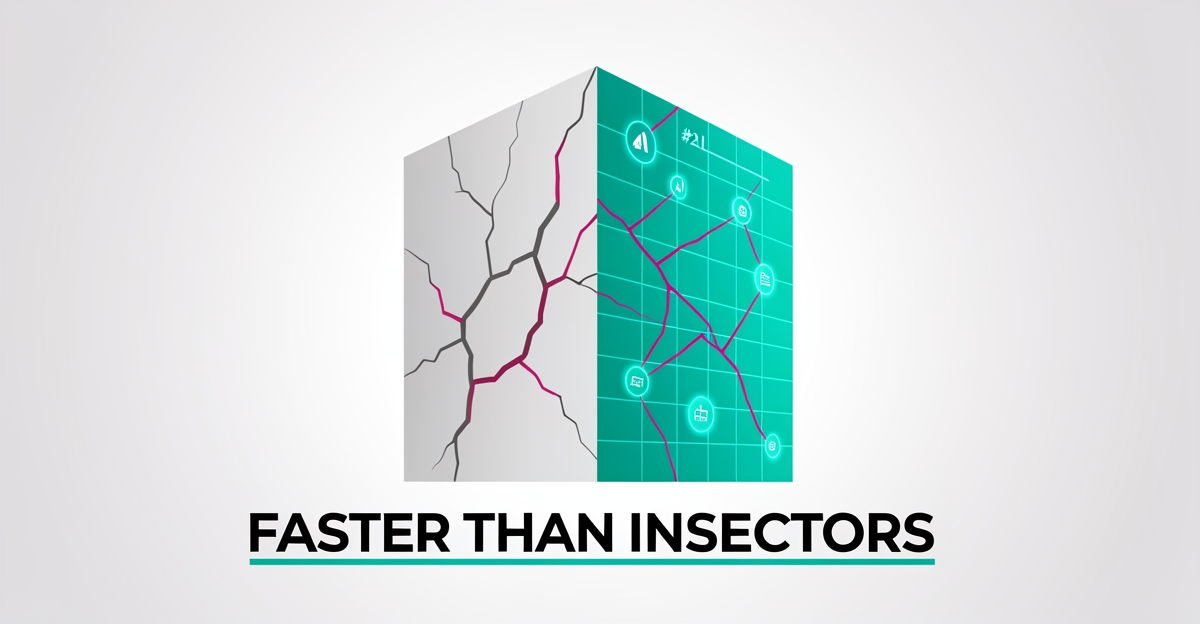
AI vs. Human Inspectors: How Smart AI Can Detect Structural Risks Faster Than a Technician
Key Facts
- Industry analyses as of late 2026 consistently find that most AI initiatives underperform when data quality, process consistency, and ownership are weak.
- A majority of organizations now use AI to automate workflows and transform how work gets done, per recent industry analysis.
- A growing share of organizations integrate AI into ERP systems specifically to improve data quality and governance.
- AIQ Labs has deployed 200+ multi-agent systems and runs 4 live SaaS products daily.
- AIQ Labs supports 99+ AI Employee roles across 11 categories.
- AI Employees typically cost ~80% less than an equivalent human hire.
Hire a team member that works 24/7 — for less than a part-time wage.
AI receptionists, SDRs, dispatchers and 99+ roles. Trained on your business, fully managed.
Not sure where to start? Ask our AI planner
The Cost of Reactive Inspections: Why Traditional Methods Miss Critical Structural Risks
Reactive inspections reward speed over accuracy, and the bill arrives later in the form of missed cracks, delayed leaks, and costly emergency repairs. Human-led structural checks remain the default for many contractors and property managers, but the process itself introduces risk.
Technicians operate under pressure, fatigue, and variable conditions. Subjectivity creeps in when one inspector flags a concern and another does not, and inconsistent documentation creates conflicting sources of truth across jobs. That inconsistency mirrors a broader operational problem: industry analyses consistently find that most AI initiatives underperform when data quality is poor, processes are inconsistent, and ownership is unclear. The same weak foundations undermine inspections.
Delayed detection is the most expensive failure mode. Issues are often found only after visible damage appears, when remediation costs multiply and liability exposure grows. Without a consistent data model, past findings, weather exposure, and material aging are rarely connected. Recent analysis notes that a majority of organizations are now using AI to automate workflows and transform how work gets done, yet adoption stalls where operational data is fragmented.
Traditional methods also struggle to scale preventive service. Teams prioritize the loudest complaints rather than the highest risk, because risk signals are buried in paper reports, photos, and memory. Governance is weak, decisions are not traceable, and accountability is hard to prove after an incident. A growing share of organizations now integrate AI into their ERP systems specifically to improve data quality, process consistency, and governance.
The cost compounds over time.
- Inconsistent reporting creates blind spots between inspections and maintenance cycles.
- Fatigue and site variability increase the chance of missed early indicators.
- Reactive work consumes crew capacity that could support preventive services.
- Poor traceability makes risk assessment subjective and hard to defend.
A strong operational core changes the equation. AI can analyze past inspection data, weather patterns, and material conditions to predict potential leaks or structural issues before they occur. That predictive layer requires consistent processes and clean data, which is why operational discipline matters as much as the model.
AIQ Labs deploys AI agents that assist in risk assessment, helping contractors prioritize high-risk jobs and improve preventive services, either as managed AI Employees or as part of a rebuilt workflow. By connecting inspection history to environmental and material signals, teams move from chasing symptoms to managing risk. The result is faster detection, fewer emergencies, and a more reliable service model built on data, not memory.
How AI Predicts Structural Failures Before They Happen: Data-Driven Risk Forecasting
Predictive AI transforms structural risk management from reactive guesswork into proactive precision. Instead of waiting for a leak to appear or a beam to fail, contractors can forecast failures weeks or months in advance by feeding historical inspection reports, weather exposure data, and material degradation patterns into intelligent systems that spot invisible warning signs.
The foundation of this capability lies in structured data models. When inspection records, maintenance logs, and environmental readings live in disconnected spreadsheets or paper files, AI cannot identify the subtle correlations that precede failures. Industry research consistently attributes most AI project failures to poor data quality and fragmented processes, highlighting why centralized data architecture matters for accurate risk forecasting.
AI addresses this by establishing consistent data models that organize information across three critical dimensions:
- Historical inspection data revealing degradation patterns and past failure points
- Weather exposure records tracking freeze-thaw cycles, humidity, and storm damage
- Material aging curves predicting when specific components approach critical thresholds
By correlating these datasets, AI generates risk scores that prioritize which structures need immediate attention. The system flags anomalies, such as accelerated corrosion following specific weather events, long before human inspectors would detect visible symptoms.
The scalability factor proves equally vital. A growing share of organizations now integrate AI directly into their ERP systems to improve data quality and governance. This integration creates the operational backbone that allows predictive models to run continuously across entire portfolios rather than individual buildings, making proactive maintenance economically viable for field service operations.
AIQ Labs applies these principles by deploying AI agents that synthesize inspection histories with real-time environmental data, enabling contractors to schedule interventions based on predicted failure probability rather than arbitrary calendars. The result shifts the entire business model from emergency repairs to planned, preventive care, reducing costs while extending asset lifespans.
From Inspection to Action: Deploying AI Agents to Prioritize High-Risk Jobs and Prevent Costly Failures
Inspection data alone doesn't prevent failures. The value comes when insights move instantly into prioritized dispatch, scheduling, and preventive work. AI agents turn inspection findings into automated workflows that rank risk, book crews, and update CRM records without manual handoffs.
AIQ Labs deploys AI Employees as intelligent dispatchers and risk assessors that operate alongside trades and facilities teams, typically at around 80% less cost than an equivalent human hire. They ingest past inspection data, weather patterns, and material conditions to flag potential leaks or structural issues before they escalate, then prioritize high-risk jobs for immediate action.
A strong operational foundation makes this possible. Recent analysis finds that a majority of organizations are using AI to automate workflows and transform how work gets done. Yet the same body of research shows most AI projects fall short where data quality, consistent processes, and clear ownership are missing.
That gap is critical for field services. Without consistent data models and process discipline, risk scoring amplifies noise instead of reducing it. A growing share of organizations are integrating AI into their ERP systems to improve data quality, process consistency, and governance.
In practice, the AI Employee acts as a dispatcher that never sleeps. It reviews inspection reports, cross-references asset history and forecast weather, and scores jobs by probability of failure and cost impact. High-risk items are auto-escalated, scheduled into the next available window, and pushed to technicians with context-rich work orders.
Integration turns prioritization into execution. The agent connects to scheduling and CRM tools to:
- Rank jobs by risk score and estimated failure cost
- Auto-book crews based on skill, location, and availability
- Update customer records and trigger preventive maintenance reminders
- Log decisions for traceability and auditability
This closes the loop from inspection to action. Preventive maintenance replaces emergency repairs, service efficiency improves, and teams focus on work that matters. Risk assessment becomes continuous, not a quarterly review.
For teams whose dispatch-and-prioritization workflow is the single biggest cost drain, AIQ Labs also offers AI Workflow Builds, a fixed-price, phased rebuild of that one workflow. By automating job prioritization, AI Employees help contractors deliver faster response on high-risk sites while reducing costly failures.
Start the 2-minute Fit Check at https://aiqlabs.ai/apply to map your biggest bottleneck, then book a free 30-minute strategy call at aiqlabs.ai/book.
Still paying for 10+ subscriptions that don’t talk to each other?
We build custom AI systems you own outright. No vendor lock-in. Full control.
Not sure where to start? Ask our AI planner
Frequently Asked Questions
How does AI detect structural risks before they become visible to human inspectors?
Why do traditional inspections often miss early signs of structural failure?
Why do so many AI projects fail to deliver results?
How does integrating AI with ERP systems improve structural risk management?
Can AI agents actually prioritize and dispatch work orders automatically?
What is the main advantage of shifting from reactive to preventive structural inspections using AI?
Stop Chasing Emergencies: Turn Your Inspection Data Into a Crystal Ball
The shift from reactive inspections to predictive risk management isn't just about adopting new technology, it's about establishing the operational discipline that makes AI effective. Human-led inspections alone introduce fatigue, subjectivity, and dangerous delays, while AI agents trained on historical data, weather patterns, and material conditions can flag structural risks weeks before they become emergencies. Yet the transformation succeeds only when built on consistent data models and integrated workflows, the same foundation that separates successful AI implementations from the majority that stall on fragmented processes and poor data quality. The path forward is clear: prioritize risk over routine, connect your inspection history to real-time environmental signals, and automate the dispatch of high-risk jobs before they escalate. AIQ Labs deploys AI Employees that handle exactly this, analyzing your inspection data, scoring risks, and scheduling preventive maintenance automatically, backed by 200+ multi-agent systems deployed and 4 live SaaS products the company runs daily. Ready to see where predictive AI fits in your operation? Start the 2-minute Fit Check at aiqlabs.ai/apply, then book a free 30-minute strategy call to map your highest-ROI automation opportunity.
Make AI your competitive advantage — not just another tool.
Strategy, implementation and ongoing optimization. One partner, end to end.
Not sure where to start? Ask our AI planner