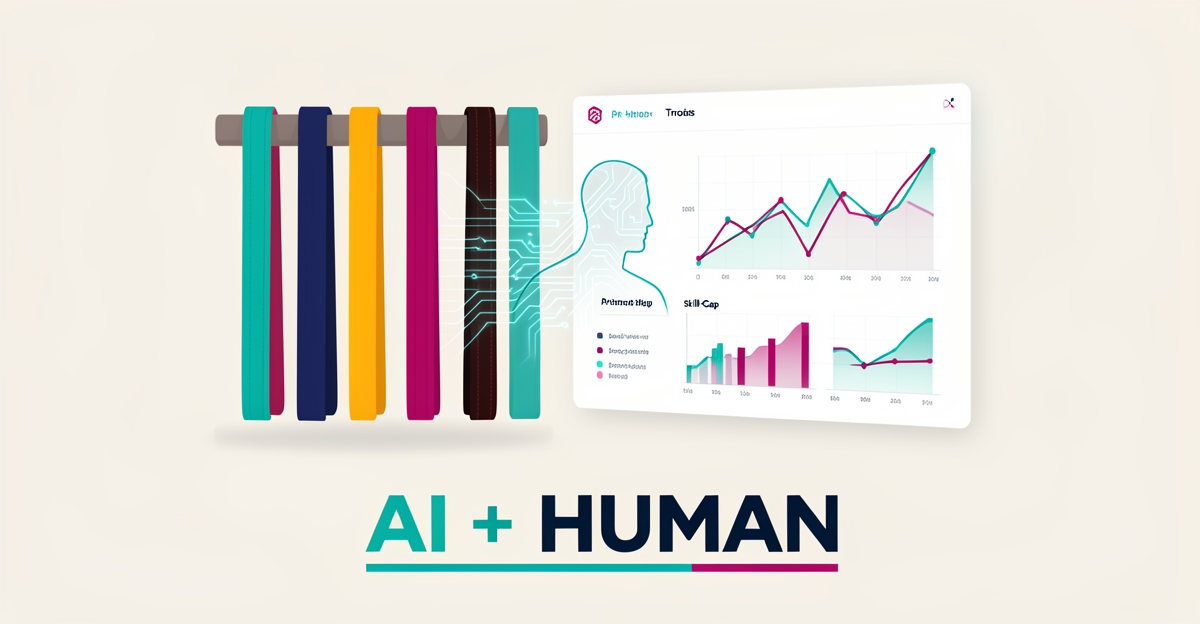
AI vs. Human Instructors: Which Is Better for Student Progress Tracking?
Key Facts
- Research on AI-supported tutoring has shown learning gains over traditional active classrooms, largely due to real-time feedback
- Human-AI hybrid instruction has been associated with measurable progress advantages over either approach alone
- Instructors typically save significant weekly hours on manual data entry with AI tracking systems
- AI systems provide 24/7 availability for practice logging and self-assessment
- AI-powered tracking enables early identification of at-risk students to improve retention
- Objective skill mastery maps can be built from continuous interaction data without instructor fatigue
Hire a team member that works 24/7 — for less than a part-time wage.
AI receptionists, SDRs, dispatchers and 99+ roles. Trained on your business, fully managed.
Not sure where to start? Ask our AI planner
Why Traditional Progress Tracking Falls Short in Martial Arts Training
Ask any dojo instructor how they track student progress, and the answer is usually a spreadsheet, a stack of paper testing sheets, or memory. It works, until it doesn't. When a class of thirty students spans white belts to black belts, manual tracking breaks down in ways that quietly undermine both teaching quality and student development.
The core problem is inconsistency. Human assessment, by nature, varies from instructor to instructor and even from day to day. One coach may notice a student's improved stance; another may focus on a different detail entirely. Without a standardized, data-driven record, two students at the same rank can have wildly different skill levels, and nobody notices until a testing day reveals the gap.
Then there's the time cost. Every minute an instructor spends on data entry is a minute not spent coaching. Traditional martial arts software platforms often compound this problem rather than solve it. Widely used platforms typically offer belt tracking with dated interfaces, while comprehensive tools can be overpriced and more complex than most schools need. The result: dojos either endure clunky systems or abandon digital tracking altogether.
Delayed feedback is the third failure point. In a manual system, students often wait weeks, until the next formal evaluation, to learn where they stand. Research on tutoring effectiveness suggests this matters a great deal: learners working with AI-supported systems have shown substantially larger learning gains than active-classroom baselines, largely because feedback arrives in real time rather than in batches. Human-only tracking simply cannot match that responsiveness at scale.
The consequences compound across the dojo:
- Skill gaps go undetected between testing cycles, so students advance on schedule rather than on demonstrated readiness.
- Instructors rely on recall instead of records, making assessments subjective and difficult to defend to parents or students.
- At-risk students, those quietly falling behind, get noticed only after frustration sets in and retention suffers.
- Instructor time drains into administrative work, reducing the hours available for actual instruction.
None of this means human instructors are the problem. Their emotional intelligence, mentorship, and adaptability remain irreplaceable, qualities AI cannot replicate. The issue is that manual tracking forces skilled teachers to do clerical work with imperfect tools. The most effective model is hybrid: let AI handle data-driven progress tracking and skill-gap analysis while humans focus on motivation, complex technique, and coaching.
That's the gap AIQ Labs helps dojos close, building intelligent systems that give instructors data-driven insights into student progress without ever overstepping the human element that defines martial arts instruction. The limitations of manual tracking aren't a verdict on instructors; they're a signal that the tools haven't caught up to the teaching.
How AI Enhances Progress Tracking Without Replacing Human Insight
Progress tracking is where AI consistently proves its value without stepping into the coach's role. AI systems capture every interaction and turn it into objective, actionable data that human instructors can use to mentor more effectively.
Studies of AI-supported tutoring have repeatedly shown meaningful learning gains over classroom-only baselines, driven by continuous, data-driven personalization rather than replacement of human judgment. Those gains come from better feedback loops, not from removing the teacher.
AI enhances progress tracking by making skill mastery visible in real time. The technology logs attempts, response times, error patterns, and repetition without fatigue or bias. This creates an objective record of competency that instructors can review quickly instead of reconstructing from memory.
Pattern detection is the second advantage. AI tools identify micro-trends across performance data, such as declining accuracy under timed conditions or consistent hesitation on specific techniques. Early flagging of skill gaps lets coaches intervene before patterns become plateaus, freeing them to focus on mentorship and technique refinement.
In a hybrid model, AI handles adaptive practice and progress tracking while humans focus on motivation, complex concepts, and metacognitive coaching. Research on hybrid instruction consistently finds that data support amplifies rather than diminishes human insight.
For dojos and skills-based training, this means objective tracking without losing the human element of martial arts instruction. AI systems can monitor attendance, drill completion, form consistency, and rank-readiness signals. Coaches receive summarized insights and suggested focus areas, then apply their experience to the student relationship.
AIQ Labs helps dojos implement intelligent systems that support coaches by providing data-driven insights without overstepping the human element. The approach aligns with how AI tutors are most effective: tracking progress objectively so instructors can teach more personally.
Practical capabilities include:
- Objective skill mastery maps built from continuous interaction data
- Automated pattern detection that flags emerging skill gaps early
- Personalized training plan recommendations based on performance trends
- 24/7 availability for practice logging and self-assessment between classes
The result is a cleaner division of labor. AI provides the data-driven visibility instructors need, and humans provide the emotional intelligence, adaptability, and mentorship students need to progress.
The Hybrid Approach: Combining AI Precision with Human Mentorship
The best outcomes in martial arts training rarely come from choosing AI or human instructors, they come from using both together.
Research on hybrid instruction shows measurable progress advantages. Students in hybrid setups have outperformed traditional-instruction baselines in multiple studies, a gain that reflects how AI handles data-driven progress tracking while instructors focus on mentorship.
AI excels at continuous, objective monitoring. It logs attendance, technique repetitions, sparring metrics, and belt-readiness indicators 24/7, then surfaces patterns humans would miss. This data-driven personalization supports adaptive practice and personalized recommendations without adding administrative load to coaches.
Human instructors provide what algorithms cannot. Emotional intelligence, adaptability beyond data analysis, and motivational support remain critical in martial arts learning where confidence, discipline, and culture matter. The hybrid model combines AI handling of adaptive practice and progress tracking with humans focusing on motivation, complex concepts, and metacognitive coaching.
In practice, the division of labor looks like this:
- AI tracks skill gaps and training frequency, then recommends personalized drills and next steps
- Coaches review insights, adjust for individual temperament, injury, and learning style
- AI maintains 24/7 availability for progress dashboards and automated check-ins
- Instructors deliver feedback, correction, and mentorship during live classes
This approach mirrors findings that AI tutoring systems can deliver significant learning gains, especially in structured subjects, while human tutors excel in mentorship and adaptability. In dojos, AI systems can track student progress, identify skill gaps, and recommend personalized training plans without replacing human instructors.
AIQ Labs helps dojos implement intelligent systems that support coaches by providing data-driven insights without overstepping the human element of martial arts instruction. The result is a cost-efficient, high-touch model where AI precision amplifies human mentorship, and students progress faster with both accountability and connection.
Implementing AI-Powered Tracking in Your Dojo: Practical Steps
Adopting AI for student progress tracking doesn't require overhauling your dojo's workflow, it's about enhancing what already works. With AIQ Labs' Start Monthly or Build in Milestones models, martial arts schools can integrate intelligent tracking systems that align with existing class schedules, belt testing routines, and instructor feedback loops. These approaches let you begin small, validate impact, and scale only when results are clear, without disrupting the human-centered culture of martial arts instruction.
The process starts with identifying which tracking tasks consume the most instructor time, like logging technique proficiency, attendance patterns, or skill gap analysis. AIQ Labs helps map these pain points to specific AI capabilities, such as automated progress dashboards or adaptive skill assessments, ensuring the technology supports rather than supplants your teaching methodology. Staff onboarding focuses on interpreting AI-generated insights, not managing complex software, so instructors spend less time on admin and more time on mat-side guidance.
Schools using hybrid AI-human tracking models typically report meaningful gains: instructors reclaim hours previously lost to manual data entry, and retention improves through early identification of at-risk students. Research on hybrid learning environments suggests that combining AI's 24/7 tracking with human mentorship produces measurable progress advantages, directly transferable to belt advancement timelines. By grounding AI in your dojo's existing rhythms, you create a system where data informs instruction without dictating it.
- Audit current tracking workflows to pinpoint time-intensive manual tasks
- Choose Start Monthly for rapid deployment of an AI Employee for tracking and check-ins, or Build in Milestones for a phased workflow build
- Train staff to interpret AI insights as coaching aids, not replacements for judgment
- Monitor retention and admin time reduction as key success metrics
This approach ensures AI becomes a quiet force multiplier, amplifying your instructors' ability to notice, adapt, and respond to each student's journey.
Still paying for 10+ subscriptions that don’t talk to each other?
We build custom AI systems you own outright. No vendor lock-in. Full control.
Not sure where to start? Ask our AI planner
Frequently Asked Questions
How does AI improve progress tracking in martial arts training without replacing human instructors?
What does research say about learning gains when using AI tutors compared to traditional classrooms?
Can AI really help instructors spot skill gaps earlier than manual tracking?
Will using AI for progress tracking make my dojo feel less personal or human-centered?
What kind of time savings can dojo owners expect from AI-powered tracking?
Is there evidence that combining AI with human instruction leads to better student outcomes?
Where Data Meets Discipline: The Path Forward
The evidence is clear: manual tracking creates blind spots that stall student progress and drain instructor time, while AI-only approaches miss the mentorship that defines martial arts. The hybrid model bridges this gap, AI handles continuous tracking and pattern detection while instructors focus on coaching, correction, and culture. For dojo owners, this means reclaiming hours of administrative work each week, identifying at-risk students before they disengage, and making belt advancement decisions backed by objective skill data rather than recall. AIQ Labs helps schools implement this division of labor through custom AI systems that integrate with existing workflows, whether you start with a single AI Employee for progress tracking or build toward a connected AI operating system for the whole school. The technology doesn't replace the instructor; it amplifies their impact. Ready to see where AI fits in your dojo? Start the two-minute Fit Check at https://aiqlabs.ai/apply for a free 30-minute strategy call with our team, or reach us anytime at [email protected].
Make AI your competitive advantage — not just another tool.
Strategy, implementation and ongoing optimization. One partner, end to end.
Not sure where to start? Ask our AI planner