AI vs. Human Staff: Which Is Better for Handling Service Inquiries in a Small Auto Shop?
Key Facts
- Shops lose $325,000 annually to manual scheduling, inspection documentation, and customer communication according to industry analysis
- Automation can increase daily repair orders per advisor from 12 to 18, generating $185,000-$285,000 in additional annual revenue per performance benchmarks
- AI-powered appointment scheduling increases after-hours bookings by 300% while cutting phone volume by 65% based on workflow analysis
- Automated customer communication slashes 'where's my car' calls by 85% through proactive text and email updates as shown in operational data
- Estimate creation time drops from 45 minutes to 8 minutes with AI assistance per service workflow research
- 62% of customers seek help from staff when they cannot find a product per retail customer behavior research
- 53% of customers say poor or unhelpful service is the leading driver of negative in-store experiences according to retail industry analysis
Hire a team member that works 24/7 — for less than a part-time wage.
AI receptionists, SDRs, dispatchers and 99+ roles. Trained on your business, fully managed.
Not sure where to start? Ask our AI planner
The Hidden Cost of Manual Service Inquiries in Auto Shops
For a typical 6-bay auto shop, the cost of relying solely on human staff for routine service inquiries like appointment scheduling and status updates extends far beyond payroll—it's a silent drain on profitability. Manual workflows create bottlenecks that ripple through every aspect of operations, from delayed customer responses to underutilized service bays. The financial impact is substantial: research shows the average independent shop loses $325,000 annually due to inefficiencies in tasks such as scheduling, inspection documentation, and customer communication industry analysis. When factoring in opportunity costs from lost repair orders and customer attrition, this figure climbs to over $725,000 per year the same report.
This hidden cost manifests in measurable ways that erode both efficiency and revenue. Shops burdened by manual processes experience 20-30% lower bay utilization and see $245,000-$385,000 in annual lost revenue simply because advisors are tied up with repetitive tasks instead of performing billable work operational data. Customer communication alone proves particularly costly—manual phone tag and delayed updates fuel a high volume of "where's my car" inquiries, which frustrate clients and consume staff time that could be spent on complex diagnostics or upsell opportunities. Without automation, these routine inquiries become a persistent tax on productivity.
- Appointment scheduling inefficiencies cost $3,200-$6,400 monthly in lost labor productivity
- Manual estimate creation takes 45 minutes per job versus 8 minutes with AI assistance
- Status update calls consume advisor time that could generate 6 additional repair orders daily
- After-hours booking opportunities are missed 75% of the time without 24/7 scheduling
- Customer churn from poor communication increases acquisition costs by 30-50%
For small auto shops operating with tight margins, these inefficiencies aren't just inconvenient—they threaten sustainability. The good news is that targeting these specific workflows with AI-powered automation doesn't require replacing human staff; it frees them to focus on the high-value interactions that build trust and drive revenue. As AIQ Labs has seen in similar service businesses, automating routine inquiries allows human advisors to increase daily repair orders from 12 to 18, directly translating to $185,000-$285,000 in additional annual revenue performance benchmarks. The real cost isn't in adopting AI—it's in continuing to pay for manual work that technology handles faster, more accurately, and around the clock.
Where AI Excels: Automating High-Volume, Repetitive Tasks
AI excels where speed and consistency matter most—automating the repetitive service inquiries that clog phone lines and slow down human advisors. From appointment scheduling to estimate creation and real-time status updates, AI handles these high-volume tasks with precision and 24/7 availability. This automation potential isn't theoretical; workflow analysis shows AI can manage 80-88% of these routine functions, directly reducing operational strain.
For example, AI-powered appointment scheduling increases after-hours bookings by 300% while cutting phone volume by 65%, freeing staff from constant call management. Estimate creation—once a 45-minute manual process—drops to just 8 minutes when AI pulls labor times and parts pricing from integrated databases. Most notably, automated customer communication slashes "where's my car" calls by 85% through proactive text and email updates triggered by repair milestones.
These improvements compound into measurable gains: estimate wait times plummet from 24+ hours to under 2 hours, and advisors see their daily repair orders rise from 12 to 18. By offloading transactional inquiries, AI lets human staff focus on complex diagnostics, customer education, and trust-building—tasks where empathy and judgment remain irreplaceable. The result is a smoother workflow where technology handles the routine, and humans deliver the value that keeps customers returning.
Why Humans Remain Essential: Trust, Judgment, and Complex Problem-Solving
A service advisor’s tone can salvage a repair estimate that the numbers alone cannot. In a small auto shop, trust is built in the conversation, not the chatbot, and the data shows customers still look for that human anchor when things get personal or technical.
Human staff remain the core of customer loyalty because they bring judgment, empathy, and accountability that automation cannot replicate. According to retail customer behavior research, 62% of customers seek help from staff when they cannot find a product, and 53% say poor or unhelpful service is the leading driver of negative in-store experiences. That reliance on human guidance is even stronger in automotive, where a repair decision carries cost, safety, and time risk.
A human-first approach is not nostalgia; it is risk management. Industry analysis on human-first AI notes that nearly 80% of consumers say they are unsure how AI is used in stores, and discomfort rises when technology feels intrusive. For a small shop, an opaque or over-automated experience can erode the personal reputation that drives repeat business and referrals.
Human advisors excel where nuance matters most. They can read frustration in a voice, explain a technical finding without jargon, and negotiate options when a customer is surprised by a cost. They also own the final decision, which builds the trust that keeps a shop’s retention from slipping. As human-first retail research puts it, intelligence can be automated, but judgment, responsibility, and values cannot.
This is why AI implementation roadmaps for auto shops should position AI as a force multiplier, not a replacement. AIQ Labs helps shops deploy AI employees like an AI service advisor to handle 24/7 scheduling, initial intake, and status updates, freeing advisors for the moments that matter. The result is a workflow where routine inquiries are automated and human staff focus on high-value engagement.
Human staff are irreplaceable for:
- Complex, emotionally charged conversations about unexpected repairs or pricing
- Technical judgment calls that require inspection context and experience
- Building long-term trust through consistent, empathetic service
- Escalations when AI confidence is low or customer sentiment turns negative
When repetitive tasks are reduced, colleagues can spend more time on customer engagement, problem solving, and judgment. That balance protects the shop’s reputation while improving efficiency.
The Optimal Model: AI as a Force Multiplier for Human Service Advisors
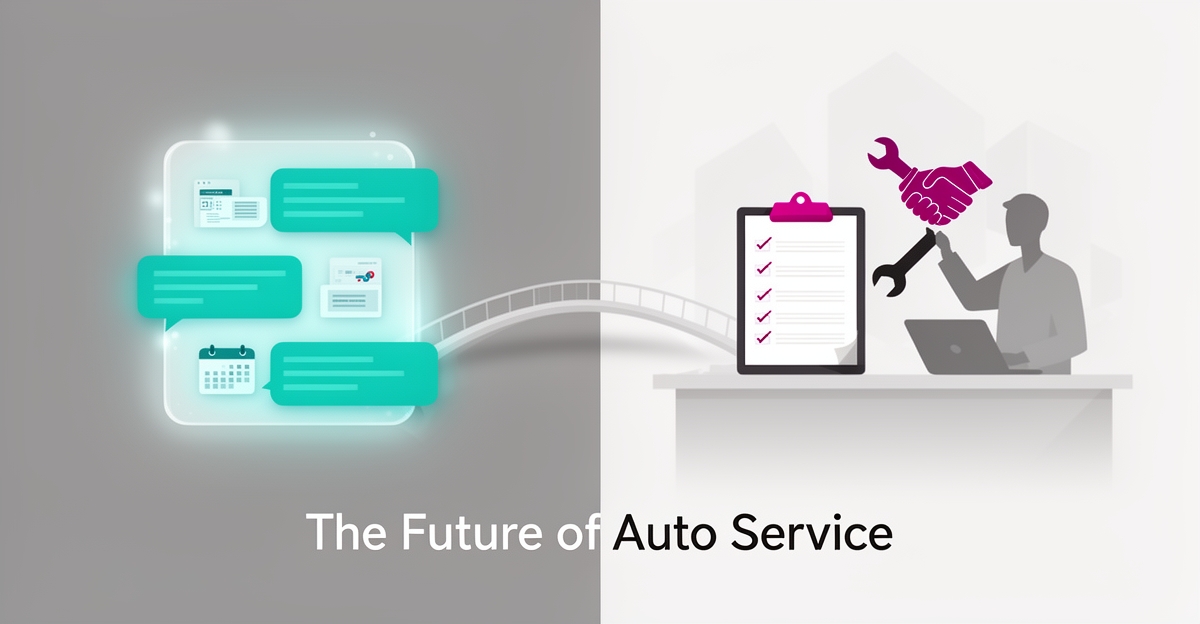
The debate over AI versus human staff misses the point entirely. The highest-performing auto shops aren't choosing one over the other; they are designing workflows where each amplifies the other's strengths.
Research into automotive service workflows shows that a typical 6-bay independent shop loses $325,000 annually to manual scheduling, inspection documentation, and estimate creation. When opportunity costs from lost repair orders and customer churn are included, that figure exceeds $725,000 per year. This inefficiency caps advisor productivity at roughly 12 repair orders per day, leaving significant revenue on the table.
AI functions best as a force multiplier for the human team. By offloading high-volume, repetitive tasks—instant appointment booking, trigger-based status texts, and preliminary estimate assembly—an AI employee clears the administrative backlog that buries service advisors. The data bears this out: shops automating these workflows see daily repair orders per advisor jump from 12 to 18, generating an additional $185,000 to $285,000 in annual revenue for a standard 6-bay operation.
This collaborative model plays out across three critical areas:
- Scheduling & Triage: AI handles 24/7 booking and basic "oil change vs. repair" routing, cutting phone volume by 65% and capturing 300% more after-hours appointments.
- Communication: Automated "inspection complete" and "ready for pickup" texts reduce "where's my car" calls by 85%, freeing advisors for face-to-face consultations.
- Estimates: AI pulls labor times and parts pricing to draft estimates in minutes rather than 45 minutes, shrinking the estimate-to-approval cycle from 24+ hours to under 2 hours.
The human advisor remains the linchpin for complex diagnostics, negotiating approvals, and building the trust that drives retention. As retail leadership research notes, intelligence can be automated, but judgment and responsibility cannot. When repetitive tasks are removed, advisors spend more time on the high-value interactions that grow average repair order values and lift customer retention from 62% to 88%+.
AIQ Labs helps shops implement this exact division of labor—deploying managed AI employees that integrate with existing shop management systems to handle the routine, so your advisors can master the complex. The goal isn't fewer people; it's more output from the people you already trust.
Still paying for 10+ subscriptions that don’t talk to each other?
We build custom AI systems you own outright. No vendor lock-in. Full control.
Not sure where to start? Ask our AI planner
Frequently Asked Questions
How much money does a typical 6-bay auto shop lose each year by relying only on human staff for service inquiries?
Can AI really reduce the time it takes to create a repair estimate for a customer?
Will using AI for appointment scheduling make our shop feel less personal to customers?
How much can AI improve customer retention in an auto shop?
What kinds of service inquiries should still be handled by humans instead of AI?
How does AI impact after-hours booking opportunities for auto shops?
Key Takeaways
{ "title": "Your Advisors Deserve Better Than Phone Tag", "content": "The math is straightforward: a 6-bay shop loses over $725,000 annually when human advisors drown in scheduling, status calls, and estimate paperwork instead of selling repairs. AI doesn't fix this by replacing your team—it fix
Make AI your competitive advantage — not just another tool.
Strategy, implementation and ongoing optimization. One partner, end to end.
Not sure where to start? Ask our AI planner