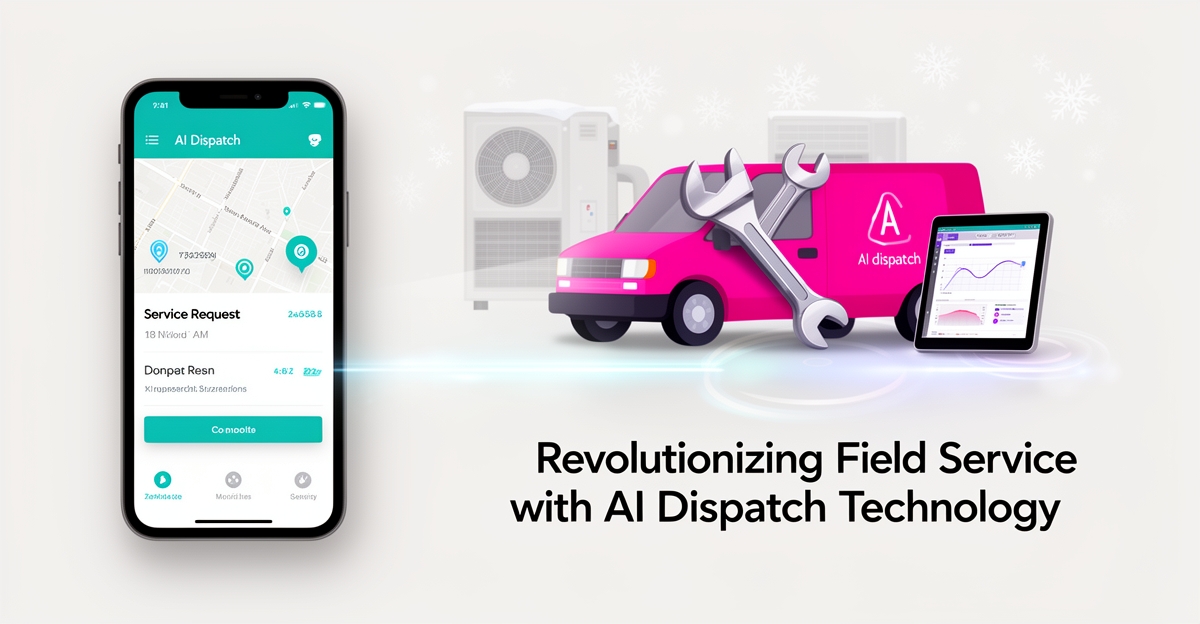
AI vs. Human Technicians: Which Is Better for Handling Emergency AC Service Calls?
Key Facts
- HVAC companies reportedly miss a significant share of incoming calls, each potentially worth hundreds to thousands of dollars, according to industry research
- AI text-back systems are reported to recover a substantial portion of missed calls that would otherwise go to competitors based on HVAC service operations data
- AI dispatch can reduce response time from roughly 45 minutes to under 5 minutes per industry analysis
- Companies implementing AI report faster response times and significant reductions in service vehicle downtime from fleet management data
- AI-powered workflows are credited with improving first-call completion rates per trade business reporting
- A majority of trade business owners say AI's biggest impact is in workflow optimization per industry survey
- Automated estimate follow-up is reported to meaningfully lift close rates based on service operation metrics
Hire a team member that works 24/7 — for less than a part-time wage.
AI receptionists, SDRs, dispatchers and 99+ roles. Trained on your business, fully managed.
Not sure where to start? Ask our AI planner
The Emergency Response Gap Costing HVAC Companies Revenue
Every minute counts during an AC emergency, yet HVAC companies routinely lose revenue before a technician even arrives. Industry research suggests companies miss a meaningful share of incoming calls, each potentially worth hundreds to thousands of dollars, creating a revenue leak from the very first point of contact. This gap widens when considering dispatch delays, with response times averaging around 45 minutes before automation, time during which frustrated customers often turn to competitors for immediate relief.
The financial impact of these delays compounds quickly. Missed calls and slow dispatch not only lose immediate service revenue but also damage long-term customer relationships and referral potential. AI-powered emergency dispatch systems address this by analyzing technician location, skills, availability, and parts inventory in real time to recommend optimal assignments, cutting response time from roughly 45 minutes to under 5 minutes in reported deployments. This speed is critical in emergency situations where customer satisfaction and business retention hinge on rapid response.
Beyond dispatch, AI text-back systems engage customers within seconds of a missed call, qualifying job types, collecting critical information, and scheduling service windows, capturing revenue that would otherwise be lost. When combined with smart dispatch and route optimization tools that process real-time traffic, job duration, and parts pickup data, AI creates a seamless emergency response workflow that minimizes downtime and maximizes first-time fix rates.
The result is measurable revenue recovery: companies implementing AI report faster response times and significant reductions in service vehicle downtime. These improvements translate to more completed jobs per day, higher customer satisfaction, and increased referral business. The most effective implementations recognize that AI excels at data-driven tasks like dispatch and routing while leaving complex diagnostics, customer relationship management, and hands-on repairs to skilled human technicians. For HVAC businesses looking to close this response gap, AIQ Labs offers AI Employees, managed AI staff, including emergency dispatchers, at roughly 80% less cost than a human hire, that work alongside field staff to ensure faster, safer response times while maintaining the human touch customers trust. Start the 2-minute Fit Check, then book a free 30-minute strategy call to assess your current emergency response workflow and identify high-ROI automation opportunities.
Where AI Outperforms Humans in Emergency Dispatch
When a customer calls at 2 a.m. with no cooling, speed is the difference between a retained client and a lost one. AI takes over the first critical minutes where humans are slowest, turning emergency intake into a measurable competitive advantage.
AI dispatch systems analyze technician location, skills, availability, and parts inventory simultaneously to recommend optimal assignments in real time. Industry analysis shows this can reduce response time from roughly 45 minutes to under 5 minutes, a shift that directly impacts customer satisfaction and retention in emergency scenarios.
24/7 call handling eliminates the gap that costs HVAC companies revenue every night and weekend. Research on HVAC service operations finds companies miss a significant share of incoming calls, with AI text-back recovering a substantial portion of calls that would have gone to competitors. The system qualifies job types, collects critical information, and schedules service windows without human intervention.
Location verification and priority routing are where AI's data processing becomes decisive. AI processes vast amounts of data at speeds impossible for humans, enabling real-time analysis of traffic conditions, estimated job duration, parts pickups, and customer service windows to sequence the day more efficiently. Trade industry reporting notes a majority of trade business owners say AI's biggest impact is in workflow optimization, reducing technician downtime, improving routing, and increasing job completion rates.
Text-back recovery closes the leak in missed-call revenue with a simple, automated workflow:
- Automated text responses within seconds of an unanswered call
- Instant qualification of job type, address, and urgency
- Automatic service window scheduling and confirmation
- Recovery of calls that would otherwise be lost to competitors
Smart dispatch also delivers broader operational gains. Companies implementing AI fleet management report significant reductions in service vehicle downtime and faster response times with smart dispatch optimization. These improvements compound when AI is integrated with field service management software to access real job data rather than generic benchmarks.
For SMBs, this is where AI employees function as a force multiplier. At AIQ Labs, managed AI dispatchers work alongside field staff to ensure faster, safer response times, handling intake and routing continuously while technicians focus on on-site work. The model aligns with AI Workflow Builds, where the routine, high-volume process that costs you the most is rebuilt end-to-end at a fixed price and human expertise is reserved for complex diagnostics and customer relationships.
The result is faster first contact, verified location data, and priority routing without adding headcount or waiting for business hours. AI doesn't replace technicians; it ensures the right technician gets the right call first, recovering revenue that would otherwise be lost to competitors.
Why Human Technicians Remain Irreplaceable On-Site
When an AC system fails in the middle of a heat wave, no algorithm can crawl into an attic, feel a failing compressor, or look a worried homeowner in the eye and explain the repair options. The pattern is clear: AI transforms what happens before the truck rolls, but the moment a technician arrives on-site, human expertise takes over.
AI diagnostic tools do give technicians real advantages in the field, real-time access to equipment history, fault code databases, and guided troubleshooting on mobile devices. But the actual problem-solving and repair work still requires human expertise, according to industry analysis of AI in HVAC operations. The tool narrows the search; the technician makes the call.
That distinction matters most in complex diagnostics. Emergency AC calls rarely present textbook symptoms. A frozen coil might stem from low refrigerant, restricted airflow, or a failing blower motor, and distinguishing between them demands sensory observation, physical testing, and judgment built over years. Human technicians excel at adapting to unprecedented situations and making decisions based on incomplete information, areas where AI struggles by design.
Trust is equally irreplaceable. A homeowner facing a major replacement decision isn't reassured by a chatbot; they're reassured by a professional who inspects the system, explains the tradeoffs, and stands behind the work. This relationship-building shows up in the data, too, companies that automate routine communications while keeping humans on-site report meaningful increases in review volume, largely because satisfied customers respond to genuine service experiences.
The most effective model is augmentation, not replacement. In practice, that partnership looks like:
- AI handling dispatch, location verification, and priority routing so technicians arrive faster, in some cases cutting response times from roughly 45 minutes to under 5 minutes
- Mobile tools surfacing equipment history and guided troubleshooting steps before the technician opens the panel
- Predictive maintenance systems flagging degradation early, turning emergency calls into scheduled visits
- Technicians retaining full authority over diagnosis, repair execution, and customer conversations
This is also where dependency risks emerge. AI is only as good as its inputs, poor sensor data or flawed control logic can cause AI to optimize around existing inefficiencies rather than fix them. A human in the loop catches what the data misses.
The takeaway for HVAC business owners: the goal isn't choosing between AI and technicians. It's pairing AI's speed in dispatch and data processing with human mastery of diagnostics and repair. Companies like AIQ Labs build AI employees, such as emergency dispatchers, that handle the coordination layer while field staff focus on the work only they can do, a division of labor reported to improve first-call completion rates meaningfully without displacing a single technician.
The Hybrid Model: AI Dispatchers Supporting Field Technicians
AI dispatchers transform emergency AC service workflows by handling intake, routing, and follow-up while technicians focus on repairs. This hybrid approach delivers measurable gains: faster response times, better first-call completion, and less vehicle downtime through integrated workflows. Industry research shows AI text-back recovers a substantial share of missed calls that would otherwise go to competitors, while fleet management data confirms significant reductions in service vehicle downtime.
- AI employees manage 24/7 call intake, qualifying emergencies and collecting critical details without human intervention
- Smart dispatch systems analyze technician location, skills, and parts inventory to recommend optimal assignments in seconds
- Route optimization tools process real-time traffic, job duration estimates, and service windows to sequence daily calls efficiently
- Automated follow-up sequences lift close rates through timely estimate reminders
- Review automation increases feedback volume by sending post-service Google review links
By offloading administrative tasks to AI, technicians spend more time on complex diagnostics and repairs where human expertise is irreplaceable. Trade business data indicates a majority of owners see AI's biggest impact in workflow optimization, reducing downtime, improving routing, and increasing job completion rates. This partnership model ensures faster emergency responses while preserving the human touch essential for customer trust and intricate problem-solving in HVAC service.
Implementation Roadmap: From Reactive to Predictive Emergency Service
Moving from reactive emergency calls to predictive service requires a phased rollout that protects current operations while building new capability. HVAC teams that sequence adoption see faster response times and fewer missed revenue opportunities without disrupting field workflows.
Phase one focuses on intake and dispatch speed. Deploy AI text-back within seconds of unanswered calls to qualify job types and collect critical information. According to industry research, AI text-back recovers a substantial share of calls that would have gone to competitors, while smart dispatch recommendations cut response time from roughly 45 minutes to under 5 minutes. This layer works alongside existing field service management software to capture real job data rather than generic benchmarks.
Phase two adds intelligent routing and follow-up automation. Configure dispatching software with built-in AI recommendations that weigh technician location, skills, availability and parts inventory. Smart dispatch optimization delivers faster response times and improves first-call completion rates. Automated estimate follow-up sequences at Day 0, Day 2, Day 5 and Day 10 lift close rates.
Integration checkpoints keep the human team in control. Connect AI tools to CRM, scheduling and communications platforms so dispatchers see a single source of truth. Train field teams on escalation paths and human-in-the-loop controls for critical decisions. AIQ Labs approaches this as AI employees working alongside field staff to ensure faster, safer response times, not to replace technicians.
Phase three shifts from reactive to predictive. Install IoT sensors and machine learning to detect HVAC system degradation before failures occur. Predictive maintenance monitoring lets contractors move from expensive emergency calls to scheduled visits, creating recurring monitoring revenue. The system monitors behavior in real time to identify inefficiencies and adjust settings based on load demand and occupancy patterns.
A practical roadmap looks like this:
- Foundation: AI text-back and smart dispatch with FSM integration and dispatcher training
- Optimization: Route optimization, automated follow-up and review automation for continuous revenue capture
- Prediction: IoT sensor deployment, predictive maintenance monitoring and proactive service scheduling
Each phase includes validation of sensor data quality, control logic and system performance before expanding scope. Poor inputs limit effectiveness, so oversight and data discipline remain essential. The result is a balanced model where AI handles speed, data processing and 24/7 availability while human technicians deliver complex diagnostics, customer relationships and on-site execution. For companies that want this connected across their whole operation rather than one workflow at a time, an AI Operating System builds the full layer in phases, and you own it outright.
Still paying for 10+ subscriptions that don’t talk to each other?
We build custom AI systems you own outright. No vendor lock-in. Full control.
Not sure where to start? Ask our AI planner
Frequently Asked Questions
Can AI really handle emergency AC calls better than my human dispatcher?
How much revenue am I actually losing from missed emergency calls?
Will AI replace my human technicians?
What specific tasks can AI handle during an AC emergency?
How does the hybrid AI-human model actually work in practice?
What are the risks of relying on AI for emergency dispatch?
Where AI and Human Expertise Meet for Faster, Smarter AC Service
The pattern is clear: AI transforms emergency AC service by cutting response times from roughly 45 minutes to under 5 minutes and recovering missed calls that would otherwise go to competitors, but it doesn't replace the irreplaceable, human technicians remain essential for complex diagnostics, on-site repairs, and building customer trust. The winning approach is a hybrid model where AI handles dispatch, routing, and follow-up so skilled technicians can focus on what they do best: solving problems and connecting with homeowners. This partnership drives faster response times, less vehicle downtime, and improved first-call completion rates without adding headcount or sacrificing service quality. For HVAC businesses ready to close the response gap and turn emergency calls into loyal customers, the next step is seeing how this works in your specific operation. Start the 2-minute Fit Check, then schedule a free 30-minute strategy call to identify your highest-ROI automation opportunities.
Make AI your competitive advantage — not just another tool.
Strategy, implementation and ongoing optimization. One partner, end to end.
Not sure where to start? Ask our AI planner