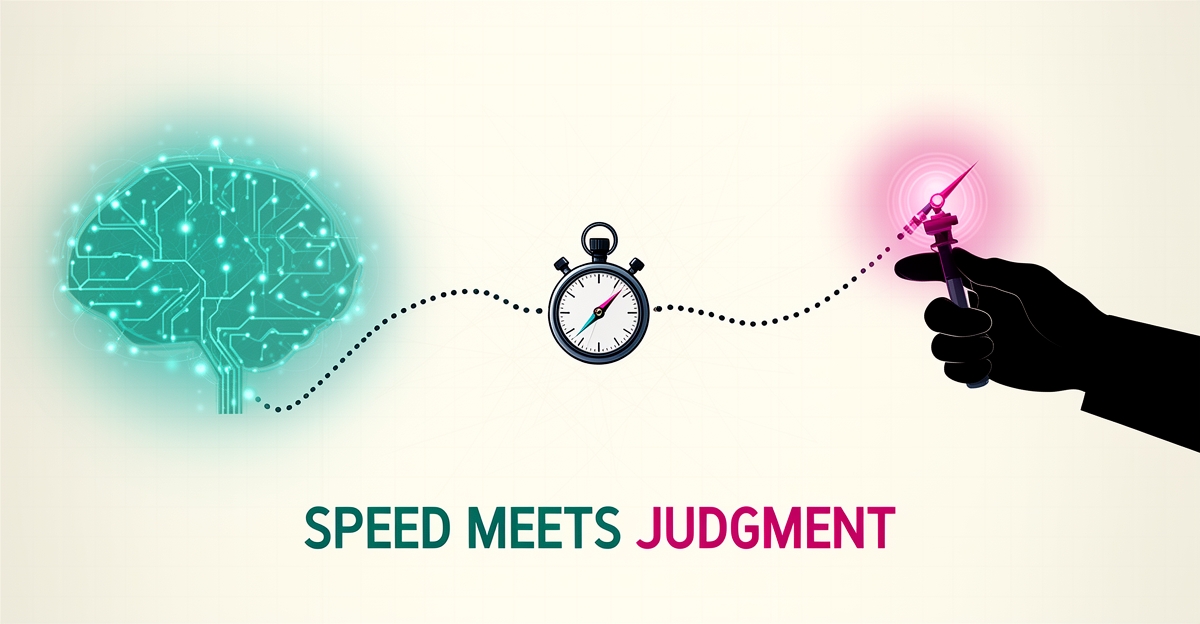
AI vs. Human Technicians: Which Is Better for Rapid Emergency Response?
Key Facts
- AI-powered dispatch systems show a 0.77% increase in on-time response performance for highly urgent requests according to research
- AI-powered detection systems offer a 20% potential increase in survival rates for out-of-hospital cardiac arrests per safety studies
- 80% of clinical errors stem from medical staff miscommunication highlighting dispatch risks
- Human technicians score 88 out of 100 on traits AI cannot replicate per career analysis
- Employment for EMTs and paramedics is projected to grow 6% from 2024 to 2034 faster than average occupations
- AI dispatchers reduce response times by prioritizing calls and routing ambulances more efficiently improving patient outcomes
- AI analyzes weather, seismic, and social data to predict disasters and support emergency preparedness per industry research
Hire a team member that works 24/7 — for less than a part-time wage.
AI receptionists, SDRs, dispatchers and 99+ roles. Trained on your business, fully managed.
Not sure where to start? Ask our AI planner
The Dispatch Bottleneck: Why Every Second Costs in Emergency Response
Every second counts when emergency services respond to a crisis, yet traditional dispatch systems often create dangerous delays through manual call triage and routing. Human operators under pressure face cognitive overload, leading to errors that can have life-or-death consequences. This dispatch bottleneck isn't just inefficient—it directly impacts patient outcomes when every moment of delay reduces survival chances.
Research shows that 80% of clinical errors stem from medical staff miscommunication, highlighting how human-only dispatch under stress amplifies risk. When call details are misheard, misinterpreted, or incorrectly routed, emergency responders may arrive unprepared or too late. These communication failures represent a systemic vulnerability in high-stakes environments where split-second decisions determine outcomes.
- Manual triage creates inconsistent prioritization based on operator experience and fatigue
- Location and vehicle type details often get lost in verbal handoffs between departments
- High call volumes during crises overwhelm human capacity, increasing error rates
- Delayed resource allocation occurs when dispatchers struggle to match urgency with available units
- Emotional distress in callers further complicates information gathering under time pressure
AI-assisted dispatch addresses these challenges by rapidly analyzing call data to assign the right resources based on vehicle type, location, and urgency—complementing rather than replacing human technicians. While humans provide irreplaceable emotional intelligence and nuanced judgment during complex emergencies, AI excels at processing structured data at scale. This hybrid approach allows roadside and emergency services to reduce dispatch errors while preserving the human elements that machines cannot replicate.
AI-powered dispatch systems have demonstrated a 0.77% increase in on-time response performance for highly urgent requests, proving that even small improvements in triage speed translate to meaningful outcomes. For time-sensitive emergencies like cardiac arrests, where AI-powered detection systems show a 20% potential increase in survival rates, optimizing the dispatch bottleneck becomes a critical lever for saving lives.
AIQ Labs supports this balance by building intelligent dispatch agents that handle rapid triage and routing, freeing human technicians to focus on high-value tasks requiring compassion and complex decision-making. The goal isn't to remove humans from emergency response but to eliminate preventable delays caused by manual processes—ensuring that when seconds matter most, the system works as fast as the situation demands.
What AI Does Best: Instant Triage, Routing, and Resource Allocation
When seconds count, dispatch decisions determine outcomes. AI-assisted routing removes the friction from emergency call handling by processing vehicle type, location, and urgency in parallel, not in sequence.
AI systems rapidly triage and assign emergency calls based on vehicle type, location, and urgency, freeing human technicians to focus on high-priority tasks that require emotional intelligence and nuanced judgment. This division of labor preserves the human advantage while accelerating the mechanical parts of response.
AI-powered dispatch systems prioritize calls and route ambulances more efficiently, reducing response times and improving patient outcomes. The same analysis shows a 0.77% increase in on-time response performance for highly urgent requests when AI supports dispatch.
The impact extends beyond routing speed. AI can analyze data from various sources, such as weather patterns, seismic data, and social media feeds, to predict potential disasters and support emergency preparedness. That predictive layer lets dispatchers pre-position resources before demand spikes.
Cardiac arrest detection is one of the clearest life-saving use cases. Research on public safety AI cites a 20% potential increase in survival rate for out-of-hospital cardiac arrests using AI-powered detection systems.
"AI has the potential to save thousands of lives each year by improving the accuracy of out-of-hospital cardiac arrest detections," says Jerome Paris, EENA Managing Director. The gain comes from faster recognition and more accurate triage, not from replacing field care.
AI does best where speed, scale, and pattern recognition matter:
- Instant triage of incoming calls by vehicle type, location, and urgency signals
- Dynamic resource allocation that matches closest available units to highest priority incidents
- Continuous data fusion from weather, seismic, and social feeds to anticipate demand
These capabilities support, rather than supplant, human technicians. AIQ Labs helps roadside companies build intelligent dispatch agents that support human technicians rather than replace them, aligning with the reality that AI cannot replace human technicians in situations that require physical presence, hands-on medical interventions, and human compassion.
The result is a faster, more accurate first mile of emergency response, with humans focused on the judgment and care only people can provide.
What Humans Do Best: Judgment, Hands-On Care, and Compassion
AI excels at rapid triage and data-driven dispatch, but human technicians bring irreplaceable strengths to emergency response. Their physical presence allows for hands-on medical interventions that algorithms cannot perform. More importantly, they provide emotional intelligence and compassionate care during high-stress situations—skills that remain beyond AI's current capabilities. This human advantage is quantified in career assessments, where EMTs score 88 out of 100 on traits AI fundamentally cannot replicate, such as nuanced judgment and interpersonal sensitivity. Industry research confirms this gap, emphasizing that AI supports rather than replaces the human element in crisis scenarios.
- Physical assessment and immediate treatment of injuries or medical conditions
- Emotional support and reassurance for patients and families during trauma
- Adaptive decision-making in unpredictable, dynamic environments
- Non-verbal communication and situational awareness beyond data inputs
- Ethical judgment in complex, value-laden emergencies
Despite advances in AI-assisted dispatch—which has shown a 0.77% improvement in on-time response for urgent calls—human roles in emergency medicine continue to grow. Employment for EMTs and paramedics is projected to increase by 6% from 2024 to 2034, outpacing the average for all occupations. This growth trend underscores that AI enhances efficiency without displacing the need for skilled technicians. Instead, it allows professionals to focus on complex, human-centered tasks where their expertise delivers the greatest value. AIQ Labs aligns with this balance by developing intelligent dispatch agents that support human teams rather than replace them, ensuring technology serves as a force multiplier in emergency response.
The Hybrid Model: Building an AI Dispatcher That Backs Your Human Team
The practical solution lies not in choosing between AI and human technicians, but in combining their strengths through an AI dispatcher agent that triages, routes, and documents calls 24/7 while escalating nuanced cases to human technicians. This hybrid model leverages AI's speed in analyzing vehicle type, location, and urgency to prioritize emergency calls, freeing human teams to focus on high-stakes situations requiring emotional intelligence and hands-on intervention. AIQ Labs builds these intelligent dispatch agents as part of its AI Employees offering—managed AI staff designed to work alongside human teams rather than replace them.
Implementing this system begins with integrating the AI dispatcher into existing dispatch platforms using secure APIs, ensuring seamless data flow between the AI agent and human workflows. The agent is trained on historical call data to recognize patterns in urgency and resource needs, then validated against real-world scenarios to maintain accuracy—critical given that 80% of clinical errors stem from miscommunication, a risk AI can help reduce by standardizing initial triage. Once deployed, human-in-the-loop safeguards ensure that ambiguous or emotionally complex cases are routed to technicians for final judgment, preserving the human touch where it matters most.
Ongoing oversight addresses key concerns around data privacy, bias, and accountability, especially as emerging AI regulations classify emergency response systems as high-risk. The AI dispatcher operates within defined guardrails, with audit trails logging every decision for transparency and compliance. Regular performance reviews adjust for drift or bias, while fallback systems maintain service if components fail. This approach aligns with the European Commission's framework for trustworthy AI, ensuring systems are explainable, fair, and respectful of human rights—without sacrificing the 0.77% improvement in on-time response performance seen in AI-powered dispatch systems. By combining AI efficiency with human expertise, roadside companies gain a resilient, scalable response model that meets both operational demands and ethical standards.
Getting Started: Proving Dispatch Automation ROI Without Risk
Starting with a single AI dispatcher pilot lets you measure real gains before scaling. Track response time improvements and routing accuracy to build a data-driven case for expansion. This low-risk approach validates impact while keeping disruption minimal.
AI-powered dispatch systems can prioritize calls and route vehicles more efficiently, reducing response times and improving outcomes. Research shows a 0.77% increase in on-time response performance for highly urgent requests using these systems. For time-sensitive emergencies, even small gains compound into meaningful differences.
Routing accuracy also sees measurable improvement with AI assistance. Studies indicate higher accuracy in call prioritization compared to manual dispatch, leading to better resource allocation. Fewer misroutes mean technicians spend less time correcting course and more time on scene.
AIQ Labs' AI Employees support this pilot phase under the Start Monthly payment model—a managed AI Dispatcher that typically costs around 80% less than a human hire. It handles triage and assignment based on vehicle type, location, and urgency, integrating with your existing tools while learning from performance data. Human technicians retain oversight for nuanced judgments and complex scenarios. If dispatch turns out to be only part of the problem, a Workflow Build can rebuild the full workflow at a fixed price, in phases.
To begin, run the two-minute Fit Check at aiqlabs.ai/apply to assess your dispatch workflow's readiness. Then book a free 30-minute strategy call at aiqlabs.ai/book to map your high-ROI automation opportunity. If there isn't a clear win, we'll say so—no obligation, just clarity.
Still paying for 10+ subscriptions that don’t talk to each other?
We build custom AI systems you own outright. No vendor lock-in. Full control.
Not sure where to start? Ask our AI planner
Frequently Asked Questions
Can AI completely replace human technicians in emergency response situations?
How much can AI-powered dispatch systems improve on-time response performance for urgent emergencies?
What is the potential impact of AI on survival rates for out-of-hospital cardiac arrests?
What percentage of clinical errors stem from medical staff miscommunication, and how does AI help reduce this?
Is employment for emergency medical technicians growing despite the rise of AI in dispatch systems?
How does AIQ Labs' AI Employee model work for dispatch automation, and what is the cost advantage?
The Future of Emergency Response Isn't AI or Humans—It's Both
The debate over AI versus human technicians misses the point: emergency response works best when each does what it does best. AI-assisted dispatch delivers measurable gains—a 0.77% increase in on-time response performance for urgent calls and a potential 20% boost in cardiac arrest survival rates—while human technicians remain irreplaceable for hands-on care, judgment, and compassion. The hybrid model isn't a compromise; it's a competitive advantage. For roadside and emergency service companies, the path forward starts small: pilot a single AI dispatcher, measure response times and routing accuracy, and scale only what proves itself. AIQ Labs builds intelligent dispatch agents designed to support your human team, not replace them—integrating with your existing tools under the Start Monthly model at roughly 80% less than a human hire. Start with the two-minute Fit Check at aiqlabs.ai/apply, then book a free 30-minute strategy call to map your highest-ROI automation opportunity. If there isn't a clear win, we'll tell you. No obligation—just clarity on what's possible when seconds matter most.
Make AI your competitive advantage — not just another tool.
Strategy, implementation and ongoing optimization. One partner, end to end.
Not sure where to start? Ask our AI planner