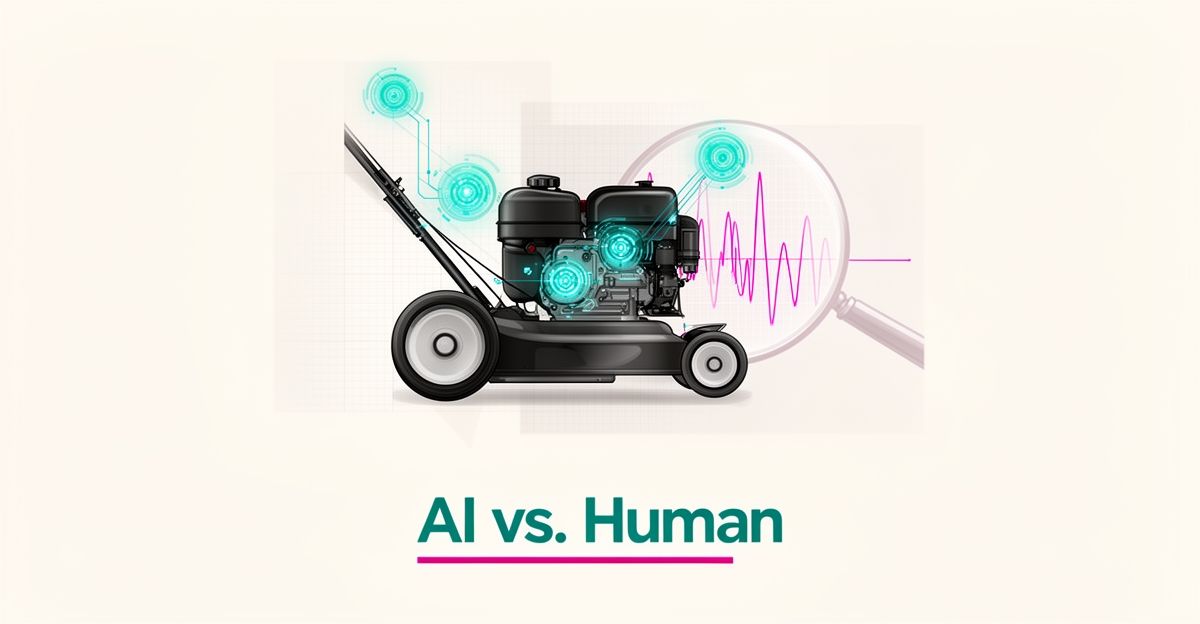
AI vs. Human Technicians: Which Is Better for Routine Small Engine Maintenance?
Key Facts
- Predictive AI shifts maintenance from calendar-based guesswork to data-driven decisions based on actual engine condition
- AI monitoring works continuously, catching wear signatures that develop gradually between scheduled service visits
- Reactive repairs typically cost far more than early interventions caught through proactive alerts
- AI handles routine monitoring and data aggregation so technicians can focus on complex diagnostics and customer work
- Shops can start with a single pilot workflow—no full shop overhaul required
- AIQ Labs builds these systems in phases, so shops can start monthly, build in milestones, or own the system outright
Hire a team member that works 24/7 — for less than a part-time wage.
AI receptionists, SDRs, dispatchers and 99+ roles. Trained on your business, fully managed.
Not sure where to start? Ask our AI planner
The Hidden Cost of Guesswork in Small Engine Maintenance
Most small engine shops still rely on reactive fixes or rigid calendar-based maintenance schedules, and both approaches share a critical blind spot: they cannot detect the subtle wear patterns that precede breakdowns. The result is a cycle of unexpected failures, inflated repair bills, and customer frustration that erodes trust over time.
Traditional preventative maintenance operates on fixed intervals—change the oil every 50 hours, replace the filter every season—regardless of actual engine condition. This one-size-fits-all approach inevitably leads to over-servicing some engines while under-servicing others that are quietly developing problems between scheduled visits. The contrast with proactive, predictive approaches is straightforward: instead of guessing, you analyze real equipment data to catch issues before they escalate.
The financial impact of this guesswork is significant. Unplanned downtime, emergency repairs, and wasted labor on engines that didn't need attention all eat directly into margins. While precise figures vary by operation, the underlying principle holds across industries: data-driven maintenance decisions consistently outperform calendar-based guesswork, because they direct labor and parts where they're actually needed.
The core problem is that human technicians, no matter how skilled, cannot continuously monitor every engine's performance data. Wear patterns develop gradually and often invisibly. By the time a customer notices symptoms or a scheduled service rolls around, minor issues have frequently compounded into major repairs. This is where AI-powered predictive maintenance offers a fundamentally different approach—one built on continuous monitoring and pattern recognition rather than fixed intervals.
Key limitations of traditional maintenance approaches include:
- Calendar-based schedules ignore actual engine condition and usage patterns
- Reactive repairs cost significantly more than early interventions
- Technicians lack visibility into gradual wear between service visits
- Over-servicing wastes labor and parts on engines that do not need attention
- Under-servicing allows preventable failures that damage customer relationships
The consistent lesson from businesses adopting AI in field service and manufacturing is that AI's value lies not in replacing technicians but in giving them better information. For small engine shops, that means shifting from reactive firefighting to proactive care—catching a worn bearing before it destroys a crankshaft, or identifying fuel system degradation before it strands a customer.
AIQ Labs works with service businesses on exactly this kind of work. Through AI Workflow Builds, the team rebuilds the one workflow that costs your shop the most—fixed price, delivered in phases—so skilled technicians spend their time on the right problems at the right time, rather than guessing which engines need attention and which can wait.
How AI Detects What Technicians Miss
A worn bearing rarely announces itself with noise—it whispers through subtle vibration changes that even experienced technicians can miss during a busy service schedule. This is where AI-driven maintenance systems earn their keep: by continuously analyzing sensor data, vibration patterns, and historical service records, they detect micro-anomalies that precede visible failure.
Traditional routine checks rely on human senses and fixed service intervals. AI flips this model by establishing a baseline of normal equipment behavior, then flagging deviations measured in fractions of a degree or hertz. Early detection translates directly to bottom-line performance: fewer catastrophic failures, better parts planning, and service scheduling based on condition rather than the calendar.
The shift from reactive to proactive maintenance delivers operational gains through several concrete capabilities:
- Continuous monitoring that never tires or overlooks subtle changes
- Pattern recognition across thousands of operating hours and service records
- Early identification of wear signatures weeks before traditional symptoms appear
- Automated service recommendations based on actual equipment condition rather than calendar dates
Crucially, these systems augment rather than replace technician expertise. AI surfaces the anomaly and suggests the probable cause, but the certified technician validates the finding, performs the physical repair, and makes judgment calls about safety and operational context. The value lies not in the algorithms themselves but in operationalizing the insights—moving from "Do we have AI?" to "Where is AI moving our P&L?"
For small engine shops, this means fewer emergency breakdowns and more efficient scheduling. AIQ Labs has deployed 200+ multi-agent systems for service businesses, integrating predictive tools with existing diagnostic equipment so technicians receive actionable alerts without drowning in data. The technology handles the monitoring; your team handles the craftsmanship.
Where Human Expertise Remains Irreplaceable
Human technicians remain irreplaceable when engine issues move beyond predictable wear into complex diagnostics and nuanced repair scenarios. While AI excels at identifying early wear patterns and recommending preventive services, it cannot replicate the tactile judgment required for intricate mechanical troubleshooting or the contextual understanding needed to interpret ambiguous symptoms. This is where the technician's evolving role becomes critical: owning complex diagnostics, executing precise repairs, and maintaining the customer trust that AI alone cannot build.
AI handles pattern recognition at scale—much like an AI receptionist or dispatcher manages high volumes of routine calls and scheduling without human intervention. However, when issues escalate—such as intermittent faults, multi-system failures, or repairs requiring adaptive problem-solving—human expertise takes over. Technicians apply reasoning honed through experience, integrating AI-generated data with hands-on inspection to make decisions that algorithms cannot yet replicate, especially in unpredictable, real-world conditions.
This division of labor is about augmenting human capabilities, not replacing them. By leveraging AI for routine monitoring and data aggregation, technicians gain more time to focus on high-value tasks like custom fabrication, advanced system tuning, and customer consultation—areas where trust, communication, and craftsmanship are paramount. In this way, AI doesn't diminish the technician's role; it elevates it, allowing skilled workers to concentrate on what they do best: solving the problems that truly require a human touch.
- Complex fault diagnosis requiring sensory interpretation and adaptive reasoning
- Physical repairs involving precision, torque sensitivity, and material judgment
- Building customer trust through transparent communication and hands-on expertise
- Integrating AI insights with contextual workshop knowledge for holistic solutions
- Handling edge cases and unexpected variables outside training data parameters
AIQ Labs supports this balanced approach with tools that augment technician capabilities—delivering early wear detection and preventive service recommendations—so skilled workers can focus on the irreplaceable aspects of engine maintenance that demand human ingenuity and trust.
Implementing AI-Assisted Maintenance Without Disruption
Routine small engine maintenance can quietly erode margins if wear is missed until failure. A low-disruption path starts with focus, not a full shop overhaul.
Start with one high-volume engine type to prove value. Selecting a single family of equipment concentrates data collection and lets technicians learn the system without changing daily routines. Data quality and integration are the foundation for reliable alerts, as AI algorithms are only as good as the data they are trained on.
Pilot deployment works best when AI insights feed existing workflow software instead of replacing it. Seamless integration with existing IT infrastructure and workflows is essential for maximizing impact and ensuring smooth adoption by users. Shops can review AI-flagged wear patterns alongside work orders, parts inventory, and service history they already use.
Technicians remain the decision-makers. Training should focus on validating alerts, interpreting data-driven recommendations, and overriding when context demands it. This human-in-the-loop approach builds trust and ensures AI augments rather than replaces skilled judgment.
A practical adoption sequence looks like this:
- Identify challenges: pinpoint a high-volume engine type and common failure modes
- Focus on data: ensure sensor readings, service logs, and parts usage are accurate and accessible
- Integrate with workflows: embed AI recommendations into existing shop management software
- Empower users: train technicians to validate alerts and act on preventive suggestions
Low-risk pilots are easier when cost and commitment are contained. AIQ Labs supports this with the Start Monthly payment model—a flat monthly plan that includes build, training, integrations, monitoring, and improvements, with the ability to pause or adjust anytime. As your operation grows, the same work can scale into a full AI Operating System—one connected layer across your shop, built in phases and owned outright. You can see all three payment models at aiqlabs.ai/pricing: Start Monthly, Build in Milestones, or Own It Outright. No fake prices, no invented numbers—just a clear path that matches your risk tolerance.
The business case for augmentation is straightforward: fewer emergency repairs, better scheduling, less wasted labor. The exact size of the gain depends on your shop's volume and current downtime, which is why a pilot on one engine family is the fastest way to find out what it's worth to you.
By starting narrow, integrating thoughtfully, and empowering technicians to validate, shops can introduce AI-assisted maintenance without disruption while building toward broader scale.
Still paying for 10+ subscriptions that don’t talk to each other?
We build custom AI systems you own outright. No vendor lock-in. Full control.
Not sure where to start? Ask our AI planner
Frequently Asked Questions
Can AI really detect engine wear before a technician notices symptoms?
Will using AI for maintenance replace the need for skilled human technicians?
What kind of improvements can small engine shops expect from AI-assisted maintenance?
Is it expensive or disruptive to implement AI tools in an existing small engine repair shop?
How does AI handle complex or ambiguous engine problems that don't follow predictable wear patterns?
What's the best first step for a shop that wants to explore this?
Where Data Meets Craftsmanship
AI isn't here to replace the skilled technician—it's here to amplify their impact. By catching subtle wear patterns before they become costly breakdowns, AI-powered predictive maintenance helps small engine shops reduce emergency repairs, optimize scheduling, and build stronger customer trust through proactive care. Human expertise remains essential for complex diagnostics, precision repairs, and the personal touch that builds lasting relationships. The real opportunity lies in using AI to handle continuous monitoring and data analysis so technicians can focus on what they do best: solving the problems that require judgment, experience, and craftsmanship. For shops ready to move from guesswork to data-informed maintenance, the first step is understanding where AI can deliver the most immediate value. Start the Fit Check—a free, no-obligation, 2-minute assessment to map your biggest maintenance bottlenecks—then book a free 30-minute strategy call to explore how AI-assisted workflows can support your team without disruption.
Make AI your competitive advantage — not just another tool.
Strategy, implementation and ongoing optimization. One partner, end to end.
Not sure where to start? Ask our AI planner