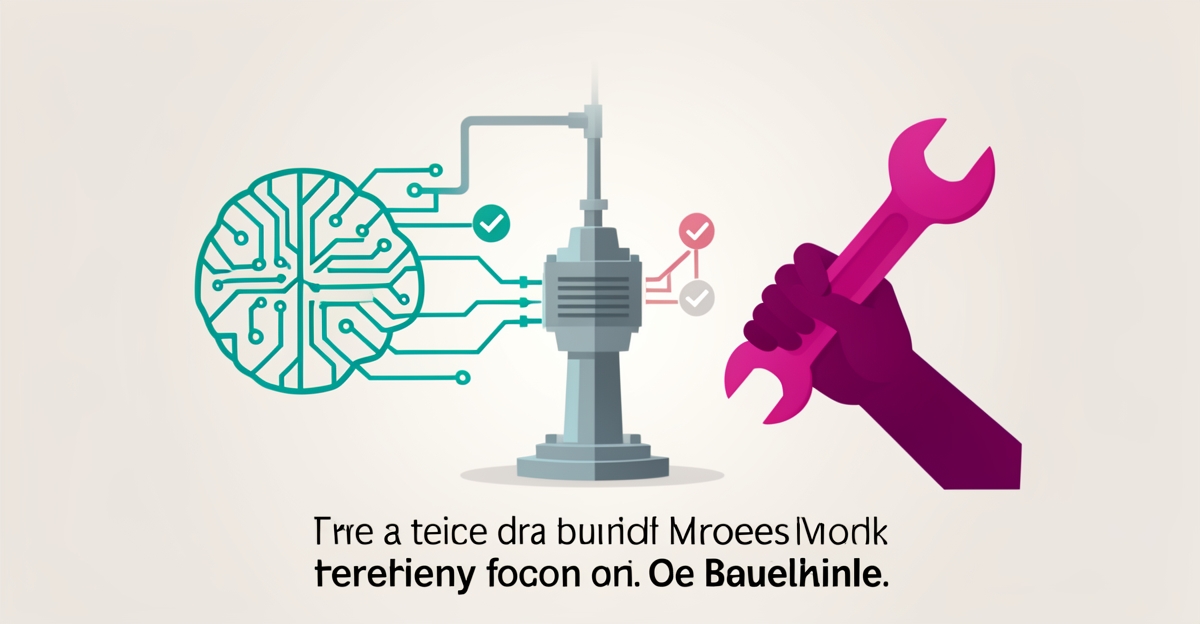
AI vs Human Technicians: Which Is More Reliable for Well Pump Diagnoses?
Key Facts
- A meaningful share of professional diagnoses are wrong, delayed, or missed, a failure pattern that shows up across technical fields, including field service
- Diagnostic errors carry heavy financial costs: repeat truck rolls, unnecessary parts, and lost customers compound quickly
- AI improves diagnostic accuracy by analyzing patterns across large datasets that no individual technician could hold in memory
- Human technicians remain essential for personalized service, complex decision-making, and customer trust
- AI expands access to expertise by offering real-time support for technicians in rural areas far from mentors or supply houses
Hire a team member that works 24/7 — for less than a part-time wage.
AI receptionists, SDRs, dispatchers and 99+ roles. Trained on your business, fully managed.
Not sure where to start? Ask our AI planner
The Hidden Cost of Diagnostic Errors in Well Pump Repair
A single misdiagnosis in a well pump service call can trigger a cascade of expensive problems. Across technical professions, a meaningful share of diagnoses turn out to be wrong, delayed, or missed, and field service is no exception. Those errors create ripple effects that extend far beyond the initial service visit.
The financial burden of diagnostic errors is real and measurable. Repeat visits consume labor hours, unnecessary parts erode margins and inflate customer bills, and downtime damages relationships. In an industry where a single bad experience can drive a customer to a competitor, diagnostic precision directly determines profitability.
In well pump repair, a wrong diagnosis creates immediate financial consequences:
- Repeat truck rolls that double or triple labor costs for a single repair
- Unnecessary part replacements that erode profit margins and inflate customer bills
- Extended system downtime that damages customer relationships and triggers negative reviews
- Lost customer trust that drives clients to competitors for future service needs
When a technician misidentifies a failing pressure switch as a burned-out motor, the customer pays for parts they don't need. When the real problem resurfaces days later, that customer faces another service call, another diagnostic fee, and mounting frustration with your company's competence.
The challenge intensifies because well pump systems present complex diagnostic scenarios. Multiple components interact in ways that can mask root causes, and symptoms often overlap across different failure modes. A technician working from incomplete information or cognitive bias can easily follow the wrong diagnostic path.
This is where AI-assisted diagnostics offer measurable value. AI systems improve diagnostic accuracy by analyzing patterns across large datasets, helping technicians identify less obvious failure modes before committing to a repair strategy.
AIQ Labs works with field service companies to implement diagnostic support systems that reduce these costly errors, typically starting with a single AI Workflow Build targeting the diagnostic workflow that costs the most. The goal isn't replacing technician expertise but augmenting it with real-time access to diagnostic patterns that would take years to develop through experience alone.
The hidden cost of diagnostic errors extends beyond immediate financial impact. Every misdiagnosis represents a missed opportunity to demonstrate competence, build customer confidence, and establish your company as the reliable expert in a competitive market where trust determines long-term success.
Where AI Wins: Accuracy, Speed, and Information Gathering
The diagnostic gap in well pump repair isn't theoretical. Wrong or delayed diagnoses translate directly into wasted truck rolls, unnecessary part replacements, and frustrated property owners. AI-assisted diagnostics address this quietly, organizing service history, summarizing symptom patterns, and retrieving answers to complex technical questions in seconds rather than hours.
Where human technicians juggle memory, manuals, and fragmented notes, AI systems excel at streamlining information gathering across every available data source. They can instantly cross-reference pump curves, manufacturer bulletins, geological surveys, and years of service records, connections that even seasoned pros might miss under time pressure. This capability proves especially valuable in rural areas, where AI offers real-time support for technicians working far from supply houses or senior mentors.
The accuracy gains compound when AI handles the pattern recognition heavy lifting. By analyzing historical failure modes against current symptom clusters, these systems flag probable root causes before a technician even opens the well cap, from automated checklist enforcement to anomaly detection in pressure transducer data. For well pump specialists, this means fewer return visits and more first-time fixes.
- Instant retrieval of manufacturer specs and bulletins for any pump model
- Automated correlation of water quality data with component wear patterns
- Real-time comparison of current symptoms against regional failure databases
- Guided diagnostic workflows that adapt based on technician input
- Documentation that builds institutional knowledge with every service call
The technology doesn't replace the technician's judgment; it ensures that judgment gets applied to complete, organized information rather than fragments. That's the difference between a technician guessing under pressure and a technician confirming a hypothesis with data.
Where Humans Still Win: Judgment, Complex Cases, and Customer Connection
Where humans still win in well pump diagnostics is in the nuanced judgment that comes from years of on-site experience. Skilled technicians excel at interpreting subtle cues, like unusual pump vibrations, water discoloration, or system pressure fluctuations, that AI might overlook without sufficient contextual training. This ability to synthesize sensory input with practical knowledge allows humans to diagnose complex, multi-faceted issues that don't fit clean algorithmic patterns. Human expertise remains essential for complex decision-making, especially when variables like well depth, soil composition, or aging infrastructure create unique diagnostic challenges.
Beyond technical skill, the human element builds trust in ways automation cannot replicate. A technician who takes time to explain a repair in plain language, acknowledges a homeowner's concerns about water safety, or follows up after a service call fosters long-term loyalty and confidence. This relational strength is particularly valuable in rural or underserved communities where well pumps are critical lifelines and service providers are few. While AI can expand access to information and streamline diagnostics, it lacks the empathy and adaptability needed to navigate emotionally charged or high-stakes situations, such as a family without water during a drought or a farmer facing crop loss due to pump failure.
That said, human technicians are not infallible. Fatigue, time pressure, or incomplete training can lead to oversight, and even experienced pros may miss early signs of failure in complex systems. These limitations don't diminish the value of human expertise but instead point to a strategic opportunity: using AI not to replace technicians, but to augment their judgment with data-driven insights, reduce cognitive load, and improve consistency, especially in routine checks or preliminary assessments. For businesses navigating this balance, AIQ Labs helps integrate AI tools in ways that enhance, rather than override, the irreplaceable strengths of skilled professionals.
The Real Answer: Augmented Diagnostics, Not Replacement
The reliability question for well pump diagnostics isn't about choosing a winner. It's about designing a workflow where each party does what it does best.
AI can improve diagnostic accuracy, expand access to expertise, and streamline information gathering for technicians working in the field. AI tools can analyze records and patterns to detect issues earlier and reduce missed or delayed diagnoses. That support matters because diagnostic errors are a persistent, well-documented problem across technical fields.
Human technicians remain essential for personalized service, complex decision-making, and human connection. They interpret site-specific conditions, make judgment calls on aging infrastructure, and build trust with homeowners. Human expertise is necessary for addressing complex cases that require judgment and empathy.
Augmented diagnostics means pairing those strengths deliberately. The reliability gains come from integration, not replacement.
Effective augmentation requires deliberate workflow design:
- Comprehensive technician training on AI tools so staff can use outputs critically and recognize when results may be inaccurate or incomplete
- Clear human-in-the-loop controls for final diagnosis, repair authorization, and customer communication
- Ongoing validation of AI outputs against field outcomes to prevent drift and bias amplification
- Guardrails that prevent over-reliance and preserve core diagnostic skills over time
The integration challenges are real. Human technicians must be trained to work effectively with AI tools and to recognize when AI-generated results may be inaccurate or incomplete. There is also the risk of relying too heavily on technology, which may lead to a loss of human skills and judgment. Perhaps most critically, AI tools may perpetuate existing biases if they are trained on biased data or designed to reinforce existing practices.
AI can quietly fix the gaps technicians see every day, but only when the workflow respects limits. The cost of getting this wrong is material: repeat truck rolls, unnecessary parts, and customers who quietly stop calling you.
For SMB service businesses, this is an implementation challenge, not a shopping trip. AIQ Labs builds diagnostic support into existing operations through AI Workflow Builds (one workflow, fixed price, phased delivery) or, for companies ready to go further, an AI Operating System that connects the whole operation in phases you own outright. Reliability becomes a system property, not a technology claim.
How to Implement AI-Assisted Diagnostics Without Losing Your Best Technicians
Technicians don't lose their jobs to AI, they lose them to companies that implement it badly. A practical rollout protects your best people while letting them work with sharper tools.
Start with a single high-value diagnostic workflow instead of a full system overhaul. Pick the call that repeats most often, is time-consuming, and has clear data inputs. Running a focused pilot creates proof, limits risk, and gives technicians a concrete example to evaluate. This mirrors the phased approach AIQ Labs uses in its AI Workflow Builds: one workflow, fixed price, delivered in milestones you approve before the next phase begins.
Define clear human-in-the-loop checkpoints for every critical decision. The AI should flag, not finalize, issues that affect safety, cost, or customer trust. Technicians retain final sign-off on repair recommendations, parts ordering, and customer communication.
Train technicians to recognize when AI output is inaccurate or incomplete. Training should cover data gaps, edge cases, and bias signals so crews trust the system because they understand its limits.
Build the roadmap around people, not just software:
- Select one repeatable diagnostic workflow for pilot and measure time-to-diagnosis and first-visit fix rate
- Map explicit human-in-the-loop checkpoints for critical decisions and safety-sensitive calls
- Run joint training sessions where technicians review AI outputs and label errors to improve the system
- Scale from pilot to full integration only after technician adoption and accuracy thresholds are met
Scale from pilot to full integration with governance embedded from day one. Human-in-the-loop controls and audit trails are core to responsible AI deployment, not afterthoughts. As the pilot proves value, expand to adjacent workflows while maintaining the same checkpoint structure and feedback loops, and choose a payment model that matches your commitment level, whether that's starting monthly, building in milestones, or owning the system outright.
The goal is augmentation, not replacement. When technicians help shape the system, they become advocates rather than skeptics, and the business gains a reliable diagnostic layer without losing the judgment that customers pay for.
Still paying for 10+ subscriptions that don’t talk to each other?
We build custom AI systems you own outright. No vendor lock-in. Full control.
Not sure where to start? Ask our AI planner
Frequently Asked Questions
Can AI replace human technicians in well pump diagnostics?
How often are well pump diagnoses incorrect, and what does that cost businesses?
What specific advantages does AI offer in well pump diagnostics compared to human technicians alone?
In what situations do human technicians still outperform AI in well pump repair?
What are the risks of implementing AI-assisted diagnostics poorly in field service operations?
How should companies introduce AI-assisted diagnostics to avoid losing their best technicians?
Reliability Is a System, Not a Showdown
The debate between AI vs human technicians misses the point for well pump diagnostics. Diagnostic errors are a known, costly problem: repeat truck rolls, unnecessary parts, and lost trust. AI wins on accuracy, speed, and information gathering by surfacing patterns and service history in seconds. Humans win on judgment, complex cases, and customer connection that builds loyalty in rural communities where water is critical. The reliable outcome comes from augmented diagnostics, not replacement, with clear human-in-the-loop controls, technician training, and validation against field outcomes. If you are evaluating this balance for your service business, start with one repeatable diagnostic workflow, define checkpoints for final sign-off, and measure time-to-diagnosis and first-visit fix rate. AIQ Labs builds these systems for field service teams, one workflow at a time or as a full operating layer you own outright. Start the 2-minute Fit Check at https://aiqlabs.ai/apply, then book a free 30-minute strategy call at https://aiqlabs.ai/book to map your biggest bottleneck.
Make AI your competitive advantage — not just another tool.
Strategy, implementation and ongoing optimization. One partner, end to end.
Not sure where to start? Ask our AI planner