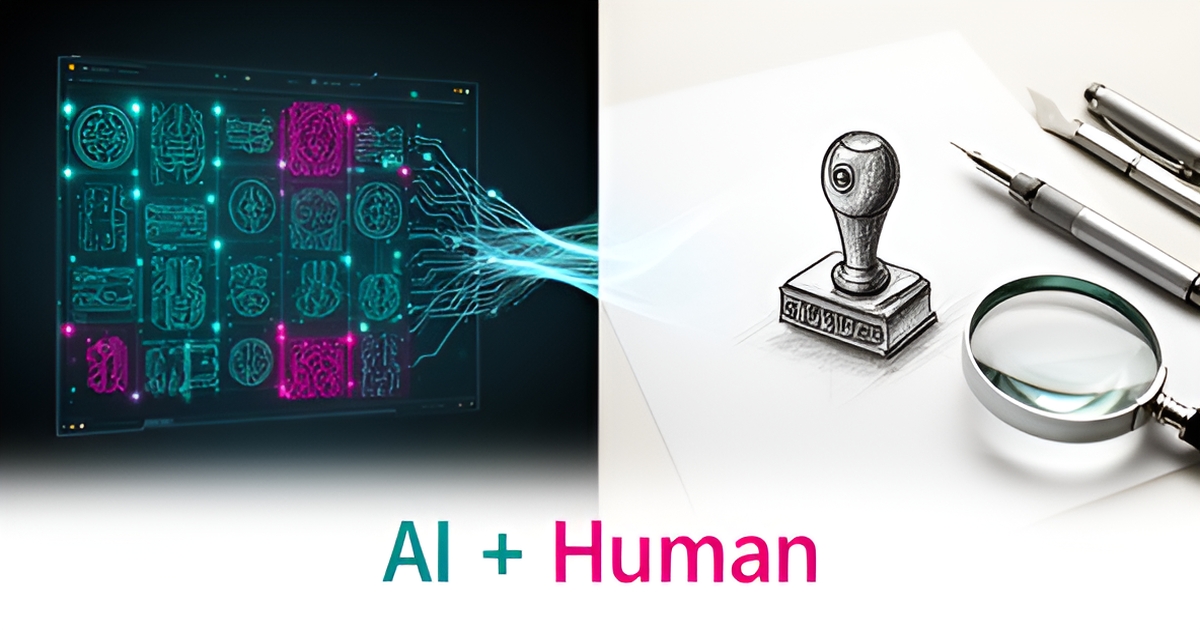
AI vs In-House Designers: Which Is Better for Custom Stamp Makers?
Key Facts
- As of late 2026, generative AI tools can execute a substantial share of routine design tasks at baseline quality, shifting the designer's value toward judgment and curation.
- In-house designers typically cost 25–35% above base salary once benefits and payroll taxes are included.
- AI can generate dozens of stamp design variants in minutes, sharply reducing manual vectorization and adaptation work.
- Many firms report that talent shortages slow their AI adoption, making managed or hybrid approaches attractive for small teams.
- Projects run by fixed-capacity teams frequently run over budget or schedule during demand spikes—an in-house designer has a hard capacity ceiling.
- Technical execution is no longer the differentiator; strategic judgment, taste, and curation are.
Hire a team member that works 24/7 — for less than a part-time wage.
AI receptionists, SDRs, dispatchers and 99+ roles. Trained on your business, fully managed.
Not sure where to start? Ask our AI planner
The Hidden Cost of In-House Design for Stamp Makers
Hiring an in-house designer seems like the obvious path for a growing stamp business, but the true cost extends far beyond a monthly salary. When you factor in benefits, continuous training, and the opportunity cost of idle time during slow periods, that "affordable" hire becomes a significant operational anchor.
The financial burden starts with compensation but quickly compounds. As of late 2026, generative AI tools can execute a substantial share of routine design tasks at baseline proficiency. That means you may be paying a full-time salary for capabilities that technology increasingly handles at a fraction of the cost. When you add benefits, payroll taxes, and overhead—typically 25–35% on top of base salary—your designer costs the business far more than their take-home pay suggests.
Then there is the relentless pressure of skills obsolescence. Design tools evolve rapidly, and continuous learning is now essential for designers to remain competitive. For a small stamp shop, this translates to ongoing training budgets and lost productivity while your designer upskills. Fall behind, and you are paying premium rates for outdated workflows.
The hidden costs of maintaining in-house design capacity include:
- Recruitment and onboarding expenses that recur with every turnover
- Idle capacity costs during slow periods when design work dries up but salary continues
- Software subscriptions and hardware upgrades required to stay current
- Management overhead for creative direction and quality control
Scalability presents another challenge. When a client requests 50 custom stamp variations by Friday, your in-house designer faces a hard capacity ceiling. Fixed-capacity teams routinely run over budget or schedule during demand spikes, and an in-house designer cannot instantly scale to meet them without burning out or missing deadlines.
Perhaps most critically, the role of designers is shifting fundamentally. Technical execution skills are no longer the differentiator—strategic judgment is. Maintaining an in-house designer purely for routine production work means paying specialist prices for tasks that AI now performs in minutes. The value has moved to curation and client consultation, not mechanical execution.
This is where hybrid models offer a strategic advantage. Rather than carrying the fixed cost of a full-time designer, stamp makers can deploy AI for rapid iteration and baseline execution while retaining human oversight for final quality control and client relationships. This approach removes the 40-hour weekly salary commitment while preserving the creative judgment that clients actually pay for.
Where AI Excels: Speed, Scalability, and Baseline Execution in Stamp Design
AI excels in stamp design when speed and scalability are critical, transforming what once took days into a matter of minutes. By generating dozens of design variants on demand, AI handles repetitive tasks like vectorizing logos, adapting patterns for different materials, and producing print-ready files with minimal manual intervention. This frees human designers to focus on higher-value decisions such as creative direction and client-specific refinements.
AI's strength lies in baseline execution, where it outperforms traditional methods in volume and consistency. For stamp makers managing high-volume orders or seasonal campaigns, this means producing multiple logo iterations or material-specific adaptations without bottlenecks. The technology doesn't replace creative judgment but removes friction from repetitive workflows, allowing teams to iterate faster and test more concepts early in the process.
- Generates dozens of design variants rapidly for quick client review
- Cuts manual effort sharply on repetitive tasks like vectorization
- Adapts designs for different materials (e.g., rubber vs. wood) to prevent production errors
- Produces print-ready files in minutes instead of days
- Lets human designers focus on curation and strategic decisions
This shift aligns with broader industry trends where AI handles execution while humans refine intent and quality. With modern generative tools, non-specialists can now produce baseline-quality design work, making strategic thinking and curation the new differentiators. For stamp makers, this means leveraging AI for scale and speed while reserving human expertise for what truly matters: understanding client needs, ensuring brand alignment, and making final judgments on which designs will work in practice. AIQ Labs supports this balance through AI Employees that manage routine design workflows, enabling teams to scale without sacrificing creative oversight.
Why Human Oversight Remains Essential for Creativity and Quality
AI can rapidly generate countless stamp design variations, but turning those outputs into meaningful, production-ready artwork requires human judgment. While AI excels at speed and volume—creating dozens of logo concepts in minutes—it lacks the nuanced understanding of brand voice, material constraints, and emotional resonance that skilled designers provide. This gap makes human oversight not just beneficial but essential for quality outcomes.
Designers act as critical curators in the AI workflow, evaluating which AI-generated options truly align with a client's identity and values. The designer's evolving role centers on taste, judgment, and knowing what's worth building rather than mere execution. For stamp makers, this means assessing whether a design will translate well from screen to rubber, wood, or metal—considering factors like line thickness, negative space, and ink bleed that AI cannot fully anticipate. Human intuition catches subtle flaws that automated systems miss, such as a logo that looks balanced digitally but loses clarity when stamped at small scale.
Moreover, designers ensure brand consistency across touchpoints, translating AI outputs into cohesive visual systems rather than isolated graphics. They apply strategic thinking to determine which elements should be standardized, adapted, or discarded—skills that remain uniquely human. AI may generate options fast, but only a designer can decide which one actually works in context and why. This curation function is where value now lies, especially as AI lowers the barrier to basic execution for non-specialists.
Finally, human oversight validates designs for real-world performance, anticipating how artwork will behave during the stamping process. Designers account for material-specific challenges—like how intricate details might fill in on soft rubber or how metallic inks interact with engraved surfaces—reducing costly rework and waste. Their ability to marry aesthetic intent with practical constraints ensures that final stamps not only look good but function reliably in production. Without this layer of expert review, even the most visually striking AI-generated design risks failure in application.
The Hybrid Model: How AIQ Labs Combines AI Efficiency with Human Expertise
For custom stamp makers, the ideal solution isn't choosing between AI and human designers—it's combining both through a hybrid model that leverages AI for rapid ideation while preserving human oversight for creativity and quality. AIQ Labs delivers this approach through managed AI Employees that handle design generation and automation, paired with human-in-the-loop supervision to ensure strategic alignment and brand integrity. This mirrors the broader industry shift where designers are evolving from executors to editors who use AI as a sparring partner to generate options while retaining responsibility for curation and judgment.
The hybrid model addresses core pain points: AI accelerates concept generation—producing dozens of stamp variations in minutes rather than hours—while human experts refine outputs for technical feasibility, material compatibility, and client-specific needs. It also sidesteps the talent shortage that leaves many small firms unable to adopt AI on their own, since the system is built and managed for you rather than requiring in-house AI expertise.
AI handles volume and speed; humans provide taste, judgment, and strategic direction. For stamp makers, this means AI employees can generate 10+ design concepts per client brief—far exceeding what a single designer could produce manually—while human reviewers apply expertise in typography, layout principles, and brand consistency to select and refine the strongest options. The result is faster turnaround without sacrificing the nuanced creativity that defines premium custom stamps, particularly for complex logos, monograms, or intricate patterns requiring material-aware adjustments.
AIQ Labs offers three ways to adopt this model, depending on where design sits in your operation. AI Employees provide managed AI staff for routine design and production workflows at a fraction of the cost of a human hire. If one specific workflow—say, order intake through design proofing—is where money leaks, a fixed-price Workflow Build rebuilds it in phases. And for shops ready to connect design, orders, and production into one system, an AI Operating System is built in phases and owned outright—no vendor lock-in, no subscription chaos. Payment models are flexible: start monthly, build in milestones, or own the system outright.
To explore how this hybrid model applies to your stamp-making business, start with the two-minute Fit Check at https://aiqlabs.ai/apply, then schedule your free 30-minute strategy call—no obligation, just clarity on your AI opportunity.
Still paying for 10+ subscriptions that don’t talk to each other?
We build custom AI systems you own outright. No vendor lock-in. Full control.
Not sure where to start? Ask our AI planner
Frequently Asked Questions
What's the real cost difference between hiring an in-house designer and using AI for my stamp business?
Can AI actually handle the technical requirements of stamp design like vectorization and material adaptation?
If AI can do so much design work, why do I still need human oversight for my custom stamps?
How does the hybrid model work practically for a small stamp shop without a big tech team?
Will using AI make my stamp designs look generic or template-based?
What happens when a client needs 50 stamp variations by Friday—can AI really scale that fast?
Design Smarter, Not More Expensively
The choice between AI and an in-house designer isn't about replacing creativity with automation—it's about where to spend your budget for real value. In-house teams carry fixed costs, idle capacity, and constant upskilling pressure, while AI now handles a large share of baseline design execution at a fraction of the cost. Where AI truly shines for stamp makers is speed and scalability: rapid variants, material adaptations, and print-ready files without bottlenecks. Yet human judgment remains irreplaceable for brand alignment, material feasibility, and the curation that turns options into orders. The most resilient stamp businesses are adopting a hybrid model—AI for volume and iteration, human oversight for taste and quality. If you're evaluating your design workflow, start by mapping which tasks are repetitive versus strategic, then test a hybrid approach on one high-volume client brief. To explore how this model applies to your shop, start with the two-minute Fit Check at https://aiqlabs.ai/apply and book a free 30-minute strategy call to identify high-ROI automation opportunities with no obligation.
Make AI your competitive advantage — not just another tool.
Strategy, implementation and ongoing optimization. One partner, end to end.
Not sure where to start? Ask our AI planner