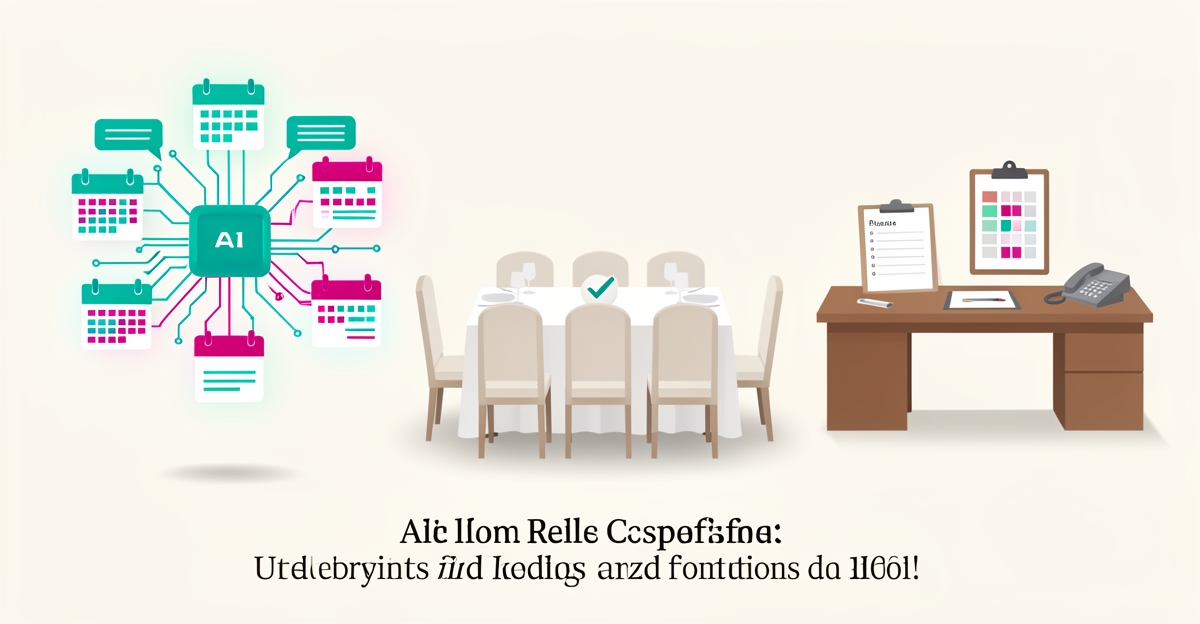
AI vs. In-House Staff: Which Is Better for Managing Event Bookings in Banquet Halls?
Key Facts
- AI is technology that enables computers and machines to simulate human learning, comprehension, problem solving, decision-making, creativity and autonomy per IBM
- Modern AI systems can perform advanced tasks that previously required human intelligence, including reasoning and multi-step workflows per Google Cloud
- AI employees typically cost a fraction of a human hire, AIQ Labs pricing runs roughly 80% less than an equivalent human role
- AIQ Labs has deployed 200+ multi-agent systems and runs 4 live SaaS products daily
Hire a team member that works 24/7 — for less than a part-time wage.
AI receptionists, SDRs, dispatchers and 99+ roles. Trained on your business, fully managed.
Not sure where to start? Ask our AI planner
The Hidden Cost of Slow Response Times in Event Booking Management
When event inquiries flood in during peak seasons, every minute of delay risks losing a booking to a competitor who responds faster. Modern AI systems are built exactly for this kind of work: as IBM defines it, AI is "technology that enables computers and machines to simulate human learning, comprehension, problem solving, decision-making, creativity and autonomy" per IBM, which includes reading an inquiry, checking availability, and responding in seconds.
In-house staff often struggle to maintain instant availability during high-volume periods, leading to missed opportunities. AI employees, by contrast, provide instantaneous 24/7 responses that capture leads competitors miss when human teams are offline or overwhelmed. When routine work is automated, human staff consistently report having more time for strategic, higher-value work, the pattern seen across organizations that delegate repeatable, low-value tasks to AI. This shift allows your team to focus on complex client interactions while AI manages routine inquiries.
- Automated booking confirmations sent within seconds of inquiry
- Real-time availability updates prevent double-bookings
- Instant follow-up messages nurture leads outside business hours
- Consistent response quality regardless of inquiry volume
- Seamless handoff to human staff for complex negotiations
By eliminating response delays, AI employees transform inquiry management from a reactive cost center into a proactive revenue driver. For banquet halls, the result is higher conversion rates, improved client experience, and reduced revenue leakage from slow response times, a competitive advantage that compounds during peak booking seasons.
Beyond Salary: Calculating the True Cost Per Lead for AI vs. Human Staff
When evaluating event booking management, the true cost per lead extends far beyond base salary or subscription fees. For in-house coordinators, total cost of ownership includes benefits, taxes, recruiting, training, and turnover, typically adding a significant premium on top of base compensation. These hidden expenses accumulate quickly, especially when staff require ongoing training on booking systems, CRM updates, and client communication protocols. In contrast, AI employees operate under a flat monthly fee that covers build, training, tool integrations, monitoring, and continuous improvement, eliminating variables like sick days, vacation time, or unexpected turnover.
This structural difference creates measurable efficiency gains. Delegating repeatable, low-value work to AI frees human capacity for higher-impact activities. Applied to banquet halls, this means AI can handle routine booking confirmations, calendar updates, and follow-up messages without fatigue or error, allowing human staff to focus on relationship-building, custom event design, and complex client negotiations.
- Benefits and taxes typically add a substantial premium on top of base salary for human employees
- Recruiting and training a single hire often costs thousands of dollars before they take a single booking
- AI employees work 24/7/365 with zero missed days or calls
The result is a lower, more predictable cost per lead. While human coordinators incur recurring expenses regardless of inquiry volume, AI employees scale instantly during peak seasons, managing unlimited concurrent booking requests without degradation in response time or quality. This operational consistency reduces wasted marketing spend from delayed responses and improves lead conversion velocity. For banquet halls evaluating staffing models, calculating true cost per lead requires looking beyond hourly wages to encompass the full lifecycle cost of maintaining capacity, reliability, and scalability, areas where AI employees demonstrate clear advantages in total cost of ownership. AIQ Labs' AI Employees run at roughly 80% less cost than an equivalent human hire, with pricing laid out plainly at aiqlabs.ai/pricing.
Scaling Without Hiring: How AI Handles Seasonal Booking Surges
Every banquet hall manager knows the pattern: wedding season arrives, inquiry volume triples, and suddenly your best event coordinator is drowning in voicemails while prospective clients wait hours, or days, for a callback. That delay is where revenue quietly disappears.
The core limitation is structural. Human staff can only handle one conversation at a time, and their capacity ends when their shift does. An AI employee, by contrast, can manage many concurrent inquiries without any degradation in service quality, a distinction that becomes decisive during peak booking periods when every missed call represents a lost event worth thousands.
The mechanics behind this resilience come from event-driven automation: a booking confirmation, an availability calendar update, or a follow-up reminder triggers automatically the moment an event occurs, no staff member required to remember it. Google Cloud describes modern AI as a set of technologies that lets computers "learn, reason, and perform a variety of advanced tasks" that used to require human intelligence per Google Cloud, and responding to a 9 p.m. Saturday inquiry is exactly such a task.
This "if-this-then-that" architecture is what allows service quality to stay flat while volume spikes. When a Saturday evening inquiry arrives in the middle of your busiest month, the response is identical in speed and accuracy to one received on a quiet Tuesday morning. Consistency, not just speed, is what protects your reputation during peak season.
For banquet hall owners, the practical takeaway is this:
- AI handles the surge; your human coordinator handles the nuances that close the sale.
- Event-driven triggers eliminate the manual follow-ups that slip through during busy weeks.
- Service protocols apply uniformly regardless of inquiry volume, reducing human error under pressure.
- You scale capacity for peak season without adding payroll for the slow months that follow.
That last point matters most financially. Hiring seasonal staff means recruiting, training, and paying people whose workload collapses after the peak, costs that recur every year. An AI employee, delivered through a flat monthly plan that costs less than a part-time hire, scales up and down with demand and works 24/7/365. Teams like AIQ Labs build and manage these AI employees, 200+ multi-agent systems deployed to date, so venue owners can absorb seasonal surges while keeping their human staff focused on high-value client relationships.
The halls that thrive through peak season won't be the ones that hired the most, they'll be the ones that automated the repeatable and reserved their people for what only people can do.
Client Experience Trade-Offs: When Human Touch Beats Automation
When technology handles routine tasks, human staff gain the capacity to focus on what machines cannot replicate: genuine human connection. This shift allows banquet hall teams to invest more time in understanding client visions, managing complex event details, and creating memorable experiences that foster long-term loyalty.
AI excels at consistent, data-driven tasks like confirming bookings, sending automated reminders, and maintaining accurate availability calendars, functions that operate with precision around the clock. However, human staff remain irreplaceable for nuanced interactions requiring empathy, creative problem-solving, and personalized attention during high-stakes event planning conversations. When routine work is automated, teams consistently report more time for strategic, higher-value engagement, the core benefit of delegating repeatable tasks to AI.
- AI manages routine inquiries and confirmations with 24/7 availability
- Human staff focus on complex consultations and relationship building
- Seamless handoff between AI and humans ensures no client falls through gaps
- Combined approach maintains service quality during peak inquiry periods
- Staff gain bandwidth for creative event design and vendor coordination
The most effective banquet hall operations use AI to handle the predictable while empowering human teams to deliver the exceptional, creating a service model where technology amplifies rather than diminishes the personal touch that defines premium event experiences. AIQ Labs supports this balanced approach: start with a single AI Employee in a defined role, or go deeper with an AI Operating System that connects your whole booking workflow.
Your Next Step: Assessing AI Readiness for Your Venue's Booking Workflow
Booking a wedding or corporate gala is a high-stakes decision, and most venue owners know the pain of a missed call becoming a missed deposit. The question is no longer whether AI can handle event bookings, it's whether your venue is ready for it. Before committing to a full rollout, a structured readiness check helps you find out.
A practical starting point is to map your current booking workflow and identify where manual steps create delays. Every manual handoff in your process, confirming a booking, sending follow-up reminders, checking availability, is a candidate for automation.
Successful AI adoption also requires an honest look at feasibility, resources, and current capabilities. Assess your data availability, whether your existing tools (CRM, calendar, payment systems) can integrate via API, and whether your team is prepared to work alongside AI, handling exceptions and personal touches.
As you evaluate readiness, ask:
- How many booking inquiries go unanswered after hours or during peak season?
- Which steps in your booking process are purely repetitive, confirmations, reminders, availability checks?
- How much does each missed lead cost you in lost event revenue?
- Could your existing tools integrate with an AI system via API?
- Is your team prepared to work alongside AI, handling exceptions and personal touches?
This is where a structured evaluation makes the difference. AIQ Labs begins with a two-minute Fit Check, a quick discovery process that identifies your biggest booking bottleneck and whether an AI Employee or a Workflow Build is the right entry point. The goal is clarity, not a sales pitch; if there isn't a clear win, a good partner will tell you that too.
The most practical next step is a low-risk pilot. Rather than replacing your event coordinator overnight, deploy a single AI Employee in a defined role, answering inquiries, qualifying leads, or booking site visits, and measure results against your current baseline. Real numbers, discussed in a free strategy call, let you compare the investment against the cost of another hire without guesswork.
Start the two-minute Fit Check at aiqlabs.ai/apply, then book a free 30-minute strategy call at aiqlabs.ai/book to map your biggest booking bottleneck with an AI engineer. Prefer email? Reach the team at [email protected].
Turning Booking Delays into Your Competitive Edge
This article has shown that slow response times aren't just an inconvenience, they're a silent revenue leak for banquet halls, especially during peak seasons when every delayed reply risks losing a booking to a faster competitor. AI employees solve this by providing instant, 24/7 responses that capture leads human teams miss, while reducing the true cost per lead by eliminating variables like sick days, turnover, and training overhead. Beyond efficiency, AI handles routine tasks, confirmations, reminders, availability updates, so your human staff can focus on what they do best: building relationships, understanding client visions, and closing complex deals that require empathy and creativity. The result isn't just faster replies; it's a scalable, consistent system that turns inquiry management from a cost center into a proactive revenue driver, all while preserving the personal touch that defines premium event experiences. If you're ready to see how this could work for your venue, start with a two-minute Fit Check to assess your biggest booking bottleneck, then book a free 30-minute strategy call with an AI engineer to map your path forward, no obligation, just clarity. Start your Fit Check to begin.
Make AI your competitive advantage — not just another tool.
Strategy, implementation and ongoing optimization. One partner, end to end.
Not sure where to start? Ask our AI planner