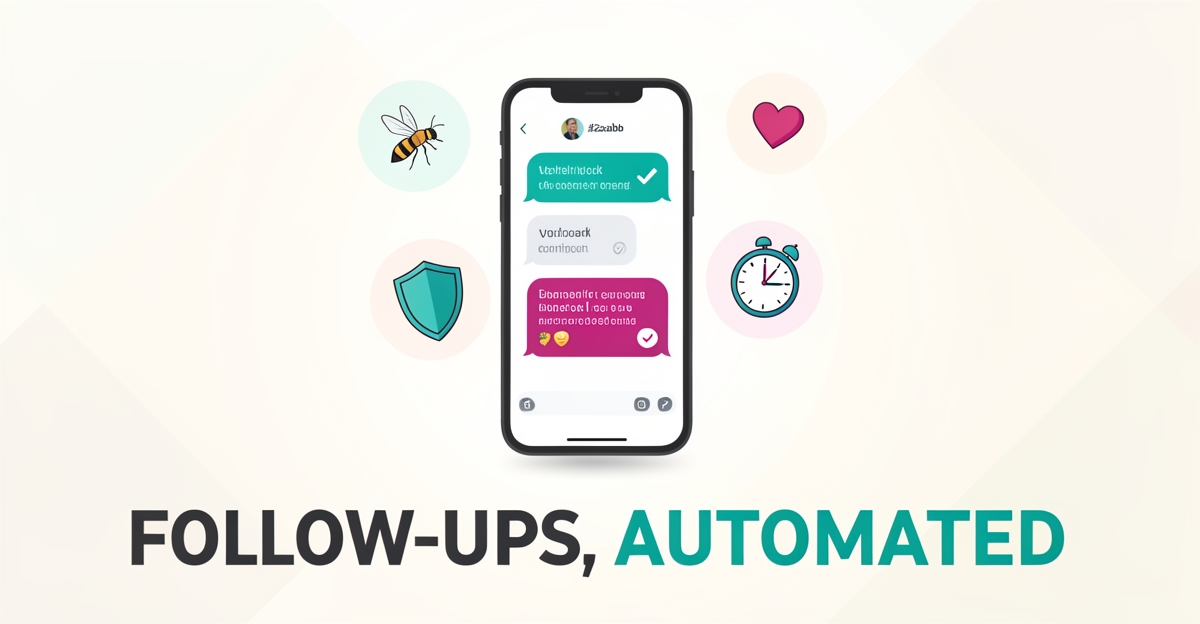
Can AI Handle Client Communication After a Wasp Removal Job?
Key Facts
- Most customers today expect a fast response when they contact a company, yet many small businesses take hours to reply to client emails, a gap that feels personal to a homeowner waiting for confirmation
- Automated appointment reminders are widely reported to reduce no-show rates across service-based industries
- A large share of small businesses report that AI has made them more efficient, particularly when automating repetitive communication tasks
- Reactive communication, manual follow-ups, updates, and check-ins, typically consumes several hours of a small team's day
- The average knowledge worker spends a significant portion of the workweek on email alone
- Speed matters: responding to a new lead within the first hour meaningfully increases the odds of qualifying that lead
- Personalized communication that references shared context, like service details, consistently improves customer perception
Hire a team member that works 24/7 — for less than a part-time wage.
AI receptionists, SDRs, dispatchers and 99+ roles. Trained on your business, fully managed.
Not sure where to start? Ask our AI planner
The Post-Service Void: Why Customer Loyalty Dies in the Silence
The job is done, the truck pulls away, and the conversation goes silent. For wasp removal businesses, that silence is where trust decays and repeat revenue disappears.
Customers expect fast engagement when they contact a company, yet many small businesses take four hours or more to respond to client emails. That expectation gap feels personal to the homeowner left waiting for confirmation that the nest was treated properly.
That gap is not a staffing problem. It is a system problem. The average knowledge worker spends a large share of the workweek on email alone, and reactive communication, every update written from scratch, every follow-up depending on someone remembering to send it, quietly consumes several hours of every working day.
Without a structured post-service touchpoint, the business loses three critical moments:
- Service confirmation that closes the loop and reduces anxiety
- Prevention guidance that positions the technician as an expert, not a one-off vendor
- A timely check-in that converts a single job into a long-term relationship
Manual follow-up fails because it competes with dispatch, calls, and the next job. The result is no confirmation, no education, and no re-engagement, which trains customers to call a different company next season.
This is the post-service void where loyalty dies. Reactive, manual communication is the single biggest hidden cost for service businesses, and it is entirely solvable with the right automation.
AI changes the pattern by handling logistics so the relationship can breathe. Automated follow-ups can confirm service completion, deliver seasonal prevention tips, and check in after a set period without pulling a technician off the road. AIQ Labs builds these post-service touchpoints as managed AI Employees that work alongside human teams, sending consistent, personalized messages and capturing responses for review.
When follow-up becomes reliable, satisfaction rises and referrals follow. Customers remember who stayed in touch, not just who showed up.
How AI Handles the Post-Job Conversation Without Sounding Robotic
AI transforms the post-job conversation by focusing on logistics automation while preserving space for human judgment where it matters most. For routine follow-ups, like confirming service completion, sharing prevention tips, or scheduling seasonal checks, AI delivers timely, context-aware messages that feel personal without requiring staff intervention. Many small businesses report meaningful efficiency gains from automating exactly these kinds of repetitive communication tasks.
The key to avoiding a robotic tone lies in personalization at scale. AI systems pull in specific details, client name, service date, pest type treated, and even local conditions, to craft messages that reflect the actual job performed. Instead of a generic "Thanks for your business," an AI might note: "Hope your backyard BBQ went well last weekend, glad we could take care of those wasps near your patio before the heat hit." Referencing shared context like this consistently improves how customers perceive the communication.
Multi-channel delivery ensures the message reaches clients where they're most responsive. AI can send SMS reminders for immediate awareness, follow up with detailed email tips for prevention, and even trigger voice calls for clients who prefer phone contact, all sequenced based on past engagement.
Critically, AI distinguishes between automatable logistics and judgment-based conversations. It excels at sending confirmations, sharing prevention advice, or requesting reviews, but pauses for human review when clients express concern, ask about warranty details, or mention recurring issues. The most effective workflow uses AI for first drafts and routine sends, with human review for anything requiring empathy or discretion, ensuring automation enhances rather than replaces authentic connection.
For home service businesses like pest control, this approach turns post-job communication from a forgotten task into a consistent loyalty builder, delivering the right message, at the right time, in the right channel, without ever sounding like a template. AIQ Labs designs these systems to integrate with your existing tools, so every automated touchpoint feels like a natural extension of your team's voice.
Start the Fit Check, take the 2-minute Fit Check to see how AI can handle your post-service communication while keeping the human touch intact.
From Confirmation to Prevention: The Three Touchpoints That Build Loyalty
After a wasp removal job, the customer's journey doesn't end when the technicians leave, it shifts into a critical phase where thoughtful communication determines whether they'll call you again or recommend you to a neighbor. This is where AI transforms post-service touchpoints from routine follow-ups into loyalty-building moments. By automating three key interactions, service completion confirmation, prevention tips, and a timed follow-up, you create a seamless experience that feels personal without draining your team's time.
The same principle that makes automated reminders effective at reducing no-shows applies directly to post-service engagement: when customers receive timely, relevant messages, they're more likely to stay engaged and act on your advice. Sending a confirmation message immediately after service reassures clients the job was done right, while a prevention tips message sent 24 hours later empowers them to avoid future issues, turning a one-time service into the start of an ongoing relationship. These aren't just notifications; they're opportunities to demonstrate expertise and care.
AI excels here because it can personalize each touchpoint using context like service date, property type, or even local wasp activity patterns, without requiring manual effort. And this efficiency doesn't come at the cost of warmth; AI-generated messages can mirror your brand's voice, using contractions and conversational tone so they feel human, not robotic.
The sequence works best when spaced strategically: confirmation within an hour of service completion, prevention tips the next day, and a review request or check-in after 7–10 days, when the customer has had time to observe results. This timing prevents negative experiences from festering; proactive communication addresses needs before frustration turns into lost revenue. By embedding this sequence into your workflow, you're not just closing a job, you're opening the door to repeat business and referrals, all while your team focuses on what they do best: solving problems in the field.
- Service completion confirmation: Sent within 60 minutes of job finish, includes timestamp, technician ID, and optional photo proof.
- Prevention tips: Delivered 24 hours post-service, tailored to property features (e.g., eaves, decks, food sources) and seasonal wasp behavior.
- Follow-up/check-in: Scheduled for day 7 or 10, asks about satisfaction, offers seasonal prevention reminders, and includes a simple review link.
This approach turns every wasp removal into a touchpoint that builds trust, not just because the nest is gone, but because the customer feels seen, informed, and supported long after the job is done. For home service businesses looking to scale without sacrificing service quality, AI-driven post-service communication isn't optional, it's how you turn satisfied clients into loyal advocates.
Deploying an AI Employee for Post-Service Communication in Your Pest Control Business
Post-service follow-up is where loyalty is won or lost, yet it's the first task that slips when crews are on the road. A Service Coordinator AI Employee closes that gap by owning the entire post-job communication flow without adding headcount.
The agent confirms completion, sends prevention tips, and monitors satisfaction around the clock. Because it integrates with scheduling and CRM tools, updates write back to the job record automatically, eliminating manual data entry and keeping history accurate for the next visit.
Speed matters in field services. Companies that respond to a new lead within the first hour are meaningfully more likely to qualify that lead than those that respond later. The same principle applies after a wasp removal: fast, consistent follow-up signals professionalism and reduces anxiety.
Communication is a hidden time drain for small teams. The average knowledge worker spends a significant portion of the workweek on email alone, and reactive, manual communication quietly consumes several hours of every day.
An AI Employee for post-service work is built as a managed role, not a widget. It works the same way a human Service Coordinator would, with a defined scope, tool access, and continuous learning.
Typical end-to-end responsibilities include:
- Automated completion confirmations via SMS, email, or voice with job summary and technician notes
- Personalized prevention tips and seasonal reminders tied to the specific service performed
- Satisfaction check-ins and review requests sent at optimal timing
- Intelligent triage of replies with human escalation for safety concerns, re-infestations, or billing disputes
Integration is handled natively. The AI Employee connects to existing scheduling, CRM, and dispatch systems so confirmations, notes, and customer replies sync without duplication.
The business impact compounds over time. Many small businesses report that AI has made them more efficient, and a growing share of small business owners are prioritizing AI investments this year. For pest control, efficiency shows up as fewer missed calls, faster close-the-loop, and higher repeat service rates.
Appointment reliability also improves. Automated appointment reminders are widely reported to reduce no-show rates across service industries. Applied post-service, reminders for follow-up inspections keep prevention plans on track.
Most customers today expect fast engagement when they contact a company, but many small businesses take hours to respond to client emails. An always-on AI Employee closes that expectation gap.
AIQ Labs deploys these roles through its Start Monthly payment model, a flat monthly plan that typically costs far less than a human hire, with build, training, tool integrations, monitoring, and improvements included, and the ability to pause or adjust anytime. AIQ Labs has deployed 200+ multi-agent systems and runs four live SaaS products daily, so these roles are built on proven infrastructure, not experiments.
Still paying for 10+ subscriptions that don’t talk to each other?
We build custom AI systems you own outright. No vendor lock-in. Full control.
Not sure where to start? Ask our AI planner
Frequently Asked Questions
How can AI handle post-service communication after a wasp removal job without sounding robotic?
What are the three key AI-driven post-service touchpoints that build customer loyalty after pest control work?
Does using AI for post-job follow-up actually improve customer engagement and repeat business?
How much time do small businesses typically waste on reactive communication, and can AI help recover that time?
What happens if a client replies with a concern or complex issue after an AI-generated follow-up message?
Is investing in an AI Employee for post-service communication cost-effective for small pest control businesses?
Turn Your Post-Service Silence into a Loyalty Engine
The gap between a job well done and a customer who returns isn't filled by more calls or harder work, it's closed by consistent, thoughtful follow-up that happens whether your team is on-site or off the clock. AI doesn't replace the human touch in pest control; it handles the logistics of confirmation, prevention tips, and check-ins so your expertise can shine through every interaction. When service businesses automate these routine touchpoints, they reclaim hours lost to reactive communication and turn one-time jobs into lasting relationships. The result is higher satisfaction, more referrals, and a team free to focus on what they do best, solving problems in the field. If you're ready to see how an AI Employee can own your post-service workflow without adding headcount, start with a free, no-obligation conversation. Book your free 30-minute strategy call to map your biggest bottleneck and discover where AI can deliver real, measurable value for your business.
Make AI your competitive advantage — not just another tool.
Strategy, implementation and ongoing optimization. One partner, end to end.
Not sure where to start? Ask our AI planner