Can AI Handle Custom Headlight Color and Finish Requests?
Key Facts
- Volkswagen Polo Modified Headlight with DRL and Projector Lamp sells for ₹37,777 on CarHatke down from ₹76,700
- Taiwan Maruti Suzuki Swift 2018 Modified Headlight with DRL is listed at ₹33,000 from original ₹49,560
- Renault Duster Modified Headlight with DRL and Projector Lamp is priced at ₹27,000 down from ₹49,560 original
- Mahindra New Thar 2010-2020 LED Headlight with DRL is offered at ₹27,000 from original ₹49,560
- AI headlight customizers let users upload photos and experiment with color and finish through preset styles
- Current AI tools focus on visual aesthetics rather than manufacturing specifications for headlight customization
Hire a team member that works 24/7 — for less than a part-time wage.
AI receptionists, SDRs, dispatchers and 99+ roles. Trained on your business, fully managed.
Not sure where to start? Ask our AI planner
The Gap Between Visualization and Specification
Visual previews are impressive. Manufacturable specifications are another story.
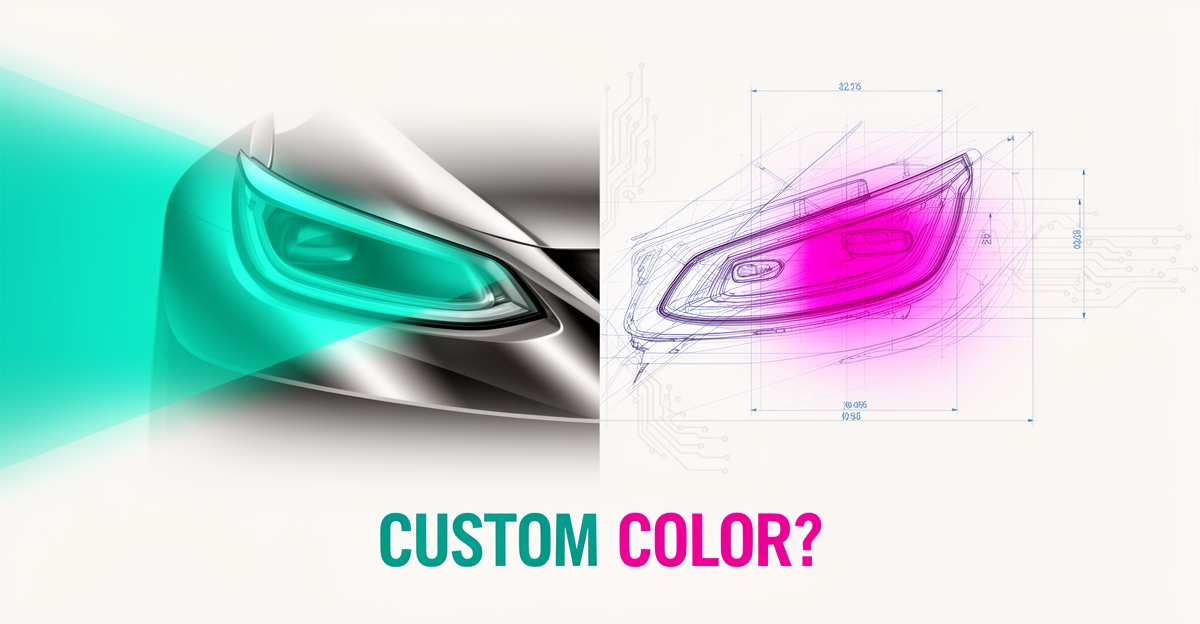
Today's AI car customizers let users upload a photo and experiment with headlight color, DRL additions, and finishes like chrome or carbon fiber. The algorithms render a realistic preview before any physical change is made. AI headlight customizer tools emphasize appearance first, with preset styles and text-prompt generation driving the experience.
That strength creates a clear boundary. The tools focus on visual aesthetics rather than the underlying technical aspects of headlight manufacturing or material science. Current customization options revolve around appearance, such as color, style, and lighting elements, with no explicit handling of material properties, lumen output, or complex design features.
Customers speak in nuance. They request a specific finish match, a particular gloss level, or compliance with regional lighting regulations. AI can render a convincing image, but it does not translate those requests into manufacturable specifications like polycarbonate grade, coating thickness, or photometric performance.
The gap shows up in real-world pricing and expectations. A Volkswagen Polo Modified Headlight with DRL and Projector Lamp is listed at ₹37,777, down from an original price of ₹76,700. Modified headlight listings highlight vision improvements and distinctive looks, not the spec sheet that makes those claims repeatable.
- Visual rendering without material data
- Color matching without spectrophotometric accuracy
- Finish selection without coating or durability parameters
- No regulatory compliance mapping for lumen output or beam pattern
For businesses selling custom finishes, this is where miscommunication grows. A customer approves a render, then expects a factory-accurate match that the preview cannot guarantee. AIQ Labs sees this pattern across quoting workflows, where visual confidence outpaces specification clarity.
Bridging the gap requires pairing generative visuals with structured service language. AI can assist in generating accurate service descriptions and quotes that translate a customer's aesthetic intent into clear, orderable options. That means capturing finish names, material constraints, and compliance notes alongside the image.
The tools are user-friendly and fast, but data dependency remains. Quality and accuracy of AI-generated results depend on the data used to train the algorithms. User-friendly interfaces with simple upload-and-select workflows accelerate ideation, yet they do not validate manufacturability.
Until models are trained on material properties and manufacturing processes, the visualization-to-specification step stays human-led. AI remains excellent at inspiration and preview, and limited at specification and compliance.
How AI Car Customizers Process Custom Requests Today
Today's AI headlight customizers work fast, but they stay firmly in the visual layer. The workflow is simple for users and narrow in scope for the model.
Users start by uploading a photo of their vehicle. The tool then offers a mode selection step, such as change color, match style, or add effects. After that, preset style application lets the user pick from curated finishes like chrome or carbon fiber and choose color swatches. The system generates a visual preview of the modified headlights for review and sharing.
The current experience is built around appearance, not production. AI car customizer tools enable users to upload images and experiment with modifications including color changes, adding daytime running lights, and applying different finishes. The focus remains on visual aesthetics rather than underlying technical aspects of headlight manufacturing or material science.
That gap is where human expertise remains essential. A rendered image does not specify lumen output, color temperature tolerances, lens material compatibility, or fitment constraints. Translating a customer's nuanced request for a custom finish into a producible quote still requires a specialist to validate feasibility, sourcing, and compliance.
In practice the workflow looks like this:
- Upload Image: a clear photo of the vehicle and existing headlight assembly is provided
- Select Mode: choose the customization mode, e.g., change color or match style
- Design Options: configure preferences for color, finish, and lighting elements
- Generate Design: the AI processes the request and returns a visual representation
The tools are user-friendly and fast, but they are limited by data dependency and the nuance of requests. Current AI tools primarily focus on visual aesthetics and do not address complexities of material science or manufacturing specifications. Accurately interpreting highly specific requests for headlight color and finish remains challenging for current algorithms.
Market context shows strong consumer interest in modified lighting. For example, a Volkswagen Polo Modified Headlight with Drl and Projector Lamp is listed at ₹37,777 on CarHatke, down from an original price of ₹76,700. Similar listings include a Taiwan Maruti Suzuki New Swift 2018 Modified Headlight at ₹33,000 from an original ₹49,560.
This is where AI assistance shifts from rendering to communication. AI can help turn a visual concept and customer notes into accurate service descriptions and quotes. A well-built system can draft clear, consistent copy that captures the requested finish and color intent, reducing miscommunication between the customer and the workshop.
Human review remains the bridge. Specialists confirm that the visual customization can translate to real-world manufacturing and installation. AI accelerates clarity, but it does not replace the judgment needed to produce a buildable, compliant headlight solution.
Where AI Adds Value in the Custom Headlight Workflow
Custom headlight requests often begin with a vision—whether it's a specific shade of midnight blue or a brushed titanium finish that catches the light just right. AI is now stepping in to bridge the gap between that initial idea and a tangible service proposal, especially in the early stages of visual ideation and preference clarification. By translating descriptive customer inputs into previewable concepts, AI reduces ambiguity before any physical work begins.
AI-powered visual customization tools allow users to upload vehicle images and experiment with headlight color, finish, and style in real time. These platforms enable rapid iteration on aesthetic preferences, letting customers preview options like chrome, carbon fiber, or custom paint without committing to physical samples. This accelerates the ideation phase by turning abstract requests into visual references that both customer and service provider can align on. According to AI car customizer platforms, this image-based approach supports intuitive exploration of design variables through simple upload-and-select workflows.
Beyond visualization, AI adds value by interpreting nuanced aesthetic descriptions and converting them into structured data for quoting and service documentation. When paired with product databases and pricing rules, AI can generate accurate descriptions of requested finishes—such as "matte black with subtle metallic flake" or "OEM-style smoked lens with red accent trim"—and link them to corresponding parts, labor estimates, and material costs. This minimizes back-and-forth clarification and helps ensure quotes reflect the true scope of the customization request. The ability to bridge descriptive language with technical specifications is where AI begins to deliver measurable efficiency in custom workflows.
For businesses integrating such capabilities into customer intake systems, the payoff is faster turnaround on quotes and fewer misunderstandings during the design approval phase. AI doesn't replace the need for expert validation—especially when it comes to material durability or light output compliance—but it does handle the front-end translation of customer intent into actionable service details. As AI models continue to train on broader datasets of finishes, textures, and real-world outcomes, their role in custom headlight workflows will likely expand from visual aid to trusted collaborator in the design-to-quote process.
Building an AI System That Bridges Visualization to Execution
Turning a customer's headlight vision into a build-ready order requires more than a visualizer — it demands a workflow that connects inspiration to inventory, pricing, and production data in real time. Current AI customizer tools let users upload a vehicle photo and experiment with color changes, DRL additions, or finishes like chrome and carbon fiber through simple interfaces. These visual previews are valuable, but they stop at the image layer; they don't translate a "gunmetal matte with amber DRL" selection into a SKU, a lead time, or a quote.
- Visual configurator linked to live product database and fitment logic
- Pricing engine that calculates cost based on finish complexity and hardware specs
- CRM integration that captures the configured design as a qualified lead
- Automated quote generation with production-ready specifications
- Human-in-the-loop review for edge cases before order confirmation
AIQ Labs builds these end-to-end systems through AI Workflow Builds, wiring the configurator to your CRM, catalog, and communication channels so the moment a customer finalizes a look, the order data flows automatically. Our AI Employees can then handle the follow-up — confirming specs, scheduling install, or answering fitment questions — around the clock without a human operator on shift. The same infrastructure behind 200+ multi-agent systems deployed for clients runs these custom workflows today.
Start the Fit Check to map your highest-friction customization workflow, or book a free 30-minute strategy call about bridging visualization to execution.
Still paying for 10+ subscriptions that don’t talk to each other?
We build custom AI systems you own outright. No vendor lock-in. Full control.
Not sure where to start? Ask our AI planner
Frequently Asked Questions
Can AI headlight customizer tools actually create manufacturable specifications for custom finishes like polycarbonate grade or coating thickness?
How accurate are AI-generated headlight color previews when it comes to matching specific finishes or gloss levels requested by customers?
Do AI car customizer tools account for regional lighting regulations like lumen output or beam pattern compliance when customizing headlights?
What role does AI play in turning a customer's custom headlight vision into a quote or service proposal?
Is human expertise still needed after using an AI headlight customizer tool to finalize a custom headlight order?
Can I trust the price shown in AI headlight customizer previews, like the ₹37,777 for a Volkswagen Polo modified headlight, to reflect the final cost?
From Pixels to Production
AI headlight customizers excel at inspiration but stop short of specification. They render stunning previews of midnight blue finishes and carbon fiber textures, yet they cannot translate those visuals into polycarbonate grades, coating thicknesses, or compliance-ready lumen outputs. For custom shops, this gap between what customers see and what can actually be built creates friction, misaligned expectations, and quoting delays. The solution isn't abandoning AI—it's bridging the visualization layer to your operational backend. When generative tools connect directly to product databases, pricing engines, and CRM systems, a customer's aesthetic approval instantly becomes a structured, orderable specification. AIQ Labs builds these end-to-end workflows, wiring visual configurators to inventory and quote generation so the moment someone finalizes a look, the production data flows automatically. If your team is manually translating customer screenshots into build sheets, start the Fit Check to map where automation can close the gap between preview and production.
Make AI your competitive advantage — not just another tool.
Strategy, implementation and ongoing optimization. One partner, end to end.
Not sure where to start? Ask our AI planner