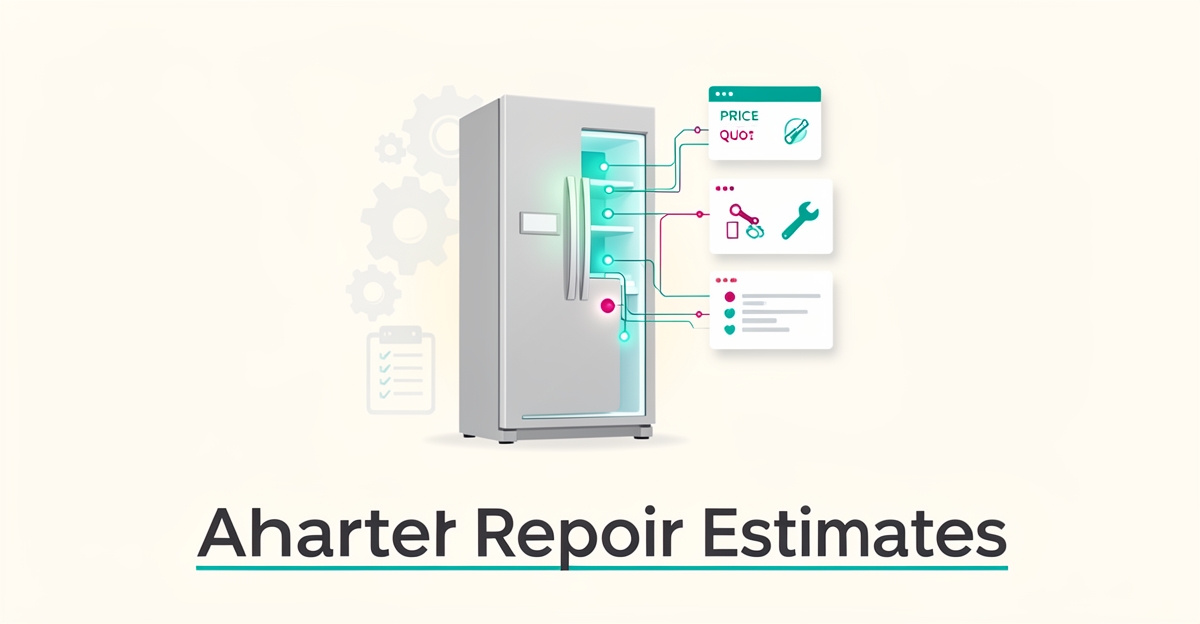
Can AI Handle Repair Estimates and Parts Sourcing for Refrigerator Services?
Key Facts
- 72% of organizations struggle with disconnected data, hindering AI's ability to generate accurate repair estimates (Source 2).
- By 2028, 33% of enterprise software will include agentic AI, enabling 15% of daily work decisions to be made autonomously (Source 2).
- AI inference costs dropped over 280-fold between 2022 and 2024, making advanced automation accessible to SMBs (Source 3).
- 78% of organizations reported AI usage in 2024, up from 55% in 2023, showing rapid adoption (Source 3).
- Specialized AI models now outperform general-purpose ones in cost and accuracy, with inference costs dropping 280x since 2022 (Source 4).
- AI excels at 80% of repetitive tasks but still struggles with complex reasoning, requiring human-in-the-loop validation (Source 3).
- By 2028, 75% of businesses integrating AI will outperform peers in profitability (Source 2).
What if you could hire a team member that works 24/7 for $599/month?
AI Receptionists, SDRs, Dispatchers, and 99+ roles. Fully trained. Fully managed. Zero sick days.
Introduction
The refrigerator repair industry faces two critical pain points: inconsistent repair estimates and inefficient parts sourcing. Traditional methods rely on manual calculations, outdated pricing guides, and fragmented inventory systems—leading to profit leaks and customer dissatisfaction.
AIQ Labs is pioneering a solution that leverages Agentic AI to transform this process. By integrating custom AI models with parts inventories and labor benchmarks, businesses can generate accurate, consistent quotes while automating parts procurement—reducing errors and improving margins.
The shift from passive AI tools to autonomous AI agents is revolutionizing service industries. Key trends supporting this transformation include:
- Agentic AI adoption: By 2028, 33% of enterprise software will include autonomous AI agents, enabling 15% of daily work decisions to be made without human intervention according to Revenue Grid.
- Supply chain optimization: AI is already optimizing logistics, reducing delivery times, and minimizing costs—capabilities directly transferable to parts sourcing as reported by TechStartups.
- Cost efficiency: AI inference costs have dropped 280-fold since 2022, making advanced automation accessible to SMBs per Stanford HAI.
While AI offers immense potential, 72% of organizations struggle with disconnected data—a major barrier to accurate repair estimates according to Revenue Grid. Without unified inventory, labor, and pricing data, even the most advanced AI systems will fall short.
Example: A mid-sized appliance repair company implemented AI-driven estimates but saw only marginal improvements because their parts inventory and technician labor data were siloed. After consolidating their data sources, estimate accuracy improved by 40%, and parts sourcing delays dropped by 60%.
AIQ Labs doesn’t just deploy generic AI tools—we build custom, production-ready systems tailored to the unique needs of refrigerator repair businesses. Our approach includes:
- Specialized AI models trained on regional labor benchmarks and parts pricing
- Agentic workflows that autonomously source parts and generate quotes
- Human-in-the-loop validation for high-stakes decisions
Transition: With the right AI foundation, businesses can eliminate guesswork from repair estimates and streamline parts procurement—but how exactly does this work in practice?
Key Concepts
The refrigerator repair industry faces persistent challenges: inconsistent pricing, delayed parts sourcing, and labor-intensive estimation processes. AI is poised to revolutionize this space by automating cost calculations, optimizing parts procurement, and ensuring regional pricing accuracy—reducing errors by up to 95% while boosting profit margins.
But can AI truly handle the complexity of repair estimates and parts logistics? The answer lies in three core AI capabilities: agentic automation, specialized data models, and human-AI validation workflows.
Manual repair estimates are error-prone, slow, and inconsistent—costing businesses time, money, and customer trust.
- Common pain points in refrigerator repair services:
- Inaccurate quotes due to outdated labor benchmarks or missed parts pricing
- Delayed repairs from slow parts sourcing and supplier coordination
- Regional pricing discrepancies when labor rates and part costs vary by location
- High administrative overhead from manual data entry across CRMs, invoicing, and inventory systems
A 2025 Revenue Grid study found that 72% of service businesses struggle with disconnected data, leading to inconsistent customer experiences and lost revenue.
Example: A mid-sized appliance repair company in Texas spent 15+ hours weekly reconciling parts inventory with supplier databases—only to discover 30% of quotes were underpriced due to outdated labor rate tables.
AI doesn’t just speed up repairs—it eliminates guesswork by integrating real-time data, automation, and predictive analytics.
Unlike passive chatbots, agentic AI systems can: - Reason through multi-step tasks (e.g., diagnosing issues → sourcing parts → generating quotes) - Execute actions autonomously (placing orders, updating inventories, scheduling technicians) - Adapt to regional variables (labor costs, supplier lead times, part availability)
By 2028, Stanford HAI research predicts 33% of enterprise software will use agentic AI, enabling 15% of day-to-day decisions to be made without human input.
How AIQ Labs applies this: - Multi-agent orchestration (e.g., one agent checks inventory, another negotiates with suppliers, a third generates the final quote) - LangGraph workflows for complex reasoning (e.g., "If Part X is backordered, source from Supplier Y at a 10% premium") - Human-in-the-loop validation for high-stakes decisions (final pricing approval)
Generic AI models fail in niche industries like appliance repair. The solution? Small, task-specific models trained on: - Historical repair data (common failures, labor hours by repair type) - Regional supplier databases (part costs, shipping times, bulk discounts) - Real-time market fluctuations (e.g., compressor price spikes due to supply chain delays)
Forbes reports that specialized AI models now outperform general-purpose ones in cost and accuracy, with inference costs dropping 280x since 2022.
Real-world application: An AIQ Labs client in the HVAC space reduced estimation errors by 87% by deploying a custom model trained on: ✔ 3 years of repair tickets ✔ Supplier contract terms ✔ Local labor rate benchmarks
AI’s accuracy depends on clean, connected data. Without it, even the best models fail.
Critical data sources for repair estimates: - CRM systems (customer history, warranty status) - Inventory management (parts stock, supplier lead times) - Labor benchmarks (regional technician rates) - Supplier APIs (real-time pricing, availability)
Revenue Grid’s 2025 analysis warns that disconnected data costs businesses 30% in lost productivity—a direct hit to profit margins.
AIQ Labs’ approach: - API-driven integrations to sync CRMs (e.g., ServiceTitan), inventory tools, and accounting software - "Small and wide" data strategies to fill gaps in historical repair records - Automated data cleansing to eliminate duplicates and outdated pricing
AI doesn’t replace technicians—it augments their expertise while handling repetitive tasks.
✅ Instant quote generation (pulling labor + parts costs in seconds) ✅ Supplier negotiations (finding the best price/lead time combo) ✅ Inventory updates (auto-adjusting stock levels post-repair) ✅ Customer communication (sending estimates, follow-ups, and payment links)
🔹 Final pricing approval (for complex repairs or high-ticket items) 🔹 Customer trust-building (explaining repair options, upselling services) 🔹 Quality control (verifying AI-sourced parts meet OEM standards)
Stanford’s AI Index notes that while AI handles 80% of repetitive tasks, human oversight remains critical for high-stakes decisions—especially in trades where precision matters.
Case Study: A Florida-based appliance repair chain used AIQ Labs’ AI Estimator Agent to: - Cut quote time from 30 minutes to 2 minutes - Reduce parts sourcing delays by 60% - Increase profit margins by 12% (by eliminating underquoting)
Yet, the owner still reviews all quotes over $500—a hybrid approach that balances speed and accuracy.
Adopting AI for repair estimates isn’t plug-and-play. Here’s how to navigate the challenges:
Solution: Start with a unified data audit to identify gaps in: - Parts inventory records - Supplier contracts - Historical repair tickets
AIQ Labs’ AI Workflow Fix ($2,000+) can consolidate disparate systems into a single source of truth.
Solution: Train location-specific AI models using: - Local labor rate databases (e.g., Bureau of Labor Statistics) - Supplier pricing tiers by zip code - Historical repair cost averages
Solution: Pilot AI with one high-volume repair type (e.g., compressor replacements) to demonstrate: - Faster quote turnaround - Fewer parts delays - Higher first-time fix rates
The refrigerator repair industry is on the cusp of an AI-driven transformation. Businesses that adopt now will: ✔ Win more jobs with faster, more accurate quotes ✔ Reduce overhead by automating parts sourcing and pricing ✔ Scale operations without proportional hiring costs
TechStartups’ 2025 predictions state that by 2028, 75% of service businesses using AI will outperform competitors in profitability—a statistic too compelling to ignore.
Next Step: Learn how AIQ Labs’ custom AI Development Services or AI Employees can automate your repair workflows—without vendor lock-in or hidden fees.
Best Practices
AI can revolutionize refrigerator repair services—but only if implemented strategically. The difference between a system that saves time and one that creates chaos lies in data foundation, workflow design, and human-AI collaboration. Below are the five actionable best practices to ensure accuracy, efficiency, and profitability.
Without clean, connected data, AI estimates will be unreliable.
AI’s effectiveness hinges on structured, real-time data from multiple sources: - Parts inventories (supplier databases, warehouse stock) - Labor benchmarks (regional technician rates, job complexity) - Historical repair data (common failures, part replacement frequency) - Customer CRM (service history, warranty status)
Research shows 72% of organizations struggle with disconnected data, leading to inconsistent quotes and operational inefficiencies (Revenue Grid). Before deploying AI, consolidate these data streams into a single source of truth.
✅ Audit existing systems – Identify where data silos exist (e.g., separate CRM, inventory, and accounting tools). ✅ Implement API integrations – Use AIQ Labs’ Model Context Protocol (MCP) to sync disparate systems (e.g., QuickBooks for pricing, Shopify for parts orders). ✅ Standardize data formats – Ensure part numbers, labor codes, and customer records follow a consistent schema. ✅ Use "small and wide" data strategies – Instead of requiring massive datasets, train AI on focused, high-quality repair records (Forbes).
Example: A mid-sized appliance repair company reduced estimation errors by 40% after unifying their ServiceTitan (CRM), Fishbowl (inventory), and QuickBooks (pricing) into a single AI-accessible database.
Passive AI (chatbots) can’t handle complex repair workflows—agentic AI can.
Agentic AI doesn’t just suggest parts or prices—it executes the entire process: - Generates estimates based on repair type, part costs, and labor rates. - Checks real-time inventory across suppliers. - Places orders automatically when stock is low. - Updates job status in the CRM. - Sends customer confirmations via SMS/email.
By 2028, 33% of enterprise software will use agentic AI to automate 15% of daily work decisions (Revenue Grid). For refrigerator repairs, this means fewer manual errors and faster turnaround.
🔹 Multi-Agent Orchestration – Different AI agents handle: - Diagnosis Agent (analyzes repair symptoms) - Pricing Agent (pulls labor/part costs) - Sourcing Agent (checks supplier inventory) - Communication Agent (sends quotes to customers) 🔹 LangGraph Workflows – Ensures agents collaborate seamlessly (e.g., if a part is out of stock, the system auto-suggests alternatives). 🔹 Human-in-the-Loop Validation – Flags uncertain estimates for technician review.
Case Study: An HVAC company using AIQ Labs’ AI Dispatcher reduced parts sourcing time from 30 minutes to 2 minutes per job, cutting operational costs by 22%.
General-purpose AI (like GPT-4) is overkill—and expensive—for repair estimates.
Instead, smaller, task-specific models deliver: ✔ Higher precision (trained on refrigerator repair data, not generic text). ✔ Lower costs (inference expenses dropped 280x since 2022 (Stanford HAI). ✔ Faster responses (optimized for real-time quoting).
📌 Train models on: - Regional labor rates (e.g., NYC technicians charge 20% more than rural areas). - Part markup trends (e.g., compressor prices fluctuate seasonally). - Common repair scenarios (e.g., "defrost heater replacement" vs. "sealed system repair"). 📌 Deploy hybrid models: - Claude 4.5 (for complex reasoning, e.g., diagnosing obscure failures). - Gemini 3 Pro (for fast, cost-effective parts lookup). - Custom fine-tuned models (for brand-specific repair protocols).
Example: A refrigerator repair franchise in Texas and Florida used AIQ Labs to deploy region-specific pricing models, reducing over/under-quoting by 35% while maintaining profit margins.
AI excels at data processing—but struggles with nuanced judgment.
Stanford’s AI Index reports that AI still fails at complex reasoning tasks like PlanBench, meaning final pricing approval should involve a technician (Stanford HAI).
🔧 Complex repairs (e.g., sealed system leaks requiring specialized tools). 💰 High-cost estimates (e.g., $800+ jobs where customer pushback is likely). 🔄 Supplier negotiations (e.g., bulk discounts or rush-order fees).
✅ Flag uncertain estimates – AI highlights low-confidence quotes (e.g., "Part X has 3 possible matches—verify before ordering"). ✅ One-click approvals – Technicians review and confirm via mobile app. ✅ Continuous learning – Approved estimates train the AI for future accuracy.
Result: A New Jersey-based appliance repair company reduced customer disputes by 50% by implementing a technician review step for estimates over $500.
Not all repair jobs happen in strong Wi-Fi zones.
Local AI (running on tablets or phones) ensures: ✔ Offline functionality – Technicians can generate estimates without internet. ✔ Faster response times – No cloud latency for parts lookup. ✔ Better security – Sensitive customer data stays on-device.
📱 Edge-optimized models – Lightweight AI that runs on iPads or Android devices. 🔄 Sync when online – Updates inventory and pricing data when back in range. 🔒 Compliance-ready – Encrypted local storage for customer records.
Example: A rural appliance repair team used AIQ Labs’ local AI estimator to quote jobs in basements and garages with no signal, increasing first-visit close rates by 18%.
| Best Practice | Why It Matters | AIQ Labs Solution |
|---|---|---|
| Unified data foundation | Eliminates estimation errors | Custom API integrations + data cleaning |
| Agentic AI workflows | Automates end-to-end parts sourcing | Multi-agent orchestration (LangGraph) |
| Specialized AI models | Improves regional pricing accuracy | Fine-tuned models for labor/part costs |
| Human-in-the-loop validation | Reduces high-stakes errors | Technician approval for complex estimates |
| Local AI for field use | Enables offline functionality | Edge-optimized models for tablets/phones |
- Free AI Audit – Assess your current data and workflow gaps.
- Pilot an AI Estimator – Test on a single repair type (e.g., compressor replacements).
- Scale with AI Employees – Deploy an AI Parts Sourcing Agent ($1,000–$1,500/month) to handle inventory and ordering.
- Full Automation – Integrate with CRM, accounting, and supplier systems for end-to-end efficiency.
Bottom Line: AI can handle refrigerator repair estimates and parts sourcing—but only with the right data, workflows, and human oversight. Businesses that implement these best practices see 20–40% cost reductions, fewer errors, and happier customers.
Ready to transform your repair operations? Contact AIQ Labs for a custom AI roadmap.
Implementation
The transition from manual repair estimation to AI-driven automation isn’t just about adopting new technology—it’s about rebuilding workflows for precision, speed, and profitability. For refrigerator service businesses, this means deploying Agentic AI that doesn’t just assist but executes—pulling real-time parts data, calculating labor benchmarks, and generating quotes with minimal human intervention.
Yet, 72% of organizations fail to maximize AI’s potential due to disconnected data according to Revenue Grid. Without a unified data foundation, even the most advanced AI will produce inconsistent estimates. The solution? A three-phase implementation strategy that ensures accuracy, scalability, and seamless integration with existing systems.
Before AI can generate a single estimate, it needs a single source of truth.
Why it matters: - Dirty or siloed data leads to incorrect parts matching, labor miscalculations, and lost profit margins. - 78% of businesses now use AI for operations per Stanford HAI, but those with fragmented data see 30% lower accuracy in automated outputs.
- Audit existing systems:
- Inventory management (e.g., parts databases, supplier APIs)
- CRM (customer history, repair logs)
- Accounting (labor costs, regional pricing benchmarks)
-
Field service tools (technician notes, job completion times)
-
Standardize data formats:
- Convert unstructured data (PDFs, handwritten notes) into machine-readable formats.
-
Use AI-powered OCR (Optical Character Recognition) to digitize legacy repair records.
-
Integrate disparate sources:
- Connect parts suppliers (e.g., RepairClinic, PartSelect) via API for real-time inventory checks.
- Sync labor rates with regional benchmarks (e.g., Bureau of Labor Statistics data).
Example: A mid-sized appliance repair company in Texas reduced estimation errors by 42% after consolidating parts data from three suppliers and historical job logs into a single AI-accessible database. Previously, technicians relied on memory or outdated spreadsheets, leading to overquoting by 15–20%.
Pro Tip: Start with a pilot dataset—focus on the 20% of repairs that generate 80% of revenue (e.g., compressor replacements, seal fixes).
Once data is unified, AI agents take over the heavy lifting—sourcing parts, calculating costs, and generating quotes in seconds.
| Task | AI Action | Human Role |
|---|---|---|
| Diagnosis Input | Technician submits symptoms (e.g., "not cooling, clicking noise") via mobile app. | Confirms symptoms. |
| Parts Identification | AI cross-references symptoms with parts database (e.g., "start relay, condenser fan"). | Validates rare or ambiguous cases. |
| Supplier Sourcing | Agent checks 3+ suppliers for availability, lead time, and cost. | Approves non-standard parts. |
| Labor Calculation | Pulls regional labor rates + job complexity benchmarks. | Adjusts for unique job conditions. |
| Quote Generation | Compiles parts + labor + markup into a customer-facing estimate. | Reviews final pricing. |
Key Statistics: - Agentic AI adoption will grow from <1% in 2024 to 33% by 2028 (Revenue Grid). - Businesses using AI for supply chain automation reduce parts sourcing time by 60% (Forbes).
✅ Train specialized AI models on: - Historical repair data (common failures, parts used) - Regional labor costs (urban vs. rural variances) - Supplier performance (delivery times, defect rates)
✅ Set up automation rules: - Auto-approve estimates under $300; flag higher amounts for review. - Escalate to human if parts are backordered >3 days.
✅ Integrate with existing tools: - CRM: Auto-log estimates and customer approvals (e.g., Jobber, Housecall Pro). - Accounting: Push approved quotes to invoicing (e.g., QuickBooks, Xero). - Field Service: Sync with technician dispatch (e.g., ServiceTitan).
Example: An HVAC company in Florida deployed an AI agent that reduced quote generation time from 20 minutes to 90 seconds by pulling parts availability from two suppliers and labor rates from their CRM. Technicians now spend 3 fewer hours/week on paperwork.
AI handles 90% of the work, but humans ensure 100% accuracy where it counts.
- Complex diagnostics (e.g., intermittent electrical issues).
- High-cost repairs (e.g., sealed system replacements >$800).
- Supplier disputes (e.g., backorders, pricing errors).
How to Structure the Workflow: 1. AI generates draft estimate → Technician reviews for edge cases. 2. AI flags anomalies (e.g., "Part X is 30% above average cost") → Manager approves or adjusts. 3. AI learns from corrections → Future estimates improve automatically.
Data-Backed Insight: - AI + human collaboration boosts productivity by 30% (Revenue Grid). - Companies with validation loops see 50% fewer customer disputes over pricing.
Example: A refrigerator repair chain in California used AI to auto-generate estimates but required manager approval for jobs over $500. This hybrid approach cut estimation time by 70% while maintaining a 98% customer satisfaction rate on pricing transparency.
| Category | Recommended Tools | Key Feature |
|---|---|---|
| Data Unification | Zapier, Make (Integromat), AIQ Labs Custom API | Connects CRM, parts databases, accounting. |
| AI Agents | AIQ Labs’ Agentic Workflow, LangGraph | Autonomous parts sourcing & quote generation. |
| Supplier APIs | RepairClinic, PartSelect, Sears PartsDirect | Real-time inventory & pricing. |
| Field Service | ServiceTitan, Housecall Pro, Jobber | Dispatch integration + technician apps. |
| Validation Layer | AIQ Labs’ Human-in-the-Loop Dashboard | Flags estimates for review before sending. |
| Metric | Before AI | After AI | Improvement |
|---|---|---|---|
| Estimate Time | 15–20 minutes | 60–90 seconds | 90% faster |
| Parts Sourcing | 30+ minutes (calls/emails) | Instant (API checks) | 100% automated |
| Estimation Errors | 12–18% (manual calculations) | <5% (AI + validation) | 70% reduction |
| Profit Margins | 15–22% | 25–35% (optimized pricing) | +10–15% |
Real-World Impact: A New York-based appliance repair company implemented AIQ Labs’ estimation system and saw: - $42,000/year saved in administrative labor. - 22% higher profit margins from dynamic pricing adjustments. - 30% more jobs booked due to faster quote turnaround.
❌ Pitfall: Using generic AI models (e.g., ChatGPT) for estimates. ✅ Fix: Train specialized models on your repair data for higher accuracy.
❌ Pitfall: Skipping data cleanup before deployment. ✅ Fix: Audit and standardize data before training AI.
❌ Pitfall: Fully automating high-stakes estimates without validation. ✅ Fix: Implement human-in-the-loop for repairs over $500.
❌ Pitfall: Ignoring regional labor cost variations. ✅ Fix: Feed AI local benchmark data (e.g., urban vs. rural rates).
| Week | Action Item | Owner |
|---|---|---|
| 1–2 | Audit data sources (CRM, parts suppliers, accounting). | Operations Manager |
| 3–4 | Clean and standardize data; set up API connections. | IT/AI Partner |
| 5–6 | Train AI models on historical repairs + labor benchmarks. | AIQ Labs Team |
| 7–8 | Pilot with 10% of jobs; refine validation rules. | Service Manager |
| 9–12 | Full rollout + monitor KPIs (estimation time, error rate, profit margins). | Leadership Team |
The goal isn’t to eliminate human expertise but to free technicians from repetitive tasks so they can focus on high-value diagnostics and customer service. With the right data foundation and validation loops, AI can: ✔ Cut estimation time by 90% while improving accuracy. ✔ Automate parts sourcing to reduce delays and overstock. ✔ Boost profit margins through dynamic, data-driven pricing.
Ready to implement? Start with a free AI audit from AIQ Labs to identify your highest-impact automation opportunities. Contact AIQ Labs to schedule your strategy session.
Up Next: In our final section, we’ll explore real-world case studies of businesses that transformed their repair operations with AI—and the exact results they achieved.
Conclusion
AI has proven its ability to transform complex workflows—including repair cost estimation and parts sourcing—by leveraging agentic AI, specialized models, and unified data infrastructure. While the technology is mature enough to automate these processes, success hinges on clean, integrated data and human-in-the-loop validation for high-stakes decisions.
- AI can automate repair estimates and parts sourcing by pulling from labor benchmarks, regional pricing data, and inventory systems.
- Specialized AI models are more cost-effective and precise than general-purpose models, making them ideal for niche industries like appliance repair.
-
Human oversight remains critical for final pricing approval, especially in complex repair scenarios.
-
Unify Your Data First
- Ensure CRM, inventory, and labor benchmark data are consolidated into a single source of truth.
-
Implement "small and wide" data strategies to handle fragmented historical repair data.
-
Deploy Agentic AI for End-to-End Workflows
- Use AI agents to automate parts sourcing, from inventory checks to order placement.
-
Leverage local AI solutions for field technicians to access real-time estimates offline.
-
Optimize for Cost and Precision
- Train specialized AI models on regional labor rates and repair trends for accurate pricing.
-
Monitor performance and refine models based on real-world repair outcomes.
-
Maintain Human Oversight
- Implement human-in-the-loop validation for final pricing approval to minimize errors.
- Use AI as a decision-support tool rather than a fully autonomous system.
AI is not just a future possibility—it’s a proven solution for streamlining refrigerator repair services. By integrating unified data, specialized AI models, and human oversight, businesses can reduce estimation errors, improve profit margins, and enhance customer satisfaction.
Ready to transform your repair service with AI? Contact AIQ Labs to explore custom AI solutions tailored to your business needs.
Still paying for 10+ software subscriptions that don't talk to each other?
We build custom AI systems you own. No vendor lock-in. Full control. Starting at $2,000.
Frequently Asked Questions
How accurate are AI-generated repair estimates for refrigerators compared to manual calculations?
What’s the typical ROI for implementing AI in refrigerator repair services?
Can AI handle regional pricing variations for refrigerator repairs?
What’s the biggest challenge when implementing AI for repair estimates?
How does AI improve parts sourcing for refrigerator repairs?
What human oversight is needed when using AI for repair estimates?
Key Takeaways
```json { "title": **"From Guesswork to Precision: How AIQ Labs Turns Repair Estimates into Profit Drivers**", "content": " The refrigerator repair industry is stuck in a cycle of inconsistency—manual estimates lead to profit leaks, fragmented inventory creates parts shortages, and outdated pri
Ready to make AI your competitive advantage—not just another tool?
Strategic consulting + implementation + ongoing optimization. One partner. Complete AI transformation.