Can AI Handle the Complex Compliance Requirements of Tobacco Distribution?
Key Facts
- Tobacco distribution is governed by overlapping federal, state, and provincial rules covering age verification, licensing, tax stamps, product tracking, and reporting
- Manual data entry and reporting consumes hours weekly and increases error rates—a pain point compliance teams across regulated industries consistently report
- ERP systems provide a foundation for compliance by automating documentation and streamlining data collection, but still rely on human validation for exceptions and change management
- Continuous monitoring enables audit-ready-by-design compliance systems, a principle emphasized in mainstream AI governance guidance
- AI agents transform compliance from a reactive burden into real-time risk control when paired with clean, structured operational data
- AIQ Labs has deployed 200+ multi-agent systems and runs 4 live SaaS products daily—compliance-grade automation is proven practice, not theory
Hire a team member that works 24/7 — for less than a part-time wage.
AI receptionists, SDRs, dispatchers and 99+ roles. Trained on your business, fully managed.
Not sure where to start? Ask our AI planner
Why Tobacco Distribution Compliance Is Breaking Manual Teams
Tobacco distribution operates under a dense web of federal, state, and provincial rules that touch age verification, licensing, tax stamps, product tracking, and reporting. Manual teams are expected to keep every shipment, retailer record, and regulatory update aligned while moving product fast. That tension is where compliance breaks down.
Compliance teams face recurring challenges: manual data entry and reporting, inconsistent documentation, and frequent regulation changes. These are the core pain points that create audit risk and operational drag across the industry. When rules shift, spreadsheets and siloed systems lag behind, exposing the business to penalties and shipment holds.
Manual processes create a compounding burden that grows with volume.
- Manual data entry and reporting consumes hours each week and increases error rates
- Inconsistent documentation across warehouses, distributors, and retailers makes audit readiness difficult
- Frequent regulation changes require constant retraining and process updates that teams struggle to track
The cost is not only operational. Industry surveys in regulated sectors consistently find that businesses with strong compliance programs treat them as a competitive advantage, not overhead—yet the same regulatory density that creates advantage also creates drag. Without real-time oversight, teams are always catching up.
Regulatory compliance also constrains technology adoption. IT leaders across industries repeatedly rank compliance concerns among the top barriers to realizing productivity gains from generative AI. For tobacco distributors, that means even basic automation stalls on the risk of non-compliance.
ERP systems can provide a foundation for reliable compliance management by automating documentation and reporting, streamlining data collection, and predicting compliance risks. In practice, however, ERPs alone still rely on human input for validation, exception handling, and change management. The gap remains between data capture and continuous risk monitoring.
This is where AIQ Labs comes in. Rather than a generic legal-tech pitch, the practical entry point is usually AI Workflow Builds: rebuild the one compliance workflow that costs you the most—regulatory reporting, license tracking, documentation assembly—at a fixed price, in phases. The goal is not to replace compliance staff but to remove the manual friction that creates exposure.
When controls are manual, audit readiness is a point-in-time event. Audit-ready by design requires systems that continuously monitor documents, flag deviations, and maintain traceable records as regulations evolve. That shift reduces the operational drag that currently defines tobacco distribution compliance.
Start the 2-minute Fit Check at aiqlabs.ai/apply to map your biggest compliance bottleneck, then book a free 30-minute strategy call.
How AI Agents Turn Compliance Into Real-Time Risk Control
Compliance in tobacco distribution isn't just about checking boxes—it's a constant battle against evolving regulations, fragmented documentation, and the high cost of manual oversight. AI agents are changing that dynamic by turning compliance from a reactive burden into a real-time risk control system. By continuously monitoring transactions, inventory movements, and regulatory updates across integrated systems, AI surfaces potential violations before they escalate—whether it's age verification gaps, tax reporting discrepancies, or licensing expirations. This proactive approach transforms compliance into a scalable, resilient foundation for confident, sustainable business growth.
In tobacco distribution—where audit readiness is non-negotiable—AI-powered monitoring ensures organizations aren't just prepared for audits, but consistently operating within regulatory boundaries. Unlike manual processes that are time-consuming and prone to errors, AI agents analyze data from ERP systems, shipping logs, and retail feeds in real time, flagging anomalies like unusual sales patterns to restricted regions or missing excise tax filings. These systems don't just detect risk—they predict it, using historical compliance data to anticipate where controls might fail under new regulations or supply chain shifts.
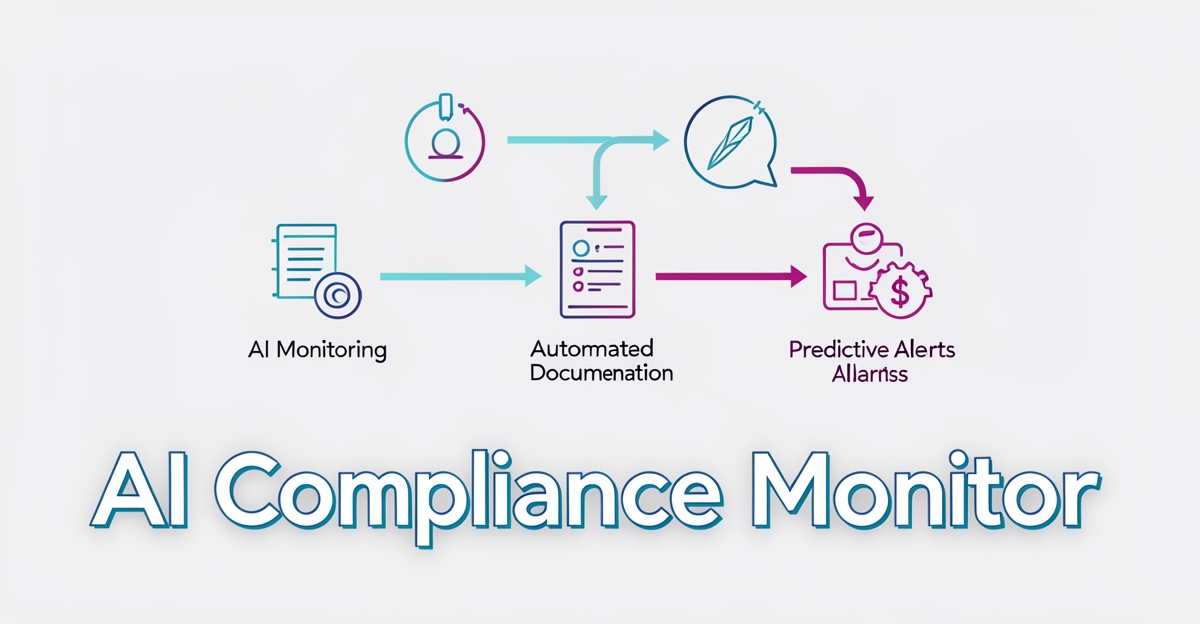
- Continuous monitoring of transactions and documentation for real-time risk detection
- Automated alerts for regulation changes impacting distribution workflows
- Audit trail generation that keeps organizations perpetually inspection-ready
- Integration with ERP systems to ensure data integrity and accurate reporting
- Predictive analytics that forecast compliance risks before they materialize
For tobacco distributors managing complex multi-jurisdictional requirements, AI doesn't replace human expertise—it amplifies it. Compliance teams shift from chasing paperwork to interpreting AI-generated risk insights, focusing on strategic decisions rather than repetitive data entry. Because compliance concerns rank among the top barriers to AI adoption for many IT leaders, the solution lies in purpose-built AI agents designed for regulated industries—those that embed governance, explainability, and human-in-the-loop controls from the start. When paired with ERP systems that provide clean, structured data, these agents deliver not just automation, but trustworthy, auditable compliance at scale. AIQ Labs builds these systems as owned assets—you own the system outright, with no rent extracted on your compliance infrastructure—and has deployed 200+ multi-agent systems across regulated and operational environments.
AI vs Manual Compliance: Accuracy, Speed and Cost Trade-Offs
Tobacco distribution lives under constant regulatory scrutiny, where a single documentation gap can trigger audits, fines, or shipment holds. That pressure forces compliance teams to choose between slow, manual oversight and faster, automated control.
Manual compliance keeps upfront costs low, but it remains time-consuming and prone to errors. Teams wrestle with manual data entry and reporting, inconsistent documentation, and frequent regulation changes. The approach offers familiarity and low initial investment, yet it struggles to scale as product lines, jurisdictions, and audit requirements multiply.
AI-powered compliance shifts the trade-off toward automated processes and improved accuracy. AI agents can continuously monitor systems and documents, surface risk early, and keep organizations audit-ready by design. The pattern is well established across regulated industries: automating controls, reducing manual effort, and delivering real-time oversight.
The business case is reinforced by market sentiment. Businesses with mature compliance programs increasingly describe compliance as a differentiator in regulated distribution, not merely risk mitigation. The distributors that scale confidently are the ones that stop treating compliance as a quarterly scramble.
Speed and accuracy gains come with new demands. AI implementation requires expertise, data quality discipline, and governance. Real challenges remain around model transparency, explainability, and integration with existing systems—which is exactly why vendor due diligence and phased builds matter.
In tobacco distribution, the practical differences show up daily:
- Manual: Periodic checks, spreadsheet tracking, and reactive reporting that lags regulation changes.
- AI-powered: Real-time monitoring across ERP and document sources with continuous flagging of deviations.
- Manual: Higher error risk under pressure and limited audit trails.
- AI-powered: Automated documentation, streamlined data collection, and predictive risk signals.
Cost profiles also diverge. Manual programs carry lower upfront cost but higher ongoing labor and error cost. AI programs require upfront investment and vendor due diligence, yet they reduce manual effort and support continuous compliance. AIQ Labs' payment models are built for this reality: Start Monthly to prove value, Build in Milestones so you only fund what's working, or Own It Outright when the system becomes core infrastructure. Details are on the pricing page.
For regulated industries with high audit requirements, the combination of ERP foundations and AI monitoring is critical. ERP systems can provide a foundation for reliable compliance management by automating documentation and reporting, streamlining data collection, and predicting compliance risks. AI layers on top to analyze diverse data sources and identify potential compliance risks in real time.
AIQ Labs works with regulated sectors where continuous monitoring and audit readiness are non-negotiable, building systems that monitor and flag compliance risks in real time rather than after the fact.
A Practical Roadmap to Implement AI Compliance Monitoring
A compliance program that only catches violations during quarterly audits is already too late. For tobacco distributors operating under dense federal and state regulations, the difference between catching a risk in real time and discovering it after the fact can be the difference between a correction and a penalty.
The good news: implementation doesn't have to be a leap into the unknown. It follows a structured path that compliance teams can move through deliberately, starting with what they already do today.
Step 1: Assess and Map Your Current Compliance Processes
Begin by auditing your existing compliance workflows in detail—manual data entry, reporting routines, documentation practices, and how regulation changes currently reach your team. The goal is to identify where AI can bring the most benefit. Most tobacco distributors find the pain concentrated in repetitive documentation and inconsistent record-keeping, which are precisely the areas where automation delivers the fastest returns.
Step 2: Set Clear, Achievable Objectives
Define what success looks like before selecting any technology. Rather than "improve compliance," aim for measurable targets: faster flagging of documentation gaps, automated reporting for specific regulatory filings, or continuous monitoring of shipment and inventory records. Clear objectives keep the project focused despite regulatory complexity.
Step 3: Conduct Vendor Due Diligence
Not every AI tool is built for regulated environments. When evaluating vendors and technology partners, dig into:
- Data quality requirements—AI outputs are only as reliable as the data feeding them
- Model transparency and explainability—you must be able to justify why a system flagged a risk
- Integration capability with your ERP and existing distribution systems
- Audit trail and documentation features that support regulator reviews
- Ownership terms—whether you rent the system forever or own it outright
Step 4: Establish AI Governance Before Deployment
Governance should be in place before the tool goes live, not after. This includes human-in-the-loop controls for critical decisions, defined escalation paths when AI surfaces a risk, and clear policies on data security and privacy. Mainstream AI governance guidance consistently treats governance frameworks as foundational to responsible deployment—a point that carries extra weight in an industry where regulators scrutinize every process.
Step 5: Deploy Real-Time Monitoring
With governance established, implement AI for continuous monitoring—integrating data from diverse sources across your distribution operation and using AI agents to analyze it, surface risk early, and keep your organization audit-ready by design. This is the shift from periodic, reactive checks to always-on oversight, and it's where AI transforms compliance from a cost center into a strength.
For distributors without in-house AI engineering resources, partnering with specialists matters. AIQ Labs builds compliance-monitoring systems with full audit trails, human-in-the-loop controls, and complete client ownership. Start with a single Workflow Build at a fixed price, or go further with an AI Operating System that connects compliance monitoring to the rest of your operation in phases. Where high-volume manual work is the bottleneck, AI Employees handle reporting and documentation roles at a fraction of the cost of a human hire.
The roadmap is straightforward; the discipline to follow it is what separates distributors who scale compliance confidently from those who keep patching manual processes.
Still paying for 10+ subscriptions that don’t talk to each other?
We build custom AI systems you own outright. No vendor lock-in. Full control.
Not sure where to start? Ask our AI planner
Frequently Asked Questions
Can AI actually keep up with tobacco distribution compliance rules?
Is manual compliance cheaper than AI-powered compliance?
What's the biggest pain point teams face with tobacco compliance right now?
Do we need an ERP system in place before adding AI for compliance?
How do we start implementing AI compliance monitoring without a big leap?
Will AI replace our compliance staff?
From Compliance Cost Center to Competitive Edge: The AI Shift
Tobacco distribution compliance doesn't have to be a reactive burden that drains resources and creates audit risk. Manual processes struggle with fragmented documentation, frequent regulation changes, and the sheer volume of data required to stay audit-ready. AI agents offer a practical shift—continuously monitoring transactions, flagging deviations in real time, and turning compliance into a proactive control system that reduces manual effort while improving accuracy. For distributors ready to move beyond periodic checks, the path forward starts with assessing current workflows, setting clear objectives, and partnering with specialists who understand regulated industries. AIQ Labs helps tobacco distributors build owned, audit-ready systems—200+ multi-agent systems deployed, with payment models that let you start monthly, build in milestones, or own it outright. Start your Fit Check to map your biggest compliance bottleneck, then book a free 30-minute strategy call and see where AI can deliver the fastest returns.
Make AI your competitive advantage — not just another tool.
Strategy, implementation and ongoing optimization. One partner, end to end.
Not sure where to start? Ask our AI planner