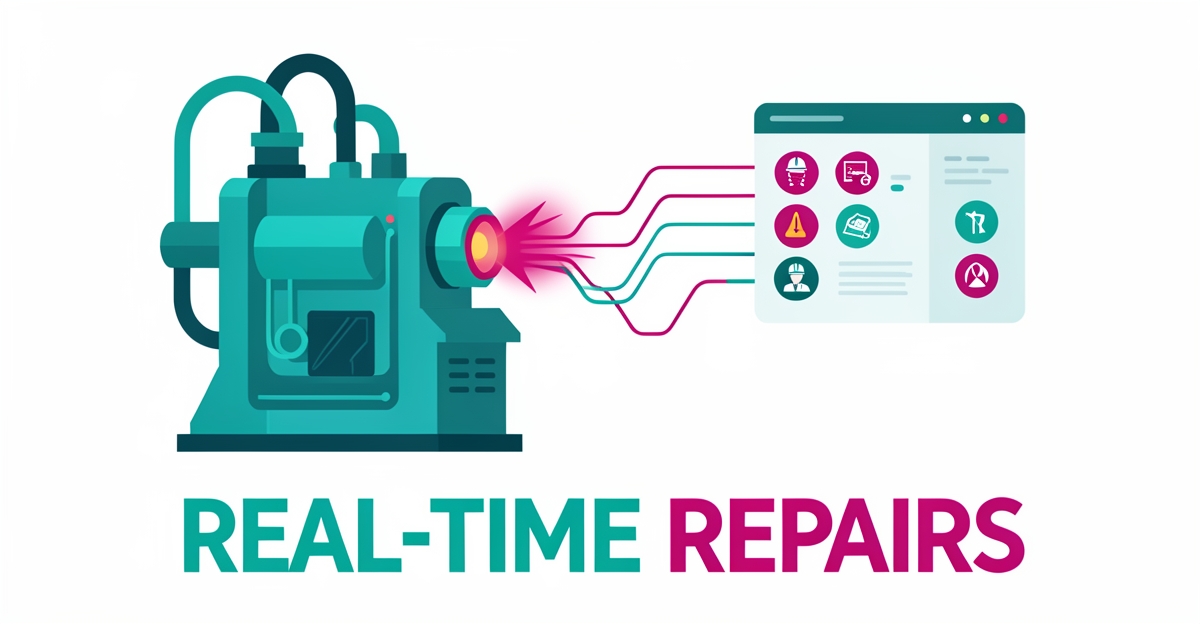
Can AI Manage Emergency Repair Requests in Real Time? A Look at AI's Real-World Capabilities
Key Facts
- AI triage can classify and route an emergency ticket in seconds, versus hours under manual voicemail-and-callback processes.
- Predictive maintenance with AI typically reduces unplanned downtime and yearly maintenance costs significantly compared to manual checks.
- Automated classification keeps a gas leak from sitting in the same queue as a clogged drain.
- Human-in-the-loop escalation preserves oversight for high-risk, low-confidence situations.
- AI works best as an augmentation tool, not a full replacement for human judgment in high-stakes scenarios.
Hire a team member that works 24/7 — for less than a part-time wage.
AI receptionists, SDRs, dispatchers and 99+ roles. Trained on your business, fully managed.
Not sure where to start? Ask our AI planner
The Real Cost of Manual Emergency Repair Handling
A burst pipe at 2 a.m. doesn't wait for business hours, yet many maintenance operations still rely on voicemail trees and on-call rotations that leave tenants waiting and damage spreading. Manual triage processes create bottlenecks exactly when speed matters most, turning containable issues into major capital expenses.
- After-hours calls go to voicemail, delaying dispatch by hours
- Technicians arrive without the right parts or context for the job
- Small leaks become mold remediation projects
- No centralized visibility into recurring failure patterns
The financial impact compounds quickly. The gap between a tenant's first call and a qualified technician's arrival is where water damage, electrical hazards, and compliance violations accumulate. Operations that automate triage and dispatch typically see meaningful reductions in unplanned downtime and yearly maintenance spend compared to manual checks, not because the technology is magic, but because the lag is where the money goes.
Manual systems also struggle with prioritization. A clogged drain and a gas leak might sit in the same queue until a human sorts them, wasting critical minutes. Human-dependent sorting introduces inconsistency and delay, whereas automated classification routes emergencies to the right responder instantly. For property managers overseeing multiple sites, that difference determines whether an incident stays a repair ticket or becomes an insurance claim.
AIQ Labs sees this breakdown regularly in field service operations where dispatchers juggle phone lines, spreadsheets, and technician schedules simultaneously. The company's AI Employees include Dispatcher and Service Coordinator roles built specifically to close this response gap, integrating with existing CRM and scheduling tools so urgent requests trigger immediate, informed action, not another voicemail.
What AI Can Actually Do in Real Time (and What It Can't)
AI systems excel at rapidly processing incoming emergency repair requests through a series of automated steps that would take human agents significantly longer. The AI first identifies new tickets as they arrive from various channels, then immediately analyzes the content to understand the nature of the issue. This includes reviewing ticket descriptions, subject lines, and any attached information to extract key details about the equipment problem or service need.
Next, the AI performs client context lookup by accessing historical data about the customer and their equipment profile, enabling more informed decision-making. Based on this analysis, the system classifies the issue into predefined categories, assigns an appropriate priority level based on urgency and potential impact, and determines the optimal technician or team for routing. This end-to-end triage process happens in near real-time, dramatically reducing the delay between request submission and work order assignment.
- Tickets are classified and prioritized in seconds, not hours
- Client and asset history is pulled automatically for context
- Routing decisions account for skill, proximity, and workload
Despite these capabilities, AI has clear limitations in emergency repair management. The effectiveness of these systems depends entirely on the quality and completeness of the data they receive, poor data inputs lead to inaccurate classifications or missed priorities. Additionally, while AI can make highly accurate predictions and recommendations, its decision-making process can lack explainability, making it difficult for technicians to trust or verify automated assignments without transparent reasoning. These constraints mean AI works best as a powerful augmentation tool rather than a complete replacement for human judgment in complex, high-stakes scenarios. AIQ Labs builds these real-time capabilities into its AI Employees for field services, ensuring critical repair requests are promptly identified and routed while maintaining human oversight for final validation.
From Reactive Repairs to Predictive Prevention
The shift from reactive firefighting to predictive prevention represents one of the most profound operational transformations AI enables. Instead of waiting for a tenant to report a burst pipe or a critical HVAC failure, intelligent systems continuously analyze sensor streams, historical ticket patterns, and environmental data to surface anomalies before they escalate into emergencies. This approach doesn't just change when repairs happen, it fundamentally alters the economics of maintenance operations.
The financial impact is substantial. Organizations adopting AI-driven predictive maintenance typically report lower yearly maintenance costs and fewer labor hours spent on upkeep compared to manual approaches. Acting on early warnings rather than reacting to breakdowns also extends asset lifecycles and cuts overtime. The exact numbers vary by operation, but the pattern is consistent: catching failures earlier is cheaper than cleaning up after them.
- Continuous sensor monitoring catches vibration anomalies and temperature drift weeks before failure
- Historical ticket analysis reveals recurring failure patterns across asset classes
- Automated work order generation routes preventive tasks to the right technician with the right parts
- Inventory optimization ensures critical spares are stocked based on predicted failure modes
- Fewer emergency truck rolls through better scheduling and prevention
The operational ripple effects extend beyond the maintenance department. Reduced downtime, lower overtime, and extended asset lifecycles compound into real financial gains over time. For property managers and field service operators, this means fewer 3 a.m. emergency calls, more predictable scheduling, and technicians who arrive prepared rather than improvising. AIQ Labs builds these predictive alert systems into customer service channels so that when the AI detects an emerging issue, whether it's a pressure drop in a boiler system or an unusual vibration signature on a rooftop unit, the right technician gets dispatched with full context before a tenant ever picks up the phone.
Building a Real-Time Emergency Alert System: A Practical Walkthrough
An emergency call comes in at 2 a.m. and the difference between a quick fix and a costly outage is how fast the request is understood, prioritized, and routed. A real-time alert system removes the manual handoffs that slow response and lets urgent jobs reach the right technician immediately.
The workflow starts with identification. The AI system receives a new ticket request across phone, SMS, or chat channels and ingests the subject, body, and any attachments. It then reviews content using natural language processing to extract symptoms, equipment type, and location, while a client context lookup pulls service history and asset data for informed triage.
Classification and priority assignment follow a staged AI triage workflow. The model categorizes the issue and determines urgency and impact, which is where real-time decisioning matters most. When sensor and ticket data are combined, teams get earlier and more reliable warnings than manual checks alone can provide.
Routing decision logic matches the ticket to the most appropriate technician or team based on skill, proximity, and current workload. Assignment and notification happen instantly through integrated channels:
- Phone voice agent answers, qualifies, and creates the ticket while speaking with the customer
- SMS and chat confirmations deliver ticket numbers and ETA updates to the requester
- Technician alerts push via SMS, push notification, and phone call with work order details
- Dispatch system updates automatically so scheduling stays in sync
Human-in-the-loop escalation is built in for critical decisions. When confidence is low or the issue is high-risk, the system routes to a human dispatcher with a summary and recommended actions, preserving trust and compliance. This balance of automation and oversight is central to AIQ Labs' approach to real-time alert systems that integrate with customer service channels.
Implementation follows a practical path: connect intake channels, map the triage workflow to existing dispatch tools, train the model on historical tickets and equipment data, and enable technician alerting with configurable escalation rules. With the right integration, no critical issue goes unattended and response times improve across the board.
Start the Fit Check at aiqlabs.ai/apply, then book a free 30-minute strategy call to map your biggest bottleneck and identify high-ROI automation opportunities.
Getting Started: Proving the Win Before You Scale
Getting started doesn't require overhauling your entire systems, it starts with proving value in one critical workflow. For emergency repair requests, that might mean automating after-hours intake or real-time dispatch triggers. AIQ Labs recommends beginning with a single high-impact process, such as detecting urgent service needs from customer messages and instantly alerting technicians. This approach minimizes risk while delivering measurable results fast. Teams can validate the win in weeks, not months, before expanding to adjacent workflows like scheduling or follow-up.
Starting small allows businesses to see tangible improvements without disruption. When AI analyzes ticket content, client context, and urgency in real time, it routes issues faster than manual checks, often assigning work orders in seconds. Those gains build confidence in the system and create a foundation for scaling AI across departments. AIQ Labs' Workflow Builds are designed exactly for this: rebuild the one workflow that costs you the most, at a fixed price, in phases.
Prove the win before you scale, that's how sustainable AI transformation begins. AIQ Labs helps you start with a targeted workflow fix, integrate with your existing tools, and measure impact early. From there, you can expand to department automation or a full AI operating system, built in phases and owned outright.
Take the first step: Start the Fit Check, a two-minute assessment, then schedule your free 30-minute strategy call. If there's no clear win, we'll tell you that too.
Still paying for 10+ subscriptions that don’t talk to each other?
We build custom AI systems you own outright. No vendor lock-in. Full control.
Not sure where to start? Ask our AI planner
Frequently Asked Questions
Can AI really handle emergency repair requests in real time?
How does AI triage a 2 a.m. emergency call differently from a human dispatcher?
What happens if the AI makes a mistake or can't handle an urgent situation?
Is AI only useful for reacting to emergencies, or can it prevent them too?
How long until we see a return on investment from AI maintenance software?
Do we need to replace all our existing systems to use AI for emergency repairs?
From Emergency to Excellence: How AI Transforms Repair Response
This article has shown how AI eliminates the costly delays of manual emergency repair handling, turning frantic 2 a.m. voicemails into instant, informed technician dispatch through real-time triage, predictive alerts, and human-in-the-loop oversight. The shift isn't just about faster fixes, it's about moving from reactive firefighting to predictive prevention, where issues are resolved before tenants even notice a problem. For property managers and field service teams, this means fewer emergencies, more predictable operations, and technicians who arrive prepared every time. If you're ready to see where AI can close your biggest response gap, start with a free two-minute Fit Check to map your bottleneck, then schedule a no-obligation 30-minute strategy call with our team to explore high-impact automation opportunities tailored to your workflow. If there's no clear win, we'll tell you that too.
Make AI your competitive advantage — not just another tool.
Strategy, implementation and ongoing optimization. One partner, end to end.
Not sure where to start? Ask our AI planner