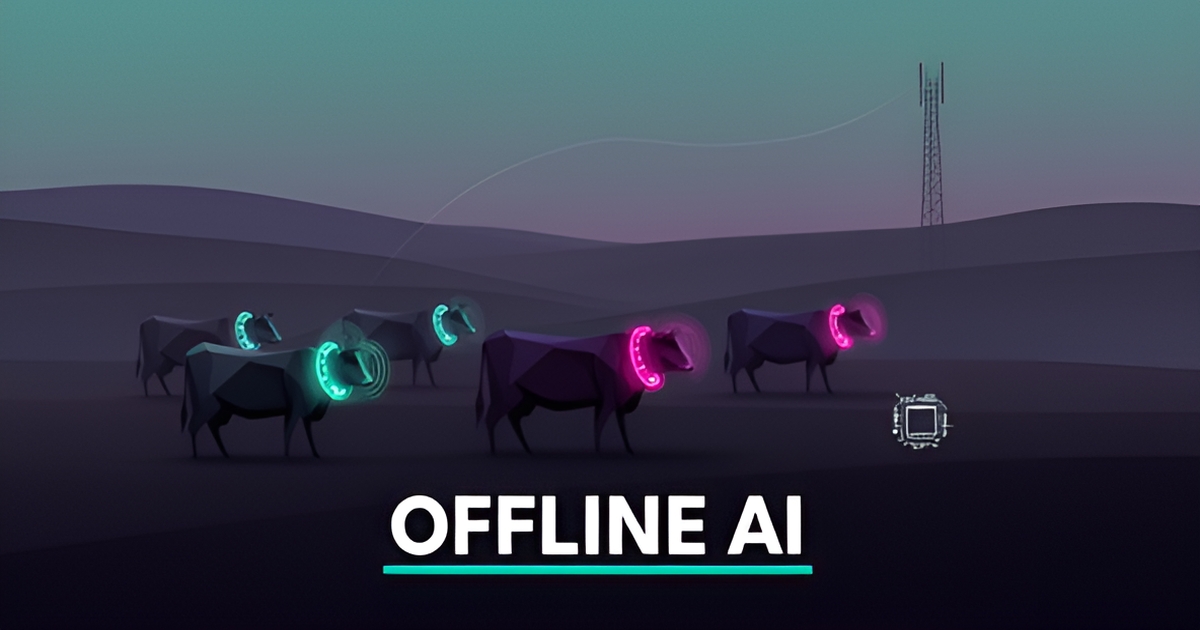
Can AI Really Monitor Cattle Health in Remote Areas?
Key Facts
- AI-powered biometric sensors continuously measure body temperature, respiration rate, and heart rate for real-time health insights according to industry analysis
- Machine learning models process historical and real-time health data to predict disease risks before clinical signs appear per industry findings
- AI-powered wearables like smart collars track movement, feeding behavior, and stress levels throughout the day as reported in industry coverage
- Automated imaging systems detect physical symptoms such as inflammation, abnormal gait, or posture changes using computer vision per industry analysis
- AI integration in livestock management leverages machine learning, computer vision, and IoT to enhance welfare and farm efficiency per Springer Nature research
- Continuous AI monitoring enables early disease isolation through automated imaging without stressing the animal per Springer Nature framework
- Offline-capable AI systems sync data when connectivity returns, ensuring health monitoring in remote ranch settings per industry coverage
Hire a team member that works 24/7 — for less than a part-time wage.
AI receptionists, SDRs, dispatchers and 99+ roles. Trained on your business, fully managed.
Not sure where to start? Ask our AI planner
The Connectivity Gap That Leaves Herds Unmonitored
Remote ranches do not get a warning call when the first animal spikes a fever. They get a dead calf and a vet bill weeks later.
Traditional cloud-dependent AI assumes constant connectivity. That assumption breaks the moment you leave cellular coverage, forcing a choice between expensive satellite infrastructure or zero visibility into herd health. The operational cost is not theoretical — it is delayed disease detection in low-connectivity zones.
AI-driven cattle health monitoring systems provide continuous, automated observation of individual animals and entire herds, enabling early disease detection and proactive herd health management. Industry coverage of AI livestock tools notes that AI-powered biometric sensors continuously measure vital indicators such as body temperature, respiration rate, and heart rate, providing real-time insight into animal health status. Machine learning models process historical and real-time health data to predict disease risks and recommend preventive measures.
In practice, that real-time loop collapses without a signal. Cloud-only architectures require constant upload of sensor streams, video, and audio to remote servers for inference. When the link drops, data queues locally, inference stops, and alerts never reach the rancher. The result is reactive treatment instead of prevention.
The integration of Artificial Intelligence into livestock management promises to improve agricultural practices by optimizing animal health, productivity, and welfare. Academic research on AI livestock frameworks describes a comprehensive AI framework that provides real-time data insights through continuous monitoring, predictive analytics, and automation. The same work identifies disease detection, welfare monitoring, and resource management as core application areas enabled by machine learning, computer vision, and IoT data integration.
For remote operations, the connectivity gap creates three compounding pressures:
- Delayed intervention windows as symptoms are only visible during manual checks
- Forced over-treatment of whole herds because individual risk cannot be confirmed
- Higher veterinary costs and production loss from outbreaks that could have been contained early
AI-powered health monitoring systems can help reduce veterinary costs by enabling targeted intervention rather than herd-wide treatment, ultimately improving herd longevity and stabilizing production output. Find in Food analysis of cattle monitoring also highlights that by continuously analyzing physiological and behavioral data, AI-based systems allow farmers to intervene before diseases spread or productivity declines.
This is where offline-capable design changes the equation. Rugged, edge-based AI can run inference on-device, log biometric and behavioral events, and sync data when connectivity returns, ensuring continuous health monitoring even in remote ranch settings. AIQ Labs builds systems designed for this reality — [AI Workflow Builds](/workflow-builds) can rebuild the one monitoring workflow that costs you the most, phased and fixed-price, with reliability in low-connectivity environments as a design requirement rather than an afterthought.
Without that resilience, the promise of AI for livestock remains a fair-weather tool.
How Offline-Capable AI Closes the Monitoring Loop
Remote ranches don’t get reliable signal, yet cattle health can’t wait for a bar to appear. Offline-capable AI closes that gap by moving intelligence to the edge, where biometric data is processed on-site and insights are stored until connectivity returns.
Edge-deployed systems fuse AI-powered biometric sensors that continuously measure vital indicators such as body temperature, respiration rate, and heart rate with computer vision models that assess gait and posture. Machine learning models process historical and real-time health data to predict disease risks and recommend preventive measures, enabling continuous, real-time health assessment without cloud reliance.
The architecture is designed for rugged, low-connectivity environments. Sensors and cameras mounted on collars, ear tags, or fixed stations capture physiological and behavioral signals locally. On-device CNN-based behavior analysis identifies anomalies such as abnormal gait or posture changes, while IoT data integration for livestock health monitoring combines temperature, heart rate, and movement streams into a unified health score.
When connectivity is available, the system syncs summarized insights and raw data bursts for deeper analytics. Until then, local storage preserves a complete monitoring loop. This approach mirrors the comprehensive AI framework proposed in livestock research that provides real-time data insights through continuous monitoring, predictive analytics, and automation.
Key components of an offline-first monitoring loop include:
- Edge inference engine running CNN models for behavior analysis and anomaly detection
- Biometric sensor fusion for temperature, heart rate, respiration and activity tracking
- Local storage buffer that queues insights until connectivity returns
- Rugged hardware enclosure rated for dust, moisture and temperature extremes
The result is proactive herd health management, reducing the need for reactive treatment and minimizing the spread of infectious diseases within herds. By continuously analyzing physiological and behavioral data, AI-based systems allow farmers to intervene before diseases spread or productivity declines.
AIQ Labs deploys rugged, offline-capable AI systems that sync data when connectivity returns, ensuring continuous health monitoring even in remote ranch settings. The design aligns with research showing that AI integration in livestock management leverages machine learning, computer vision, and IoT devices to enhance livestock welfare and farm efficiency.
For operations where signal is intermittent, the monitoring loop stays closed locally, and the business context remains intact when the network does.
From Detection to Intervention: What Continuous Monitoring Actually Changes
Imagine knowing a cow is sick before she shows a single visible symptom—and before the rest of the herd is at risk. That is the practical shift continuous AI monitoring delivers, turning ranch management from a cycle of crisis response into a discipline of early intervention.
The operational change begins with detection speed. According to industry analysis of AI-driven monitoring systems, biometric sensors continuously measure body temperature, respiration rate, and heart rate, while machine learning models process historical and real-time data to predict disease risks before clinical signs appear. Instead of discovering a sick animal during a weekly visual check—or worse, after an infection has spread—ranchers receive alerts that enable immediate isolation. This early warning capability directly reduces the need for herd-wide treatments; the same research notes that targeted intervention can replace blanket antibiotic protocols, cutting veterinary costs while slowing resistance.
The intervention window matters most in pasture-based systems, where cattle may roam far from handling facilities. Springer Nature research on AI livestock frameworks highlights how computer vision and IoT integration enable continuous behavior monitoring even in extensive grazing operations. When these systems operate offline—processing data locally and syncing only when connectivity returns—ranchers gain several operational advantages:
- Early disease isolation through automated imaging that detects inflammation, abnormal gait, or posture changes without stressing the animal
- Reduced antibiotic dependence by shifting from reactive, herd-wide treatment to individual animal care
- Optimized grazing patterns based on real-time movement and feeding behavior data
- Labor savings from automated observation that replaces manual patrols across remote terrain
These capabilities compound into proactive herd management. Rather than waiting for a calf to separate from the herd or a cow to stop eating—signs that often appear days after infection begins—AI flags subtle deviations in real time. The Springer framework emphasizes that predictive analytics and automation work together to transform raw sensor data into actionable health insights, enabling interventions that preserve productivity and animal welfare simultaneously.
For operations spread across remote pastures, this continuous vigilance eliminates the connectivity gap that once made digital monitoring impractical. AIQ Labs builds rugged, offline-capable systems that keep collecting and analyzing data even when miles from the nearest cell tower, syncing securely when networks become available. The result is a herd that stays healthier, treatments that stay targeted, and ranchers who spend less time searching for problems and more time preventing them.
Deploying Rugged AI Where the Cattle Are — Not Where the Wi-Fi Is
Remote ranches don’t have cell towers, and they don’t have IT teams. They have dust, distance, and animals that move.
Deploying AI for cattle health in those conditions means moving the intelligence to the edge, not waiting for the cloud.
Practical deployments start with rugged hardware built for the environment. Industry coverage of AI-driven cattle health monitoring describes AI-powered biometric sensors that continuously measure vital indicators such as body temperature, respiration rate, and heart rate, providing real-time insight into animal health status. The same systems use machine learning models to process historical and real-time health data to predict disease risks and recommend preventive measures.
Wearables make that continuous stream possible without handling animals daily. Reporting on optimizing cattle health with AI-driven monitoring systems notes that AI-powered wearables, such as smart collars or ear tags, track movement, feeding behavior, and stress levels throughout the day. Automated imaging systems complement these tools by using computer vision to detect physical symptoms such as inflammation, abnormal gait, or posture changes, enabling non-invasive and stress-free health assessments.
An offline-first architecture keeps monitoring alive when connectivity drops. The model that works in remote settings combines three layers:
- Solar-powered edge nodes that run inference locally and store data on-device
- Durable wearables and tags designed for cattle, with long battery life and rugged housings
- Store-and-forward sync protocols that upload batches when a gateway or vehicle returns within range
This approach aligns with how AIQ Labs builds owned, offline-first systems that integrate with existing ranch tools and scale without recurring per-head SaaS fees. Through [AI Operating Systems](/ai-operating-systems), ranchers get one connected operating layer built in phases and owned outright — data and infrastructure stay under their control rather than rented access.
Continuous, automated observation of individual animals and entire herds enables early disease detection and proactive herd health management, as highlighted in coverage of AI-driven cattle health monitoring systems. By continuously analyzing physiological and behavioral data, AI-based systems allow farmers to intervene before diseases spread or productivity declines, ultimately leading to healthier cattle and more resilient farming operations.
The result is health monitoring that does not depend on constant connectivity. Data is collected at the animal, analyzed at the edge, and synchronized when possible, giving ranch teams actionable alerts even in the most remote pastures.
Still paying for 10+ subscriptions that don’t talk to each other?
We build custom AI systems you own outright. No vendor lock-in. Full control.
Not sure where to start? Ask our AI planner
Frequently Asked Questions
Can AI really monitor cattle health without internet connectivity?
What happens to the health data when my cattle are in areas with zero cell signal?
How early can AI actually detect sickness in cattle compared to human observation?
What specific health indicators can AI track in free-range or pasture-based cattle?
Does remote monitoring actually reduce veterinary costs, or just add technology expenses?
Is this technology rugged enough to survive harsh ranch environments like dust, moisture, and extreme temperatures?
Where the Herd Roams, AI Should Follow
Remote ranching doesn’t pause for a signal, and neither should herd health monitoring. This article has shown how offline-capable AI closes the critical gap between technological promise and pasture reality—processing biometric data at the edge, detecting illness before symptoms appear, and syncing insights when connectivity returns. The result is earlier intervention, reduced antibiotic use, lower veterinary costs, and healthier herds without relying on constant cloud access. For ranchers tired of reactive vet bills and lost productivity, the shift to rugged, on-device intelligence isn’t just practical—it’s profitable. AIQ Labs builds exactly these kinds of owned, offline-first systems designed for dust, distance, and discrete deployment. To see how this approach could work for your operation, start with a [2-minute Fit Check](/apply), then book a free 30-minute strategy call to map your biggest bottleneck and identify where AI delivers real ROI—no obligation, just clarity. Questions first? Reach us at [email protected].
Make AI your competitive advantage — not just another tool.
Strategy, implementation and ongoing optimization. One partner, end to end.
Not sure where to start? Ask our AI planner