Can AI Replace a Human Compliance Auditor? The Truth About AI in Food Safety
Key Facts
- 60% of brands are predicted to use agentic AI by 2028 according to industry research
- Only 11% of organizations have successfully deployed AI agents as of recent industry analysis per TechRadar
- 40% of agentic AI projects are predicted to be canceled by 2027 due to unclear business value forecasts indicate
- 27% of organizations struggle with data quality undermining AI reliability platform data shows
- 62% of organizations are concerned about data privacy in AI systems compliance research reveals
- AI enhances auditors with predictive analytics, computer vision, and supply chain traceability while keeping human oversight central to validation
Hire a team member that works 24/7 — for less than a part-time wage.
AI receptionists, SDRs, dispatchers and 99+ roles. Trained on your business, fully managed.
Not sure where to start? Ask our AI planner
The Reality of AI in Food Safety Compliance: Why Full Replacement Isn't the Goal
The idea that an AI auditor can walk into a plant, inspect a line, and sign off on compliance on its own is still a headline, not a reality.
In food safety, AI is moving from data analysis support toward more autonomous actions, yet the gap between expectation and execution remains wide. Industry research predicts 60% of brands will use agentic AI by 2028, while only 11% of organizations have successfully deployed AI agents as of late 2026. That gap reflects the structural realities of regulated environments.
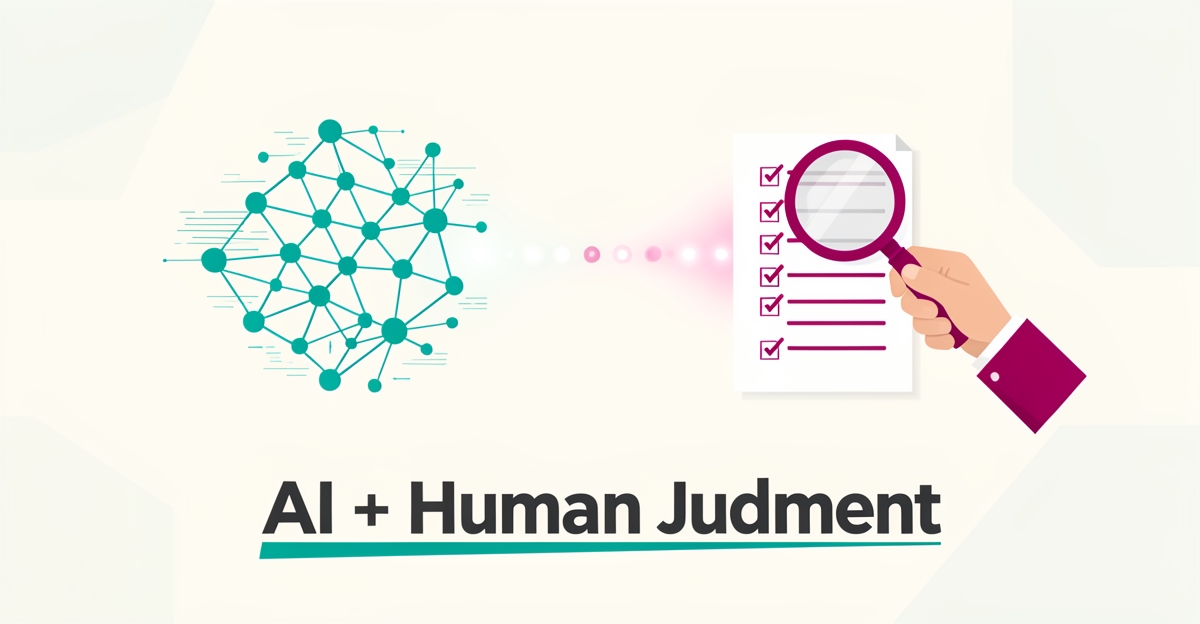
Full replacement is not the goal because food safety decisions demand accountability, context, and human judgment. AI augments auditors with speed, consistency, and pattern recognition, not a substitute for experienced professionals who validate outputs and handle exceptions. This is the realistic assessment AIQ Labs brings to every build: systems that support, not replace, compliance professionals.
Implementation challenges underscore why augmentation wins over automation alone. Organizations struggle with fragmented data, unclear decision ownership, and a lack of digital traceability. As TechRadar analysis notes, you cannot run an agent on fragmented data. You need a dynamic digital twin of operations in the form of a single, living data layer.
Data quality and governance are persistent constraints. Platform data shows 27% of organizations are struggling with data quality and 62% are concerned about data privacy. In food safety, those concerns translate directly into risk for audit trails, traceability, and regulatory trust.
Where AI adds measurable value today is as an augmentative tool:
- Predictive analytics for contamination risk based on historical and environmental data
- Computer vision for automated quality control and defect detection
- Supply chain traceability to identify contamination sources faster
- Compliance monitoring that flags regulatory gaps for human review
These use cases improve efficiency while keeping human oversight central to validation and escalation. Human expertise remains essential for interpreting edge cases, ensuring ethical considerations, and meeting requirements like the EU AI Act's emphasis on transparency and accountability.
The hype cycle also carries risk. Forecasts indicate 40% of agentic AI projects are predicted to be canceled by 2027 due to a lack of clear business value. The hard truth is many companies struggle to get AI to deliver real value because they haven't addressed underlying operational inefficiencies their systems are trying to solve.
In regulated food safety, the sustainable path is human-AI collaboration. AI handles repetitive monitoring, pattern finding, and documentation consistency. Auditors focus on judgment, investigation, and assurance. That partnership model delivers speed without sacrificing trust.
How AI Enhances Human Auditors: Speed, Consistency, and Pattern Recognition
The most effective food safety operations today share a common trait: their auditors spend less time on manual data collection and more time on the judgment calls that actually prevent contamination events. This shift isn't about replacing human expertise, it's about amplifying it through intelligent automation that handles the repetitive, data-heavy lifting.
Modern AI systems excel at predictive analytics for contamination risks, analyzing historical data and environmental factors to forecast potential safety issues before they escalate. Rather than manually reviewing months of temperature logs and supplier reports, auditors receive prioritized risk assessments that highlight anomalies requiring immediate attention. According to industry analysis, this represents a fundamental shift from AI as a passive tool to AI agents capable of autonomous monitoring and alerting.
Computer vision transforms quality control by automatically detecting defects in food products at speeds and consistency levels impossible for human inspectors. These systems don't get tired, don't have off days, and apply the same standards to the ten-thousandth inspection as they did to the first. The result is increased audit consistency across shifts, facilities, and product lines.
Supply chain traceability represents another critical application. AI systems track products through complex supply networks, creating the digital thread necessary to quickly identify contamination sources during an outbreak. However, compliance research indicates that 27% of organizations struggle with data quality issues that can undermine these systems. Success requires a unified data foundation, what experts call a "digital twin" of operations.
At AIQ Labs, we build multi-agent systems that handle these data-intensive tasks while maintaining rigorous audit trails, over 200 deployed to date. Our approach to real-time data processing ensures that compliance monitoring happens continuously, not just during scheduled audits. Whether that starts with a single workflow rebuild or a fuller AI operating system, this architecture supports:
- Automated compliance monitoring that flags regulatory deviations instantly
- Pattern recognition across supply chain data to identify hidden risk correlations
- Predictive modeling that forecasts contamination risks based on environmental variables
- Continuous documentation that maintains audit-ready records without manual entry
The goal isn't to remove humans from the loop but to elevate their role within it. When AI handles the repetitive monitoring and data synthesis, auditors can focus on complex risk assessments, supplier relationship management, and the nuanced judgment calls that require contextual understanding and ethical consideration. This human-AI collaboration creates a food safety framework that's both more efficient and more robust than either could achieve alone.
The Human-AI Partnership: Why Oversight and Process Redesign Are Non-Negotiable
The promise of AI in food safety is compelling, but reality demands more than technology alone. Successful implementation requires rethinking how humans and machines work together, starting with the data that fuels every decision. A significant 27% of organizations struggle with data quality, undermining AI's ability to deliver reliable insights in high-stakes environments like food safety compliance. Without clean, consistent, and accessible data, even the most advanced AI systems risk amplifying errors rather than preventing them.
This is where the concept of a digital twin becomes essential, not as a futuristic ideal, but as a practical necessity. As industry experts emphasize, you cannot run an effective AI agent on fragmented data; instead, organizations need a dynamic, real-time reflection of their operations to enable accurate, auditable decision-making. Building this unified data layer requires more than technical fixes, it demands process redesign, clear ownership of data flows, and investment in governance that ensures integrity across systems.
Yet even with strong data foundations, many AI initiatives falter. Research shows 40% of agentic AI projects are predicted to fail by 2027 due to unclear business value, often because teams automate broken workflows without first addressing underlying inefficiencies. In food safety, this might mean deploying AI to flag contamination risks while still relying on manual logbooks or siloed spreadsheets that delay action and obscure accountability. True progress comes not from layering AI onto outdated processes, but from reimagining those processes around human-AI collaboration.
This is where AIQ Labs provides critical value, helping organizations map decision points, redesign workflows for traceability, and embed human-in-the-loop controls that ensure AI augments rather than replaces expert judgment. By aligning technology with operational reality, food safety teams can move beyond automation theater to build systems that are not only efficient but genuinely compliant, auditable, and resilient. The future isn't AI replacing auditors, it's auditors empowered by AI to focus on what matters most: judgment, context, and continuous improvement.
Still paying for 10+ subscriptions that don’t talk to each other?
We build custom AI systems you own outright. No vendor lock-in. Full control.
Not sure where to start? Ask our AI planner
Frequently Asked Questions
Can AI completely replace a human food safety compliance auditor?
What is AI actually good at in food safety compliance right now?
Why do so many AI projects in regulated industries fail?
How ready are organizations to deploy AI agents for compliance work?
What data problems should we fix before using AI for food safety audits?
What role do humans play once AI is monitoring compliance?
The Auditor's Edge: Human Judgment Powered by AI
AI will not replace a human compliance auditor in food safety, and it shouldn't. The real value is in a partnership where AI handles repetitive monitoring, pattern finding and documentation consistency, while auditors focus on judgment, investigation and assurance. That model only works with clean, unified data, clear decision ownership and human-in-the-loop controls, because fragmented data and broken workflows are why 40% of agentic AI projects are predicted to be canceled by 2027 due to a lack of clear business value TechRadar analysis. For food safety teams, the practical next step is to map where speed and consistency create risk reduction, build a living data layer for traceability, and redesign processes around human-AI collaboration. AIQ Labs helps organizations move from pilots to production, whether that's a fixed-price workflow rebuild, an AI operating system you own outright, or AI employees handling the monitoring work at a fraction of the cost of a human hire. Start the Fit Check at aiqlabs.ai/apply for a free 30-minute strategy call to map your biggest bottleneck and identify high-ROI automation opportunities.
Make AI your competitive advantage — not just another tool.
Strategy, implementation and ongoing optimization. One partner, end to end.
Not sure where to start? Ask our AI planner