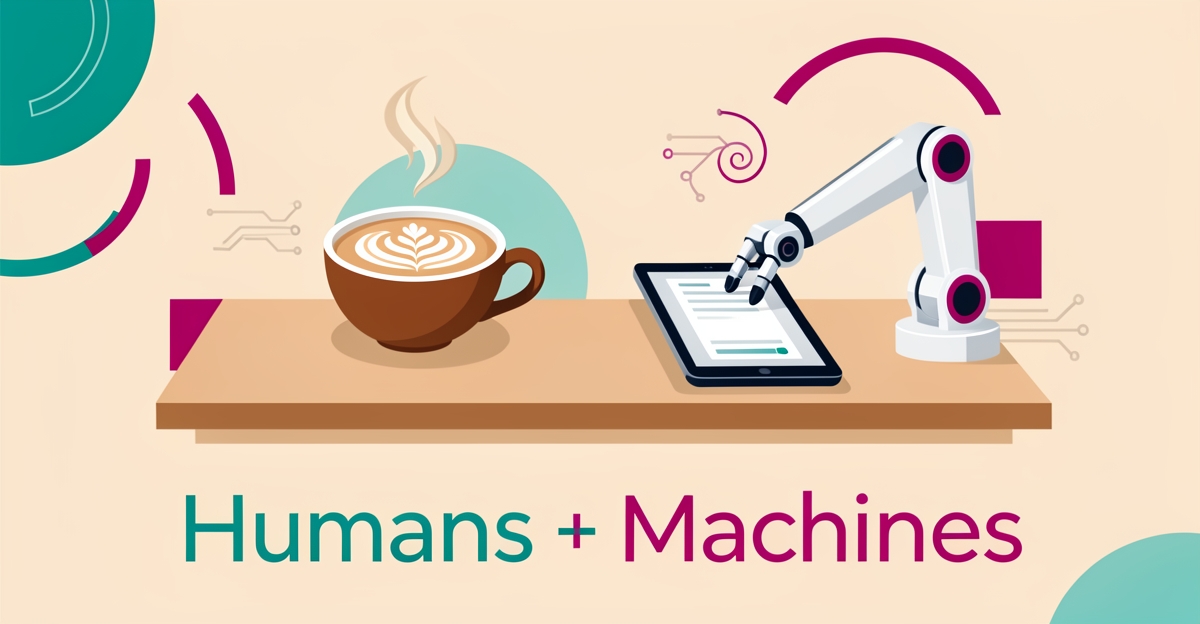
Can AI Replace a Tea House Barista? The Truth About AI in Customer Service
Key Facts
- A significant portion of barista tasks, order taking, standard drink prep, inventory, are typically automatable with current AI tools
- Barista employment has generally remained stable despite automation pressures, as of late 2026
- Baristas score highly on measures of human advantage, reflecting skills machines can't replicate
- Digital and mobile ordering now represents a large share of transactions at many locations, driving AI adoption
- Hospitality wages have risen notably since 2021, reflecting continued demand for skilled staff
- Convenience-focused coffee service is expected to see substantial automation by 2028, per industry forecasts
Hire a team member that works 24/7 — for less than a part-time wage.
AI receptionists, SDRs, dispatchers and 99+ roles. Trained on your business, fully managed.
Not sure where to start? Ask our AI planner
The Barista Displacement Myth vs Reality
Some industry analyses put a startlingly high displacement risk on barista work, and headlines love to repeat those numbers. Yet the figures don't tell the whole story. Barista employment has generally held steady despite automation pressures, and hospitality wages have risen notably since 2021, often outpacing inflation. This creates a tension where owners fear technological replacement while staff worry about becoming obsolete, even as demand for skilled baristas persists.
The reality is more nuanced than elimination. AI excels at handling routine tasks like standard drink preparation, mobile order processing, and inventory management, functions already demonstrated by systems such as Starbucks' Deep Brew AI and robotic barista platforms. However, the role is transforming rather than disappearing, with human baristas increasingly focusing on what machines cannot replicate: crafting latte art, remembering regulars' stories, resolving complaints with empathy, and creating the welcoming "third place" atmosphere that drives customer loyalty.
For tea house owners navigating this shift, the challenge isn't choosing between humans and machines but designing workflows where each plays to their strengths. AI can manage the predictable, high-volume aspects of service, like processing the digital orders that now make up a large share of transactions at many locations, while human staff concentrate on sensory evaluation, relationship building, and experience curation. This collaboration allows baristas to leverage AI as a tool that handles repetitive work, freeing them to develop expertise in areas like alternative brewing methods, direct trade sourcing, and tea education, skills that position them as irreplaceable specialists rather than operators at risk of displacement. Professionals who adapt by using AI effectively tend to thrive in this evolving landscape.
What AI Actually Does in Tea Houses Today
Tea houses today are seeing AI step into specific, well-defined roles that support rather than replace human staff. Systems like Starbucks' mobile ordering and Deep Brew AI already handle routine functions such as order taking, queue management, and inventory prediction with measurable impact, digital and mobile orders now represent a large share of transactions at many locations, reducing manual input and wait times. Robotic platforms like Rozum Cafe Robot and Briggo further demonstrate AI's ability to prepare standard drinks consistently, dispensing precise measurements for lattes, cappuccinos, and drip coffee every time.
These technologies excel at repetitive, rule-based tasks: processing payments, tracking ingredient levels, and optimizing workflow during peak hours. By automating these elements, AI frees baristas to focus on higher-value interactions that require emotional intelligence and craft. For example, AI-powered inventory systems analyze historical sales, seasonality, and local events to predict demand for milk, beans, and syrups, cutting stockouts and excess inventory substantially in comparable food service settings. This allows human staff to spend less time on manual counts and more time engaging customers.
AIQ Labs designs managed AI employees that integrate into these workflows, handling intake, scheduling, and routine inquiries while working alongside human teams to improve speed and consistency. The result isn't replacement but augmentation: routine work shifts to machines, while humans concentrate on what they do best, creating atmosphere, perfecting latte art, and building relationships that keep customers coming back. As the industry bifurcates between convenience-focused automation and experience-driven specialty service, the barista's role evolves toward hospitality, storytelling, and sensory expertise, skills no algorithm can genuinely replicate.
The Human Advantage Baristas Keep
Despite AI's growing capabilities in coffee service, human baristas retain irreplaceable advantages that define the specialty coffee experience. CareerExplorer's analysis of the role gives baristas a high human-advantage score, indicating that the core of their role remains deeply human even as AI matures per CareerExplorer analysis. This reflects skills that machines cannot replicate, such as creating genuine hospitality, performing sensory evaluations, and expressing craft through latte art.
These human strengths are what transform a simple transaction into a memorable experience. Baristas excel at remembering regulars' names and preferred orders, engaging in authentic conversation, and cultivating the welcoming "third place" atmosphere that fosters customer loyalty. They also perform critical sensory evaluations, detecting off-flavors from stale beans, adjusting for humidity, and troubleshooting equipment issues by sound or smell, that require trained human senses beyond AI's current reach. As one CareerExplorer insight puts it, "Machines can pour coffee but not create hospitality."
Beyond individual interactions, baristas contribute to team culture and craft in ways AI cannot duplicate. They mentor new staff on espresso technique and milk texturing, maintain morale during high-pressure rushes, and uphold the café's unique identity through leadership and example. Their ability to craft latte art, free-pour rosettas, tulips, and swans, demonstrates muscle memory, timing, and creative expression that automation struggles to match. These skills are not just technical; they are expressive and relational, forming the foundation of a barista's enduring value.
For businesses navigating this shift, AIQ Labs supports the integration of AI employees to handle routine tasks like order taking and inventory management, allowing human baristas to focus on these high-touch, experience-driven responsibilities. This collaboration enhances service speed and consistency while preserving the irreplaceable human elements that define exceptional coffee service. The future belongs not to replacement, but to augmentation, where AI handles the repeatable, and humans elevate the remarkable.
How Tea Houses Can Augment Staff with AI Employees
Tea houses face a clear opportunity to blend human craft with AI efficiency. With a large share of barista tasks typically automatable, forward-thinking establishments are using AI to handle repetitive work while elevating the human touch that defines their experience. AI excels at standard drink preparation, order taking, and inventory management, freeing baristas to focus on latte art, sensory evaluation, and building genuine customer connections that machines cannot replicate.
AIQ Labs supports this shift by deploying managed AI employees that work alongside barista teams. These AI employees handle routine inquiries, order FAQs, inventory checks, and digital queue management, tasks that make up the bulk of automatable barista work. By taking on these repetitive functions, AI allows baristas to dedicate more time to craft, hospitality, and creating the welcoming atmosphere that drives loyalty in specialty tea and coffee spaces.
The augmentation model is simple: AI manages the predictable, high-volume tasks while humans own the experiential elements. For example, AI employees can monitor stock levels of tea leaves, syrups, and milk using predictive analytics, triggering reorders before shortages occur, mirroring systems like Starbucks' Deep Brew AI. They also manage digital queues from mobile apps and in-store kiosks, reducing wait times and ensuring smooth flow during peak hours. This lets baristas stay present at the counter, engaging with customers, perfecting pour-over techniques, and sharing the story behind each blend.
Tea houses using this model typically see faster service, fewer errors in routine tasks, and higher staff satisfaction as baristas spend less time on administrative work and more on what they love, crafting drinks and connecting with people. AIQ Labs' Start Monthly model makes this accessible: a flat monthly cost typically well below a human hire, covering build, training, tool integrations, monitoring, and ongoing improvements, with the flexibility to pause or adjust as needed. Owners who prefer a bigger transformation can rebuild their costliest workflow at a fixed price, phased in stages.
This isn't about replacement; it's about empowerment. By handling the routine, AI employees let baristas do what they do best: create moments of warmth, precision, and care that turn a simple tea service into a memorable experience. As one analysis notes, machines can pour drinks but not create hospitality, and that's exactly where human baristas shine.
Still paying for 10+ subscriptions that don’t talk to each other?
We build custom AI systems you own outright. No vendor lock-in. Full control.
Not sure where to start? Ask our AI planner
Frequently Asked Questions
Will AI actually replace tea house baristas, or is that just a myth?
What specific tasks can AI handle in a tea house today?
What parts of a barista's job can AI not replicate?
Is there still demand for skilled baristas despite AI advancements?
How can tea house owners use AI without losing the human touch?
What skills should baristas develop to stay valuable in an AI-integrated workplace?
The Perfect Blend: Human Craft Meets AI Efficiency
The future of tea houses isn't about choosing between human baristas and AI, it's about finding the right balance. With digital ordering now dominant at many locations, AI excels at handling routine tasks like order processing and inventory management, freeing your team to focus on what truly matters: creating memorable experiences, crafting latte art, and building genuine customer connections. This is where AIQ Labs comes in, deploying AI employees that work alongside your baristas to improve speed and consistency without compromising the human touch that defines your brand. Ready to see how AI can enhance your tea house operations? Start the 2-minute Fit Check, then book a free 30-minute strategy call and discover how to automate routine tasks while keeping the heart of your business human. Questions first? Reach us at [email protected].
Make AI your competitive advantage — not just another tool.
Strategy, implementation and ongoing optimization. One partner, end to end.
Not sure where to start? Ask our AI planner