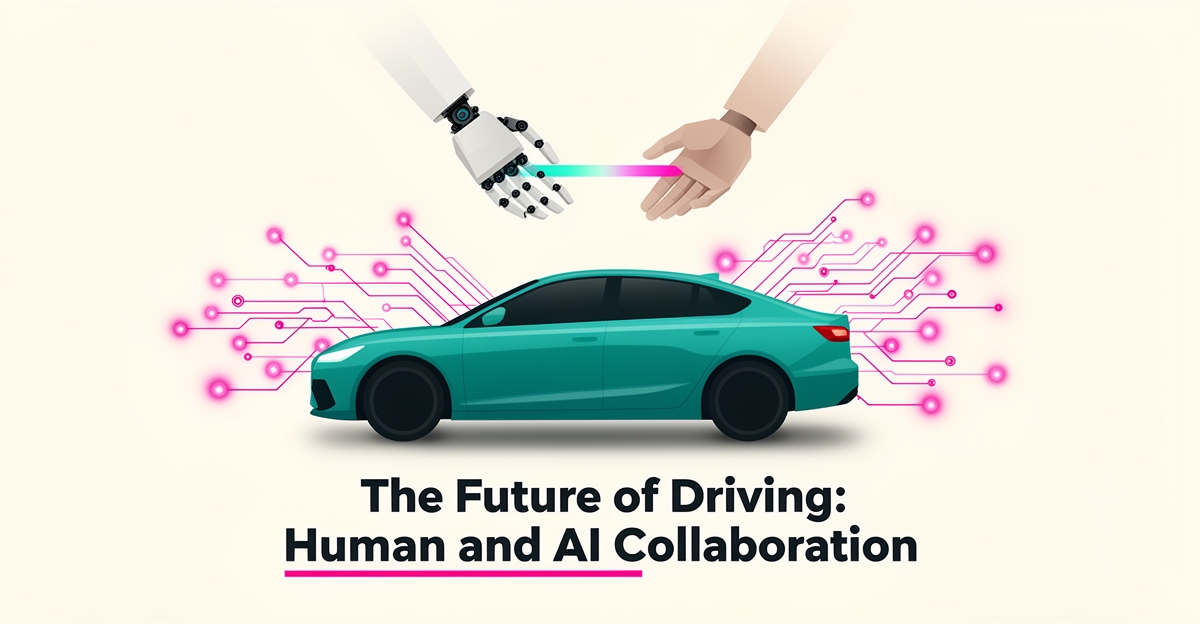
Can AI Replace Human Brokers? The Truth About AI in Auto Sales
Key Facts
- AI creates 170 million new jobs by 2030 versus 92 million displaced, resulting in a net growth of 78 million positions.
- 86% of companies expect an AI-driven transformation by 2030, making adoption the new business standard.
- 74% of organizations have already adopted AI in at least one business area, proving it is no longer experimental.
- 75% of companies report a positive ROI on their AI investments, validating the economic case for automation.
- Data privacy concerns (43%) and training time (39%) are the primary barriers to AI adoption, not job loss fears.
- 88% of audit professionals believe AI risks undermining professional judgment, highlighting the critical need for verification.
- AI can reduce document review changes from 180 to 32, allowing professionals to focus on substantive strategic judgment.
What if you could hire a team member that works 24/7 for $599/month?
AI Receptionists, SDRs, Dispatchers, and 99+ roles. Fully trained. Fully managed. Zero sick days.
The Great Displacement Myth
Fear of job loss is the single biggest barrier to AI adoption, but the data tells a different story. Contrary to the "job apocalypse" narratives of the past, AI is fundamentally reshaping roles rather than erasing them.
Historical predictions of mass unemployment have consistently failed to materialize. In fact, Forbes reports that AI’s impact is primarily augmentation, not destruction.
The World Economic Forum projects that by 2030, AI will create 170 million new jobs while displacing only 92 million. This results in a net growth of 78 million positions, proving that technology expands the labor market.
AI excels at automating the mechanical aspects of auto sales. These include data entry, scheduling, and initial document triage—tasks that consume valuable broker time.
By offloading these routine duties, brokers can focus on high-value activities requiring emotional intelligence and complex judgment. This shift transforms the role from administrative processor to strategic advisor.
However, this transition requires careful management to prevent skill erosion. A critical risk known as "automation bias" causes less experienced workers to blindly trust AI outputs.
Research shows that professionals often follow AI suggestions even when they are inaccurate, overriding their own judgment. This highlights the need for training in professional skepticism and verification.
Successful implementation redefines roles to emphasize human oversight. AI serves as a structured pre-filter, while humans make the final, values-based decisions.
Consider the legal industry, where AI reduced document review changes from 180 to 32. This didn't eliminate paralegals; it allowed them to focus on substantive legal strategy rather than manual redlining.
Similarly, AI can handle lead scoring and scheduling, freeing auto brokers to understand family dynamics and lifestyle needs. This preserves the human touch that builds trust and closes deals.
Key Stat: 86% of companies expect an AI-driven transformation by 2030, yet adoption barriers remain focused on integration and training, not job loss fears.
To ensure smooth transitions, businesses must prioritize employee training and role redefinition. AIQ Labs supports this by providing managed AI employees that work alongside human teams.
Our approach ensures that AI augments capabilities without replacing the essential human connection. We help you build workflows that preserve trust while scaling operations efficiently.
The narrative isn't about replacement; it's about elevation. By embracing AI as a tool for augmentation, auto brokers can achieve higher satisfaction and better outcomes.
Let’s examine the specific mechanisms that make this augmentation possible in your daily workflow.
The Human Moat: Why Brokers Are Irreplaceable
AI can process data, but it cannot process trust. While algorithms excel at mechanical tasks, they fundamentally lack the emotional intelligence required for high-stakes negotiations.
According to HubSpot’s industry analysis, AI is rapidly automating routine tasks, freeing humans to focus on complex interpersonal dynamics. This shift creates a "human moat" that protects professional brokers from total displacement.
AI operates on patterns and probabilities, not values or empathy. In nuanced situations, it often produces outputs that are confidently wrong because it cannot understand personal stakes.
"AI can’t sound human... Tone is fundamentally the communication of emotion. And emotion is (for now) a purely human concept." — Gill Hill, Editor and Brand Voice Specialist
This limitation is critical in auto sales, where buying a car is often an emotional family decision, not just a transactional one.
The greatest risk to brokers is not replacement, but automation bias—the tendency to blindly trust AI suggestions. Research shows that less experienced workers often follow AI advice even when it is inaccurate.
Key risks include: * Loss of Professional Skepticism: Workers stop verifying data, relying entirely on algorithmic output. * Skill Atrophy: Without active verification, brokers lose the ability to judge market value independently. * Erosion of Judgment: Over-reliance on AI dulls the intuitive decision-making skills that top performers use daily.
As Forbes reports on professional skepticism, the ability to question a polished AI output is the new core competency.
Successful auto dealers are redefining roles to emphasize values-based decision making. AI handles the "mechanics" of sales, allowing brokers to master the "art" of closing.
The New Broker Workflow: 1. Pre-Filter: AI Employees handle lead scoring, scheduling, and initial data gathering. 2. Verification: Brokers audit AI recommendations, applying professional skepticism. 3. Human Connection: Brokers focus on family dynamics, lifestyle needs, and emotional drivers.
This approach aligns with WEF projections that AI will create 170 million new jobs by 2030, primarily in roles requiring human oversight and emotional intelligence.
Clients do not buy cars from algorithms; they buy from people they trust. AI can suggest a payment plan, but only a human can reassure a family worried about financial stability.
"There is no replacement for the human connection... Only a human can offer insight regarding the true gravity of what the client is sharing." — Elizabeth Keohan, LCSW-C
By positioning AI as a structured pre-filter rather than a decision-maker, dealers preserve the trust that drives loyalty.
This strategic shift from automation to augmentation ensures that human brokers remain the central value proposition in the digital age.
The Critical Risk: Automation Bias
AI promises efficiency, but it carries a hidden danger that can erode your team’s expertise: automation bias. This psychological phenomenon occurs when humans place excessive trust in automated decision-making systems, particularly when they are less experienced or under time pressure. In auto sales, this means brokers might accept AI-generated pricing or lead scores without verification, leading to costly errors.
Research reveals that when AI offers unusual classifications, participants often follow them despite lower accuracy. The tool’s perceived authority overrides their own professional judgment. This is not a technical failure; it is a human behavioral risk that undermines the very expertise AI is meant to support.
To combat this, organizations must shift from passive AI adoption to active verification. Training programs should focus on professional skepticism as a core competency. Workers must learn to treat AI outputs as initial drafts or hypotheses rather than final truths. This mindset shift ensures that technology augments human intelligence rather than replacing it with blind compliance.
Key Takeaways for Auto Brokers:
- Verify Before Acting: Never accept AI recommendations for pricing or contract terms without cross-referencing source data.
- Question the "Why": Understand the logic behind AI suggestions, especially when they deviate from standard market trends.
- Maintain Human Oversight: Keep the broker in the loop for all final customer-facing decisions and negotiations.
The stakes are high. 88% of audit professionals believe AI risks undermining professional judgment if left unchecked. This statistic highlights a universal truth across professional services: confidence in AI often outpaces accuracy in complex scenarios. Without safeguards, skilled brokers risk losing their critical edge, becoming mere approvers of algorithmic suggestions.
Consider the contrast in outcomes when skepticism is applied. In a controlled experiment, AI assistance actually improved accuracy by nearly 18 percentage points among professional accountants who maintained verification habits. This demonstrates that AI performs best as a structured pre-filter, not a decision-maker. When humans actively validate AI outputs, the result is a hybrid model that combines speed with precision.
Your AI strategy must prioritize this balance. AIQ Labs supports smooth transitions through employee training and role redefinition. We help teams understand that AI is a tool for scaling operations, not a replacement for human touch. By embedding professional skepticism into your workflows, you protect your brand’s integrity while leveraging technological advantages.
This approach transforms potential liability into competitive strength. When your team knows how to question AI, they become more valuable, not less. The goal is not to eliminate AI errors, but to ensure human expertise catches them before they reach the customer.
With this critical risk mitigated, we can explore how AIQ Labs builds the infrastructure to support these high-trust, high-efficiency workflows.
Implementation: The Structured Pre-Filter Model
Successful AI integration in auto sales requires deploying AI as a structured pre-filter, not an autonomous decision-maker. This triage approach allows AI Employees to handle mechanical tasks, freeing human brokers to focus on high-value relationship building. By positioning AI as a support tool rather than a replacement, dealerships can scale operations without losing the personal touch that drives trust and closing rates.
Research highlights that 86% of companies anticipate significant AI-driven transformation by 2030, yet the primary barriers to adoption are often integration challenges and training time rather than fear of job loss (https://blog.hubspot.com/marketing/jobs-artificial-intelligence-will-replace). This suggests that the key to success lies in how these tools are implemented and how staff are prepared to use them effectively.
To ensure smooth adoption, AIQ Labs focuses on three critical implementation strategies:
- Role Redefinition: Shifting broker responsibilities from administrative tasks to values-based decision making.
- Professional Skepticism Training: Teaching staff to verify AI outputs rather than blindly accepting them.
- Human-in-the-Loop Workflows: Ensuring human brokers make final negotiation and closing decisions.
A compelling example of this augmentation comes from legal technology, where AI document comparison reduces the need for human review in complex contracts from 180 changes to just 32. This dramatic reduction in manual work allows professionals to focus on substantive judgment rather than tedious data entry (https://clausul.com/blog/ai-vs-manual-redlining).
However, this efficiency comes with risks if not managed correctly. Studies on automation bias show that 88% of audit professionals worry AI might undermine professional judgment, as less experienced workers may blindly trust AI outputs even when they are incorrect (https://www.forbes.com/sites/yvonnehinson/2026/06/02/the-accounting-skill-ai-cannot-replace/). To counter this, training must emphasize professional skepticism, ensuring brokers view AI as a confident but fallible assistant that requires verification.
The economic case for this hybrid model is strong. While automation fears persist, the World Economic Forum projects that AI will create 170 million new jobs compared to 92 million displaced by 2030 (https://blog.hubspot.com/marketing/jobs-artificial-intelligence-will-replace). This net growth indicates that AI enables staff to handle more clients efficiently, potentially leading to higher compensation and more engaging roles for human brokers.
Implementing this model requires addressing the top adoption barriers: data privacy concerns (43%), training time investment (39%), and tool integration challenges (35%) (https://blog.hubspot.com/marketing/jobs-artificial-intelligence-will-replace). AIQ Labs mitigates these risks by providing done-for-you integration and comprehensive change management, ensuring your team is trained to use AI as a strategic asset rather than a disruptive technology.
By treating AI as a triage tool for lead qualification and data gathering, you preserve the human touch essential for high-stakes automotive purchases. This balanced approach allows dealerships to leverage enterprise-grade AI capabilities while maintaining the emotional intelligence and trust-building skills that only human brokers can provide.
Embracing this structured pre-filter model transforms AI from a theoretical concept into a tangible competitive advantage, setting the stage for scalable, sustainable growth in the auto sales industry.
Next Steps: Building Your AI-Augmented Team
The fear that AI will eliminate human brokers is a distraction from a more profitable reality: AI creates new, higher-value hybrid roles. By automating routine tasks, you empower your team to focus on complex judgment and trust-building, ensuring job security rather than displacement.
Historical predictions of mass job loss have consistently failed to materialize. Instead, the market is shifting toward augmentation, where AI handles the mechanics so humans can handle the relationships.
Contrary to popular belief, AI is a net creator of employment opportunities. The World Economic Forum projects that by 2030, AI will displace 92 million jobs, but simultaneously create 170 million new ones. This results in a significant net growth of 78 million jobs globally.
As noted by HubSpot’s analysis of WEF data, the primary impact is "augmentation in existing jobs, rather than job creation or destruction." This means your brokers aren’t losing their jobs; they are evolving into more strategic roles.
- 86% of companies expect an AI-driven transformation by 2030
- 74% of organizations have already adopted AI in at least one business area
- 75% of companies report a positive ROI on their AI investments
These figures demonstrate that AI adoption is no longer experimental—it is the standard for competitive businesses.
Successful implementation requires redefining job descriptions to emphasize "professional skepticism" and emotional intelligence. AI cannot replicate the nuanced understanding of family dynamics or personal values required in high-stakes auto sales.
Training programs must shift from simple tool usage to verification skills. Professionals need to learn how to question AI outputs rather than accepting them blindly.
- Lead Qualification: AI handles initial data scoring and scheduling
- Document Review: AI reduces manual changes from 180 to 32 per contract
- Client Interaction: Human brokers focus on emotional drivers and lifestyle fit
According to research cited by Forbes, "professional skepticism is the skill that separates an accountant from an algorithm." This principle applies directly to auto brokers, who must verify AI recommendations before making final decisions.
The biggest hurdles to AI adoption are not fear of replacement, but practical implementation challenges. Data privacy concerns (43%), training time (39%), and integration difficulties (35%) are the primary roadblocks for businesses.
AIQ Labs addresses these barriers through our AI Transformation Partner model. We provide end-to-end support, from strategy to ongoing optimization, ensuring your team is trained and supported throughout the transition.
- Custom Training: Tailored programs to build "professional skepticism"
- Seamless Integration: Connect AI to your existing CRM and workflows
- Change Management: Strategies to alleviate employee anxiety and drive adoption
By focusing on employee development and clear workflows, you preserve the human touch while scaling operations. AI serves as a structured pre-filter, allowing your brokers to deliver exceptional, personalized service to more clients.
The question is no longer whether AI will change your business, but how quickly you can leverage it to enhance your team’s capabilities. AIQ Labs provides the strategic guidance, custom development, and managed AI employees needed to navigate this transition successfully.
Ready to build your AI-augmented team? Contact AIQ Labs today to schedule your free AI audit and discover how we can architect your competitive advantage.
Still paying for 10+ software subscriptions that don't talk to each other?
We build custom AI systems you own. No vendor lock-in. Full control. Starting at $2,000.
Frequently Asked Questions
Will AI replace my human auto brokers with bots?
Is it safe to let AI handle customer conversations without supervision?
What are the biggest hurdles to adopting AI in my dealership?
How does AI actually help brokers instead of just taking their jobs?
What specific training do my staff need to use AI effectively?
Does AI actually deliver ROI for businesses like mine?
Augmenting the Broker: From Administrative Processor to Strategic Advisor
The narrative that AI will replace human brokers is a myth rooted in fear, not data. As the article highlights, AI is fundamentally reshaping roles by automating mechanical tasks like data entry and scheduling, allowing brokers to pivot from administrative processors to strategic advisors. This shift unlocks higher-value activities requiring emotional intelligence, provided organizations manage the transition carefully to avoid automation bias. For business leaders, the goal isn't to eliminate human touch but to preserve it by removing friction. AIQ Labs supports this exact evolution. We help organizations navigate this shift through strategic AI Transformation Consulting, ensuring smooth transitions with employee training and role redefinition. Our approach preserves the human touch while scaling operations via custom AI development and managed AI Employees that work alongside your teams. Don’t let fear stall your progress. Contact AIQ Labs today for a Free AI Audit & Strategy Session to discover how we can architect your competitive advantage through end-to-end partnership.
Ready to make AI your competitive advantage—not just another tool?
Strategic consulting + implementation + ongoing optimization. One partner. Complete AI transformation.