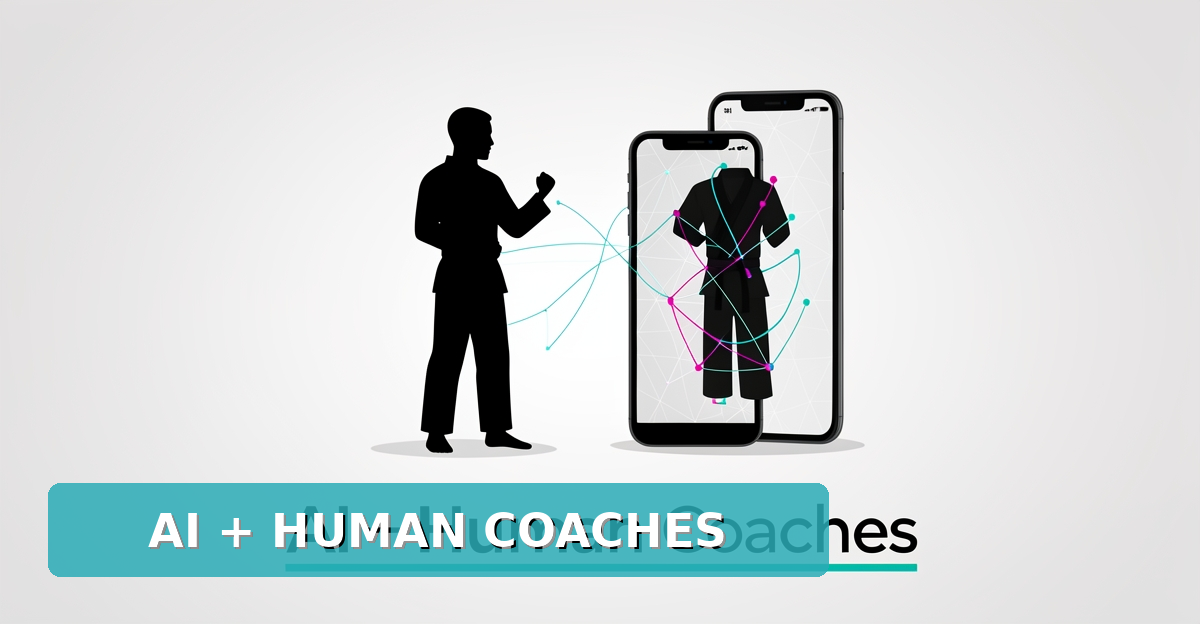
Can AI Replace Human Coaches in Martial Arts Training? The Truth
Key Facts
- AI video-analysis tools for martial arts typically track dozens of body joints in uploaded footage to flag biomechanical issues frame by frame.
- Research on technology-enhanced martial arts learning consistently finds that instructor competency remains a significant predictor of student engagement and results, even in AI-enhanced environments.
- AI-assisted training is widely reported to improve learning efficiency compared to traditional methods alone, though exact figures vary by study and setup.
- AI-assisted form feedback can help reduce injury risk by flagging dangerous technique before it becomes routine.
- Supervised AI-enhanced training programs have shown meaningful skill gains in early studies, with the word "supervised" doing real work.
- Well-built AI coaching tools provide confidence scores and decline to give feedback when camera views are unclear, rather than guessing.
Hire a team member that works 24/7 — for less than a part-time wage.
AI receptionists, SDRs, dispatchers and 99+ roles. Trained on your business, fully managed.
Not sure where to start? Ask our AI planner
Why AI Alone Can't Teach Martial Arts: The Missing Human Element
Imagine a tool that never sleeps, tracks every millimeter of your movement, and analyzes your technique with superhuman precision. Now imagine that same tool standing on the mat, unable to feel the energy of a sparring session or offer a word of encouragement when a student is struggling. This is the paradox of AI in martial arts: it possesses remarkable analytical power but lacks the fundamental human essence of a great instructor.
The most critical gap lies in the ability to read live timing and pressure. A human coach feels the rhythm of a fight, anticipates an opponent's move based on subtle shifts in weight, and understands the unspoken dialogue between two practitioners. Even the developers of leading AI coaching tools acknowledge that reading live timing and pressure in the moment is a capability their AI explicitly does not claim. This is not a temporary technological limitation; it is a fundamental boundary between analyzing a recording and experiencing a reality.
The capability split is clear. AI excels at data-driven tasks where humans are limited; it has essentially zero capability for the dynamic, in-the-moment functions that define coaching.
- Reads your actual footage: AI provides frame-by-frame analysis, a task impossible for a human coach during a live session.
- Available 24/7: AI offers constant access for feedback between classes, while a coach's time is finite.
- Reads live timing & pressure: This crucial skill is exclusively the domain of the in-person coach, a fact even AI toolmakers acknowledge.
This isn't just a philosophical argument; it's reflected in academic research. Studies of technology-enhanced experiential learning in martial arts, including work with hundreds of practitioners in AI-powered virtual reality environments, consistently find that instructor competency remains a significant driver of learning performance. The quality of human guidance and communication stays a vital component for student engagement and success, proving that technology cannot simply be swapped in for a qualified teacher.
Ultimately, AI cannot read a student's frustration, adjust a drill based on the energy in the room, or provide the motivational push that forges resilience. It cannot replicate the trust built through shared experience. This is why at AIQ Labs, our approach to AI implementation focuses on augmentation, not replacement. Whether through [AI Workflow Builds](/workflow-builds) or a fuller [AI Operating System](/ai-operating-systems), we design systems where AI handles the logistics and data analysis, freeing human experts to focus on the irreplaceable, high-value interactions that drive true mastery.
How AI Actually Enhances Martial Arts Training: Filling the Gaps Between Sessions
Ask any practitioner what happens between weekly sessions and you'll hear the same answer: solo drills, guesswork, and bad habits quietly forming. This is precisely where AI tools are proving their worth, not as coaches, but as a coaching layer that keeps training honest in the gaps.
The key distinction is that these systems analyze recorded footage, not live action. The best tools put it plainly: "We don't replace your coach. We fill the gap." The process follows a closed loop, film a round, receive an analysis of movement quality, run the prescribed drill, then film again to verify the fix actually landed. The technical depth is substantial: leading platforms track dozens of key joints in uploaded videos for biomechanical analysis and process footage at high frame rates with low latency.
Other tools follow the same asynchronous model. App-based trainers rely on users uploading videos of shadowboxing, bag work, or sparring for post-session assessment, and typically carry strong user ratings on the major app stores. Complementary tools generate slow-motion breakdowns and analysis-enhanced training videos from uploaded footage.
The reported results support this supplement model. Industry sources suggest AI-assisted training can meaningfully improve learning efficiency compared to traditional methods alone, and that AI-assisted feedback can reduce injury risk by flagging dangerous form before it becomes routine. Exact figures vary by study and setup, so treat headline numbers as directional rather than guaranteed.
What separates a quality AI training tool from a generic chatbot is intellectual honesty. The best tools provide a confidence score with every analysis and refuse to invent numbers when the camera view is unclear. The principle is simple: a real coach who can't see clearly asks to see it again, not invent a story. Honest uncertainty builds trust.
The academic evidence reinforces that the human element remains central even in AI-enhanced environments. Studies of technology-enhanced experiential learning across multiple facilities have found that instructor competency is a significant predictor of cognitive absorption, the strongest driver of results. And where AI-enhanced training has shown impressive skill gains, it has almost always been under supervision, with that word doing real work.
For dojos evaluating where AI fits, the practical applications cluster around a few proven areas:
- Post-session video analysis with biomechanical form corrections and confidence scoring
- Personalized drill recommendations based on a practitioner's history and recovery status
- Progress tracking that verifies whether prescribed fixes actually landed
- Slow-motion breakdowns and analysis-enhanced training sequences generated from real footage
- Administrative support, scheduling, reminders, and curriculum design, freeing instructors to teach
That last point matters as much as technique analysis. Industry guides frame AI as handling administrative, marketing, and curriculum tasks so instructors can focus on teaching, "AI doesn't replace tradition. It enhances it." It's the same balance we emphasize at AIQ Labs when designing systems: automation absorbs the repetitive work so the irreplaceable human instruction gets more attention, not less.
The pattern is consistent across every source. AI owns everything between sessions, the analysis, the drills, the verification. The coach owns the moment: live timing, pressure, and the read on a student that no camera can capture. Used that way, AI doesn't dilute coaching quality. It compounds it.
The Smart Integration Model: Using AI to Amplify Human Coaching in Martial Arts Schools
The future of martial arts training isn't about choosing between AI and human coaches, it's about strategically combining both to create a more effective, scalable model. By leveraging AI for tasks that don't require human intuition, martial arts schools can free up instructors to focus on what they do best: providing live feedback, mentorship, and the nuanced guidance that only comes from years of on-the-mat experience.
AI tools excel at handling the administrative and analytical workload that often pulls coaches away from direct teaching. Modern platforms offer on-demand video analysis of student technique, tracking key joints to deliver precise biomechanical feedback on form and execution. This allows students to review and refine their movements between classes, turning solo practice into targeted skill development. Meanwhile, AI can automate scheduling, generate class outlines, create marketing content, and design personalized training plans, functions that consume significant instructor time.
By offloading these responsibilities to AI, coaches gain back valuable hours to concentrate on high-impact, human-centric activities. This includes reading live timing and pressure during sparring sessions, a capability AI cannot replicate, as even AI toolmakers explicitly state, providing real-time adjustments based on a student's emotional state, and delivering the motivational energy that drives long-term commitment. Research on technology-enhanced learning reinforces this balance, showing that instructor competency remains a significant predictor of learning performance even in tech-enhanced environments.
This hybrid approach creates a virtuous cycle: AI handles repetitive analysis and administrative tasks, while instructors focus on relationship-building, strategic sparring feedback, and personalized mentorship. Schools using this model report improved learning efficiency and reduced injury risk through better form correction. For martial arts studios looking to scale without sacrificing quality, AI isn't a replacement for the coach, it's a force multiplier that lets human expertise shine where it matters most. [Start the Fit Check](/apply) to explore how AIQ Labs can help design a tailored integration roadmap for your dojo.
Still paying for 10+ subscriptions that don’t talk to each other?
We build custom AI systems you own outright. No vendor lock-in. Full control.
Not sure where to start? Ask our AI planner
Frequently Asked Questions
Can AI actually replace my martial arts coach?
How accurate is AI video analysis for technique correction?
What specific tasks can AI handle for my martial arts school?
Is there research proving AI-assisted training works better than traditional methods alone?
Which AI tools are actually built for martial arts, and how do they differ?
How does AIQ Labs help martial arts schools implement this technology?
The Mat Still Needs a Human Touch
AI will not replace the coach who reads the room, feels live timing and pressure, and pushes a student through frustration, it will never replicate that in-the-moment trust. What it can do is own everything between sessions: frame-by-frame biomechanical analysis, confidence-scored form corrections, personalized drills, progress verification, and the administrative work that pulls instructors off the mat. Used that way, AI compounds coaching rather than dilutes it, freeing human experts to focus on mentorship, sparring feedback, and motivation where they matter most. The emerging research supports the hybrid model: supervised AI-enhanced training shows real gains, and instructor quality stays the strongest predictor of results. For dojos ready to scale without sacrificing quality, the next step is mapping where automation can handle analysis and logistics so your coaches can double down on high-value instruction. Start the [Fit Check](/apply) for a free 30-minute strategy call to explore a tailored integration roadmap with AIQ Labs.
Make AI your competitive advantage — not just another tool.
Strategy, implementation and ongoing optimization. One partner, end to end.
Not sure where to start? Ask our AI planner