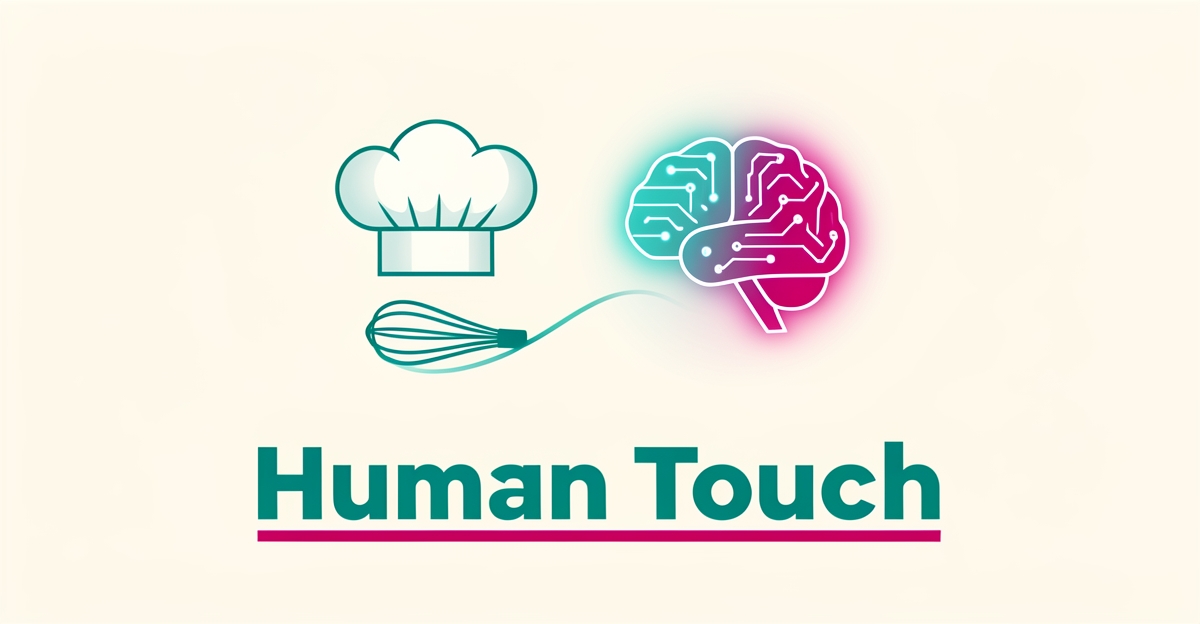
Can AI Replace Human Cooking Instructors? The Truth About AI in Culinary Training
Key Facts
- A substantial share of global working hours, often cited around 40%, is expected to be influenced by generative AI in the coming years, though adoption is still ramping up
- Daily use of generative AI among workers remains a minority as of late 2026, indicating a transition phase rather than displacement
- AI-related job listings have grown steadily since the launch of ChatGPT, while broader tech listings have softened
- Organizations with structured AI literacy programs typically report faster technology adoption and stronger returns on their investments
- Northwestern University frames AI as a tool for tutoring and concept exploration under human supervision, not autonomous instruction per teaching guidance
Hire a team member that works 24/7 — for less than a part-time wage.
AI receptionists, SDRs, dispatchers and 99+ roles. Trained on your business, fully managed.
Not sure where to start? Ask our AI planner
Why the Fear of AI Replacing Cooking Instructors Is Misplaced
The fear that AI will replace human cooking instructors misses the fundamental shift occurring in professional education. AI is not eliminating roles but reshaping them, taking on standardized tasks while elevating the importance of human expertise. A widely cited estimate suggests roughly 40% of global working hours will be influenced by generative AI in the coming years, yet daily use of these tools among workers remains limited as of late 2026, indicating a transition phase rather than displacement.
In culinary training specifically, AI excels at consistent, scalable functions like technique demonstration, recipe standardization, and initial skill assessment, areas where repetition and precision matter most. However, human instructors remain irreplaceable for developing culinary intuition, transmitting cultural knowledge, and guiding creative decision-making. This mirrors Northwestern University's teaching frameworks, which position AI as a tool for tutoring and concept exploration under human supervision, not autonomous instruction.
The most effective approach involves collaborative integration where AI handles routine elements such as temperature monitoring and timing reminders, freeing instructors to focus on higher-order skills like flavor balancing, adaptive teaching, and mentorship. As industry leaders observe, professionals who master AI collaboration will outperform those who resist it, not because AI replaces them, but because it amplifies their capabilities. For cooking education, this means instructors who learn to guide AI-assisted learning while preserving their irreplaceable role in nurturing craftsmanship will define the future of culinary training. Northwestern's guidance confirms that successful AI integration requires maintaining human accountability for nuanced instruction while leveraging technology for scalable support. AIQ Labs builds systems that embody this principle, AI Employees that support instructors with real-time feedback rather than attempting to replicate the full spectrum of human teaching. This collaborative model ensures technology serves educational goals without diminishing the essential human connection at the heart of culinary arts.
How AI Augments, Not Replaces, Human Culinary Instruction
The evidence from classrooms and workplaces points to the same conclusion: AI works best as a teaching assistant, not a head chef. In culinary education, this means AI handles the repeatable, scalable elements of instruction while human instructors own everything that requires judgment, creativity, and lived experience.
Consider what each side of the partnership actually does well. AI systems excel at consistent, scalable tasks, standardized technique demonstration, recipe standardization, basic skill assessment, temperature monitoring, and timing reminders. Human instructors provide what no algorithm can: adaptive, nuanced instruction, creative problem-solving, cultural knowledge transmission, and mentorship. The common refrain from practitioners across industries is that AI can assist, automate, and accelerate, but it cannot replace human judgment, empathy, accountability, and experience.
Northwestern University's guidance on teaching with AI reinforces this division of labor. Its framework for generative AI in the classroom offers three policy models, Open, Conditional, and Closed, that translate directly to culinary training:
- Open approach: Students use AI freely with instructor guidance on best practices, citation, and verification, ideal when AI literacy itself is a learning objective.
- Conditional approach: AI is permitted only when explicitly authorized, such as supporting knife skills practice while reserving plating and flavor balancing for human demonstration.
- Closed approach: AI is prohibited entirely where muscle memory and sensory development demand human-only practice.
The pattern mirrors what's happening across professional fields. Engineers who ship faster and safer with AI are outpacing those who don't, and the same logic applies to culinary educators: instructors who skillfully integrate AI tools for demonstration, progress tracking, and personalized learning paths will outpace those who don't. As engineering leaders put it, AI is replacing tasks, not ownership, the ownership of learning outcomes stays with human educators.
This collaborative model is already how well-designed AI education systems work. At AIQ Labs, the focus is on building AI-powered assistants that support instructors with real-time feedback and guidance, augmenting the teacher rather than attempting to replace them. The economic case supports this approach: organizations with structured AI literacy programs typically report faster technology adoption and meaningfully higher returns on their investments.
The practical playbook for instructors echoes advice from software engineering: start with routine tasks where AI excels, scope requests tightly, verify outputs carefully, and let AI get you most of the way there fast, then apply human judgment for the final, most important stretch. In the kitchen, that final stretch is exactly where great teaching lives: the intuition to know when a sauce needs one more minute, the cultural story behind a dish, and the encouragement that turns a hesitant student into a confident cook.
Practical Steps for Integrating AI into Culinary Training Programs
Cooking schools looking to integrate AI should begin with low-risk, high-impact tasks that free up instructor time for deeper student engagement. Starting with routine activities like recipe standardization, technique demonstration videos, or basic skill assessment allows programs to test AI tools while maintaining full human oversight. This approach aligns with proven strategies from technical fields where AI handles the bulk of initial work, leaving the final decisions for human judgment where intuition and experience matter most.
Successful integration requires building AI literacy among instructional staff through structured training programs. Organizations with formal AI literacy initiatives typically shorten technology adoption ramps considerably and see stronger returns on their investments. Cooking schools should implement progressive learning paths where instructors first observe AI-assisted demonstrations, then co-teach with AI tools, and finally design AI-enhanced lesson plans, always retaining authority over creative decision-making and nuanced instruction.
AIQ Labs supports this phased implementation through services built around human-in-the-loop controls and continuous optimization, whether that's an AI Employee handling scheduling and student communications, a targeted Workflow Build that rebuilds one costly administrative process, or a longer-term AI Operating System that connects a school's tools into one layer the school owns outright. Schools should establish clear policies defining when AI use is open, conditional, or closed, mirroring Northwestern University's framework for educational AI integration. For example, AI might be openly used for recipe scaling exercises, conditionally authorized for basic knife skills practice with instructor supervision, and closed for advanced flavor balancing where human sensory judgment is irreplaceable. Regular review habits, verifying AI outputs, testing techniques, and refining approaches, ensure quality while building instructor confidence in AI collaboration. Over time, this develops the intuition needed to know when to leverage AI for efficiency and when to step in for the nuanced guidance that defines exceptional culinary mentorship. If you're ready to explore what this could look like at your school, start with the two-minute Fit Check, which leads to a free 30-minute strategy call at aiqlabs.ai/book.
Still paying for 10+ subscriptions that don’t talk to each other?
We build custom AI systems you own outright. No vendor lock-in. Full control.
Not sure where to start? Ask our AI planner
Frequently Asked Questions
Will AI actually replace human cooking instructors in culinary schools?
How can cooking instructors effectively use AI in their teaching without losing the human touch?
What specific tasks in culinary training are best handled by AI versus human instructors?
Is there evidence that using AI in cooking education improves learning outcomes or instructor efficiency?
What are the risks of relying too much on AI in cooking instruction, and how can they be avoided?
How should cooking schools start integrating AI into their training programs?
Make AI your competitive advantage — not just another tool.
Strategy, implementation and ongoing optimization. One partner, end to end.
Not sure where to start? Ask our AI planner