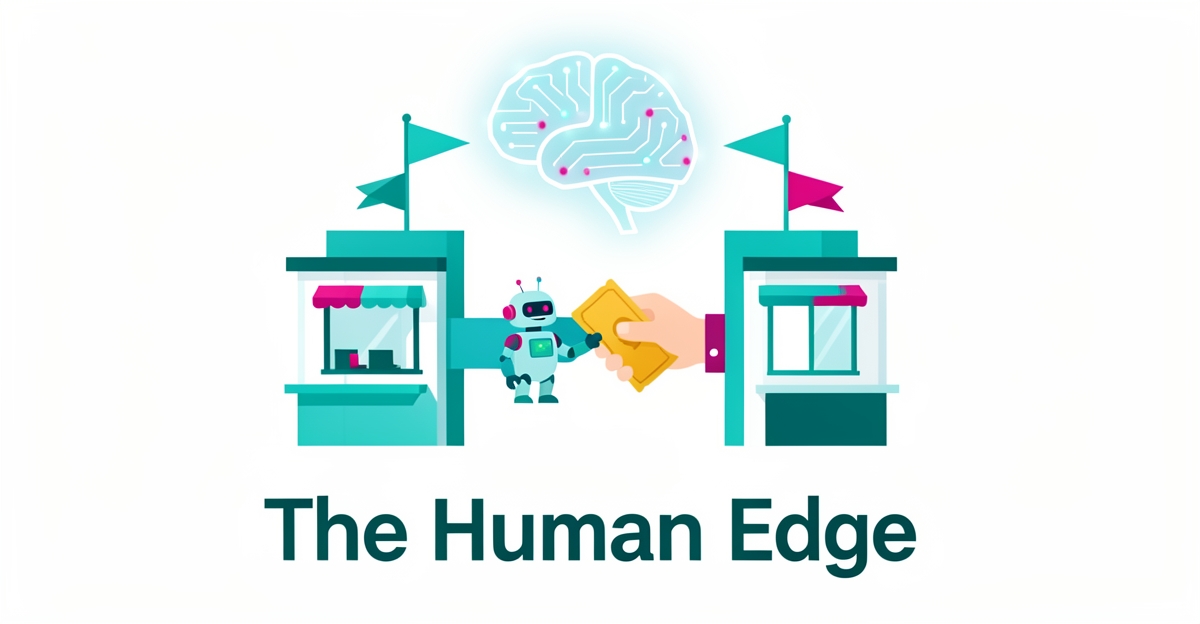
Can AI Replace Human Hosts at Themed Entertainment Centers? The Truth Behind the Myth
Key Facts
- A large share of customers report their last AI interaction didn't solve their problem, a gap that widens in high-touch, emotionally charged environments.
- Most major enterprises are actively exploring agentic AI workflows, especially for operational efficiency.
- AI works best fully handling low-risk, repetitive tasks like tagging, triaging, or summarizing, per customer support best practices.
- Real ROI typically arrives when companies 'agentify' the process, moving beyond chatbots to systems that own complete workflows.
- Addressing biases in AI requires diversifying data, conducting algorithmic audits, and applying fairness metrics.
- AI Employees work 24/7 without breaks, handling guest inquiries even when the park is closed or staff are stretched thin.
Hire a team member that works 24/7 — for less than a part-time wage.
AI receptionists, SDRs, dispatchers and 99+ roles. Trained on your business, fully managed.
Not sure where to start? Ask our AI planner
Why Full AI Replacement Falls Short in Immersive Experiences
While AI hosts can streamline ticketing, wayfinding, and basic information delivery, they fall short in creating the emotional resonance that defines memorable themed entertainment. A significant share of customers say their last AI interaction didn't solve their problem, revealing a persistent gap between automated responses and guest expectations in high-touch environments. This disconnect becomes especially apparent when visitors seek personalized storytelling, spontaneous interactions, or empathetic guidance, elements that remain fundamentally human.
Themed entertainment thrives on moments of surprise, delight, and emotional connection that current AI cannot authentically replicate. Unlike scripted exchanges, human hosts read subtle cues in body language, adjust tone mid-conversation, and improvise based on a guest's energy or confusion. These adaptive responses build trust and immersion in ways rule-based systems struggle to match. AI may recognize keywords, but it lacks the lived experience to convey genuine wonder or comfort a frightened child with intuitive sensitivity.
Creative improvisation is another uniquely human strength that AI cannot duplicate in live entertainment settings. When a ride breaks down or a guest deviates from the expected path, human hosts transform potential disappointments into memorable adventures through quick thinking and emotional intelligence. They can turn a delay into a behind-the-scenes anecdote or calm a frustrated family with humor and warmth, actions requiring contextual judgment beyond current AI capabilities. Even advanced voice agents lack the depth to navigate these nuanced, high-stakes social dynamics consistently.
For themed centers aiming to balance efficiency with authenticity, a hybrid model offers the most promising path forward. AI can handle routine tasks like check-in procedures, FAQ responses, or queue management, freeing human staff to focus on high-value interactions that demand empathy, spontaneity, and creative problem-solving. This approach leverages technology where it excels while preserving the irreplaceable human elements that transform a visit into a lasting memory. As AIQ Labs observes in designing AI Employees for experience-driven industries, the goal isn't replacement but strategic augmentation, using technology to elevate, not eliminate, the human touch that defines exceptional entertainment.
The Hybrid Model: Where AI Enhances Rather Than Replaces Human Hosts
The hybrid model is gaining traction as themed entertainment centers look to balance efficiency with guest experience. Rather than replacing human hosts, AI handles routine, repetitive tasks while staff focus on high-touch interactions that build emotional connections. This approach aligns with broader enterprise trends, where most major organizations are actively exploring agentic AI workflows to improve operational efficiency.
By delegating information delivery, queue management, and basic inquiries to AI systems, human hosts gain more time to create personalized moments that drive satisfaction and repeat visits. These benefits are most pronounced when AI is used for low-risk, repetitive tasks like tagging, triaging, or summarizing, as noted in customer support best practices.
- AI manages check-in kiosks and ride information queries
- Human hosts guide immersive storytelling and emotional engagement
- Staff resolve complex guest needs with empathy and creativity
- AI supports multilingual assistance without adding headcount
- Teams focus on surprise-and-delight moments that build loyalty
This division of labor allows themed entertainment centers to scale service quality without sacrificing the human touch that defines memorable experiences. AIQ Labs supports this hybrid approach through AI Employees designed for front desk automation and guest engagement roles, enabling seamless integration between technology and human teams. The result is not replacement, but augmentation, where technology handles the transactional, and humans deliver the transformational.
Building Fair and Effective AI Systems for Guest-Facing Roles
Building fair and effective AI systems for guest-facing roles requires intentional design to ensure all visitors feel welcomed and respected. Given how often AI interactions fall short of guest expectations, thoughtful implementation matters, fairness in AI algorithms means different things depending on context. It can refer to equality of opportunity, absence of bias, or equitable outcomes, so themed entertainment centers must define what fairness looks like for their specific guest experience.
To build AI hosts that treat all guests equitably, organizations should prioritize diverse training data, conduct regular algorithmic audits, and apply established fairness metrics. Addressing biases in AI requires a collaborative approach that includes these practices to prevent unintended discrimination. For example, AI systems used for greeting guests, providing directions, or handling routine inquiries must be tested across demographics to ensure consistent, respectful interactions regardless of age, language, accent, or ability.
- Use AI fully for low-risk, repetitive tasks like check-in kiosks or FAQ responses
- Deploy AI as a helper for pattern-based tasks such as ride recommendations or wait-time estimates
- Maintain human oversight for high-touch moments requiring empathy, conflict resolution, or personalized storytelling
AIQ Labs supports themed entertainment venues in designing AI employee systems that align with these principles, ensuring technology enhances, not undermines, the inclusive atmosphere essential to guest satisfaction. By combining AI efficiency with human creativity, centers can deliver seamless experiences that are both operationally sound and genuinely welcoming.
A Practical Framework for Implementing AI Hosts in Your Venue
Getting AI hosts right in themed entertainment means starting with scope, not software. Operators who map exactly where automation helps and where human hosts must lead avoid the frustration that comes when guests feel an automated system didn't actually solve their problem.
Define the scope of the project with clear goals and human involvement levels. Identify low-risk, repetitive tasks that can be fully automated and high-touch moments that require empathy and creativity. This boundary setting prevents over-automation and protects guest experience.
Choose the right AI technology for the venue's specific workflows. Consider the level of automation required, the type of interactions to be performed, and how much human oversight the role demands. With most major enterprises now exploring agentic AI workflows, selection criteria matter more than hype.
Design the system around hybrid support, not replacement. Use AI fully for low-risk, repetitive tasks like tagging, triaging, or summarizing, and use AI as a helper for pattern-based tasks like routing, recommending actions, or drafting replies. This approach frees human hosts to focus on storytelling and spontaneous guest engagement.
Implementation follows a test-first rhythm. Build the AI system with the architecture, algorithms, and data required to train and test, then deploy in a production environment with controlled guest exposure. Monitor performance, human involvement needs, and business impact continuously.
A practical roadmap operators can follow:
- Define scope: goals, automated tasks, and required human involvement
- Choose technology: match automation level to task type and guest touchpoint
- Design system: architecture, algorithms, and training data with fairness checks
- Implement with testing: develop, validate, and deploy in production with human-in-the-loop
- Monitor and evaluate: track AI performance, satisfaction, and efficiency gains
Balancing automation with human oversight is the key lever. Agentic AI can autonomously perform many tasks, from handling routine customer inquiries to producing first drafts of routine documents, and most operators report measurable efficiency gains when they get the balance right. The real ROI typically kicks in once the process is fully "agentified."
AIQ Labs approaches this as a hybrid model for themed environments, where AI voice and communication systems handle routine interactions while humans manage high-touch experiences. For venues that want to rebuild the one workflow that costs them the most, queue management, reservations, guest communications, a fixed-price Workflow Build is often the fastest entry point. That structure preserves brand magic while delivering measurable efficiency and consistent guest service.
Deploying AI Employees That Complement Your Human Team
The hybrid model isn't just a theory, it's the most practical path forward for themed entertainment centers that want to scale without sacrificing magic. Instead of replacing your star performers, deploy AI Employees to handle the routine interactions that consume valuable time and energy.
AI excels at low-risk, repetitive tasks like answering FAQs, providing wayfinding directions, and sharing showtime information. This frees your human hosts to focus on character interactions, storytelling, and the spontaneous moments that create lasting memories.
AI Employees work 24/7 without breaks, handling guest inquiries even when your park is closed or during peak hours when human staff are stretched thin. They never call in sick, never need vacation, and maintain consistent performance regardless of crowd size or weather conditions.
Start small with a single AI Employee in a defined role, an AI Concierge at your entrance, an AI Information Agent near your main attractions, or an AI Receptionist handling phone inquiries. This mirrors the agentic AI workflows most enterprises are now exploring, where AI autonomously handles routine tasks while humans manage high-touch experiences.
Here's how to structure your first AI Employee deployment:
- AI Concierge: Greets guests, provides park maps, answers questions about attractions, dining options, and accessibility services
- AI Information Agent: Shares real-time wait times, showtime schedules, character meet-and-greet locations, and special event details
- AI Receptionist: Handles phone inquiries, books reservations, provides directions, and answers pre-visit questions 24/7
- AI Wayfinding Assistant: Guides guests to specific attractions, restrooms, dining locations, and emergency services
The real ROI kicks in when you "agentify" the process, moving beyond simple chatbots to AI systems that autonomously handle complete workflows. Your AI Employee doesn't just answer questions; it integrates with your scheduling systems, updates information in real-time, and escalates complex situations to human staff when needed.
AIQ Labs builds AI Employees that work alongside your team, not replace it. Each AI Employee is trained on your specific park layout, policies, and brand voice, then deployed under a Start Monthly plan, managed AI staff across 99+ roles that typically cost around 80% less than an equivalent human hire. Your human hosts stay focused on creating magical moments while AI handles the routine work that keeps operations running smoothly.
The result? Guests get instant, accurate answers at any hour. Your human team spends their energy on high-value interactions. And your park operates more efficiently without compromising the immersive experience that defines themed entertainment.
Still paying for 10+ subscriptions that don’t talk to each other?
We build custom AI systems you own outright. No vendor lock-in. Full control.
Not sure where to start? Ask our AI planner
Frequently Asked Questions
Can AI hosts fully replace human staff in themed entertainment centers?
What tasks should AI hosts handle in a themed entertainment center?
How does a hybrid AI-human model improve guest experiences in themed entertainment?
How can themed entertainment centers ensure AI systems are fair and unbiased?
What is agentic AI and how is it used in themed entertainment centers?
What is the first step in implementing AI hosts at a themed entertainment venue?
The Real Magic: How AI and Humans Create Unforgettable Experiences Together
Themed entertainment thrives on moments only humans can create, spontaneous storytelling, empathetic guidance, and creative problem-solving that turn visits into lasting memories. While AI excels at handling routine tasks like check-ins, wayfinding, and FAQ responses, it cannot replicate the emotional resonance, adaptability, and intuitive sensitivity that human hosts bring to high-touch interactions. Rather than choosing between technology and talent, forward-thinking centers are adopting a hybrid model where AI manages transactional workflows, freeing human staff to focus on surprise-and-delight moments that drive loyalty and repeat visits. For themed entertainment venues ready to enhance operations without sacrificing magic, the path forward starts with clarity. Take the first step by assessing where automation can support, not replace, your team's strengths. Start the Fit Check to map your biggest bottlenecks and discover high-ROI opportunities where AI Employees can handle routine work while your human hosts create the moments guests remember forever.
Make AI your competitive advantage — not just another tool.
Strategy, implementation and ongoing optimization. One partner, end to end.
Not sure where to start? Ask our AI planner