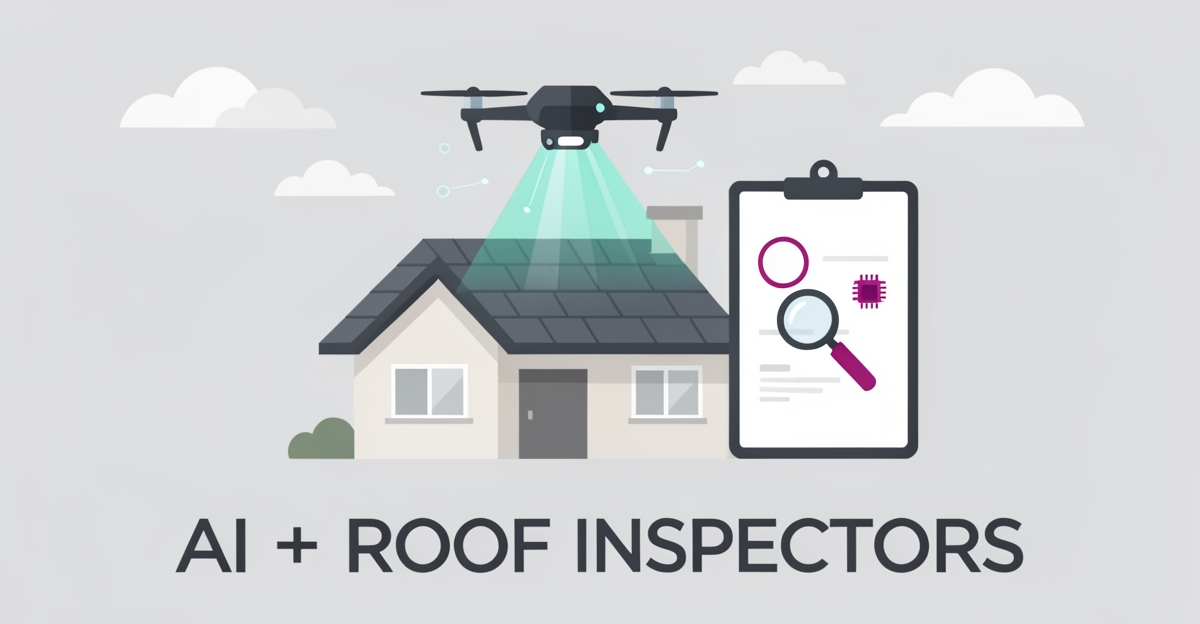
Can AI Replace Human Inspectors in Roof Repair? A Reality Check for 2026
Key Facts
- Computer vision systems can convert damage photos into preliminary repair estimates in seconds, not hours
- AI-assisted estimating in adjacent industries (like auto claims) still requires human validation for complex decisions
- Human inspectors remain essential for safety judgments that AI cannot assess from imagery alone
- After major weather events, demand for qualified inspectors typically far outstrips supply, creating backlogs AI-assisted triage can help reduce
- The most effective model is hybrid: AI pre-processing plus human validation
Hire a team member that works 24/7 — for less than a part-time wage.
AI receptionists, SDRs, dispatchers and 99+ roles. Trained on your business, fully managed.
Not sure where to start? Ask our AI planner
The Stakes: Why Roof Inspections Are Ripe for Disruption
A single damaged roof can trigger a cascade of delays, from the initial inspection to the final repair approval, leaving homeowners and insurers in a frustrating limbo. This bottleneck is precisely where the pressure for technological disruption is highest, forcing the industry to ask if artificial intelligence can finally streamline a process that has remained stubbornly manual for decades.
The traditional roof inspection model is fraught with inefficiencies. It relies on scheduling a human expert, who must physically access the roof, often in hazardous conditions, to document damage and compile a report. This process is not only slow but also introduces the potential for human error and inconsistency, which can lead to disputes and delayed claims. And every week of delay compounds the financial pressure on homeowners already dealing with unexpected repair costs and insurance paperwork.
The auto insurance industry offers a compelling case study for this transformation. Leading providers now use AI-powered solutions to handle initial damage assessments, a process that once required a manual review for every claim. Computer vision platforms in that space analyze photos of damaged vehicles and automatically generate initial repair appraisals for human review, demonstrating how AI can successfully pre-process complex visual information to accelerate workflows without removing people from the loop.
This shift toward AI-assisted analysis is not limited to large enterprises. Consumer appetite for AI-driven repair guidance has grown steadily, with homeowners increasingly comfortable using AI tools for initial diagnostics and step-by-step instructions. These tools are not a substitute for professional assessment, but their adoption signals a broader acceptance of AI as a first-pass source of insight.
The core challenges that make roof inspections ripe for this kind of AI augmentation include:
- Slow Turnaround Times: Manual scheduling, travel, and reporting create significant delays in the claims and repair lifecycle.
- Inconsistency and Human Error: Subjective assessments can vary between inspectors, leading to disputes and inaccurate repair scopes.
- Safety Risks: Physically accessing steep or damaged roofs exposes inspectors to significant personal danger.
- Scalability Issues: After a major weather event, the demand for qualified inspectors far outstrips supply, creating massive backlogs.
At AIQ Labs, we see this pattern across many industries: a critical workflow is constrained by manual data processing. The solution is not to remove human experts but to empower them. Whether that means deploying [AI Employees](/ai-employees) to handle intake, scheduling, and claims follow-up, or building a custom inspection workflow, the goal is the same, free up human inspectors to focus on what they do best: applying deep contextual knowledge and making final, critical judgments.
What AI Does Well: Speed, Scale, and Pattern Recognition
Artificial intelligence excels at the heavy lifting of visual data processing, transforming how industries approach damage assessment long before a human expert arrives on site. In the roofing sector, this capability translates to faster triage and more informed decision-making, though the technology serves as a sophisticated filter rather than a final authority.
Computer vision systems now analyze photographic evidence with remarkable precision, identifying damaged components and generating preliminary assessments in seconds rather than hours. In the collision repair industry, AI estimating platforms convert photos of damaged vehicles into detailed estimate lines that human adjusters then review. The workflow is straightforward yet powerful: adjusters capture photos and incident information, the AI analyzes the imagery using computer vision, and the system surfaces initial estimates for human validation.
This pattern of AI-assisted pre-processing offers a blueprint for roof repair applications. Similar algorithms can scan aerial imagery or ground-level photos to flag missing shingles, water damage, or structural compromises before a technician ever climbs a ladder. The technology excels at pattern recognition at scale, processing thousands of images to identify common failure points that might escape the human eye during initial triage.
Consumer appetite for these AI-driven assessment tools continues to grow across adjacent markets. Homeowners increasingly trust AI to interpret visual damage and recommend a first course of action, signaling that the market is ready for AI-assisted inspection workflows in property services.
However, these systems function as decision-support tools rather than autonomous replacements. AI estimating platforms, despite sophisticated computer vision, still require human expertise to review and validate estimates before finalization. Similarly, while DIY apps empower homeowners with information, they cannot replicate the tactile assessment or safety judgment of a certified roofing inspector.
AIQ Labs builds hybrid systems that mirror this collaborative approach, where AI pre-processes visual data and flags risks while human technicians retain final authority over assessments. By handling the initial data crunching, these systems allow inspectors to focus their expertise on complex judgment calls rather than routine documentation.
Key capabilities where AI currently outperforms manual processes include:
- Rapid analysis of photographic evidence to identify damaged components
- Generation of initial assessment estimates within seconds
- Consistent application of damage classification criteria across thousands of cases
- 24/7 availability for preliminary risk flagging and triage
The result is not a replacement of human inspectors, but rather an augmentation that eliminates bottlenecks in the assessment pipeline while preserving the critical thinking that only experienced professionals provide.
Where Human Expertise Remains Irreplaceable
Even the most sophisticated AI models still need a human pair of eyes on the final call. Consider the collision repair industry, where automated estimating tools have had years to mature. These platforms use computer vision to analyze photos of damaged vehicles, identify damaged components, and convert that analysis into estimate lines. Yet even with that technological pedigree, human expertise remains essential to review and validate every estimate the system produces.
Roof inspection demands even more from human judgment than auto claims do. A roof is a living system shaped by weather history, building age, drainage patterns, and structural quirks that no camera can fully capture. AI excels at pre-processing data and flagging risks, but a trained inspector brings three capabilities no algorithm currently matches:
- Contextual judgment, distinguishing between cosmetic wear and damage that signals deeper structural failure
- Safety assessment, evaluating live hazards like compromised decking or unstable surfaces before anyone sets foot on the roof
- Real-time adaptation, adjusting the inspection on the spot when conditions reveal something the initial photos never showed
The stakes of getting this wrong are real. Consumer AI repair apps can be genuinely useful for simple, everyday fixes, but they are not a substitute for professional expertise on complex structural work, and roof repair sits firmly in that category. A misdiagnosed leak or an underestimated structural issue can turn a manageable repair into a full replacement.
This is why the most practical path forward is augmentation, not replacement. AIQ Labs builds hybrid systems on exactly this principle: AI pre-processes data and flags risks, then supports human technicians with real-time insights during on-site visits. The technology handles the pattern recognition and paperwork; the human handles the judgment calls that carry real consequences.
The evidence from adjacent industries reinforces the point. Automated estimating works because it was designed as a first draft, not a final verdict, the AI surfaces initial estimates, but qualified professionals confirm accuracy before money changes hands. Roofing deserves the same discipline. Homeowners facing major repair decisions can't afford choices made on AI output alone.
The realistic answer for 2026 isn't AI instead of inspectors. It's AI that makes inspectors faster, sharper, and better equipped to protect the homes they climb onto every day.
The Hybrid Model: AI Pre-Processing + Human Validation
The most effective inspection model doesn't ask whether AI or humans win; it assigns each the tasks they perform best. In roof repair, that means AI handles data capture and risk flagging in the cloud, while human technicians arrive on-site with AI-generated insights already in hand.
This division of labor mirrors how AIQ Labs structures document processing and intake workflows for field service businesses. Rather than attempting full automation, the system pre-processes visual data and flags potential structural risks, then supports human experts during physical inspections. The technician climbs the ladder knowing exactly where to look.
Here is how the hybrid model operates in practice:
- Photo capture and intake: Technicians or drones capture high-resolution images of the damaged roof, which upload immediately to the processing system.
- Computer vision analysis: AI algorithms scan the imagery to identify damaged shingles, compromised flashing, and structural anomalies, converting visual data into actionable intelligence.
- Estimate generation: The system translates identified damage into preliminary repair estimates and material requirements, the same first-draft pattern used by AI estimating tools in auto claims.
- Human validation: Certified inspectors review AI findings on-site, verify accuracy, and make final determinations about repair scope and safety compliance.
This workflow follows the precedent set by the automotive insurance industry, where AI generates initial estimates but human adjusters validate every line item before approval. The AI accelerates the paperwork; the human ensures the roof is actually safe to walk on and correctly diagnoses hidden water damage that cameras miss.
Speed matters, but accuracy determines profitability. Consumer DIY apps can offer automated repair guidance, but professional roofing demands higher stakes than a smartphone algorithm can manage. The hybrid approach catches the measurement errors and misidentified materials that pure AI solutions overlook.
Financial implications extend beyond the job site. Accurate AI-assisted inspections help prevent the over-scoping that drives up costs, protecting both contractor margins and homeowner budgets, and reducing the claim disputes and rework that erode trust on all sides.
Ultimately, this architecture embodies the principle that AI augments rather than replaces skilled trades. By handling data processing and risk flagging, the technology frees inspectors to focus on the complex judgments that require physical presence and professional experience.
Implementing Augmented Inspection Systems in Your Operation
For roofing and restoration companies exploring AI integration, the first step is assessing current workflows to pinpoint where automation can deliver the most value without compromising inspection quality. AIQ Labs recommends starting with high-volume, low-complexity tasks, such as initial photo triage or basic damage pattern recognition, that AI can handle consistently while freeing human inspectors for nuanced on-site evaluations. This approach aligns with industry trends where AI-powered estimating tools generate initial appraisals with computer vision but still require human review for validation.
Establishing clear human-in-the-loop protocols is critical to maintaining service quality. Inspectors should retain final authority on repair recommendations, using AI-generated risk flags and data summaries as decision-support tools rather than replacements for judgment. For example, in roofing applications, AI can pre-process drone imagery to highlight areas of concern, such as missing shingles or potential water intrusion, but technicians must verify findings during physical inspections, especially for subtle issues like hidden structural damage or ventilation problems that algorithms may overlook.
When evaluating solutions, companies should first audit their existing processes to identify repetitive tasks consuming inspector time. Off-the-shelf tools may suffice for standardized functions like image categorization or report generation, but custom AI systems become advantageous when integrating with proprietary workflows, legacy software, or unique inspection criteria. Depending on scope, that might mean a single [AI Workflow Build](/workflow-builds) to rebuild the one process that costs you the most, a managed [AI Employee](/ai-employees) handling intake and scheduling around the clock, or a phased [AI Operating System](/ai-operating-systems) that connects estimating, claims, and customer communication into one layer you own outright. AIQ Labs helps businesses map these opportunities, ensuring any AI implementation complements, rather than disrupts, established service standards while building toward scalable, owned capabilities.
Start with a Fit Check, complete the short application at [AIQ Labs /apply](/apply) and book a free 30-minute strategy call to assess your workflows and identify high-ROI automation opportunities tailored to your roofing operation.
- AI-powered estimating in auto claims uses computer vision for initial appraisals but requires human validation
- DIY repair apps offer guidance but lack the expertise needed for complex structural tasks
- Human oversight remains essential for validating AI-generated estimates in regulated industries
Still paying for 10+ subscriptions that don’t talk to each other?
We build custom AI systems you own outright. No vendor lock-in. Full control.
Not sure where to start? Ask our AI planner
Frequently Asked Questions
Can AI completely replace human roof inspectors in 2026?
How does AI actually help in roof inspections if it doesn't replace inspectors?
What proof is there that AI works well in similar industries like auto insurance?
Are DIY AI repair apps reliable for roof assessments?
What specific tasks should roofing companies automate first with AI?
How does AI-assisted inspection impact homeowner costs?
Make AI your competitive advantage — not just another tool.
Strategy, implementation and ongoing optimization. One partner, end to end.
Not sure where to start? Ask our AI planner