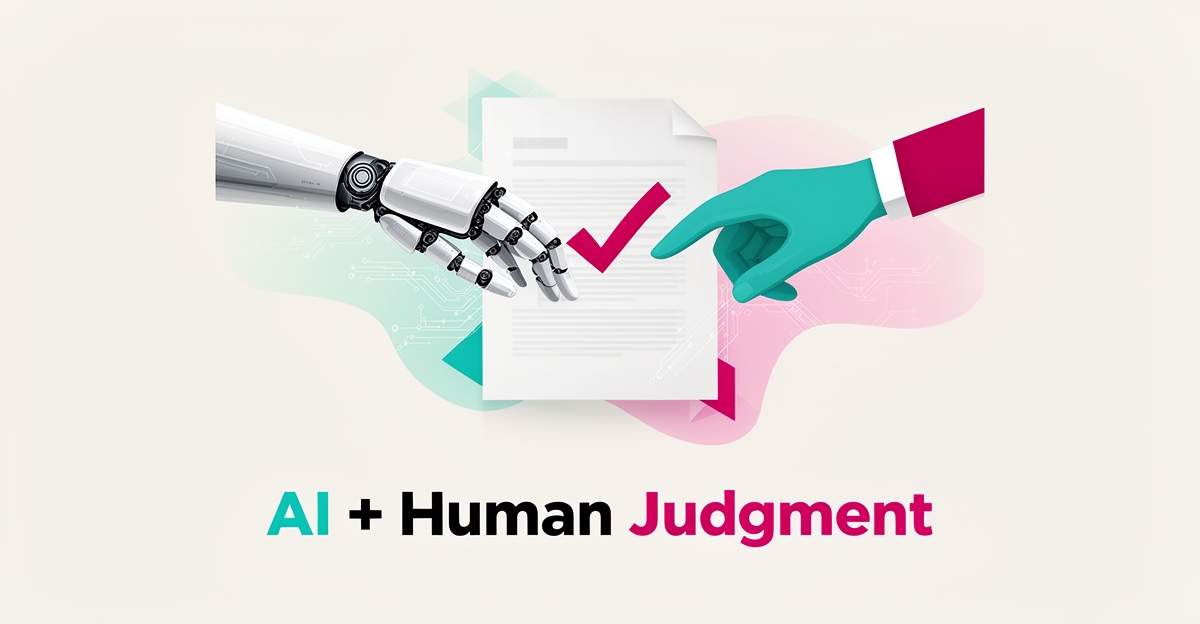
Can AI Replace Human Loan Officers in Title Loan Businesses?
Key Facts
- Nearly 90% of title and escrow professionals use at least one AI tool according to industry research.
- Agentic AI can double title examiner output from 10 to 20 commitments per day based on industry reports.
- Automated document processing can achieve up to 99% accuracy and cut loan approvals to 30-60 seconds per lending automation studies.
- 87% of organizations report faster threat response with AI-driven fraud detection per lending technology surveys.
- A 5% increase in customer retention can boost profits by over 25% as noted in customer experience research.
- The CFPB treats AI assistants the same as human loan officers for RESPA violations per financial process guidance.
Hire a team member that works 24/7 — for less than a part-time wage.
AI receptionists, SDRs, dispatchers and 99+ roles. Trained on your business, fully managed.
Not sure where to start? Ask our AI planner
Introduction
The title loan industry stands at a pivotal moment where technology promises to reshape how loans are processed, yet the human touch remains irreplaceable. As AI systems grow more sophisticated, the question isn't whether they can handle routine tasks, but where human judgment, empathy, and compliance oversight still add indispensable value. The data shows a clear industry shift toward augmentation rather than replacement, with professionals recognizing AI's potential to transform workflows while acknowledging its limits.
Nearly 90% of title and escrow professionals already use at least one AI tool, reflecting widespread adoption and growing optimism about the technology's role in their work over the next three to five years. This optimism has risen significantly, with a 14% increase in professionals feeling "optimistic" or "very optimistic" about AI between 2023 and 2025. These trends signal that the industry is moving beyond experimentation toward practical integration of AI in daily operations.
AI excels at high-volume, rule-based tasks that once consumed hours of manual labor. Automated document processing can achieve up to 99% accuracy in data extraction, reducing processing times from days to just 30-60 seconds for loan approvals. Title examiners using agentic AI have doubled their production capacity, moving from 10 to 20 commitments per day by offloading repetitive document review. These gains allow lenders to respond faster to potential threats, with 87% of organizations reporting improved threat response times thanks to AI-driven fraud detection.
- AI handles routine data extraction, fraud scoring, and Tier 0/1 customer support
- Humans manage complex exceptions, empathy-driven negotiations, and final compliance decisions
- The hybrid model positions humans as "AI conductors" guiding system outcomes
- Emotional intelligence remains critical for customer retention, with a 5% increase in retention boosting profits by over 25%
- AI enables straight-through processing for eligible applications while humans oversee high-risk cases
Despite AI's strengths in speed and accuracy, it cannot replicate the empathy required for distressed borrowers or navigate nuanced legal scenarios that demand human judgment. Regulatory compliance further necessitates human oversight, as the CFPB treats AI assistants the same as human loan officers—meaning any RESPA violation by an AI carries the same penalties as if a human committed it. For title loan businesses, the path forward lies in a balanced approach where AI manages execution and humans provide the knowledge, oversight, and emotional intelligence that build trust and loyalty. AIQ Labs supports this transition through AI Employees for front-line automation and Workflow Builds for rebuilding the loan processes that cost your team the most time—deploying AI where it adds value while preserving the human elements that drive sustainable success.
Key Concepts
The integration of AI in title loan businesses is not about replacement but transformation. Industry data shows nearly 90% of title and escrow professionals already use at least one AI tool, reflecting growing optimism about technology's role in streamlining operations according to industry research. This shift is driven by AI's ability to automate repetitive tasks, reduce processing times from days to minutes, and achieve up to 99% accuracy in data extraction—capabilities that directly enhance operational throughput and reduce human error as documented in lending automation studies. However, these gains do not eliminate the need for human judgment, especially in complex or emotionally charged scenarios.
AI excels at handling high-volume, rule-based workflows such as document classification, fraud scoring, and Tier 0/1 customer support, enabling straight-through processing for eligible applications per financial process optimization reports. Yet, it lacks the emotional intelligence required to navigate distressed borrower situations or negotiate sensitive loan terms—areas where human loan officers remain indispensable as highlighted in analyses of intelligent automation. The most effective model positions AI as an orchestrator of routine tasks while humans act as conductors, guiding decisions, managing exceptions, and ensuring compliance with nuanced regulatory requirements.
- AI agents can double production capacity for title examiners, increasing output from 10 to 20 commitments per day by offloading repetitive review based on industry reports
- Organizations using AI/ML report an 87% increase in speed when responding to potential threats, enhancing fraud detection and risk management per lending technology surveys
- A 5% increase in customer retention can boost profits by over 25%, underscoring the enduring value of human connection in lending relationships as noted in customer experience research
For businesses navigating this shift, AIQ Labs offers three entry points: AI Employees to staff routine intake and support roles at a fraction of the cost of a human hire, Workflow Builds to rebuild the single workflow that costs you the most, and AI Operating Systems to connect everything into one operating layer you own outright. By automating routine processes, loan officers can focus on high-value activities like complex case management, relationship building, and regulatory oversight, creating a more resilient and customer-centric operation. This balanced approach ensures efficiency gains are realized without sacrificing the empathy and judgment that define trusted lending relationships.
Best Practices
Successfully integrating AI into title loan operations requires a deliberate, phased approach that leverages technology where it excels while preserving the irreplaceable value of human judgment. Title and escrow professionals are already embracing this shift, with nearly 90% reporting they use at least one AI tool in their daily workflows, reflecting growing confidence in AI's ability to streamline routine tasks without compromising service quality.
A proven best practice is to implement tiered support systems where AI handles Tier 0 and Tier 1 inquiries—such as document requests, status updates, and basic eligibility questions—allowing human loan officers to focus on Tier 3 cases involving emotional distress, complex negotiations, or regulatory exceptions. This model not only improves efficiency but also enhances customer retention, as emotionally engaged interactions driven by human empathy can boost profits by over 25% with just a 5% increase in retention.
Organizations should also prioritize compliance automation by embedding digital KYC protocols and audit trails into AI workflows, ensuring that every action taken by an AI agent is traceable and aligned with regulatory standards like RESPA. Given that the CFPB treats AI assistants the same as human loan officers for compliance purposes, maintaining human-in-the-loop oversight for high-risk decisions is non-negotiable. AIQ Labs supports this balance through Workflow Builds, helping businesses design systems where AI executes routine actions under clear governance, while humans retain authority over nuanced judgments.
Finally, continuous monitoring and optimization are essential. AI models must be regularly updated to counter evolving fraud tactics, especially as criminals increasingly use AI to commit financial crimes. By treating AI as a collaborative tool rather than a replacement, title loan businesses can achieve faster processing, higher accuracy, and stronger customer relationships—all while staying compliant and resilient in a rapidly changing market.
Implementation
Knowing where to start is often the hardest part of AI adoption. The good news: most title and loan businesses don't need a moonshot—they need a disciplined, phased rollout that puts AI to work on the routine tasks that consume your team's day. Nearly 90% of title and escrow professionals already use at least one AI tool, so the question is no longer whether to implement, but how to do it well.
Start with an honest assessment of your current workflows. Map where loan officers spend their hours—document collection, data entry, status calls—and identify which tasks are high-volume and rule-based. These are your first automation targets. A practical guide to loan automation recommends beginning with smart workflows: dynamic webforms and rule-based engines that adapt questions and document requests based on loan type and borrower profile.
A sensible implementation sequence looks like this:
- Deploy AI-powered document extraction using OCR and NLP to pull data from IDs, bank statements, and property papers—automated processing can achieve up to 99% accuracy in data extraction.
- Stand up fraud detection models that score transactions in real time and flag suspicious patterns for human investigation, since 56% of fraud-management decision-makers reported increased financial crime activity in 2023.
- Configure tiered support so AI handles Tier 0 and Tier 1 inquiries autonomously, escalating only complex or emotional Tier 3 cases to your staff.
- Enable straight-through processing for eligible applications, reserving human review for high-risk exceptions.
Compliance must be built in from day one, not bolted on later. Integrate digital KYC protocols and audit trails early, because the CFPB treats your chatbot the same as a human loan officer—if it violates RESPA, you face the same fines. Define clear human-in-the-loop checkpoints where officers review AI recommendations before final decisions, particularly on high-risk cases.
Integration with your existing systems is equally critical. Legacy platforms and non-standardized processes are among the biggest barriers to AI adoption in lending, so any solution must connect cleanly with your loan origination system and core tools to preserve data integrity. Beware of vendors selling rebranded outsourcing dressed up as AI—distinguish between applied AI that delivers measurable ROI and generative tools that waste budget without a strategy.
This is where a structured approach pays off. AIQ Labs' Workflow Builds rebuild the one workflow that costs you the most at a fixed price, in phases, so results arrive in weeks rather than quarters. The payoff for getting it right is substantial: title examiners using agentic AI have doubled production capacity, moving from 10 to 20 commitments per day, while lenders adopting AI report faster threat response and dramatically reduced processing times.
Finally, plan for change management. Train your team on new roles, communicate clearly about how AI augments rather than replaces them, and establish metrics to track performance from day one. The businesses that treat implementation as an ongoing discipline—measuring, refining, and expanding—will be the ones that turn AI from a pilot project into a durable competitive advantage.
Conclusion
AI will not erase the loan officer role in title lending. It will reshape it around judgment, empathy, and compliance oversight while automating the repetitive work that slows teams down.
Nearly 90% of title and escrow professionals already use at least one AI tool, and industry research shows 86% feel neutral to very optimistic about AI technology. That adoption reflects real gains: agentic AI can double production capacity for title examiners, moving from 10 to 20 commitments per day, and intelligent document processing extracts data with up to 99% accuracy in 30-60 seconds.
The hybrid model is already emerging. AI handles high-volume, rule-based workflows such as document classification, fraud scoring, and Tier 0/1 support. Humans act as conductors, managing exceptions, nuanced legal scenarios, and final approvals where empathy and accountability matter.
This shift aligns with an Intelligence-in-Motion framework where AI orchestrates state and action while people retain knowledge and oversight. Lenders using AI/ML to understand lending risk report faster threat response, and 94% of organizations use AI/ML for risk understanding. The future is augmentation, not replacement.
For title loan businesses, the next steps are practical and phased:
- Map routine, high-volume workflows for straight-through processing and fraud detection automation
- Define human-in-the-loop decision points for high-risk cases, compliance, and distressed borrower interactions
- Establish AI readiness for data, integration, and governance before scaling agents across intake, verification, and collections
- Pilot an AI employee for Tier 0/1 support and document extraction, then expand with measurable ROI tracking
AIQ Labs supports this transition across three entry points—AI Employees, Workflow Builds, and AI Operating Systems—helping SMBs move from pilots to scaled, owned systems. The goal is not to remove human judgment but to free loan officers to use it where it creates the most value.
Organizations that pair agentic execution with human oversight gain speed, accuracy, and resilience without sacrificing trust. That balance is the competitive advantage in title lending today.
Still paying for 10+ subscriptions that don’t talk to each other?
We build custom AI systems you own outright. No vendor lock-in. Full control.
Not sure where to start? Ask our AI planner
Frequently Asked Questions
Will AI completely replace human loan officers in title loan businesses?
How much can AI improve processing speed for title loan approvals?
What percentage of title and escrow professionals already use AI tools in their work?
Can AI make final compliance decisions in title lending without human oversight?
How does AI impact customer retention and profitability in title loan businesses?
What is the accuracy rate of AI in extracting data from loan documents?
The Human-AI Balance: Where Title Lending Wins
The title loan industry isn't facing a choice between humans and AI—it's discovering how to make them work better together. With nearly 90% of professionals already using AI tools and seeing tangible gains like doubled production capacity and highly accurate data extraction, the real opportunity lies in augmentation, not replacement. AI excels at speed and scale, but human judgment, empathy, and compliance oversight remain irreplaceable for complex cases and customer trust. The path forward is clear: automate routine workflows, keep humans in the loop for high-risk decisions, and use AI to free your team for what they do best—building relationships and navigating nuance. To start your own balanced transformation, take the 2-minute Fit Check to see where AI fits your operation, then schedule your free 30-minute strategy call to map your highest-impact opportunities with AIQ Labs.
Make AI your competitive advantage — not just another tool.
Strategy, implementation and ongoing optimization. One partner, end to end.
Not sure where to start? Ask our AI planner