Can AI Replace Human Technicians in Glass & Mirror Installation? The Truth
Key Facts
- Glass Inc has 70 years of experience in the glass industry according to their website
- Glass Inc has served 25,000+ customers across 95+ cities in Metro Atlanta per their service data
- Safety Window Glass Repair has 158 Google reviews with a 5.0-star rating as shown on their profile
- Mitchell brings 80 years of industry expertise to automated estimating per their solutions page
- AIQ Labs deploys 200+ multi-agent systems daily per technical reports
- AI Employees cost 75–85% less than human employees in equivalent roles based on AIQ Labs pricing
- AI can reduce invoice processing time by 80% per AIQ Labs operational data
Hire a team member that works 24/7 — for less than a part-time wage.
AI receptionists, SDRs, dispatchers and 99+ roles. Trained on your business, fully managed.
Not sure where to start? Ask our AI planner
Why Glass & Mirror Installation Needs More Than Automation
A robot can measure a window frame, but it can't feel when a sash is slightly out of square or sense that a hairline crack is one wrong touch away from shattering. Glass and mirror installation is a trade where the difference between a flawless fit and a costly failure often comes down to human judgment in the moment.
Consider what experienced technicians actually bring to a job. Companies like Glass Inc have built their reputations on 70 years of accumulated expertise, serving more than 25,000 customers across 95+ cities in Metro Atlanta. That depth of knowledge, knowing how glass behaves under different loads, temperatures, and framing conditions, cannot be downloaded into a machine.
The safety stakes raise the bar even higher. Glass is one of the few building materials that can fail catastrophically, which is why providers offering 24/7 emergency service rely on trained professionals to assess structural risks on-site. A technician must evaluate wall integrity, weight distribution, and mounting surfaces before a single pane is lifted. These split-second calls demand real-world judgment that AI simply cannot replicate.
Where AI falls short in this trade comes down to a few core limitations:
- No human judgment: AI cannot replicate the on-site expertise of a seasoned technician facing an unexpected framing issue
- Dependence on data quality: AI is only as good as the data it's trained on, and poor data leads to inaccurate results
- No physical dexterity: handling fragile, heavy glass panels requires trained hands, not algorithms
- No customer trust: homeowners rely on the reassurance of a skilled professional standing in their home
Customer trust is perhaps the most underrated factor. A company like Safety Window Glass Repair has earned 158 Google reviews with a 5.0-star rating, reputation built on human interaction, craftsmanship, and accountability that no chatbot can deliver.
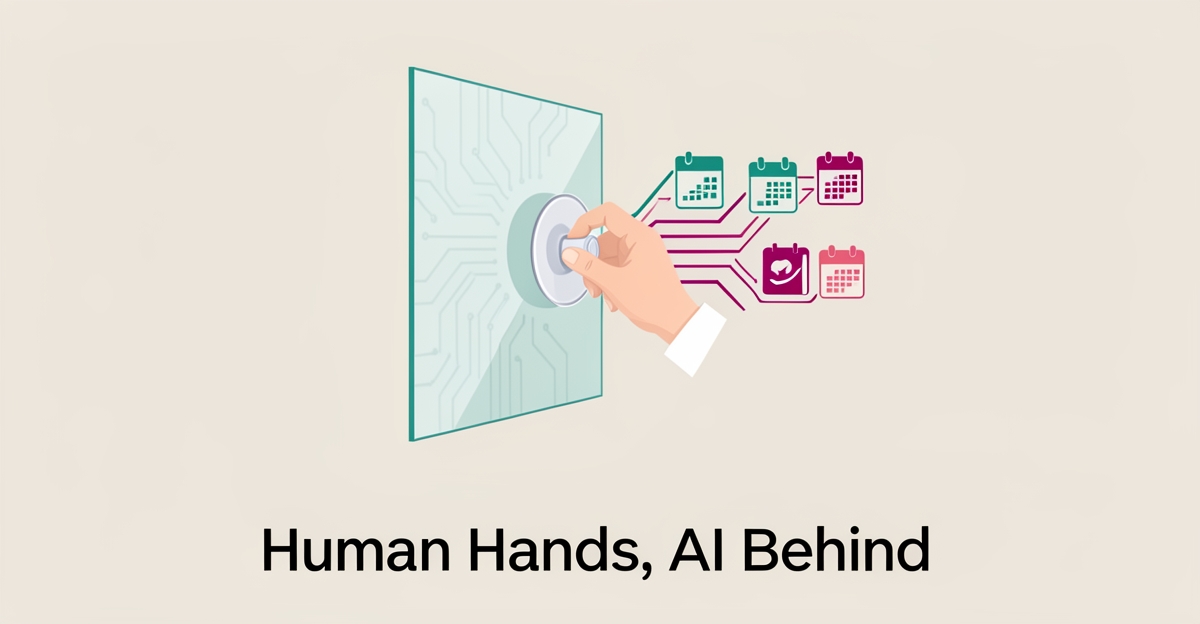
This doesn't mean AI has no place in the industry. Far from it. The most successful glass businesses use AI to handle scheduling, customer communication, and administrative work, freeing technicians to focus on the installation itself. As guidance on AI implementation suggests, the goal is augmenting human work, not replacing it. That's precisely how AIQ Labs approaches automation, building systems that work alongside human teams rather than in place of them.
Even in adjacent fields with deep AI investment, the pattern holds. Mitchell brings 80 years of industry expertise to automated estimating, yet those tools support professionals rather than eliminate them. The lesson is consistent: AI handles the paperwork, humans handle the craft.
How AI Enhances, Not Replaces, Human Technicians in Glass & Mirror Work
AI is transforming how glass and mirror businesses operate, not by replacing skilled technicians, but by handling the administrative work that pulls them away from the job site. For companies with decades of experience like Glass Inc, which has served 25,000+ customers across 95+ cities in Metro Atlanta over 70 years, AI tools now manage scheduling, customer follow-ups, and invoicing so technicians can focus on precision installation and customer trust. Glass Inc notes that AI enhances customer communication and scheduling, directly improving the overall experience without compromising craftsmanship.
AI-powered systems automate routine tasks such as appointment reminders, job status updates, and payment processing, freeing up valuable time for technicians to tackle complex cuts, edge work, and on-site problem solving. This shift allows human experts to apply their judgment where it matters most: assessing unique framing conditions, ensuring seamless fits, and advising clients on maintenance. As highlighted in the research, AI does not replicate the nuanced expertise required for glass and mirror work but instead supports it by reducing errors in logistics and improving response times. Tanic emphasizes that 24/7 emergency service availability is critical in this industry, and AI helps ensure no call goes unanswered while keeping technicians available for urgent installations.
By integrating AI into workflows, glass and mirror businesses gain measurable efficiency without sacrificing the human touch that defines quality service. Technicians spend less time on phone tags and paperwork and more time delivering flawless results, whether it’s a custom shower enclosure or a historic mirror restoration. AIQ Labs designs these systems to work alongside human teams, ensuring that technology strengthens rather than supplants the skilled labor at the heart of the trade. The result is a smoother operation where craftsmanship thrives, backed by smart automation that handles the rest.
Practical Steps to Implement AI as a Technician’s Assistant in Glass & Mirror Businesses
Glass and mirror businesses built on craftsmanship are discovering where AI fits best: not on the ladder, but in the office. The goal is to keep technicians installing while AI handles the work that slows them down.
Start by defining clear objectives for AI implementation in glass and mirror installation. Clarify whether the priority is faster scheduling, fewer missed calls, or reduced admin time. Objectives guide tool selection and prevent scope creep.
Select relevant metrics to track and evaluate AI performance from day one. Common measures include response time, booking conversion, and technician utilization. Monitoring performance impact ensures improvements are measurable, not assumed.
Data quality determines success. Collect and analyze data from dispatch logs, CRM notes, and customer communications before training any assistant. Poor data leads to poor routing and scheduling errors that technicians must then fix on site.
Integrate AI with existing workflows rather than replacing them. AI should read job details, confirm arrival windows, and send updates, while technicians retain final judgment on site conditions and installation methods. This augmentation model aligns with how AIQ Labs builds systems designed to work alongside human teams.
A practical rollout for glass and mirror shops typically includes:
- Define the assistant role: booking, rescheduling, and 24/7 customer updates
- Connect to current scheduling and dispatch tools for seamless data flow
- Train the model on real job histories, service areas, and brand voice
- Pilot with one crew or territory and measure against baseline metrics
- Expand after validating accuracy and technician feedback
Businesses with long track records show why trust matters. Glass Inc highlights 70 years of experience in the glass industry, 25,000+ customers served, and 95+ cities served in Metro Atlanta. Those relationships rely on human expertise on site, supported by reliable back-office operations.
Customer communication and scheduling are the highest-value first use cases. AI can confirm appointments, provide 24*7 emergency service availability updates, and collect access details, freeing technicians to focus on craftsmanship and customer trust. AI does not replace human technicians, it handles administrative tasks that pull them away from installation.
Limitations remain. AI lacks human judgment for complex on-site decisions and depends entirely on the data it is trained on. Ensuring data quality and accuracy is essential before scaling. With clear objectives, clean data, and measured pilots, glass and mirror businesses can adopt AI as a technician’s assistant without disrupting the expertise customers value.
Still paying for 10+ subscriptions that don’t talk to each other?
We build custom AI systems you own outright. No vendor lock-in. Full control.
Not sure where to start? Ask our AI planner
Frequently Asked Questions
Can AI completely replace human technicians for glass and mirror installation?
What specific tasks can AI handle in a glass and mirror business?
Why can't AI handle the physical installation of glass and mirrors?
How does AI improve customer service for glass companies without replacing technicians?
What are the main limitations of using AI in glass installation?
How should a glass and mirror business start implementing AI tools?
Where Craft Meets Code: The Future of Glass Installation
The glass and mirror installation trade proves that some crafts remain irreplaceably human, where judgment, dexterity, and trust turn technical skill into artistry. AI won’t replace the technician who senses a hairline crack or adapts to a warped frame, but it can eliminate the administrative drag that pulls experts away from what they do best. By automating scheduling, customer updates, and invoicing, AI gives seasoned teams back the time to focus on precision work and customer relationships that build decades-long reputations. For businesses ready to protect their craft while gaining operational clarity, the next step is identifying where AI can handle the routine so your technicians can focus on the remarkable. Start with a free strategy call at AIQ Labs to see how AI can build systems that work alongside your team, not in place of it, so your expertise shines brighter than ever.
Make AI your competitive advantage — not just another tool.
Strategy, implementation and ongoing optimization. One partner, end to end.
Not sure where to start? Ask our AI planner