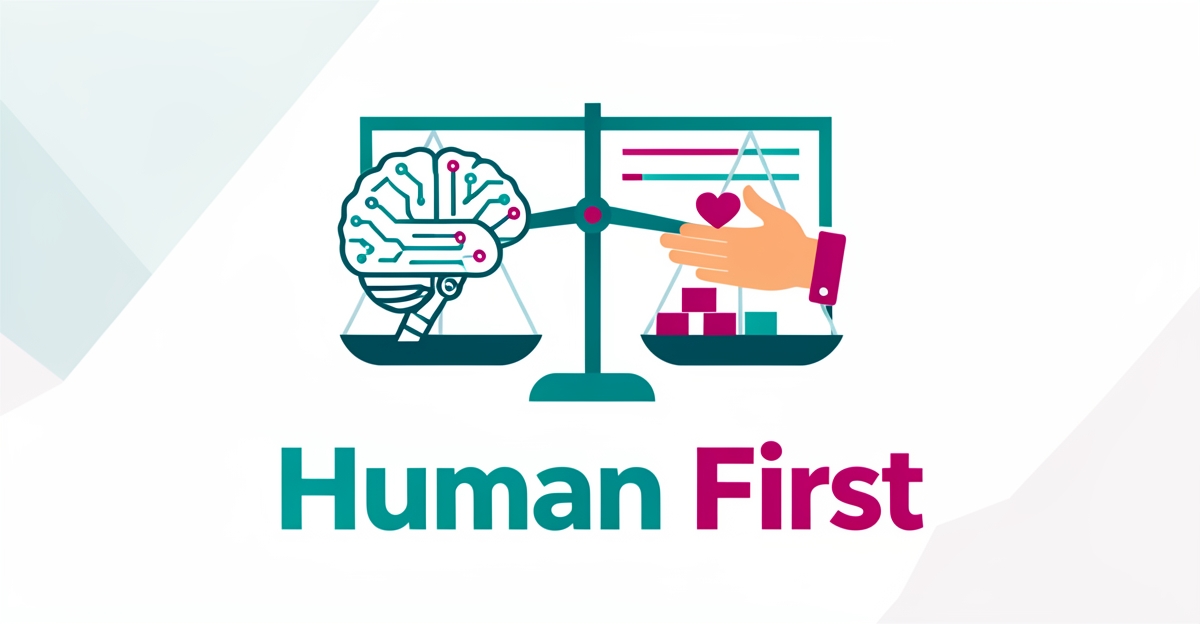
Can AI Replace Human Tutors for Behavioral Support? The Truth for Special Education
Key Facts
- A large share of K-12 teachers report receiving little or no AI professional learning, according to recent education technology surveys.
- Education guidance in multiple jurisdictions emphasizes that essential learning skills must remain the focus of public education.
- Mental health research suggests AI can reduce anxiety and depression symptoms in some carefully designed programs, but only as a support, not a replacement.
- AI can reduce educator administrative burden by automating routine tasks like documentation and progress reporting.
- Human tutors remain essential for empathy, trust, and clinical judgment in behavioral support.
Hire a team member that works 24/7 — for less than a part-time wage.
AI receptionists, SDRs, dispatchers and 99+ roles. Trained on your business, fully managed.
Not sure where to start? Ask our AI planner
The Special Education Dilemma: Demand vs Human Capacity
Special education teams across North America face an impossible equation: rising demand for behavioral support colliding with chronic staffing shortages, overwhelming caseloads, and educator burnout. The question isn't whether help is needed, it's whether AI can provide meaningful relief without compromising the human connection that vulnerable students require.
The capacity crisis starts with a skills gap. Recent education technology surveys suggest that most K-12 teachers have received little or no professional learning about using AI in the classroom. This leaves special education teams without the training to leverage tools that could automate administrative burdens and free up time for direct student support.
Meanwhile, the core mission remains non-negotiable. Education guidance in multiple jurisdictions, including UK government policy on generative AI in education, consistently emphasizes that essential learning skills, literacy, numeracy, research, and critical thinking, must remain the focus of public education. Any technological solution must protect these fundamentals while addressing the behavioral support gap.
Human tutors bring irreplaceable strengths to this work: empathy, clinical judgment, and the ability to build trust with students in crisis. Yet these same professionals face limited availability and high costs that make comprehensive coverage impossible for many districts. The result is a system where students who need consistent behavioral support often encounter rotating staff or waitlists instead of reliable relationships.
AI offers a different kind of capacity. When designed responsibly, these tools can handle routine check-ins, track behavioral patterns, and provide immediate responses during off-hours, functioning as force multipliers for human teams rather than replacements. Mental health research indicates that AI can reduce symptoms of anxiety and depression in some carefully designed programs, suggesting similar potential for structured behavioral support in educational settings.
However, the technology carries real limitations that special education leaders must navigate:
- AI systems can miss subtle signs of crisis that trained professionals recognize
- Algorithmic biases may affect how tools interpret behavior across different student populations
- Data privacy concerns require stringent protocols when handling sensitive student information
- Over-reliance on automated responses risks missing the human context behind behavioral escalations
The path forward requires treating AI as infrastructure for human connection, not a substitute for it. This means deploying intelligent systems to handle documentation, pattern recognition, and routine monitoring while preserving human tutors for complex interventions and relationship-building. It also means addressing the readiness gap through strategic planning, ensuring staff receive proper training before tools enter the classroom.
Organizations like AIQ Labs approach this through structured discovery work, starting with a focused workflow rebuild that targets the single most expensive, time-consuming process in a program (often documentation and reporting) before scaling further. By identifying specific workflow bottlenecks and training needs first, special education programs can implement AI support that actually reduces burnout rather than adding technological complexity to an already strained system.
What AI Can and Cannot Do in Behavioral Support
AI is being positioned as a tutor, coach and crisis responder for students with behavioral needs. The reality is more limited and more nuanced.
Research shows AI can support mental health care by reducing symptoms of anxiety and depression when carefully designed and used appropriately. It can encourage self-reflection and offer emotional support in some situations. In special education, AI can help teachers focus on teaching by automating administrative tasks and providing personalized learning experiences. Education technology analysis consistently notes that AI can reduce the administrative burden on educators by automating routine tasks.
Capabilities are real but bounded. AI systems can:
- Provide helpful information and prompt self-reflection for students
- Support cognitive reframing techniques in structured mental health programs
- Automate administrative work so teachers can focus on instruction
- Deliver personalized learning experiences and enhance lesson planning
Those strengths matter. Yet AI cannot truly understand the person behind the conversation. According to mental health researchers, AI systems can generate inaccurate advice, miss signs of crisis, and lack the empathy and trust that human mental health professionals provide.
The limitations are critical in behavioral support. AI lacks the true empathy and clinical judgment needed for special education contexts. It can inherit biases from training data and struggle with nuanced human behavior. Crisis detection failures remain a documented risk, and over-reliance can erode safety.
Adoption context matters. Surveys of K-12 teachers consistently find that most have received little or no professional learning about using AI in the classroom. At the same time, public education guidance emphasizes that essential learning skills, literacy, numeracy, and critical thinking, need to remain a focus of public education.
Human-AI collaboration is essential in special education and mental health care. AI can support human tutors by providing additional resources and feedback, but human tutors are necessary for empathy, trust, and clinical judgment. This is why a nuanced discussion on the role of AI in emotional and behavioral support emphasizes that AI cannot replace human empathy but can significantly augment it. AIQ Labs works with organizations to map where augmentation adds value without displacing human-led care, starting with a two-minute Fit Check to identify the right entry point.
Human-AI Collaboration as the Safe Path Forward
Human-AI collaboration offers a safe and effective path forward for behavioral support in special education. Research shows AI can automate administrative tasks, provide personalized learning experiences, and enhance lesson planning, freeing up human tutors to focus on direct student interaction. Education technology studies have found that AI can help reduce the administrative burden on educators, allowing them to dedicate more time to teaching and support.
While AI tools excel at pattern recognition and feedback delivery, they cannot replicate the empathy, trust, and clinical judgment that human tutors bring to behavioral support. Mental health researchers consistently emphasize that AI is a tool to support care, rather than something that can or should replace it. Human tutors remain essential for interpreting nuanced behaviors, building therapeutic relationships, and making safety-critical decisions.
Effective collaboration requires strong safeguards around data privacy, bias mitigation, and governance. AI systems must protect sensitive student information and avoid inheriting biases from training data that could disadvantage certain populations. Human oversight ensures AI-generated insights are interpreted correctly and ethically applied. For institutions ready to go beyond isolated tools, AIQ Labs builds AI operating systems, one connected layer, built in phases and owned outright, so safeguards and human oversight are designed into the system rather than bolted on. This balanced approach leverages AI's strengths in resource provision and feedback while preserving the irreplaceable human elements of empathy, trust, and judgment.
A Responsible Implementation Roadmap for Schools
Implementing AI in behavioral support requires a thoughtful, step-by-step approach that centers human expertise while leveraging technology responsibly. Schools should begin by clearly defining what AI integration means within their special education framework, gathering input from students, teachers, and leadership to ensure alignment with pedagogical goals and student needs. This foundational step ensures that technology serves as a supplement, not a substitute, for the empathy and clinical judgment only human tutors can provide. Given that most K-12 teachers report little or no professional learning about classroom AI, stakeholder-defined goals are critical for effective adoption.
Next, develop a detailed implementation plan that outlines timelines, resource allocation, and targeted training for staff involved in behavioral support. Training should focus on how AI tools can automate administrative tasks, like tracking behavior logs or generating progress reports, freeing educators to spend more time on direct student interaction. Pilot the selected tools with a small group of educators and students, maintaining open communication channels to address concerns and gather real-time feedback on usability and impact. A fixed-price, phased build, like AIQ Labs' AI Workflow Builds, keeps pilots scoped and predictable, so districts can prove value on one workflow before committing further.
Finally, establish a cycle of continuous monitoring and refinement, using data on student outcomes and staff feedback to adjust AI usage as needs evolve. Regularly assess whether the technology is meeting its intended goals, such as improving consistency in behavior tracking or offering supplemental self-reflection prompts, without over-reliance or erosion of human connection. As the research consistently notes, AI is a tool to support mental health care, rather than something that can or should replace it. For schools seeking guidance on responsible AI adoption, AIQ Labs offers a free 30-minute strategy call, start with the Fit Check at aiqlabs.ai/apply, to ensure technology enhances, rather than displaces, human-led care in special education settings.
Still paying for 10+ subscriptions that don’t talk to each other?
We build custom AI systems you own outright. No vendor lock-in. Full control.
Not sure where to start? Ask our AI planner
Frequently Asked Questions
Can AI actually replace human tutors for students with behavioral needs?
What specific tasks can AI handle in special education behavioral support?
What are the biggest risks of using AI for student behavioral support?
Are teachers actually prepared to use AI tools in special education?
How should schools implement AI without compromising student safety?
Does using AI in special education conflict with core learning goals?
Augment, Don't Replace: Building a Human-Centered Behavioral Support System
The evidence is clear: AI cannot replace the empathy, clinical judgment, and trust that human tutors provide for students with behavioral needs, but it can meaningfully augment them. When deployed responsibly, AI can handle routine check-ins, track behavioral patterns, automate documentation and progress reporting, and provide immediate off-hours support, freeing special education teams to focus on the complex interventions and relationships only people can deliver. The risks are real, missed crisis signals, algorithmic bias, data privacy concerns, and over-reliance, which is why implementation must be guided by human oversight, strong safeguards, and staff readiness. With most K-12 teachers reporting little or no professional learning about AI in the classroom, the first step is assessing where augmentation adds value without displacing human-led care. Define your goals with educators and families, map workflow bottlenecks, and pilot tools with clear monitoring. If you want help building that roadmap, start the two-minute Fit Check at aiqlabs.ai/apply to book a free 30-minute strategy call and identify high-ROI, human-centered AI opportunities for your program.
Make AI your competitive advantage — not just another tool.
Strategy, implementation and ongoing optimization. One partner, end to end.
Not sure where to start? Ask our AI planner