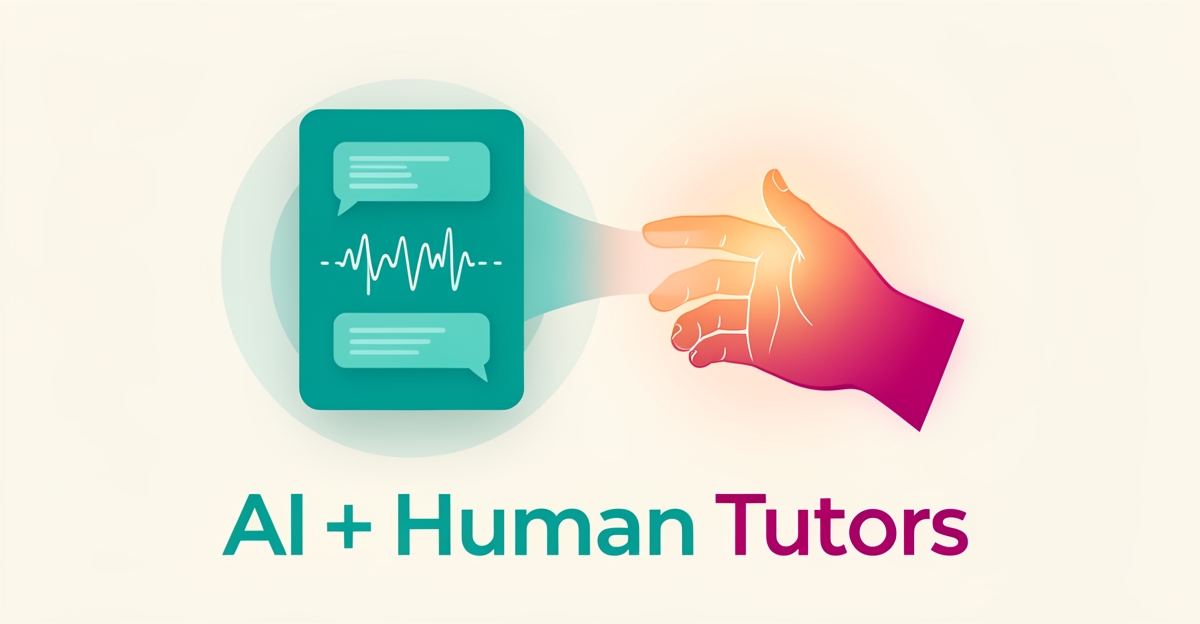
Can AI Replace Human Tutors in ESL? The Truth About AI Coaching in Language Learning
Key Facts
- A large majority of students, often reported above 80%, already use AI in their studies, with many using it weekly according to Elsevier research
- Roughly half of US students credit AI with helping them achieve better grades in a higher education study
- A majority of faculty report using AI for teaching, but only a small minority feel equipped to use it effectively per Elsevier
- AI literacy skills added by LinkedIn members grew sharply year-over-year according to LinkedIn
- AI literacy growth has far outpaced overall skills growth per LinkedIn talent blog
- AI coaching magic lies in creating developmental shifts not tracking progress says Michael Hudson
Hire a team member that works 24/7 — for less than a part-time wage.
AI receptionists, SDRs, dispatchers and 99+ roles. Trained on your business, fully managed.
Not sure where to start? Ask our AI planner
The ESL Tutoring Gap AI Promises to Fill
Ask any ESL teacher how many students they can realistically coach one-on-one each week, and the answer reveals the core problem: demand for language support keeps growing while human capacity stays fixed. AI has stepped into that gap with remarkable speed, and the numbers show students got there before institutions did.
According to research from Elsevier, the large majority of students, figures above 80% have been reported, already use AI in their studies, with many using it weekly. The same research found that roughly half of US students credit AI with helping them achieve better grades. Learners are not waiting for permission; they have already made AI part of their study routine.
Institutions, however, are lagging behind their own classrooms. While a majority of faculty report using AI for teaching, only a small fraction feel equipped to use AI effectively in the classroom. That gap between adoption and readiness creates real risk: students practicing pronunciation with unvetted tools, receiving vocabulary feedback no instructor has reviewed, and developing habits nobody is monitoring.
The result is a tutoring landscape defined by three pressures:
- Class sizes that make individualized speaking practice nearly impossible during limited contact hours
- Faculty who want to use AI but lack the training and policies to do it responsibly
- Learners who need frequent, low-stakes practice between lessons, exactly the kind of repetition human tutors cannot economically provide
This is where well-designed AI tutoring earns its place. Systems that provide guided practice, pronunciation feedback, and vocabulary reinforcement can absorb the repetitive drill work, freeing instructors to focus on what AI handles poorly: emotional support, contextual understanding, and the encouragement that keeps a struggling learner going. It is the model we build toward at AIQ Labs, AI tutors operating under the supervision of human instructors, not instead of them. If you are exploring what supervised AI staff can do for a language program, our AI Employees page is a practical starting point.
The demand is not going away, and neither is the technology. The question facing ESL programs is not whether students will use AI, but whether institutions will shape that use deliberately or leave it to chance.
What AI Does Well in Language Learning
AI is proving to be a powerful supplement in language learning, particularly when it comes to structured practice and measurable outcomes. For ESL students, AI-driven tools excel at delivering consistent, repeatable exercises that reinforce grammar rules, sentence patterns, and vocabulary acquisition through spaced repetition and adaptive quizzes. These systems can track learner progress over time, identifying strengths and gaps with precision, something that supports both student self-awareness and instructor planning. According to research on AI in higher education, roughly half of US students credit AI with helping them achieve better grades, highlighting its effectiveness in supporting structured learning tasks.
Beyond practice, AI shines in areas like pronunciation feedback and vocabulary reinforcement, where immediate, objective responses can accelerate skill development. Speech recognition technology allows learners to repeat phrases and receive real-time corrections on intonation, stress, and phoneme accuracy, feedback that would be difficult to scale in a traditional classroom setting. Similarly, AI-powered flashcards and contextual usage examples help embed new words into long-term memory by adapting to individual learning curves. This kind of guided, supervised practice aligns closely with how AIQ Labs approaches AI staffing: AI team members provide targeted support in pronunciation, vocabulary, and skill-building, all under the oversight of human educators who ensure relevance and emotional engagement.
- Delivers consistent, adaptive practice for grammar and sentence structure
- Provides real-time pronunciation feedback using speech recognition
- Reinforces vocabulary through spaced repetition and contextual examples
- Tracks progress objectively to inform both learners and instructors
- Operates 24/7, enabling flexible, self-paced study outside class hours
While these capabilities make AI a valuable asset, its role remains complementary, handling the repetitive, data-driven aspects of learning so human tutors can focus on conversation, cultural nuance, and motivational guidance. The most effective ESL programs use AI not to replace teachers, but to extend their reach, ensuring students get both the rigor of automated practice and the empathy of human interaction. As noted in expert commentary on AI and human coaching, the magic of language development lies in transformative feedback, something AI can support, but not replicate, on its own.
Where Human Tutors Remain Irreplaceable
While AI excels at delivering structured language exercises and tracking measurable progress, it falls short in areas where human connection drives real growth. The magic of coaching lies in creating developmental shifts, not just tracking vocabulary or grammar accuracy, something AI systems are not designed to replicate according to Michael Hudson. This limitation becomes especially critical in ESL learning, where confidence, cultural nuance, and emotional resilience often determine long-term success more than rote memorization.
Human tutors bring emotional intelligence that allows them to sense frustration, celebrate breakthroughs, and adapt their approach in real time, capabilities AI cannot match as shown in direct comparisons. They provide not just correction, but encouragement; not just feedback, but mentorship. For ESL learners navigating the vulnerability of speaking a new language, this emotional support is essential, research confirms human coaches are vital for offering the guidance and feedback that sustain motivation through plateaus and setbacks as noted in higher education studies.
Moreover, human instructors excel at contextual understanding, recognizing when a learner’s error stems from language transfer, cultural misunderstanding, or personal anxiety, and responding with tailored strategies based on nuanced observation. They spark deeper personal transformation by connecting language learning to identity, goals, and lived experience, turning lessons into meaningful milestones. While AIQ Labs builds AI staff to handle pronunciation drills, vocabulary reinforcement, and guided practice under human supervision, these tools are designed to amplify, not replace, the irreplaceable role of the human educator in fostering not just language proficiency, but lifelong confidence in communication.
A Hybrid Model for ESL Coaching That Works
A hybrid model for ESL coaching offers the most effective path forward, combining the strengths of both AI and human instructors. Rather than viewing AI as a replacement, it functions best as a targeted supplement, handling repetitive drills, pronunciation feedback, and vocabulary tracking while freeing human tutors to focus on empathy, cultural nuance, and motivational guidance. This approach aligns with the growing demand for AI literacy, as evidenced by a sharp year-over-year increase in AI literacy skills added by LinkedIn members, signaling a widespread shift toward responsible AI integration in education.
Implementing this model begins with clearly defined learning objectives, ensuring AI tools are deployed purposefully rather than arbitrarily. Institutions must establish governance frameworks that prioritize transparency, equity, and accountability, especially critical given that a majority of faculty report using AI for teaching, but only a small minority feel equipped to use it effectively. Without such structure, even well-intentioned AI use risks undermining learning outcomes or exacerbating inequities.
In practice, AI excels at structured tasks: generating personalized pronunciation exercises, tracking lexical progress over time, and delivering instant grammar corrections during self-paced study. These capabilities support consistent practice and data-driven insights, allowing human tutors to intervene strategically when learners struggle with idiomatic expressions, social pragmatics, or confidence barriers. As noted in coaching research, "AI coaching is here, sort of... The magic of coaching is in creating developmental shifts, not tracking progress", a reminder that emotional intelligence and transformative guidance remain distinctly human domains.
To sustain this balance, educators need ongoing support in AI literacy and ethical application. Professional development should cover not only how to use AI tools but also when to rely on human judgment, particularly in assessing learner motivation, cultural identity, and emotional readiness. When AI handles measurement and repetition, teachers can dedicate more time to meaningful dialogue, role-playing real-world scenarios, and fostering the intercultural competence essential for true language mastery.
This supplement-not-replace framework doesn’t diminish AI’s value, it amplifies it by placing technology in service of pedagogy rather than the reverse. For organizations ready to move, AIQ Labs builds this kind of supervised AI capacity in phases: Workflow Builds rebuild the one process that costs you the most, while AI Operating Systems connect everything into one layer your organization owns outright. Start with a two-minute Fit Check to see which entry point fits. By anchoring innovation in clear objectives and ethical guardrails, schools and language programs can harness AI’s efficiency while preserving the irreplaceable role of the tutor as mentor, motivator, and cultural bridge.
Still paying for 10+ subscriptions that don’t talk to each other?
We build custom AI systems you own outright. No vendor lock-in. Full control.
Not sure where to start? Ask our AI planner
Frequently Asked Questions
Can AI really replace human tutors for ESL learners?
How many students are already using AI in their studies?
What specific language skills does AI help improve in ESL learning?
Why do human tutors remain essential in ESL coaching even with AI available?
Do students say AI helped them get better grades?
Are faculty prepared to use AI effectively in ESL classrooms?
Make AI your competitive advantage — not just another tool.
Strategy, implementation and ongoing optimization. One partner, end to end.
Not sure where to start? Ask our AI planner