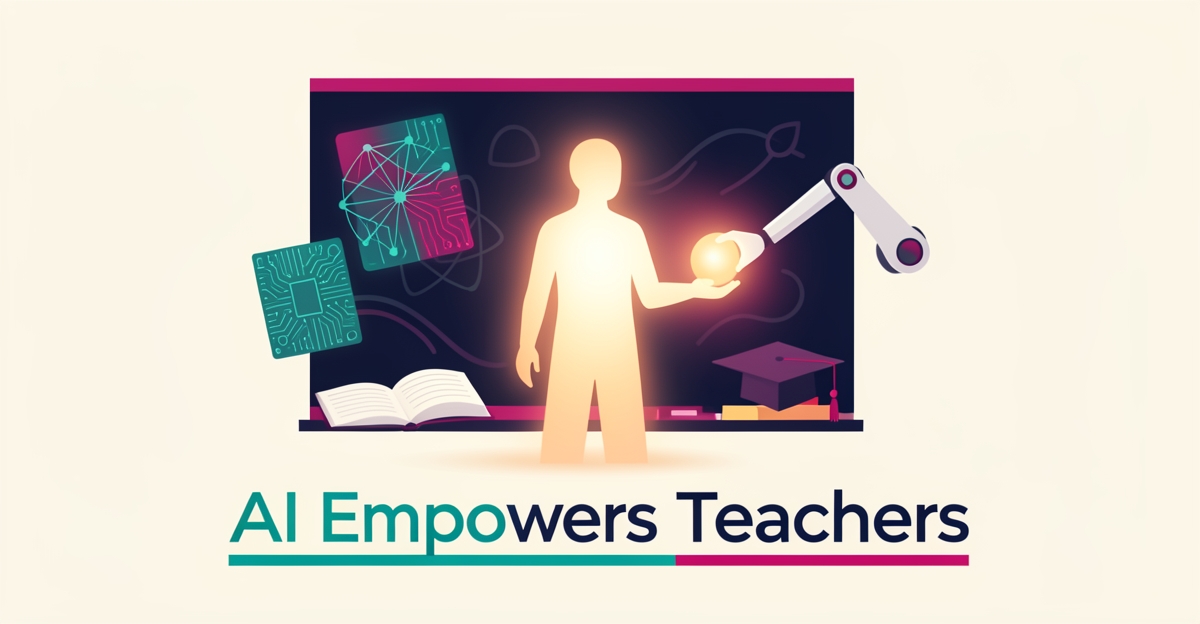
Can AI Replace Teachers in Private K-12 Schools? The Truth About AI's Role in Education
Key Facts
- A strong majority of teachers believe AI helps streamline routine tasks like grading and scheduling, according to CDW research
- Most educators believe AI can improve student outcomes when technology serves pedagogy per industry data
- A majority of teachers say AI enables more personalized learning for diverse student needs based on recent study findings
- Teachers can typically save several hours per week using AI assessment tools for grading and content differentiation according to implementation data
- A large share of K-12 teachers report receiving no professional learning about using AI in the classroom per CDW survey results
- Many university instructors believe AI will have a negative impact on academic integrity according to research shared by Angela Duckworth
- Nearly all surveyed respondents agree essential learning skills must remain a focus and students should not become overly dependent on AI per West Virginia Department of Education
Hire a team member that works 24/7 — for less than a part-time wage.
AI receptionists, SDRs, dispatchers and 99+ roles. Trained on your business, fully managed.
Not sure where to start? Ask our AI planner
The Reality Check: Why AI Won't Replace Teachers in K-12 Education
The idea that AI could replace teachers in K-12 classrooms misses the mark entirely. Research shows that most teachers view AI as a tool for streamlining routine tasks like grading and scheduling, not as a substitute for human instruction. According to CDW, this perspective reflects a growing understanding that AI’s true value lies in handling administrative burdens so educators can focus on what matters most: direct student engagement.
Angela Duckworth’s insight reinforces this reality: in the age of AI, students need teachers more, not less. Her research emphasizes that teachers provide irreplaceable elements, emotional intelligence, critical thinking guidance, and modeling genuine intellectual engagement, that AI fundamentally cannot replicate. While AI can personalize content or automate feedback, it lacks the capacity to inspire curiosity, navigate complex social dynamics, or mentor students through authentic learning struggles.
This is where thoughtful AI integration transforms education. By automating routine tasks, AI frees teachers to dedicate more time to lesson planning, individualized support, and fostering classroom communities. Tools that assist with differentiation or assessment allow educators to shift from administrative roles back to their core mission: guiding students through meaningful intellectual work. Data shows that most teachers believe AI enables more personalized learning, and most educators see potential for improved student outcomes, but only when technology serves pedagogy, not the reverse.
AIQ Labs understands this balance through its AI Workflow Builds, helping educational institutions rebuild the one workflow that costs the most, whether that's grading pipelines, scheduling, or parent communications, so teachers get relief where it matters. The focus remains on building systems where technology handles repetitive workflows, empowering teachers to invest their energy in the relationships and insights that drive real learning. When AI streamlines the mechanics of education, teachers gain the space to do what only humans can: nurture the whole student.
How AI Actually Enhances Teaching: Administrative Automation and Personalized Learning
Teachers are not being replaced by AI; they are being relieved of work that keeps them from teaching. In private K-12 schools, the most consistent gains come from using AI to handle repetitive operations and to adapt instruction to individual learners.
Administrative automation is freeing up real time. According to industry research, a strong majority of teachers believe AI helps streamline routine tasks such as scheduling, grading, and tracking student progress. That streamlining translates into hours recovered each week, with implementation data suggesting teachers can save several hours per week using AI assessment tools for grading and content differentiation.
Tools like Gradescope show how this works in practice for assessment. The platform handles scanning handwritten work, digital uploads, and coding assignments, particularly in STEM subjects, while AI-powered assistants automate routine grading and feedback generation. Diffit specializes in text differentiation, allowing educators to take any article or topic and generate reading materials at various grade levels or Lexile scores. The result is less manual prep and more direct student interaction.
Personalized learning is the second major enhancement. A recent study found that most teachers said AI enables more personalized learning, and most educators believe AI can improve student outcomes. Adaptive platforms adjust content difficulty and presentation style based on individual needs and learning paces, supporting inclusion classrooms and language learners.
The shift is practical and teacher-led:
- Automated grading and feedback for essays, quizzes, and assignments
- Content differentiation for reading levels and learning profiles
- Scheduling and progress tracking handled by AI assistants
- Formative assessment ideas generated to support dynamic lessons
This is where an AI readiness assessment becomes relevant for schools. An AI Readiness Assessment helps leadership map current workflows, identify high-impact automation targets, and ensure tools respect pedagogy and human oversight. AIQ Labs approaches education with that balance, focusing on systems that handle administrative load while teachers retain control of instruction and relationships.
When AI absorbs the repetitive work, teachers can focus on what AI cannot replicate: guiding intellectual challenge, modeling engagement, and providing emotional support. That partnership model is the proven path forward.
Implementation Strategy: AI as a Teacher's Assistant, Not a Replacement
Private K-12 schools face a critical decision: how to integrate AI without undermining the teacher’s irreplaceable role. The most effective strategy positions AI as a teacher’s assistant, not a replacement, focusing on augmenting human capabilities while preserving the emotional intelligence and mentorship that define quality education. This approach aligns with research showing that most teachers believe AI helps streamline routine tasks, freeing them to focus on direct student interaction and creative lesson planning.
A phased implementation ensures sustainable adoption and minimizes disruption. Schools should begin by assessing current workflows to identify repetitive tasks AI can automate, such as grading, scheduling, or progress tracking. Starting with one targeted tool, like MagicSchool AI for lesson differentiation or Curipod for interactive lesson building, allows educators to build confidence and expertise before scaling. Piloting with small groups, such as a single grade level or subject department, provides valuable feedback and highlights implementation challenges early.
Professional development is essential, given that a large share of K-12 teachers surveyed report receiving no professional learning about using artificial intelligence in the classroom. Training must emphasize how AI supports, not replaces, pedagogical goals, covering tool functionality, data privacy, and strategies for guiding students toward instrumental AI use that builds skills rather than seeking quick answers. Continuous monitoring of impact on student outcomes and teacher workload allows for data-driven adjustments, ensuring the technology enhances learning without creating over-dependence.
AIQ Labs supports this journey through a phased build model: start with a single high-cost workflow, prove the value, then expand toward a connected AI Operating System the school owns outright. By prioritizing teacher agency and ethical AI use, private schools can harness technology to deepen engagement, personalize learning, and restore time for what matters most, meaningful student-teacher relationships. This balanced approach turns AI from a potential distraction into a powerful ally in education.
Still paying for 10+ subscriptions that don’t talk to each other?
We build custom AI systems you own outright. No vendor lock-in. Full control.
Not sure where to start? Ask our AI planner
Frequently Asked Questions
Can AI really replace teachers in private K-12 schools?
What kind of work can AI actually take off a teacher’s plate?
Does using AI in classrooms actually help students learn better?
Is AI good for personalized learning in K-12?
What are the biggest concerns about AI in education?
How should private schools start implementing AI without replacing teachers?
The Future of Teaching: Where AI and Educators Work Together
The evidence is clear: AI won't replace teachers in private K-12 schools, but it will transform how they teach. As this article highlights, most educators already see AI streamlining routine tasks like grading and scheduling, freeing up hours each week for what truly matters, direct student engagement, lesson planning, and emotional support. Tools such as Diffit for content differentiation and Gradescope for assessment automation demonstrate how AI handles the mechanics of education, allowing teachers to focus on irreplaceable human elements like fostering curiosity and guiding intellectual struggle. When implemented thoughtfully, AI becomes a teacher's assistant, not a replacement, enhancing personalized learning while preserving the mentorship that drives real student growth. For school leaders ready to explore this balance, AIQ Labs offers AI Workflow Builds to identify the one workflow costing your staff the most time and rebuild it at a fixed price, with a clear path toward a full AI Operating System over time. Start with the 2-minute Fit Check and a free 30-minute strategy call to see how AI can empower your teaching team without compromising the human connection at the heart of education.
Make AI your competitive advantage — not just another tool.
Strategy, implementation and ongoing optimization. One partner, end to end.
Not sure where to start? Ask our AI planner