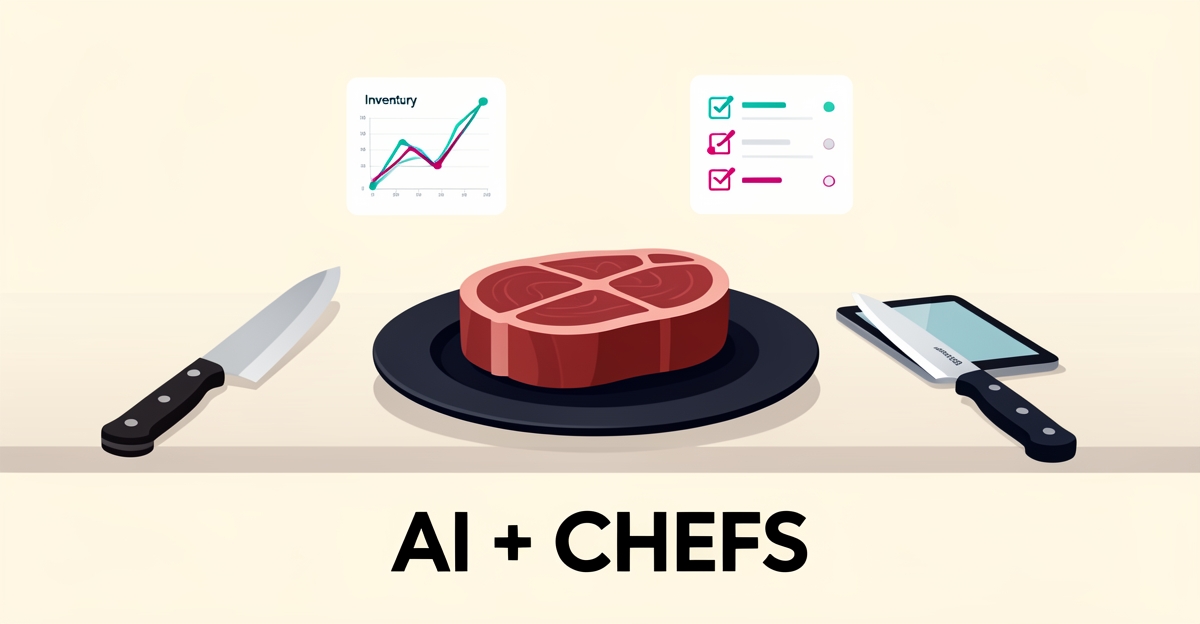
Can AI Replace Your Steakhouse Chef? The Truth About AI in Culinary Operations
Key Facts
- Industry analyses consistently rate chef and head cook roles as low-risk for AI displacement, the work depends on sensory judgment machines can't replicate
- AI forecasting tools typically predict ingredient needs with high accuracy, minimizing waste and preventing stockouts
- Head cooks commonly reclaim several hours per week of routine work, inventory tracking, order logging, and data entry, when AI handles the backend
- Restaurants using AI-powered inventory and purchasing systems typically report meaningful food cost reductions
- A large share of restaurant operators plan to invest in AI technology over the next two years, per industry association surveys
- The U.S. Bureau of Labor Statistics projects continued growth in chef and head cook positions through the mid-2030s, indicating industry expansion
- A majority of operators report trouble filling cook and chef positions, AI helps by making roles more sustainable, not by replacing people
Hire a team member that works 24/7 — for less than a part-time wage.
AI receptionists, SDRs, dispatchers and 99+ roles. Trained on your business, fully managed.
Not sure where to start? Ask our AI planner
Why Steakhouse Chefs Are Not Going Anywhere, But Their Workload Is Changing
The fear that AI will replace chefs is a common misconception, but the evidence points the other way. Chef and head cook roles consistently rank as low-risk for AI displacement, the core of the job is sensory judgment, creativity, and hospitality, none of which machines can authentically replicate. Rather than eliminating positions, AI is taking over repetitive tasks like inventory tracking and order logging, freeing chefs to focus on what they do best. This shift doesn't diminish the chef's role; it enhances it, allowing culinary professionals to spend more time on innovation and guest experience.
AI tools are already proving their value in steakhouses and fine dining establishments, where they help forecast ingredient needs and reclaim hours of routine work each week for head cooks. This operational support addresses real industry pain points, like the fact that a majority of operators report trouble filling cook and chef positions, by making roles more sustainable and less prone to burnout. Instead of replacing staff, AI helps retain talent by reducing the burden of manual, time-consuming processes.
The future of culinary work is not one of human versus machine, but human alongside machine. The U.S. Bureau of Labor Statistics projects continued growth in chef and head cook positions through the mid-2030s, signaling expansion, not decline. As AI handles data-driven tasks like forecasting and cost analysis, chefs are empowered to lead with artistry, intuition, and leadership. In this collaborative model, technology serves the craft, not the other way around. AIQ Labs supports this balance by automating backend operations like inventory and order management, so chefs can focus on what they do best: creating memorable meals.
How AI Is Already Cutting Costs and Saving Time in Professional Kitchens
Professional kitchens are discovering that AI delivers measurable operational benefits by handling the repetitive tasks that consume valuable time and resources. Restaurants using AI-powered inventory and purchasing systems typically report meaningful food cost reductions and faster menu development, directly improving both profitability and innovation speed. These gains come from AI's ability to analyze purchasing patterns, optimize portioning, and streamline menu development without compromising culinary standards.
Beyond cost and time savings, AI enhances forecasting accuracy and reduces administrative burden. AI-powered systems can predict ingredient needs with a high degree of accuracy, minimizing waste and preventing stockouts during peak service. For experienced chefs and head cooks, this automation typically reclaims several hours per week previously spent on inventory tracking, order logging, and manual data entry, time that can be redirected toward menu creativity, staff training, or guest engagement.
- Automated invoice processing dramatically reduces accounts payable workload
- Predictive inventory models cut excess stock and stockouts during peak service
- AI-driven scheduling tools lower labor costs by aligning staffing with predicted demand patterns
AIQ Labs supports steakhouse operations by automating these repetitive workflows through managed AI employees that integrate with existing kitchen management systems. By handling time-intensive operational tasks, AI allows culinary teams to focus on the irreplaceable elements of their craft: flavor development, technique refinement, and delivering memorable dining experiences. This partnership between human expertise and intelligent automation creates kitchens that are not only more efficient but also more innovative and resilient.
The Practical Path: Integrating AI Without Losing the Human Touch
The kitchen is evolving, but the chef remains at its heart. Rather than fearing replacement, forward-thinking steakhouses are discovering how AI can streamline the operational grind that steals time from what truly matters: crafting exceptional dishes and connecting with guests. AIQ Labs supports this shift by automating repetitive tasks like inventory tracking and order logging, allowing culinary teams to focus on quality and creativity.
The practical path begins simply. Start with a general-purpose AI assistant for tasks like researching ingredient trends or drafting supplier communications, this low-risk step builds familiarity without disrupting core operations. Next, analyze your workflow to pinpoint high-leverage repetitive chores: inventory management, recipe cost analysis, and order logging are prime candidates, often reclaiming several hours per week for experienced chefs. Once comfortable, layer in 1-2 specialized tools aligned with those pain points, such as platforms excelling in real-time food cost tracking or predictive ingredient forecasting. If one workflow stands out as your biggest cost drain, a focused rebuild, like AIQ Labs' workflow builds, can fix it at a fixed price without overhauling everything at once.
Crucially, involve your team throughout the process. Provide training, solicit feedback, and frame AI as a support tool that handles the mundane so staff can engage more deeply with skilled work and hospitality. This collaborative approach prevents frustration and builds buy-in. Always verify AI-generated suggestions with your culinary expertise, AI enhances judgment but doesn't replace the irreplaceable human elements of taste, intuition, and storytelling that define a great steakhouse experience. The goal isn't automation for its own sake, but a smarter kitchen where technology serves the art, not the other way around.
Still paying for 10+ subscriptions that don’t talk to each other?
We build custom AI systems you own outright. No vendor lock-in. Full control.
Not sure where to start? Ask our AI planner
Frequently Asked Questions
Will AI actually replace steakhouse chefs?
How much time can AI realistically save my kitchen team?
Can AI help cut food costs in a steakhouse?
What kitchen tasks will AI take over versus what chefs still do?
Is AI useful given the chef shortage problem?
How do I start using AI without losing the human touch?
The Smartest Kitchens Run on Both Fire and Data
The verdict is clear: AI won't replace your steakhouse chef, it will make them better at their job. With chef roles consistently rated low-risk for automation, continued projected growth in culinary positions, and measurable wins like reduced food costs and hours reclaimed weekly, the human-plus-machine model is already proving itself in professional kitchens. The chefs who thrive won't be the ones resisting technology, but the ones using it to eliminate the inventory tracking, order logging, and cost analysis that keep them away from the grill and their guests. That's exactly where AIQ Labs comes in, automating the backend grind so your culinary team can focus on flavor, technique, and hospitality. Start small: pick one repetitive workflow, pilot a solution, and measure the hours you get back. Curious what that could look like in your kitchen? Take the two-minute Fit Check at aiqlabs.ai/apply, then book a free 30-minute strategy call with an AI engineer, a real working session to map your biggest bottleneck. If there's no clear win, we'll tell you that too. Your chef's creativity is irreplaceable; their paperwork doesn't have to be.
Make AI your competitive advantage — not just another tool.
Strategy, implementation and ongoing optimization. One partner, end to end.
Not sure where to start? Ask our AI planner