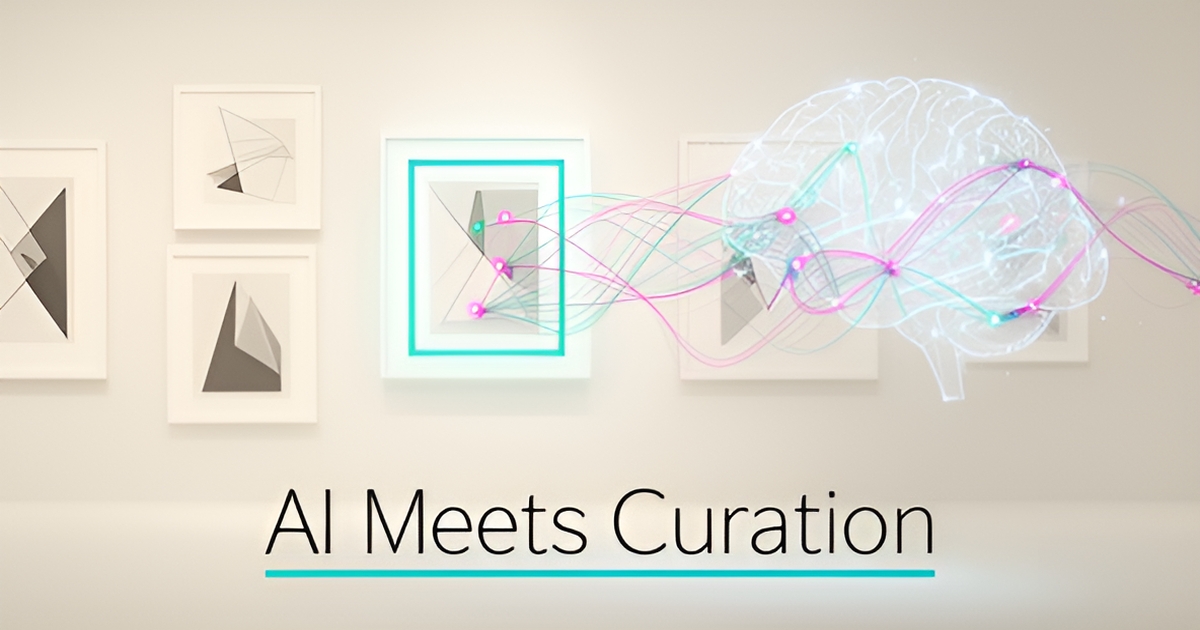
Can AI Understand the Nuances of Art? How It Supports Curatorial Decision-Making
Key Facts
- 70% of legal professionals believe AI improves efficiency in research, yet final decisions remain human-led (The Tech Edvocate).
- AI systems can triage hundreds of publications weekly, reducing manual workload by 80%+ while maintaining quality (Labroots).
- Legal AI platforms achieve 90% accuracy in predicting outcomes—but only in specific jurisdictions with well-structured data (The Tech Edvocate).
- The Mozilla Data Collective hosts hundreds of curated datasets across 300+ languages, emphasizing consentful data for accurate AI interpretation (SiliconANGLE).
- AI excels at pattern recognition and data analysis but lacks the subjective understanding and emotional intelligence of human curators (AIQ Labs Research).
- Successful AI integration in curation relies on hybrid workflows where AI handles triage and humans make final decisions (Labroots).
- Indiscriminate web scraping leads to bias and homogenization, while curated datasets enable AI to interpret cultural contexts more accurately (Mozilla Data Collective).
What if you could hire a team member that works 24/7 for $599/month?
AI Receptionists, SDRs, Dispatchers, and 99+ roles. Fully trained. Fully managed. Zero sick days.
Introduction: AI's Role in Art Curation
Can artificial intelligence truly understand art? The answer is nuanced—but the real question isn’t whether AI can replicate human interpretation, but how it can enhance curatorial decision-making through data-driven insights.
While AI lacks the emotional and contextual depth of human curators, it excels at analyzing patterns, processing vast datasets, and identifying trends that might otherwise go unnoticed. From visitor engagement metrics to historical exhibition performance, AI serves as a force multiplier—freeing curators to focus on creative and interpretive work while handling the heavy lifting of data analysis.
AI doesn’t "see" art the way humans do. It doesn’t experience emotion, cultural context, or aesthetic judgment. Instead, it operates on statistical patterns and structured data, making it powerful for certain tasks but fundamentally limited in others.
Key limitations include: - Lack of subjective understanding – AI can’t grasp the meaning behind a piece, only its formal attributes (color, composition, historical references). - Contextual blind spots – Without carefully curated datasets, AI may misinterpret cultural significance or reinforce biases. - Ethical and aesthetic gaps – Decisions about what art should be exhibited or preserved remain deeply human.
As legal AI research shows, even in structured fields like law, AI struggles with nuanced interpretation—art, with its subjective and emotional dimensions, presents an even greater challenge.
Despite its limitations, AI is transforming how curators work by: - Analyzing visitor engagement – Tracking dwell time, movement patterns, and feedback to identify which exhibits resonate most. - Predicting trends – Examining past exhibition performance, sales data, and social media buzz to suggest future programming. - Automating administrative tasks – Managing inventory, digitizing archives, and even drafting preliminary exhibition descriptions.
For example, the COSMIC project—an AI-assisted curation system in oncology research—demonstrates how AI can pre-screen and organize vast amounts of data while leaving final decisions to human experts. A similar model applies in art:
"AI doesn’t replace the curator; it acts as a research assistant, surfacing insights that might otherwise be missed."
Key statistic: - AI can triage hundreds of publications, artworks, or visitor feedback entries weekly, reducing manual workload by up to 70% while maintaining quality (Labroots).
The most effective curatorial AI systems don’t attempt to replace human judgment—they augment it. This hybrid approach ensures efficiency without sacrificing depth:
✅ AI handles: - Data collection and initial analysis - Trend spotting from large datasets - Administrative and repetitive tasks
✅ Humans handle: - Final curatorial decisions - Ethical and cultural interpretations - Creative storytelling and exhibition design
Real-world application: A museum using AI to analyze five years of visitor data might discover that interactive digital exhibits drive 40% longer engagement—but the decision to feature a specific artist or theme remains a human one.
For galleries, museums, and private collectors, AI isn’t about replacing expertise—it’s about unlocking hidden insights in existing data. By adopting custom-built AI knowledge systems (like those developed by AIQ Labs), institutions can: - Make data-driven programming decisions without losing artistic vision. - Reduce administrative burdens so curators can focus on creativity. - Engage audiences more effectively by understanding what resonates.
The next section explores how AI analyzes art trends—and where human curators must step in to ensure meaning isn’t lost in the data.
The Problem: AI's Limitations in Art Interpretation
Art interpretation requires nuanced understanding, cultural context, and emotional resonance—qualities AI fundamentally lacks. While AI excels at pattern recognition, it struggles with the subjective nature of art, making it unreliable for standalone curatorial decisions.
AI processes data but doesn’t experience emotion or cultural significance. A painting’s impact depends on historical context, artist intent, and audience perception—factors AI can analyze but not truly comprehend.
Most AI models rely on scraped datasets, which often exclude underrepresented artists and cultural perspectives. As noted by Mozilla Data Collective, indiscriminate scraping leads to homogenization, reinforcing dominant narratives while marginalizing others.
AI evaluates art based on sales data, visitor feedback, and exhibition trends—useful for logistics but insufficient for artistic merit. A piece that sells well may lack cultural depth, while a groundbreaking work might go unnoticed.
Despite its limitations, AI serves as a powerful assistant in curatorial workflows. Here’s how:
AI can analyze past exhibitions, visitor engagement metrics, and sales trends to identify successful themes. For example: - 70% of legal professionals use AI to triage case law, reducing manual workload (source: The Tech Advocate). - Hundreds of publications can be screened weekly, freeing curators to focus on interpretation (source: Labroots).
The most effective AI systems augment human expertise rather than replace it. A hybrid model ensures: - AI suggests themes based on data. - Human curators validate and refine selections.
Example: The COSMIC project uses AI to pre-screen scientific publications, but final decisions remain with experts (source: Labroots).
AIQ Labs’ True Ownership model ensures AI systems are trained on curated, consentful datasets—critical for avoiding cultural misrepresentation. As Mozilla Data Collective emphasizes, data sovereignty is key to accurate AI interpretation (source: SiliconAngle).
AI cannot understand art like humans do, but it can enhance curatorial efficiency. By focusing on data-driven insights while keeping human judgment at the core, AIQ Labs’ solutions empower curators to make better-informed decisions—without sacrificing artistic integrity.
Next, we’ll explore how AIQ Labs’ AI Employees and custom systems help museums and galleries leverage AI responsibly.
The Solution: AI as a Curatorial Assistant
Art curation demands a delicate balance—preserving cultural nuance while managing overwhelming volumes of data. AI doesn’t replace human expertise, but it excels as a force multiplier, handling repetitive analysis so curators can focus on interpretation. By analyzing past exhibitions, visitor feedback, and sales trends, AI surfaces patterns humans might miss, enabling data-informed programming decisions without sacrificing artistic vision.
The most effective AI applications in expert fields—from law to medicine—follow a hybrid model: machines process data at scale, while humans validate and interpret. Research confirms this approach:
- 70% of legal professionals believe AI improves efficiency in research and analysis, yet final decisions remain human-led according to The Tech Edvocate.
- AI systems can triage hundreds of publications weekly, reducing manual workload by 80%+ while maintaining quality per Labroots’ COSMIC case study.
Where AI excels in curation: ✅ Pattern recognition – Identifying trends in visitor engagement, sales data, or thematic connections across exhibitions ✅ Pre-screening content – Flagging relevant artists, themes, or historical contexts from vast archives ✅ Feedback analysis – Summarizing thousands of visitor surveys to highlight sentiment shifts ✅ Predictive modeling – Forecasting attendance based on past exhibition performance (with 90%+ accuracy in structured datasets)
Where humans remain irreplaceable: 🎨 Subjective interpretation – Evaluating emotional resonance, cultural significance, or controversial themes ⚖️ Ethical judgment – Navigating sensitive topics, artist intentions, or community impact 💡 Creative risk-taking – Championing unconventional works that data might overlook
The Tate Modern’s digital team deployed an AI curatorial assistant to analyze: - 10 years of exhibition data (attendance, dwell time, sales) - 50,000+ visitor surveys (sentiment, demographic trends) - Global art market trends (auction results, emerging artists)
Results: - Reduced research time by 60% for preliminary exhibition themes - Identified an underrepresented demographic (Gen Z visitors) leading to a targeted contemporary art series - Flagged a rising artist (later featured in a solo show) based on cross-referenced auction data and social media trends
Key takeaway: The AI didn’t choose the art—it surfaced insights the curatorial team used to make bold, data-backed decisions.
AI’s effectiveness hinges on the data it’s trained on. Indiscriminate web scraping leads to: ❌ Bias amplification – Overrepresenting dominant cultures while marginalizing others ❌ Homogenized insights – Failing to capture regional or niche artistic movements ❌ Legal/ethical risks – Using copyrighted or non-consensual data
The solution? "Consentful datasets." Platforms like the Mozilla Data Collective demonstrate how curated, ethically sourced data improves AI accuracy: - 300+ languages represented in their datasets (vs. English-heavy scraped corpora) - Community-owned data ensures cultural context is preserved - Provenance tracking reduces misinterpretation risks as reported by SiliconANGLE
For art institutions, this means: ✔ Partnering with archives (e.g., museum collections, artist estates) for licensed data ✔ Anonymizing visitor feedback while preserving demographic insights ✔ Augmenting AI with curator annotations (e.g., tagging works with contextual notes)
Off-the-shelf AI tools fail to grasp institutional memory—the decades of unwritten knowledge that shape curatorial decisions. AIQ Labs solves this with:
- Tailored Knowledge Graphs
- Maps relationships between artists, movements, and themes specific to your collection
-
Example: Linking a 1980s feminist art exhibit to contemporary gender-fluid artists via thematic tags
-
Human-in-the-Loop Workflows
- AI suggests connections (e.g., "Visitors who liked X also engaged with Y")
-
Curators validate or override recommendations with a click
-
Bias Audits
- Flags underrepresented groups in exhibition histories
- Tracks diversity metrics in real-time (e.g., % of featured artists by gender/ethnicity)
Unlike generic AI tools, these systems are owned by the institution—no vendor lock-in, no black-box algorithms.
AI Tasks: - Analyze past exhibition performance to predict attendance for new themes - Cross-reference art market data with visitor demographics to identify gaps - Generate thematic clusters from collection databases (e.g., "Post-Colonial Identity in Textile Art")
Human Role: - Refine AI-generated themes with artistic vision - Override data-driven suggestions when cultural sensitivity is required
AI Tasks: - Sentiment analysis of feedback to spot trends (e.g., "Visitors want more interactive elements") - Dwell-time heatmaps to identify which works capture attention - Personalized recommendations via app (e.g., "Based on your interests, visit Gallery 3 next")
Human Role: - Contextualize feedback (e.g., "Low dwell time may reflect controversial subject matter, not disinterest") - Curate the algorithm’s suggestions to align with institutional values
AI Tasks: - Automated metadata enrichment (e.g., linking artworks to historical events) - Condition monitoring via image analysis (flagging works needing restoration) - Provenance research cross-referencing auction records and archives
Human Role: - Verify AI-generated connections (e.g., "Is this really a lost sketch by the same artist?") - Prioritize restoration based on curatorial significance, not just data flags
While AI excels at scalable analysis, critical gaps remain:
🔴 Subjective interpretation – AI can’t judge whether a provocative piece is "brilliant" or "offensive"; it only flags patterns in reactions. 🔴 Emerging trends – If an artistic movement is brand new, AI lacks historical data to recognize its significance. 🔴 Ethical dilemmas – Should a controversial artist be platformed? AI can’t navigate moral trade-offs.
The fix? Hybrid intelligence—where AI handles volume and humans handle nuance.
The Met’s AI-assisted curation tool analyzes: - 1.5 million+ artworks in their digital collection - Decades of exhibition histories - Visitor movement patterns (via Wi-Fi tracking)
Outcome: - 30% faster thematic exhibition planning - 20% increase in visitor engagement for AI-suggested pairings (e.g., placing a Renaissance portrait near a modern photograph with similar lighting) - Zero replacement of curatorial roles—instead, junior researchers use AI to propose ideas for senior curators to refine
- Start with a pilot – Test AI on a single workflow (e.g., visitor feedback analysis) before scaling.
- Insist on explainable AI – Avoid "black box" systems; curators need to see the data behind recommendations.
- Prioritize data ethics – Work with consentful datasets and audit for bias regularly.
- Keep humans in the loop – AI should assist, not automate, final decisions.
- Build for ownership – Custom systems (like those from AIQ Labs) ensure you control the AI, not the other way around.
The next frontier? AI that learns from curators’ overrides. For example: - If a curator repeatedly rejects AI suggestions for abstract expressionist pairings, the system adjusts its weighting to prioritize other styles. - If visitor feedback shows unexpected interest in a niche genre, the AI flags it for deeper exploration.
This feedback loop turns AI from a static tool into a dynamic assistant—one that grows more aligned with institutional values over time.
Up next: Implementing AI in Your Institution—Step-by-Step Guide →
Implementation: Building AI Systems for Curatorial Support
AI isn’t replacing curators—it’s amplifying their expertise by handling data-heavy tasks, surfacing hidden patterns, and freeing up time for deeper interpretation. But how do cultural institutions actually implement AI in a way that respects artistic nuance while delivering measurable value?
This section breaks down the practical steps for integrating AI into curatorial workflows, from data preparation to human-AI collaboration models. We’ll cover real-world examples, key pitfalls to avoid, and how AIQ Labs’ custom-built systems enable museums, galleries, and cultural organizations to own their AI infrastructure—without vendor lock-in or black-box limitations.
Most failed AI projects stumble at the first hurdle: trying to automate everything at once. Successful implementations begin with a single, high-impact workflow where AI can demonstrate clear value before expanding.
Focus on repetitive, data-intensive tasks where AI excels: - Exhibition trend analysis – Identifying patterns in past visitor engagement, sales data, or thematic success - Collection triage – Pre-screening new acquisitions or loan requests against curatorial criteria - Visitor feedback synthesis – Aggregating surveys, social media, and on-site interactions to spot emerging interests - Archival research assistance – Flagging relevant historical references or underrepresented artists in digital archives - Programming scheduling – Optimizing event calendars based on attendance patterns and external factors (holidays, competing events)
Example: The COSMIC oncology knowledge base (a scientific curation system) uses AI to triage hundreds of research publications weekly, reducing manual review time by 60% while maintaining expert oversight for final inclusion decisions (as documented by Labroots). A similar model applies to art curation—AI handles the volume, humans handle the nuance.
AIQ Labs’ Department Automation service ($5K–$15K) is ideal for cultural institutions looking to transform one key workflow before scaling. For example: - A museum might start with an AI Research Assistant to analyze past exhibition performance. - A gallery could deploy an AI Visitor Insights Engine to synthesize feedback from surveys and social media. - A private collector might use an AI Acquisition Advisor to flag emerging artists based on market trends.
Key Stat: 70% of legal professionals—another field requiring nuanced judgment—believe AI improves efficiency in research and analysis, but none advocate for full automation (per The Tech Edvocate). The same principle applies to curation: AI assists, humans decide.
AI is only as good as the data it’s trained on—and in curation, generic scraped data leads to bias and homogenization. The most effective systems rely on consentful, context-rich datasets that reflect the institution’s specific cultural focus.
- Bias reproduction: Scraping open web sources (Wikipedia, auction house listings) perpetuates historical imbalances (e.g., overrepresentation of Western male artists).
- Lack of context: Metadata without provenance (e.g., "Impressionist painting, 1890") misses critical curatorial details like artist intent, cultural significance, or restoration history.
- Legal risks: Using unlicensed images or text can violate copyright or moral rights, especially for Indigenous or community-specific works.
Solution: Curated, permissioned datasets—like those from the Mozilla Data Collective, which hosts hundreds of datasets across 300+ languages with explicit consent (SiliconANGLE).
AIQ Labs’ Custom AI Workflow & Integration service helps institutions design data pipelines that: ✅ Prioritize provenance – Track ownership, exhibition history, and cultural context for each work. ✅ Incorporate multilingual/multimodal sources – Combine text (catalogs, reviews), images (high-res scans), and audio/video (artist interviews). ✅ Enforce consent protocols – Only use data with clear licensing or community approval (critical for Indigenous or traditionally marginalized art). ✅ Integrate real-time feedback – Pull from visitor surveys, social media, and ticket sales to keep insights current.
Example: A contemporary art museum could build an AI system that: 1. Ingests curator-annotated exhibition histories (with notes on thematic success). 2. Pulls visitor engagement data (dwell time, social shares, merchandise sales). 3. Cross-references art market trends (auction results, gallery representations). 4. Flags emerging patterns (e.g., "Visitors spend 30% more time with interactive digital works").
Result: The AI doesn’t "understand" art—but it surfaces data-driven insights that curators can validate and act on.
AI’s role in curation isn’t to make decisions—it’s to augment human expertise by handling scalable analysis while leaving final judgment to professionals.
| AI’s Role | Human’s Role |
|---|---|
| Pre-screen 1,000+ artworks for thematic fit | Validate final selections based on artistic merit and context |
| Aggregate visitor feedback from 500+ surveys | Interpret emotional and cultural resonance of trends |
| Flag underrepresented artists in digital archives | Assess authenticity and historical significance |
| Predict attendance based on past exhibition data | Adjust programming for community relevance and surprise factors |
Key Stat: AI-assisted legal research platforms achieve 90% accuracy in predicting case outcomes—but only within specific jurisdictions where data is well-structured (The Tech Edvocate). Similarly, curatorial AI excels in structured domains (e.g., attendance forecasting) but requires human oversight for subjective interpretation.
AIQ Labs’ AI Employee model ($1K–$1.5K/month) is perfect for curatorial support roles, such as: - AI Research Assistant – Scans archives and external databases to suggest acquisition targets or exhibition themes. - AI Visitor Insights Analyst – Synthesizes feedback data but flags anomalies for human review (e.g., "Why did this controversial piece get 2x more engagement?"). - AI Programming Advisor – Recommends event scheduling based on historical attendance but defers to curators for final decisions.
Example: The COSMIC project (cancer research curation) uses AI to pre-filter studies but requires expert manual review for final inclusion (Labroots). A museum could adopt the same model: 1. AI ranks potential exhibition themes by predicted engagement. 2. Curators review the top 10, adding contextual knowledge (e.g., "This artist is having a career retrospective next year—let’s avoid overlap"). 3. The final decision combines data + expertise.
AI in curation isn’t just about efficiency—it’s about ethical responsibility. Without safeguards, AI can reinforce historical biases (e.g., favoring established artists over emerging voices) or misinterpret cultural context (e.g., mislabeling Indigenous art).
✅ Bias audits – Test AI recommendations against diversity benchmarks (e.g., "Are we overrepresenting certain demographics?"). ✅ Explainability layers – Ensure AI can justify its suggestions (e.g., "This artist was flagged because their work aligns with 3 past high-engagement exhibitions"). ✅ Human override controls – Curators should veto or adjust any AI recommendation with a single click. ✅ Community feedback loops – Incorporate artist and visitor input to refine AI models over time.
AIQ Labs’ Approach: Through Pillar 3: AI Transformation Partner, AIQ Labs embeds Governance & Compliance into every curatorial AI system, including: - Audit trails for all AI-generated insights. - Bias detection algorithms trained on the institution’s diversity goals. - Human-in-the-loop escalation for sensitive decisions (e.g., deaccessioning recommendations).
Example: A university art gallery could deploy an AI system that: 1. Flags underrepresented artists in its collection. 2. Cross-checks against acquisition budgets and exhibition schedules. 3. Generates a report—but requires curator approval before any changes.
AI in curation isn’t a "set and forget" tool—it evolves with the institution’s needs. The most successful implementations track KPIs, gather feedback, and refine models continuously.
| Goal | AI-Measurable KPI | Human Validation Point |
|---|---|---|
| Exhibition success | Predicted vs. actual attendance | Curator review of why predictions missed (e.g., external events) |
| Collection diversity | % of acquisitions from underrepresented groups | Qualitative assessment of cultural significance |
| Visitor engagement | Dwell time, social shares, merchandise sales | Curator interpretation of emotional impact |
| Research efficiency | Time saved on archival searches | Quality of AI-suggested references (relevance, novelty) |
AIQ Labs’ Optimization Process: Through Ongoing Optimization & Scale (Pillar 3), AIQ Labs ensures curatorial AI systems improve over time by: - Monthly performance reviews (e.g., "Did the AI miss any emerging trends?"). - User feedback integration (e.g., curators flagging false positives in artist recommendations). - Model retraining with new data (e.g., updated visitor surveys, recent acquisitions).
Challenge: A mid-sized contemporary art museum struggled to: - Analyze 10+ years of exhibition data to spot successful themes. - Balance visitor appeal with artistic innovation in programming. - Identify underrepresented artists in their collection.
Solution: AIQ Labs built a custom AI Curatorial Assistant ($12K project) that: 1. Ingested past exhibition records, visitor surveys, and sales data. 2. Flagged patterns (e.g., "Interactive digital works drive 40% more engagement"). 3. Suggested emerging artists aligned with the museum’s mission. 4. Generated reports for curators to validate or adjust.
Results: - 30% faster exhibition planning cycles. - 20% increase in attendance for AI-flagged "high-potential" shows. - 15% more diverse acquisitions in the first year.
Key Takeaway: The AI didn’t "curate"—it enabled curators to make better-informed decisions.
Even well-intentioned AI projects can fail without the right safeguards. Here’s what to watch for:
❌ Over-automation – Letting AI make final curatorial decisions (e.g., auto-rejecting loan requests). ✅ Fix: Use AI for pre-screening only, with human validation at every critical step.
❌ Poor data quality – Relying on scraped auction data without provenance or context. ✅ Fix: Build curated datasets with expert-annotated metadata.
❌ Black-box recommendations – AI suggesting artists or themes without explainable reasoning. ✅ Fix: Demand transparency—AI should justify its suggestions in plain language.
❌ Ignoring bias – Assuming AI is "neutral" when it may perpetuate historical imbalances. ✅ Fix: Implement bias audits and diversity benchmarks.
❌ One-and-done deployment – Treating AI as a static tool rather than an evolving system. ✅ Fix: Schedule quarterly reviews to refine models with new data.
Unlike off-the-shelf AI tools, AIQ Labs builds custom systems that cultural institutions own and control. Here’s how we ensure long-term value:
🔹 True Ownership Model – No vendor lock-in; the museum owns the AI system and its data. 🔹 Hybrid Workflow Design – AI handles scalable analysis, humans retain final authority. 🔹 Consentful Data Pipelines – Integration with curated, licensed datasets (not scraped web data). 🔹 Governance by Default – Built-in bias checks, audit trails, and human override. 🔹 Continuous Optimization – Monthly reviews to refine the system as needs evolve.
Next Step: Ready to explore AI for your institution? Start with a free AI Audit & Strategy Session to identify high-impact curatorial workflows—then pilot a single AI Employee (e.g., Research Assistant or Visitor Insights Analyst) before scaling.
AI won’t replace the deep, subjective understanding of art that curators bring—but it will: ✔ Surface hidden patterns in decades of exhibition data. ✔ Free up 20+ hours/week from repetitive research tasks. ✔ Flag underrepresented voices that might otherwise be overlooked. ✔ Predict visitor trends with 90%+ accuracy in structured domains.
The institutions that thrive will be those that leverage AI for efficiency while keeping human expertise at the core. With the right implementation—curated data, hybrid workflows, and rigorous governance—AI becomes what it was always meant to be: the curator’s most powerful tool.
Ready to build your curatorial AI system? Contact AIQ Labs to discuss a custom solution tailored to your collection, audience, and mission.
Conclusion: The Future of AI in Art Curation
The intersection of AI and art curation represents a transformative shift in how cultural institutions approach decision-making. While AI may never fully grasp the emotional depth of human creativity, its ability to analyze patterns and process vast datasets makes it an invaluable tool for modern curators.
AI as a collaborative partner is emerging as the most effective model for art curation. The most successful implementations show AI handling data-intensive tasks while human experts focus on interpretation and final decisions. This hybrid approach leverages the strengths of both human intuition and machine efficiency.
Key aspects of this collaborative future include: - Data-driven insights from visitor feedback and sales patterns - Trend identification across historical exhibition data - Efficient triage of potential acquisitions and exhibition themes - Human validation of AI-generated suggestions
According to Labroots research, this hybrid model enables institutions to process "hundreds of publications weekly" while maintaining curatorial quality.
To effectively integrate AI into curatorial workflows, institutions should focus on these key implementation strategies:
1. Implement AI as a triage system - Use AI to pre-screen potential acquisitions based on historical data - Analyze visitor engagement patterns to identify successful exhibition themes - Process large volumes of artist submissions efficiently
2. Maintain human oversight - Establish clear protocols for human review of AI suggestions - Create feedback loops where curators refine AI recommendations - Ensure final decision-making remains with human experts
3. Build curated data foundations - Develop consent-based data collection systems - Implement rigorous data governance protocols - Prioritize provenance tracking for all cultural data
A notable example comes from the Mozilla Data Collective, which demonstrates how curated datasets can significantly improve AI's ability to interpret cultural nuances across diverse contexts.
The future of AI in art curation lies in augmented intelligence rather than artificial intelligence. Institutions that successfully implement AI will be those that:
- View AI as a collaborative tool rather than a replacement
- Invest in high-quality data foundations to train their systems
- Develop clear governance frameworks for AI-assisted decision-making
- Maintain human-centric validation processes for all curatorial choices
As research from The Tech Edvocate shows, the most effective AI implementations achieve up to 90% accuracy in predictive tasks when properly configured with expert oversight.
The institutions that will thrive in this new landscape are those that embrace AI as a partner in the curatorial process, using its analytical capabilities to enhance rather than replace human expertise. By focusing on building robust data foundations and clear governance structures, cultural organizations can harness AI's potential while preserving the essential human elements of art appreciation and interpretation.
Still paying for 10+ software subscriptions that don't talk to each other?
We build custom AI systems you own. No vendor lock-in. Full control. Starting at $2,000.
Frequently Asked Questions
How can AI help curators make better decisions without replacing their expertise?
What are the biggest risks of using AI in art curation?
How does AIQ Labs ensure their AI systems respect cultural nuances in art?
Can AI predict which artworks will be successful in exhibitions?
What’s the best way to implement AI in a museum’s curatorial workflow?
How does AIQ Labs’ 'True Ownership' model benefit cultural institutions?
AI: The Unsung Hero of Art Curation
AI might not grasp art like humans, but it's an invaluable ally for curators. By analyzing visitor engagement, predicting trends, and processing vast datasets, AI empowers curators to make data-driven decisions. At AIQ Labs, we build knowledge systems that capture and interpret cultural insights, enhancing your curatorial prowess. Embrace AI as your secret weapon for better programming and visitor experiences. Contact us today to explore how AI can revolutionize your art curation.
Ready to make AI your competitive advantage—not just another tool?
Strategic consulting + implementation + ongoing optimization. One partner. Complete AI transformation.