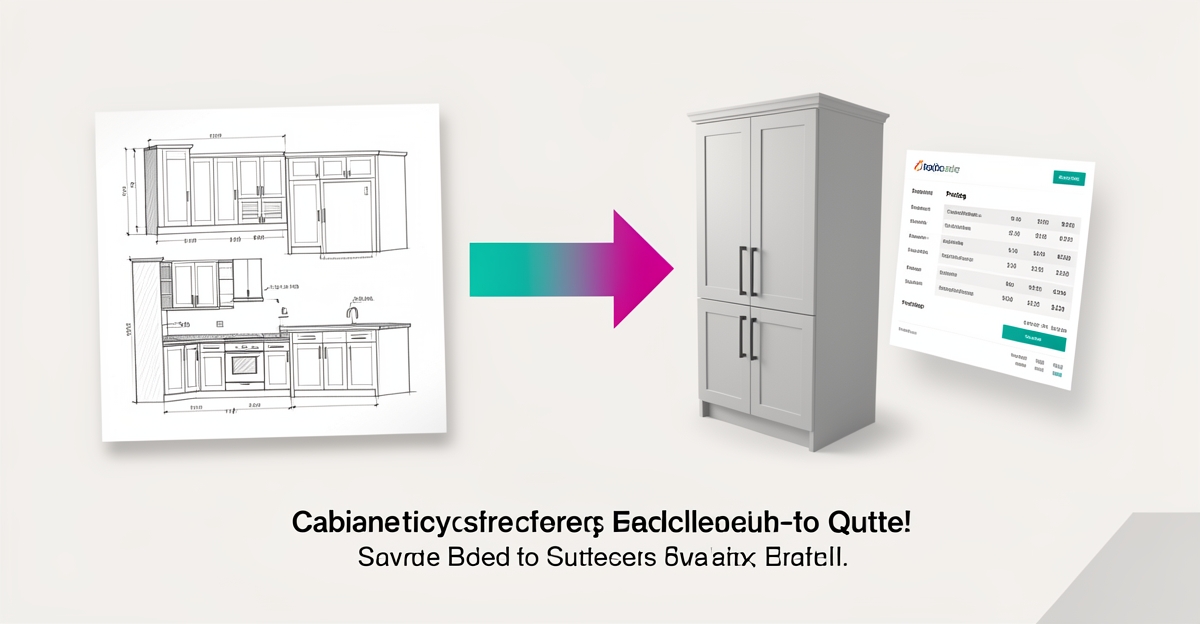
From Design Sketch to Quote: How AI Can Automate the Cabinetry Workflow
Key Facts
- AI drawing automation tools can cut 2D fabrication drawing time dramatically, often by well over half, by generating documentation directly from 3D models.
- As of late 2026, most large organizations have automated at least one business function, and AI adoption in design and production work is now mainstream.
- The global workflow automation market was valued in the tens of billions of dollars by the mid-2020s and continues to grow steadily.
- Intelligent automation generally delivers larger operational cost reductions than basic, rules-only automation because it handles judgment-heavy steps, not just repetitive ones.
- AIQ Labs has deployed 200+ multi-agent systems and runs 4 live SaaS products daily, this is proven infrastructure, not theory.
Hire a team member that works 24/7 — for less than a part-time wage.
AI receptionists, SDRs, dispatchers and 99+ roles. Trained on your business, fully managed.
Not sure where to start? Ask our AI planner
The Bottleneck in Cabinetry: Manual Sketch-to-Quote Delays
A client sketch lands on the desk and the clock starts. In most cabinetry shops, that moment triggers a chain of manual handoffs that stretches days into weeks.
The first bottleneck is interpretation. Sales or design staff manually translate freehand sketches, photos, and notes into measurable specifications. Ambiguities get clarified by phone or email, and each back-and-forth adds delay. Errors introduced here cascade through the entire build.
CAD drafting is the second choke point. Designers rebuild the concept from scratch in 3D, then generate 2D fabrication drawings by hand. AI drawing automation tools can reduce this documentation burden substantially, often by well over half, which shows just how much time shops currently spend on repetitive documentation.
Quoting adds a third layer of friction. Material takeoffs, hardware counts, labor estimates, and pricing rules are calculated manually or in disconnected spreadsheets. A single missed component or outdated price triggers rework, margin loss, and client frustration.
This pattern is not unique to cabinetry. As of late 2026, most large organizations have automated at least one business function to address exactly these kinds of bottlenecks, and the workflow automation market continues to grow year over year.
The cost of staying manual shows up in consistency and speed. Shops that automate the translation work between sketch, model, and quote typically report fewer design inconsistencies and materially faster turnaround, because the same rules get applied the same way every time.
Traditional cabinetry workflows typically suffer from:
- Sketch interpretation delays from unclear client drawings and manual clarification loops
- Time-consuming CAD drafting and repetitive 2D documentation production
- Error-prone quoting with manual material takeoffs and pricing rule application
- Disconnected tools that force re-entry of dimensions, specs, and pricing data
Each step relies on human attention for routine translation work. That creates variability between designers and quotes, makes scaling difficult, and limits how many projects a team can handle without adding headcount.
AI workflow automation approaches the problem by automating the sketch-to-quote translation itself. AIQ Labs builds systems that understand design specifications and pricing rules, delivering consistent outputs across the workflow. The goal is to eliminate manual interpretation and manual drafting so the shop moves from sketch submission to accurate pricing faster, with fewer errors and less rework. If quoting is the single workflow costing you the most, that's exactly what AI Workflow Builds are designed to fix.
AI-Powered Design Automation: Turning Sketches into Production-Ready Models
Cabinetry shops lose hours translating freehand ideas into clean 3D models, consistent drawings, and production-ready specs. AI-powered design tools are collapsing that gap.
Text-to-CAD and sketch-to-CAD engines can turn natural language descriptions or rough drawings into parametric 3D geometry in seconds, giving designers an immediate starting point instead of a blank canvas. Drawing automation tools handle the documentation phase by generating 2D fabrication drawings from 3D parts with consistent dimensions, views, and drafting standards. Assembly-focused AI tools can build complex multi-part models from sketches or specs, while engineering copilots automate repetitive in-CAD operations like bulk edits and standards checks.
The time savings are real. Drawing automation alone can cut 2D documentation time dramatically, often by well over half, because the tool applies your drafting standards consistently instead of a designer redrawing every view by hand.
For cabinetry workflows, that means sketch interpretation moves from manual modeling to guided generation, then to automated documentation without rework. The practical impact shows up in three areas:
- Faster concept to model: text-to-CAD tools eliminate blank-canvas delay and provide parametric foundations for refinement
- Error-proof documentation: automated 2D drawing production maintains standards and cuts drawing time substantially
- Consistent outputs: the same rules applied the same way every time means fewer inconsistencies between designers and quotes
These capabilities fit naturally into a sketch-to-quote pipeline where design specifications flow into pricing and material estimates. The result is less manual rework, shorter turnaround times, and a design process that scales with demand without adding headcount.
From Model to Quote: AI-Driven Material Takeoffs and Pricing Automation
Once the 3D model is ready, AI transitions to material takeoffs and pricing by integrating with your material databases and pricing rules. This eliminates manual calculations and typically delivers larger cost reductions than basic rules-only automation, because the system handles judgment-heavy steps, not just copy-paste work. The system automatically calculates board footage, hardware quantities, finish requirements, and labor estimates based on your predefined rules, ensuring consistency and accuracy across every quote.
- Extracts material quantities directly from the 3D model geometry
- Applies current pricing from integrated supplier databases
- Generates detailed, client-ready quotes with breakdowns and lead times
- Flags potential cost overruns or material substitutions for review
- Updates instantly when design changes occur
By connecting design intent directly to pricing logic, AIQ Labs enables cabinetry businesses to deliver quotes in minutes instead of days, turning a traditionally slow, error-prone process into a competitive advantage. Every quote reflects current material costs, labor rates, and profit margins without manual intervention, freeing estimators to focus on customer relationships and complex project consultations rather than spreadsheet calculations.
Implementation Roadmap: Deploying AI in Your Cabinetry Business
Deploying AI in cabinetry starts with mapping the manual handoffs between sketch, model, cut list, and quote. Teams that automate early tend to see compounding gains, because each automated stage feeds cleaner inputs to the next.
Begin by identifying the slowest, highest-error steps in your current flow. Most shops lose time on blank-canvas modeling, 2D drawing production, and repetitive in-CAD edits. Pinpointing those bottlenecks creates the business case for automation and guides tool selection.
Choose augmentation-first tools that integrate with existing CAD and ERP systems. Early-stage design benefits from text-to-CAD geometry generation, while documentation automation can cut drawing time substantially. Repetitive operations are best handled by engineering copilots that automate bulk edits and standards checks.
Design the rollout as a phased workflow build, not a wholesale rip-and-replace. A practical sequence:
- Audit current maturity and map your sketch-to-quote data flow
- Automate one stage first, e.g., sketch interpretation to parametric model
- Establish review protocols to validate AI-generated geometry and material takeoffs
- Integrate outputs directly into CAD, ERP, and pricing rules for closed-loop quoting
Augmentation beats full automation at first. Use AI to generate initial layouts and takeoffs, then review before anything reaches a client. Prompt and specification skills improve results quickly, and continuous improvement comes from monitoring which components are used and how frequently they change.
For cabinetry specifically, this translates to faster turnaround from client sketch to accurate pricing and material estimates, with fewer manual errors. AIQ Labs builds these systems to integrate with your existing CAD and ERP stack, and with 200+ multi-agent systems deployed and 4 live SaaS products running daily, the approach is field-tested. Larger shops eventually graduate from a single workflow to a full AI Operating System that connects design, quoting, and production in one layer you own outright.
A practical deployment path follows Build in Milestones for a single workflow, fixed price, phased, with approval and payment per phase, or Start Monthly if you want to begin with one AI employee handling a specific role, with build, training, integrations, and monitoring included. Both models let you pause or adjust as adoption grows, and you keep ownership of the system you build.
Still paying for 10+ subscriptions that don’t talk to each other?
We build custom AI systems you own outright. No vendor lock-in. Full control.
Not sure where to start? Ask our AI planner
Frequently Asked Questions
How long does it really take to go from a client sketch to a quote with AI?
Will AI-generated CAD drawings and material takeoffs actually be accurate enough for production?
What's the ROI on automating the sketch-to-quote workflow for a cabinetry shop?
Do I need to replace my existing CAD software and ERP system to use AI automation?
How much training does my team need to start using AI for cabinetry design?
What happens if the AI makes a mistake in a material takeoff or pricing calculation?
Turn Client Sketches into Competitive Advantage
From sketch interpretation delays and manual CAD drafting to error-prone quoting, the cabinetry workflow is ready for AI-driven transformation. By automating the journey from client sketch to accurate pricing, through text-to-CAD geometry, automated 2D drawings, and intelligent material takeoffs, shops can cut quoting errors, speed up turnaround, and deliver quotes in minutes instead of days. These gains free teams to focus on customer relationships and complex consultations rather than repetitive tasks. The path forward starts with identifying your biggest bottleneck. Take the two-minute Fit Check to see where AI can create real value for your shop, or book a free 30-minute strategy call to map your workflow. You can also reach the team directly at [email protected].
Make AI your competitive advantage — not just another tool.
Strategy, implementation and ongoing optimization. One partner, end to end.
Not sure where to start? Ask our AI planner