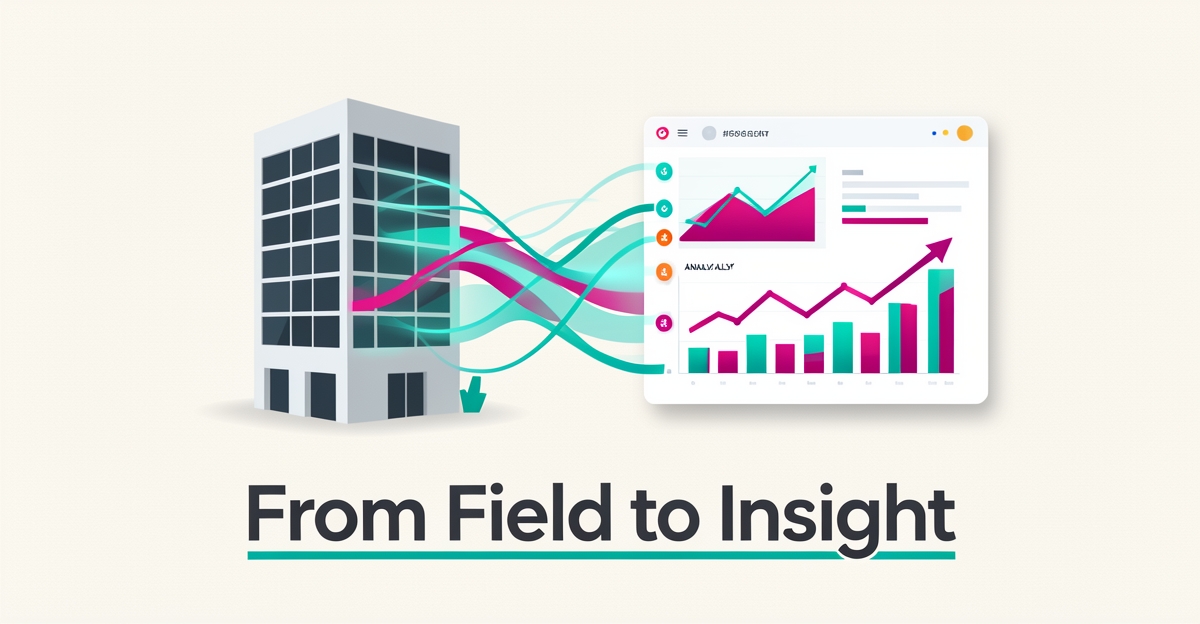
From Field to Office: How AI Transforms Energy Audit Data into Actionable Insights
Key Facts
- For repetitive, rules-based tasks like data normalization, AI typically outperforms manual work in speed and consistency
- AI tends to reduce long-term operating costs, but requires upfront investment and ongoing data governance
- AI accuracy improves with more data and feedback loops
- Hybrid models, AI for processing, humans for judgment, often deliver better outcomes than full automation
- AI systems depend on data quality and governance; poor inputs lead to systematic errors at scale
- In structured tasks with quality data, AI can match or exceed human accuracy
- Successful AI initiatives rest on a foundation of clean data, automation and infrastructure, not just the models themselves
Hire a team member that works 24/7 — for less than a part-time wage.
AI receptionists, SDRs, dispatchers and 99+ roles. Trained on your business, fully managed.
Not sure where to start? Ask our AI planner
The Hidden Bottleneck in Energy Auditing: Turning Field Data into Decisions
Energy auditing firms today don't suffer from a data shortage, they drown in it. Technicians return from sites with thousands of readings, infrared photos, equipment nameplates, and interval logs, yet the path from that raw pile to a client-ready recommendation remains stubbornly manual.
The bottleneck sits squarely in analysis. Engineers spend hours normalizing spreadsheets, cross-referencing nameplate data against ASHRAE baselines, and stitching together narratives for each facility. Repetitive, rules-based tasks like these are exactly where AI typically outperforms manual work in speed and consistency. When the same calculations are repeated across a portfolio of fifty buildings, human fatigue introduces inconsistencies that no quality-check checklist fully catches.
- Data normalization across disparate meter formats and BMS exports
- Baseline comparison against climate-normalized benchmarks
- Measure-level savings calculations with interactive what-if scenarios
- Narrative generation tailored to each stakeholder, facility manager, CFO, sustainability lead
These steps are structured, high-volume, and rule-governed, exactly the profile where AI delivers superior efficiency and scalability. Yet many firms hesitate, and for good reason: AI systems depend on data quality and governance; poor inputs produce systematic errors at scale. The answer isn't full automation but a hybrid model where AI handles the heavy lifting, ingestion, classification, pattern detection, and senior auditors validate, contextualize, and advise.
Behind every successful AI initiative lies a robust foundation in data, automation, and infrastructure. AIQ Labs helps energy auditing firms lay that foundation, turning field data into visual dashboards, performance trends, and client recommendations that scale across portfolios without adding headcount. If one workflow is bleeding the most hours, a focused AI Workflow Build is usually the fastest place to start.
Why AI Outperforms Manual Analysis for Energy Audit Data
Energy audit data arrives in high volumes and follows predictable patterns, making it ideal for AI-driven processing. Manual analysis struggles to keep pace with the sheer scale of utility bills, sensor readings, and equipment logs that auditors collect across multiple client sites. AI excels here by applying consistent rules at machine speed, turning repetitive data tasks into automated workflows that run without fatigue or variation. This capability allows energy auditing firms to process more audits in less time while maintaining uniform standards across all client engagements.
For repetitive, rules-based tasks, AI typically outperforms manual work in speed and consistency, directly addressing the core challenge of scaling energy audit insights. Unlike humans, AI systems don't tire when reviewing thousands of line items or applying the same efficiency benchmarks across hundreds of buildings. This consistency reduces variability in findings, ensuring that audit results are comparable over time and across different properties, a critical factor for tracking long-term energy performance trends.
Beyond speed, AI delivers measurable operational advantages. It tends to reduce long-term operating costs by minimizing the labor hours needed for data cleaning, normalization, and basic analysis, though it requires upfront investment in model training and data governance. Over time, AI accuracy improves through feedback loops, as the system learns from corrections and adapts to seasonal usage patterns or building-specific quirks. These gains compound with each audit cycle, making AI increasingly reliable at identifying anomalies like equipment malfunctions or insulation failures that might be missed in a rushed manual review.
However, AI's strength lies in structured environments, not ambiguity. While it can match or exceed human accuracy in well-defined tasks with quality data, human judgment remains superior in novel or unclear situations, such as interpreting unusual occupant behavior or assessing unconventional building systems. This is why hybrid approaches, where AI handles data processing and humans focus on interpretation and recommendation, often yield the best outcomes. AIQ Labs supports this balance by building AI systems that surface clear insights while leaving strategic decisions to experienced auditors who understand the context behind the numbers.
Ultimately, AI transforms energy audit data from a bottleneck into a scalable asset. By automating the heavy lifting of data analysis, auditors can redirect their expertise toward higher-value activities like client consulting, retrofit planning, and performance verification, delivering deeper insights without expanding headcount. This shift not only improves audit throughput but also enhances the quality of recommendations, helping clients achieve measurable energy savings faster and more reliably.
What AI Actually Does with Energy Audit Data: Dashboards, Trends, and Recommendations
Raw audit logs, sensor streams and utility bills become insight when AI moves them from spreadsheets into living systems. Energy auditing firms can now turn field data into visual dashboards, performance trends and recommendations that scale across dozens of facilities without linear headcount growth.
AI-powered tools transform energy audit data into actionable insights, enabling firms to scale insights across clients. The shift is from static reports to dynamic, insight-driven deliverables that surface what matters per building and per portfolio.
Dashboards translate complexity into clarity. AI consolidates meter data, weather normalization and equipment logs into visual dashboards that surface performance trends at a glance. Patterns that would take hours to find manually appear instantly, supporting faster decisions for auditors and clients alike. This is where visual dashboards and performance trends become a core deliverable rather than an afterthought.
Anomaly detection flags inefficiencies before they compound. AI applies consistent rules at machine speed across large datasets, identifying deviations from baseline consumption and highlighting equipment, zones or schedules that drift. Because AI accuracy improves with data and feedback loops, detection sharpens over time as more audits are ingested.
Automated recommendations make insights client-ready. Instead of generic best practices, AI generates tailored recommendations per building or facility based on usage patterns, audit findings and retrofit options. The output aligns with the business context of data analytics and business intelligence: raw audit data transformed into visual dashboards, performance trends and client recommendations. AIQ Labs builds this type of production-grade data intelligence for firms seeking to scale insights without rebuilding operations each time.
Implementation works best as a hybrid model. AI delivers superior efficiency and scalability for structured, high-volume tasks, while manual work remains essential for judgment-driven activities. And because AI systems depend on data quality and governance, poor inputs lead to systematic errors at scale, so firms design for data foundations first.
A practical AI output set for energy auditing firms typically includes:
- Portfolio dashboards with KPI trends, energy intensity and cost per square foot
- Anomaly alerts for spikes, baseload drift and equipment faults
- Prioritized retrofit recommendations with estimated savings and payback
- Client-facing summaries that translate technical findings into business impact
The result is a move from one-off reports to continuous insight. AI tends to reduce long-term operating costs but requires upfront investment and governance, so firms design for data foundations first. With the right architecture, audit data becomes a reusable asset that compounds in value across clients.
How to Implement AI-Powered Energy Audit Analytics Without Breaking Your Workflow
Adopting AI for energy audits doesn't require a complete operational overhaul. In fact, the most successful implementations start small, address specific bottlenecks, and scale gradually based on real-world feedback.
Before introducing any new technology, take an honest look at your current processes. Where do auditors spend the most time on repetitive tasks? Which steps introduce the most errors? Successful AI initiatives rest on a robust foundation of data, automation, and infrastructure, not just the AI models themselves.
Start by documenting your existing workflows to pinpoint exactly where manual data entry, inconsistent formatting, or analysis bottlenecks slow down your team. This diagnostic phase reveals the high-impact opportunities where AI delivers immediate value.
Once you've identified these pain points, follow this proven implementation sequence:
- Identify pain points: Document workflows and flag tasks that consume excessive time or generate frequent errors
- Build and test: Develop a prototype in a controlled environment, gather user feedback, and refine before scaling
- Empower your team: Train staff thoroughly and create channels for ongoing input and improvement suggestions
Data quality determines everything. AI systems depend entirely on data governance, poor inputs lead to systematic errors at scale. Before deploying any analytics platform, establish validation protocols for incoming audit data and maintain consistent formatting standards across all client projects.
When building your prototype, resist the urge to automate everything at once. Hybrid models consistently outperform full automation in practice. AI excels at structured analysis, processing thousands of data points, identifying consumption patterns, and flagging anomalies, but human auditors remain essential for interpreting complex building contexts and making nuanced recommendations.
This division of labor plays to each strength. Let AI handle the repetitive data processing while your team focuses on client relationships and judgment calls that require industry experience. Firms that adopt this balanced approach typically see faster adoption rates and more sustainable long-term results.
Training shouldn't end at launch. Create feedback loops where auditors can report issues, suggest improvements, and share insights about how the AI performs in real field conditions. This continuous refinement ensures the system evolves alongside your team's needs rather than becoming another abandoned tool.
Energy auditing firms that follow this measured approach, starting with clear pain points, testing rigorously, and maintaining human oversight, build AI capabilities that genuinely enhance their service delivery. The result is a workflow where technology amplifies expertise rather than replacing it, allowing your team to deliver deeper insights to more clients without sacrificing the quality that defines your reputation.
Scaling Energy Audit Insights Across Clients with Custom AI Systems
Energy auditing firms face a growing challenge: how to deliver deep, actionable insights across an expanding client base without proportionally increasing overhead. As audit data accumulates from diverse buildings and systems, the manual effort to analyze, visualize, and translate findings into recommendations becomes a bottleneck. This is where custom AI systems transform the equation, turning raw data into scalable intelligence that serves multiple clients efficiently.
AI is ideal for processing standardized energy audit inputs like utility bills, equipment inventories, and performance metrics, repetitive, rules-based work where it typically outperforms manual effort in speed and consistency. When built on owned infrastructure, these systems eliminate the fragmentation of point solutions and create a unified engine for insight generation. Rather than relying on generic platforms that require constant adaptation, firms can deploy AI tuned to their specific audit methodologies, reporting standards, and client communication workflows.
The result is not just faster analysis, but consistent, high-quality outputs at scale. Because AI accuracy improves with data and feedback loops, as the system processes more audits, its ability to detect patterns, such as seasonal inefficiencies or equipment degradation trends, becomes more refined. This enables firms to move beyond one-off reports to deliver longitudinal performance tracking, comparative benchmarking across similar facilities, and predictive recommendations that anticipate issues before they escalate in energy costs or comfort.
Owned AI infrastructure allows energy auditing firms to institutionalize their expertise. Custom dashboards can visualize energy use intensity, retrofit ROI, and compliance trajectories in formats clients already understand. Recommendation engines can prioritize actions based on savings potential, payback period, or alignment with sustainability goals, all while reducing the cognitive load on auditors. Hybrid models often deliver better outcomes than full automation, which suggests the most effective systems augment human judgment rather than replace it, letting auditors focus on complex diagnostics and client engagement while AI handles data synthesis and trend identification.
For SMBs in energy auditing, building such systems in-house is often prohibitive due to talent gaps and infrastructure costs. AIQ Labs bridges this gap with production-ready AI systems that firms own outright, dashboards, analytics engines, and recommendation tools built to mirror their operational workflows. Through AI Operating Systems, these solutions are engineered for long-term scalability, built in phases and integrating with existing tools like energy modeling software, CRM platforms, and reporting utilities without creating dependency on third-party subscriptions. Firms that prefer a lighter touch can also start with AI Employees handling intake, data prep and reporting at a fraction of the cost of a human hire.
This approach shifts the firm from a service provider selling hours to a knowledge partner delivering persistent, data-driven value. Clients receive not just an audit, but an evolving intelligence layer that tracks progress, validates investments, and uncovers new opportunities over time. As the firm's client base grows, the AI system scales with it, processing more data without linear increases in labor or error rates. In this way, owned AI becomes a force multiplier: enabling deeper insights, faster turnaround, and stronger client retention, all while maintaining the agility and personal touch that defines successful SMBs. The audit doesn't end at the report; it begins there, powered by systems designed to learn, adapt, and deliver lasting impact.
Still paying for 10+ subscriptions that don’t talk to each other?
We build custom AI systems you own outright. No vendor lock-in. Full control.
Not sure where to start? Ask our AI planner
Frequently Asked Questions
Can AI really analyze energy audit data better than a human engineer?
What does AI actually produce from raw energy audit data?
Will AI replace our auditors?
What happens if our field data is messy or inconsistent?
How should we start implementing AI without disrupting our workflow?
Is AI-powered audit analytics worth the investment for a small firm?
From Bottleneck to Competitive Edge
Energy auditing firms no longer need to choose between depth and scale. The field-to-office bottleneck breaks when AI handles ingestion, normalization, pattern detection and narrative generation, while senior auditors validate, contextualize and advise. That hybrid model turns repetitive, rules-based analysis into consistent, portfolio-wide dashboards, anomaly alerts and prioritized retrofit recommendations without adding headcount. The firms that win will be those that build on solid data foundations first, prototype on real pain points, and let feedback loops sharpen accuracy over time. If you want to see where this fits your practice, start with an honest workflow audit to pinpoint the highest-impact manual steps, then test a focused prototype before scaling. AIQ Labs helps energy auditing firms design and own these systems, turning audit data into reusable intelligence that compounds across clients. Take the two-minute Fit Check at https://aiqlabs.ai/apply to book a free 30-minute strategy call and map your biggest bottleneck, or email the team at [email protected]. For structured, rules-based tasks like these, AI consistently outperforms manual work in speed and consistency.
Make AI your competitive advantage — not just another tool.
Strategy, implementation and ongoing optimization. One partner, end to end.
Not sure where to start? Ask our AI planner