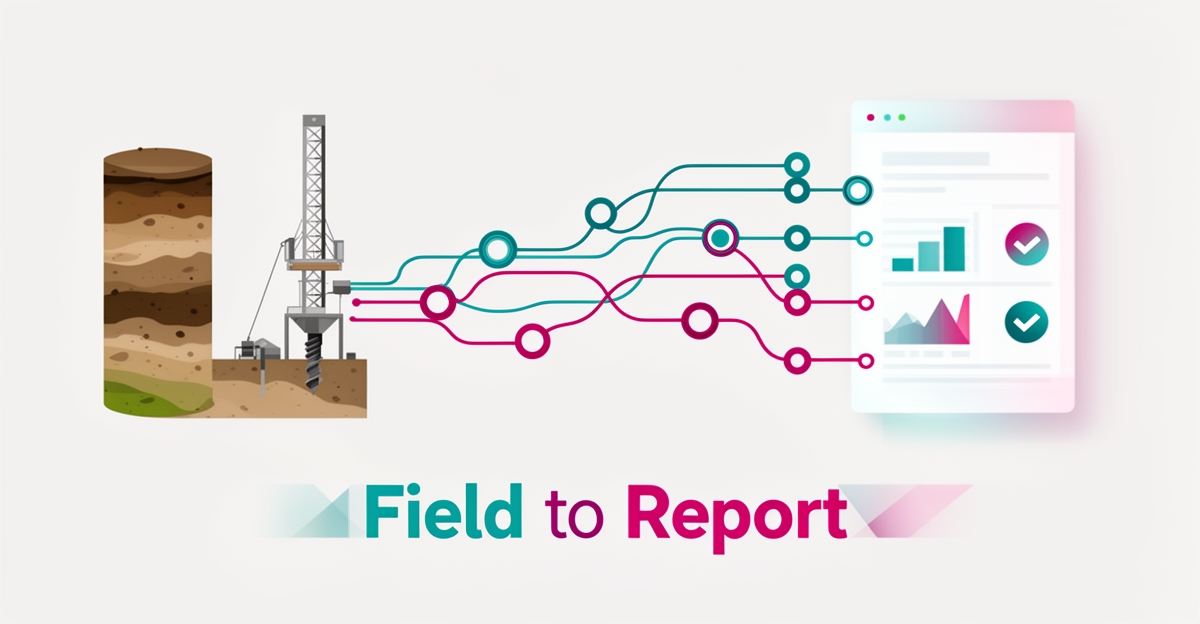
From Field to Report: How AI Can Automate the End-to-End Soil Testing Workflow
Key Facts
- AI-powered soil testing systems can reduce manual data entry by eliminating transcription errors across workflow stages.
- AI integration in soil testing enables real-time validation by flagging anomalies like sensor drift or inconsistent spatial patterns.
- Automated report generation using AI synthesizes key findings with visual summaries and confidence intervals for stakeholder clarity.
- Geotech firms using AI-owned workflows can scale testing capacity without increasing headcount or introducing new error risks.
- AI-driven data unification in soil testing standardizes formats, timestamps, and units from field sensors, drones, and lab results.
- AIQ Labs has deployed 200+ multi-agent systems and runs 4 live SaaS products daily, so the approach is proven in production, not theoretical.
- AIQ Labs' Start Monthly model provides automated field-to-report processing for a managed cost typically far below a full-time hire.
Hire a team member that works 24/7 — for less than a part-time wage.
AI receptionists, SDRs, dispatchers and 99+ roles. Trained on your business, fully managed.
Not sure where to start? Ask our AI planner
The Soil Testing Bottleneck Geotech Firms Face
Every geotechnical project begins the same way: a drill rig on site, soil samples carefully extracted, labeled, and logged. Yet between that first core sample and the final client report, an enormous amount of manual work quietly piles up, work that delays projects, inflates costs, and introduces errors at every handoff.
The typical soil testing lifecycle moves through distinct stages: field sampling, lab analysis, data validation, interpretation, and report generation. Each stage often lives in its own system, or worse, in disconnected spreadsheets and email threads. Field technicians record observations on paper or in mobile apps that don't sync with laboratory information systems. Lab results arrive as PDFs or printouts that someone must manually transcribe. Engineers then cross-reference these results against project specifications, regulatory thresholds, and historical site data, often re-entering the same numbers into multiple platforms.
This fragmentation creates a cascade of problems. Validation delays occur when a single anomalous result requires backtracking through handwritten chain-of-custody forms. Labor costs climb as highly trained engineers spend hours on data entry rather than analysis. And the risk of transcription errors grows with every manual handoff, potentially compromising the integrity of the final geotechnical report.
The pressure to fix this bottleneck is intensifying. Clients want quicker turnarounds without sacrificing precision. Regulators demand better documentation. And project timelines leave zero room for the weeks-long delays that manual soil testing workflows often produce.
Consider the specific friction points that plague most geotech firms:
- Field data captured in isolated apps or notebooks that require manual transfer to central databases
- Lab results delivered in incompatible formats, forcing staff to re-key critical measurements
- Validation checks performed manually, creating bottlenecks when senior engineers must review every data point
- Report assembly that involves copying and pasting from multiple sources into Word templates
- Client delivery delayed by version control issues and last-minute corrections
These aren't minor inefficiencies. They represent structural barriers to scalability. A firm that lands a major infrastructure project can't simply hire its way out of the bottleneck, training new staff on fragmented legacy processes takes months, and the error risk multiplies with each additional handoff.
The lesson from AI adoption in adjacent fields is clear: when data moves automatically from collection to analysis to delivery, both speed and accuracy improve. Firms that unify their data flows typically see fewer transcription errors, faster validation cycles, and reports that go out on time instead of sitting in a review queue.
AIQ Labs works with firms facing exactly these challenges, building custom AI systems that connect field data collection directly to lab analysis and report generation. Rather than patching together disconnected tools, these firms gain a unified workflow where validation happens automatically and engineers focus on interpretation instead of data entry. The result is a testing pipeline that scales with demand, not against it. For firms that want to start smaller, a single AI Workflow Build can target the one handoff that costs the most, often lab-to-report data entry.
How AI Automates Data Integration, Validation and Delivery
AI-powered data integration transforms soil testing by seamlessly combining field sensor readings, drone imagery, and lab results into a unified workflow, eliminating manual data silos that often delay project timelines. This automation allows geotech teams to focus on interpretation rather than aggregation, accelerating the path from collection to insight. AI systems standardize formats, timestamps, and units across disparate sources, creating a consistent foundation for analysis that supports faster decision-making in site planning and design.
Validation is equally critical, as AI continuously monitors incoming data for anomalies, sensor drift, or inconsistencies that could compromise report accuracy. By applying statistical checks and cross-referencing spatial-temporal patterns, the system flags potential biases, such as over-representation of certain soil zones or calibration gaps in equipment, before they propagate into conclusions. This proactive quality control ensures that only reliable data feeds into downstream modeling, directly supporting the transparency and explainability that regulators and clients increasingly expect.
Once validated, AI auto-generates client-ready reports that synthesize key findings, risk assessments, and actionable recommendations in clear, accessible formats. These outputs include visual summaries, confidence intervals, and plain-language explanations of AI-derived insights, helping stakeholders understand not just what the data shows, but how the system reached its conclusions. By embedding explainability into the delivery phase, AI builds trust in automated workflows, addressing a core concern in AI adoption where opaque outputs hinder confidence and accountability.
Building an Owned, Scalable Soil Testing Workflow with AIQ Labs
Geotech firms looking to modernize their soil testing workflow can now own a fully automated, end-to-end system built specifically for their operations. AIQ Labs partners with clients to design and deploy custom multi-agent systems that handle everything from field data collection and lab result integration to validation, reporting, and client delivery, all under a single owned platform. This approach eliminates reliance on fragmented tools and manual handoffs, creating a scalable workflow that grows with the business. For firms ready to connect testing into a broader operating layer across scheduling, billing, and client management, an AI Operating System ties it all together in phases you own outright.
The implementation follows AIQ Labs' build-own-operate model, beginning with a discovery phase to map current pain points in data flow, tool fragmentation, and reporting delays. From there, a tailored architecture is developed using multi-agent workflows, enabling specialized agents to collaborate on tasks like sensor data ingestion, anomaly detection, and report generation. These systems integrate directly with existing tools such as project management software, LIMS platforms, and CRM systems via API connections, ensuring seamless data synchronization across departments. Where a firm needs ongoing coverage, say, handling inbound sample inquiries or chasing lab turnaround times, managed AI Employees can cover those roles at a fraction of the cost of a human hire.
Clients can choose flexible payment paths that align with their capacity and goals. The Start Monthly model allows firms to begin with a core workflow, such as automated field-to-report processing, with setup and ongoing management included for a predictable monthly cost typically far below a full-time hire. For larger initiatives, the Build in Milestones approach breaks the system into deployable phases, letting teams validate each component before moving forward. Those seeking full control can opt for Own It Outright, securing complete IP and code ownership upon delivery. Throughout, AIQ Labs provides managed support to monitor, maintain, and continuously improve the system, ensuring long-term performance without added overhead. This owned, scalable foundation turns soil testing from a bottleneck into a strategic advantage.
Still paying for 10+ subscriptions that don’t talk to each other?
We build custom AI systems you own outright. No vendor lock-in. Full control.
Not sure where to start? Ask our AI planner
Frequently Asked Questions
How does AI improve the soil testing workflow for geotech firms?
What are the main challenges AI addresses in geotechnical data management?
Can AI really reduce errors in soil test reporting?
How does AIQ Labs' approach differ from other AI solutions for soil testing?
What kind of ROI can geotech firms expect from AI automation?
Is AI in soil testing transparent and accountable?
Turn Soil Testing From Bottleneck Into Competitive Edge
The soil testing lifecycle doesn't have to be a patchwork of paper logs, PDFs, spreadsheets, and manual re-keying. When field sampling, lab analysis, validation, and reporting are connected into one owned workflow, geotech firms cut delays, reduce transcription errors, and free engineers to focus on interpretation instead of data entry. AI-powered integration standardizes formats and timestamps, continuously flags anomalies and sensor drift, and auto-generates client-ready reports with visual summaries and explainable insights that build trust with stakeholders. For an industry under pressure to deliver faster, more accurate site characterization, that directly supports sustainable building practices and tighter project timelines. If your team is feeling the strain of fragmented tools and scaling limits, map your current handoffs and identify one critical workflow to automate first. Start the 2-minute Fit Check at https://aiqlabs.ai/apply, then book a free 30-minute strategy call at https://aiqlabs.ai/book to map your biggest bottleneck and see a clear, no-obligation path to an owned, scalable system. You can also reach the team directly at [email protected].
Make AI your competitive advantage — not just another tool.
Strategy, implementation and ongoing optimization. One partner, end to end.
Not sure where to start? Ask our AI planner