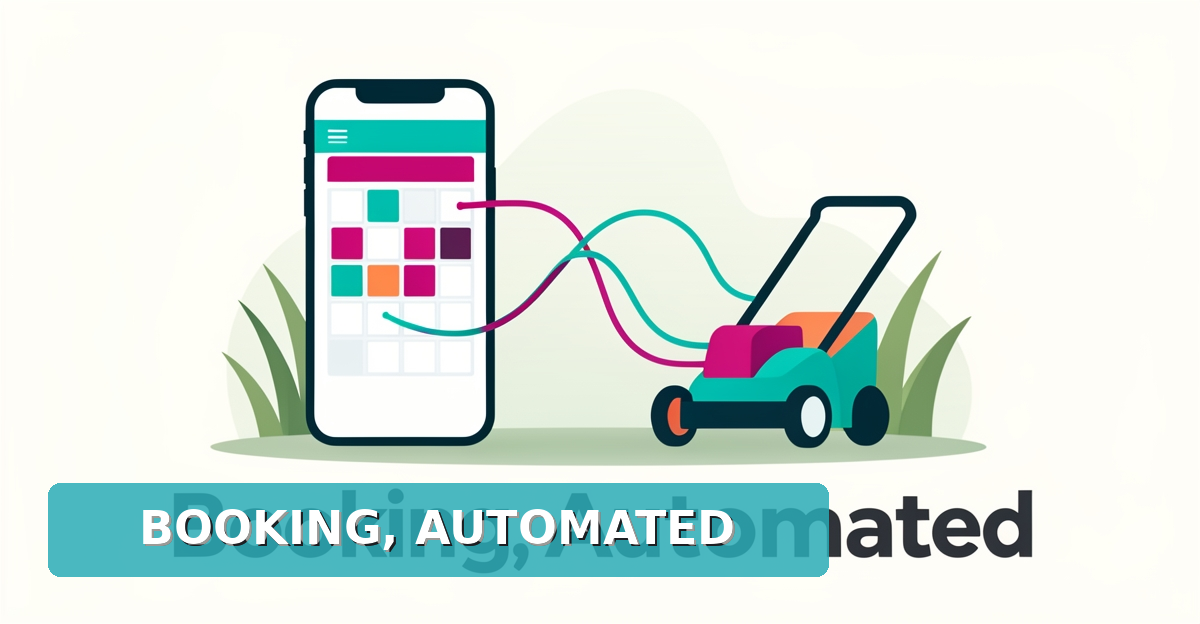
From Human to AI: Transforming Lawn Care Job Booking with Smart Automation
Key Facts
- Lawn care is a large, seasonal industry where booking speed often decides who wins the job, yet many operators still rely on phone tags, paper schedules, and handwritten notes
- Staffing shortages across landscaping and field services mean capacity is constrained; automation lets you serve more jobs without adding headcount
- AI-powered scheduling typically increases daily job capacity through optimized routing, traffic analysis, and tighter crew coordination
- AI job booking reduces dispatcher workload by automating routine service requests, confirmations, and calendar sync
- Route optimization commonly produces measurable fuel savings for operators running multiple crews daily
- Smart automation enables near-instant booking for standard services, replacing slow callback cycles that lose jobs to faster competitors
Hire a team member that works 24/7 — for less than a part-time wage.
AI receptionists, SDRs, dispatchers and 99+ roles. Trained on your business, fully managed.
Not sure where to start? Ask our AI planner
The Hidden Cost of Manual Booking in a Seasonal Race
Lawn care businesses face a hidden crisis in their booking processes. Manual systems create bottlenecks that prevent companies from capturing available demand during the exact months when most revenue is earned. In a seasonal industry, every slow booking day is a day you can't get back.
Manual booking forces dispatchers to juggle phone calls, paper schedules, and handwritten notes during peak season. This inefficiency directly impacts response times and job capacity, with companies losing potential revenue every time a customer calls and encounters delays or voicemail. The speed of booking has become a competitive differentiator in an industry where same-day service often determines which company wins the job.
These manual limitations manifest in several costly ways. Dispatchers spend excessive time on routine scheduling instead of focusing on complex jobs requiring human judgment. Standard services like weekly mowing or seasonal cleanups get delayed while staff manage administrative overhead. Customer satisfaction suffers when clients cannot book quickly or receive confirmation delays.
The operational strain extends beyond missed opportunities to employee burnout. Dispatchers handling high call volumes with outdated systems experience increased stress and turnover risk. This creates a vicious cycle where staffing shortages worsen due to poor working conditions, further reducing service capacity in an industry already struggling to fill positions.
Smart automation addresses these bottlenecks by handling routine booking tasks automatically. AI-powered systems can process standard service requests, confirm appointments, and optimize schedules without human intervention. This allows human staff to concentrate on value-added activities like custom landscaping consultations or emergency response coordination.
For lawn care businesses still reliant on manual processes, the cost of inaction extends beyond immediate lost revenue. It affects long-term competitiveness as faster-booking competitors capture the same-day jobs you're missing. Every season you run on paper is a season of demand handed to whoever answers first.
How Smart Automation Transforms Booking Operations
Routine lawn care calls used to pile up on a single dispatcher's desk, creating delays that cost jobs. Smart automation flips that model by letting AI handle the repetitive booking work while humans focus on judgment calls.
AI-powered job booking systems handle form filling, service recommendations, and confirmation without human intervention. The system answers standard service requests instantly, checks crew availability, and locks in a time slot. Complex requests with custom pricing or site constraints get flagged for human review.
This division of labor is critical in an industry facing persistent staffing shortages. AI job booking automates routine scheduling so dispatchers can focus on high-value jobs that need real scheduling judgment.
Route optimization is where capacity gains become measurable. AI-powered scheduling software analyzes traffic patterns, job proximity, and crew availability to build efficient daily routes. Operators typically see a meaningful increase in daily job capacity with this approach, because fewer windshield hours means more crew hours on actual jobs.
The efficiency gains show up in fuel and response time. Tighter routes mean fewer miles driven per job, and instant booking means customers stop waiting on callbacks that may never come.
Automation transforms booking operations through:
- Instant form filling and service recommendations from customer inputs
- Automatic confirmation and calendar sync with crews and clients
- Smart flagging of complex requests for human review
- Dynamic route optimization that increases daily job capacity
AIQ Labs builds custom systems that align with business needs, from small family-run services to mid-sized operations, replacing manual bookings with owned AI workflows. For operators who want a managed solution without building anything, AI Employees can staff the booking desk, an AI receptionist that answers calls, books standard services, and confirms appointments around the clock, typically at a fraction of the cost of a human hire. The result is faster response times, reduced dispatcher workload, and improved customer satisfaction without adding headcount.
Your Step-by-Step Transition from Manual to Automated
Transitioning from manual to automated lawn care job booking requires a structured approach that minimizes disruption while delivering early wins. Begin by assessing your current workflow, track how dispatchers spend their time, identify repetitive booking tasks, and measure average response times for service requests. This baseline helps pinpoint where AI can deliver the greatest impact, especially for high-volume, routine jobs like standard mowing or seasonal cleanups. AI job booking excels at handling clear, repetitive requests, freeing staff for complex scheduling decisions.
Next, design a phased implementation that starts with a narrow scope, such as automating bookings for one service type or geographic zone, before expanding. AIQ Labs recommends beginning with a pilot that integrates AI for form filling and confirmation on standard services, allowing dispatchers to oversee exceptions. If you'd rather rebuild the single workflow that costs you the most, a fixed-price Workflow Build is designed for exactly that: one high-cost process, rebuilt in phases. Train your team not just on the new tool, but on how their role evolves: dispatchers shift from data entry to exception handling and customer relationship management. This change management step is vital, as staff resistance often stems from fear of replacement rather than the technology itself. Emphasize that AI handles the routine, while humans focus on judgment-based tasks that require empathy and flexibility.
Finally, establish continuous optimization loops by monitoring key metrics like dispatcher workload reduction, customer response times, and booking accuracy. Use feedback from both staff and customers to refine AI responses, such as improving service recommendations based on local climate patterns or adjusting confirmation timing. Early wins often include faster response times for standard requests and measurable fuel savings from optimized routing. By iterating based on real-world performance, your automated system becomes more accurate and valuable over time, turning initial efficiency into sustained competitive advantage.
Building Custom AI Systems That Fit Your Operation
Building custom AI systems starts with recognizing that no two lawn care operations run the same way. A family-owned service handling 15 weekly jobs needs different automation than a mid-sized company managing 150. Off-the-shelf booking software often forces businesses to change their workflows to fit the tool, creating friction and underutilized features. Instead, tailored solutions map directly to how you already work, whether that's taking calls on a landline, using a paper calendar, or juggling multiple spreadsheets.
The real advantage lies in ownership. When you build your automation infrastructure rather than rent it, you eliminate recurring subscription costs and gain full control over customization. AIQ Labs develops systems where clients own the code, data, and integrations, meaning your AI evolves with your business, not the other way around. This approach avoids vendor lock-in and ensures your investment compounds over time, especially as you add services or expand crews. For operators ready to connect booking, dispatch, routing, and customer communication into one layer, an AI Operating System ties the whole operation together, built in phases and owned outright.
For lawn care specifically, custom AI booking can transform how service requests flow through your operation. Imagine a system that answers after-hours calls, checks crew availability in real-time, suggests add-on services like edging or fertilization based on property history, and sends confirmations, all without human intervention. The result isn't just efficiency, it's scalable growth rooted in a system you truly own, with every booking captured instead of lost to a busy phone line.
Still paying for 10+ subscriptions that don’t talk to each other?
We build custom AI systems you own outright. No vendor lock-in. Full control.
Not sure where to start? Ask our AI planner
Frequently Asked Questions
How much can AI-powered scheduling increase daily job capacity for lawn care businesses?
What kind of fuel savings can a lawn care business expect from AI route optimization?
Will implementing AI job booking replace my human dispatchers?
How does AI job booking improve response times for standard lawn care services?
How does automation help with staffing shortages in lawn care?
What does it cost to get started with AIQ Labs?
From Paper Trails to Profit: Your Lawn Care Business, Automated
The hidden cost of manual booking isn't just lost revenue, it's stalled growth, dispatcher burnout, and missed opportunities in a seasonal industry where same-day service wins jobs. Smart automation flips the script by handling routine scheduling so your team focuses on high-value work, with typical results including greater daily capacity and lower fuel costs from optimized routing. For lawn care businesses ready to move beyond manual bottlenecks, the path forward starts with assessing your current workflow, piloting AI for standard services, and building a system that grows with you, no vendor lock-in, just owned technology that pays dividends. Take the first step: start the Fit Check and book a free 30-minute strategy call to see where AI can unlock your next level of efficiency and growth.
Make AI your competitive advantage — not just another tool.
Strategy, implementation and ongoing optimization. One partner, end to end.
Not sure where to start? Ask our AI planner