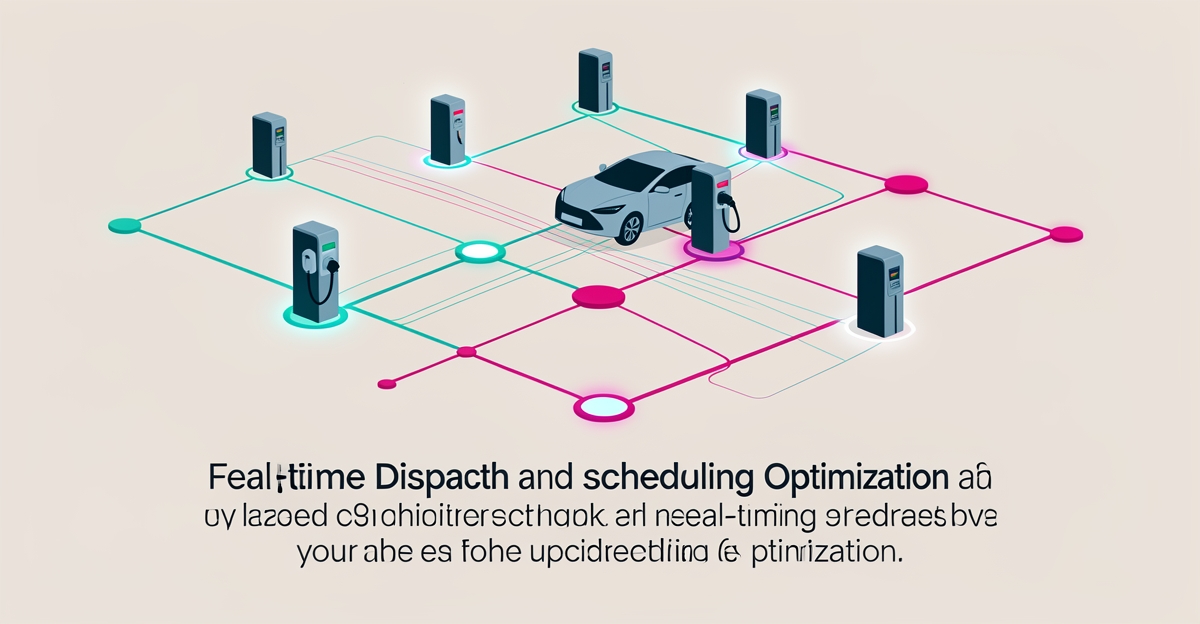
From Inefficient to Intelligent: How EV Charging Networks Are Using AI to Optimize Scheduling
Key Facts
- Most enterprises struggle with AI implementation due to technical complexity, a common reason projects stall before delivering value
- A large share of AI projects never move beyond the pilot phase, typically because of poor data quality and unclear goals
- Automation typically delivers major reductions in time spent on manual data processing and coordination
- Automated scheduling reduces human-caused errors, double-booking, misallocation, by taking routine coordination logic out of human hands
- AI scheduling systems improve technician productivity and reduce idle time across EV charging networks by aligning crews with live demand signals
Hire a team member that works 24/7 — for less than a part-time wage.
AI receptionists, SDRs, dispatchers and 99+ roles. Trained on your business, fully managed.
Not sure where to start? Ask our AI planner
The Technician Scheduling Crisis in EV Charging Networks
EV charging networks are expanding faster than the teams that keep them running. Operators are caught between rising utilization and the operational limits of manual scheduling, with every delayed repair translating into lost sessions and customer frustration.
Technician shortages create the first bottleneck. Networks grow unevenly across regions, yet staffing remains static and reactive. Dispatchers rely on spreadsheets and phone calls to match crews to faults, which leaves high-priority stations waiting while technicians sit idle elsewhere.
Uneven demand patterns compound the problem. Peak usage spikes in the morning and evening, while maintenance windows shrink. Without real-time visibility, station allocation becomes guesswork. Operators over-allocate to busy sites and under-serve remote locations, eroding both uptime and customer satisfaction.
Inefficient station allocation is amplified by data silos. Work orders, technician location, skill sets, and historical performance live in separate systems. Manual coordination wastes hours on data gathering and invites errors, double-booked technicians, missed SLAs, misallocated parts, that automation is well suited to eliminate.
The implementation hurdle is real. Many enterprises struggle with AI implementation due to technical complexity, and a large share of AI projects never move beyond the pilot phase, usually because teams skip the unglamorous work of cleaning data and defining a measurable goal.
This is where AI workflow and task automation changes the equation. AI systems can analyze real-time demand, technician availability, and historical performance to create optimized workloads across the network.
Operators face three persistent pain points that fuel the crisis:
- Reactive dispatch that prioritizes first-reported faults instead of network impact
- Idle time from mismatched skills, travel distance, and poor route planning
- Station allocation driven by averages, not live utilization and failure risk
AIQ Labs builds AI scheduling systems that improve productivity and reduce idle time across the network by replacing manual triage with continuous optimization. Our AI Workflow Builds rebuild the one workflow that costs you the most, dispatch scheduling is usually near the top of that list for charging operators, at a fixed price, in phases. The approach treats scheduling as a dynamic workflow problem rather than a calendar exercise, aligning crews with the stations that matter most at any given moment.
How AI Transforms Workload Optimization in EV Infrastructure
EV charging network operators face mounting pressure to balance technician availability with fluctuating charging demand across geographically dispersed stations. Traditional scheduling methods often result in inefficient routing, prolonged idle times, and missed service opportunities, directly impacting network reliability and customer experience. By leveraging AI to analyze real-time usage patterns, technician skill sets, and historical maintenance records, operators can transform reactive dispatch into proactive, data-driven workload optimization. Automation driven by intelligent scheduling typically cuts the time spent on manual data processing and coordination dramatically, enabling faster decision-making during peak demand periods. It also sharply reduces human-caused errors, such as double-booking technicians or misallocating resources, by taking routine scheduling logic out of human hands. This shift not only improves operational accuracy but also frees up human supervisors to focus on exception management and strategic network planning.
- AI systems continuously ingest live charging session data, predicting localized demand spikes based on time-of-day, weather, and regional events
- Technician availability is dynamically matched to job complexity, certifications, and proximity to minimize travel time
- Historical performance metrics, like average repair duration and first-time fix rates, are used to refine scheduling accuracy over time
- Real-time adjustments accommodate emergencies, such as sudden station outages or grid-related issues, without disrupting the broader workflow
- The system learns from past scheduling outcomes, reducing guesswork and improving forecast reliability with each operational cycle
For EV operators, this level of optimization translates directly into higher station uptime, reduced operational costs, and improved service consistency, critical factors in maintaining driver trust and supporting broader EV adoption. AIQ Labs develops scheduling systems that embody these principles, integrating real-time analytics with rule-based automation to create adaptive workflows tailored to specific network topologies and operational constraints. For operators ready to connect scheduling to the rest of their operations, our AI Operating Systems build one connected layer across dispatch, maintenance, and reporting, delivered in phases and owned outright by you. By aligning technician deployment with actual demand signals rather than static shifts, networks achieve better resource utilization while maintaining the flexibility to scale as charging infrastructure expands. The result is a more resilient, responsive charging ecosystem where AI handles the complexity of coordination, allowing human teams to deliver higher-value service where it matters most.
Implementation Best Practices: From Pilot to Productive AI Scheduling
The leap from a promising pilot to a productive, network-wide AI scheduling system is where most EV charging operators stall. A large share of AI projects never move beyond the pilot phase, often because teams underestimate the operational discipline required to scale. Success depends less on model sophistication and more on a structured rollout that treats data quality and continuous refinement as first-class priorities.
Start by defining the exact operational bottleneck you need to solve, whether it's technician idle time, uneven station coverage, or missed SLA windows. A vague goal like "optimize scheduling" produces vague results; a precise problem statement lets you measure progress from day one. Next, audit your data pipelines. Incomplete work-order histories, inconsistent timestamps, and siloed technician calendars will sabotage even the best algorithms. Automation can dramatically reduce the time spent on data processing, but only if the underlying inputs are trustworthy.
- Define a single, measurable KPI (e.g., "reduce technician travel time by 15% this quarter")
- Clean and unify historical dispatch, availability, and station-uptime data before training
- Deploy a shadow mode where AI recommendations run parallel to human dispatchers for two weeks
- Establish a weekly review cadence to compare AI suggestions against actual outcomes
- Retrain models monthly using the latest performance data and edge-case feedback
Continuous refinement closes the loop. Teams that monitor model drift and inject fresh field data see sustained gains; those that treat deployment as a finish line watch accuracy decay. AIQ Labs applies this same disciplined framework when building AI scheduling systems for EV networks, ensuring that real-time demand signals, technician constraints, and historical performance feed a living optimization engine rather than a static rule set. The result is a scheduling layer that grows smarter every week, turning a pilot win into a durable operational advantage.
Still paying for 10+ subscriptions that don’t talk to each other?
We build custom AI systems you own outright. No vendor lock-in. Full control.
Not sure where to start? Ask our AI planner
Frequently Asked Questions
Why is technician scheduling such a crisis for EV charging networks right now?
How does AI actually improve workload optimization for EV charging operators?
Can AI really reduce human errors in dispatch and scheduling?
What’s the biggest risk when trying to implement AI scheduling?
How do you move from a pilot to a productive network-wide AI scheduling system?
Is AI a replacement for dispatchers or just a tool?
Turning Scheduling Chaos into Strategic Advantage
EV charging networks don’t just need more technicians, they need smarter scheduling. AI transforms reactive dispatch into proactive optimization by aligning technician deployment with real-time demand, skill sets, and historical performance. The result? Higher station uptime, reduced idle time, and a more resilient charging ecosystem, directly supporting network reliability and customer satisfaction. For operators ready to move beyond manual spreadsheets and pilot-phase frustration, the path forward starts with clarity: define your bottleneck, unify your data, and test AI recommendations in shadow mode before scaling. AIQ Labs helps EV networks build scheduling systems that grow smarter over time, whether as a single workflow rebuild or a full operating layer, turning operational complexity into a durable competitive advantage. To explore what this looks like for your network, start with the 2-minute Fit Check, then book a free 30-minute strategy call. No obligation, just clarity.
Make AI your competitive advantage — not just another tool.
Strategy, implementation and ongoing optimization. One partner, end to end.
Not sure where to start? Ask our AI planner