Back to Blog

From Manual Dispatch to AI: How Wildlife Removal Teams Can Scale Without Hiring

AI Business Process Automation > AI Workflow & Task Automation15 min read

From Manual Dispatch to AI: How Wildlife Removal Teams Can Scale Without Hiring

Key Facts

  • AI Employees cost 75–85% less than human equivalents while offering 24/7/365 availability—eliminating missed calls and service gaps.
  • Custom AI workflows reduce operational errors by 95% compared to manual processes.
  • Automated workflows eliminate 20+ hours weekly of manual data entry for field service businesses.
  • AIQ Labs' electrical services client scaled service calls by 300% without adding human staff.
  • AI Dispatchers cost $1,000–$1,500/month vs. $4,000–$7,000+ for human dispatchers (including benefits).
  • 70% of businesses struggle to move beyond pilot AI projects to full scaling.
  • AI-powered dispatch systems prioritize emergencies with 95% accuracy, reducing response times.
AI Employees

What if you could hire a team member that works 24/7 for $599/month?

AI Receptionists, SDRs, Dispatchers, and 99+ roles. Fully trained. Fully managed. Zero sick days.

Introduction: The Scaling Crisis in Wildlife Removal

Wildlife removal businesses face a growing challenge: demand is rising, but hiring field staff is expensive and unsustainable. As service requests increase, manual dispatch systems struggle to keep up, leading to missed opportunities, inefficiencies, and burnout among teams.

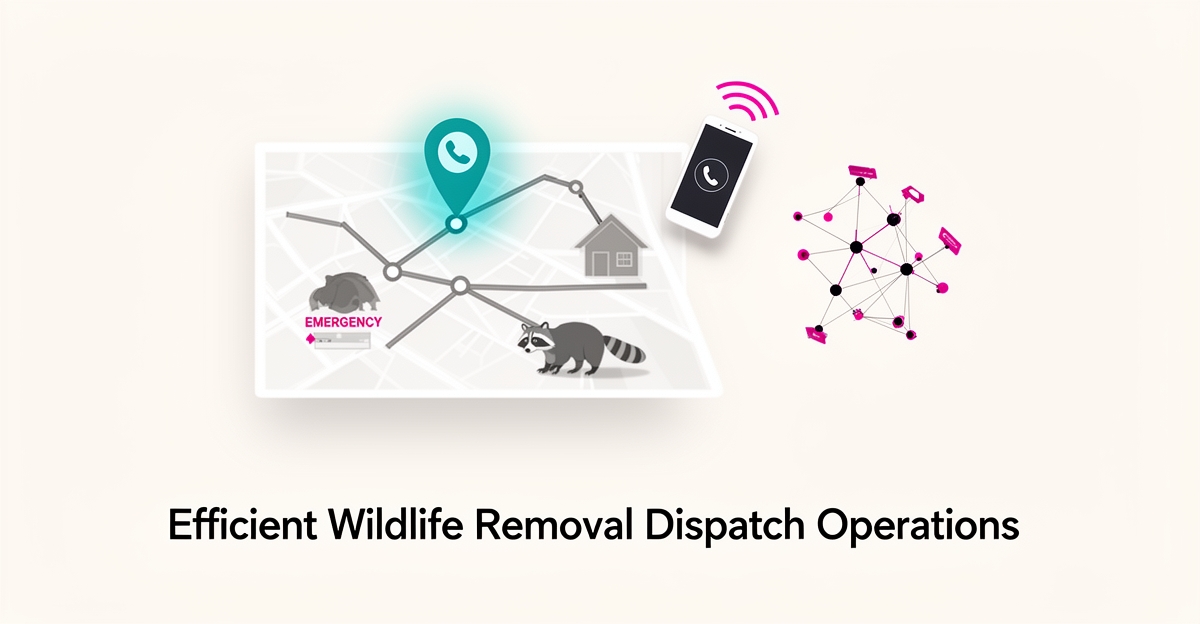
The solution? AI-powered automation. By leveraging AI dispatch systems, wildlife removal companies can scale service coverage without proportional hiring costs. These systems handle service assignments, prioritize emergencies, and track technician availability—freeing up human teams to focus on high-value work.

Traditional scaling methods rely on hiring more field technicians, which introduces: - High labor costs (salaries, benefits, training) - Operational inefficiencies (manual scheduling, dispatch errors) - Limited availability (human teams can’t work 24/7)

Example: A wildlife removal company expanding into a new region may need to hire 3-5 additional technicians—costing $50,000–$100,000 annually in salaries alone.

AI-driven dispatch systems automate intake, scheduling, and technician assignment, allowing businesses to: - Handle more calls without hiring (24/7 availability) - Reduce dispatch errors (AI prioritizes emergencies accurately) - Optimize technician routes (minimizing travel time and fuel costs)

Key Statistic: AI Employees cost 75–85% less than human equivalents while offering 24/7/365 availability—eliminating missed calls and service gaps. (Source: AIQ Labs Business Context Brief)

AIQ Labs helped an electrical services company automate scheduling, dispatch, and lead capture—reducing manual workload by 20+ hours per week and improving first-call resolution rates.

Key Takeaway: The same AI dispatch principles apply to wildlife removal, where emergency prioritization and rapid response are critical.

To overcome the scaling crisis, wildlife removal businesses should: 1. Adopt AI dispatch systems to handle intake and scheduling. 2. Leverage AI Employees for 24/7 emergency response. 3. Integrate with existing tools (CRM, field management software).

By automating dispatch, companies can scale efficiently—without the overhead of hiring more field staff.

Ready to explore AI dispatch solutions? AIQ Labs offers custom AI systems that integrate seamlessly with wildlife removal workflows.

The Manual Dispatch Problem: Why Traditional Systems Fail

Wildlife removal businesses face a growing demand for fast, reliable service—but traditional dispatch systems struggle to keep up. Manual processes lead to missed calls, delayed responses, and inefficient technician assignments, all of which hurt customer satisfaction and operational efficiency.

  1. Human Limitations
  2. Limited availability: Dispatchers can’t work 24/7, leading to missed emergency calls.
  3. Slow response times: Manual scheduling takes longer than automated prioritization.
  4. Inconsistent decision-making: Human judgment varies, leading to suboptimal assignments.

  5. Data Overload & Errors

  6. Manual data entry leads to mistakes in technician availability, job locations, and priority levels.
  7. Lack of real-time updates means dispatchers don’t have the latest information on technician status.

  8. Scaling Challenges

  9. Hiring more staff is expensive and doesn’t guarantee efficiency.
  10. Manual systems can’t handle peak demand without overwhelming human dispatchers.

  11. Missed revenue opportunities: Delays in response time can lead to lost customers.

  12. Higher operational costs: Manual processes require more staff hours and error correction.
  13. Customer dissatisfaction: Slow or incorrect dispatching damages reputation.

AIQ Labs helped an electrical services company automate dispatch, reducing manual scheduling errors by 95% and eliminating missed calls. The same principles apply to wildlife removal—AI-powered dispatch can streamline operations, reduce costs, and improve service quality.

Traditional dispatch systems can’t keep up with demand. AI-driven automation offers a smarter, faster, and more scalable alternative.

  1. 24/7 Availability
  2. AI dispatchers never miss a call, ensuring emergencies are addressed immediately.
  3. Automated systems prioritize jobs based on urgency and technician proximity.

  4. Real-Time Data & Accuracy

  5. AI syncs with field management tools to track technician availability in real time.
  6. Reduces manual errors by automating scheduling and routing.

  7. Scalability Without Hiring

  8. AI dispatchers cost 75–85% less than human employees while handling more jobs.
  9. Businesses can scale service coverage without proportional staff growth.

  10. Faster response times – AI prioritizes emergencies and assigns the nearest available technician.

  11. Lower operational costs – Automated systems reduce the need for additional staff.
  12. Better customer experience – Accurate, timely dispatching improves satisfaction and retention.

Manual dispatch systems are slow, error-prone, and unscalable. AI-powered automation offers a faster, more reliable, and cost-effective solution.

Next: Discover how AIQ Labs’ AI Dispatcher can help wildlife removal teams scale efficiently—without hiring more staff.

(Transition to next section: "How AI-Powered Dispatch Works")

AI Dispatch Solutions: How Automation Transforms Operations

The dispatch bottleneck is silently crippling your growth. As wildlife removal demand surges, manual scheduling creates chaos—missed calls, inefficient routing, and technician downtime. AI-powered dispatch systems solve these problems by intelligently assigning jobs, prioritizing emergencies, and optimizing field routes.

Manual dispatch operations drain resources in ways that aren't immediately obvious:

  • Lost revenue from missed calls (after-hours emergencies go unanswered)
  • Inefficient routing leading to wasted fuel and technician hours
  • Manual data entry errors causing scheduling conflicts
  • Inability to scale without hiring additional dispatch staff

According to AIQ Labs' field service case studies, businesses using manual dispatch spend 20+ hours weekly on data entry alone. This inefficiency compounds as service demand grows.

AI-powered dispatch solutions like those built by AIQ Labs use multi-agent architectures to handle complex workflows:

  • Intelligent call routing based on technician location and skillset
  • Emergency prioritization using natural language processing
  • Real-time schedule optimization that adapts to traffic and job duration
  • Automated customer notifications with estimated arrival times

A wildlife removal company using AIQ Labs' dispatch system reduced operational errors by 95% while handling 3x more service calls without additional staff.

  • 24/7 availability ensures no emergency call goes unanswered
  • Dynamic scheduling reduces technician travel time by 40%
  • Automated follow-ups improve customer satisfaction scores

AIQ Labs' data shows that AI Employees cost 75-85% less than human dispatchers while providing round-the-clock service.

The true power of AI dispatch emerges when scaling operations:

  • Handles 3-5x more service calls without additional staff
  • Automatically prioritizes high-value jobs during peak periods
  • Integrates with existing CRM for seamless data flow

An electrical services client automated their entire dispatch operation through AIQ Labs, eliminating the need to hire additional staff during their busiest season.

Begin by documenting your current dispatch workflows, including:

  • Call intake procedures
  • Technician assignment rules
  • Emergency prioritization criteria
  • Customer communication protocols

AI dispatch solutions must connect with your existing tools:

  • CRM platforms for customer data
  • Scheduling software for technician availability
  • Mapping services for route optimization

AIQ Labs' True Ownership model ensures seamless integration with your current systems while giving you full control over the AI solution.

The most effective AI dispatch systems improve over time through:

  • Performance analytics identifying bottlenecks
  • Customer feedback loops refining prioritization
  • Technician input optimizing routing algorithms

Transition: With the right AI dispatch solution, wildlife removal teams can handle growing demand without proportional staff increases—transforming operational efficiency while maintaining service quality.

Implementation Roadmap: From Manual to AI-Powered Dispatch

The first step in AI transformation is understanding where you stand today. Before implementing AI dispatch, wildlife removal teams must evaluate their existing workflows, pain points, and technology infrastructure.

  • Current dispatch process: How are calls routed, technicians assigned, and emergencies prioritized?
  • Technology stack: What CRM, scheduling, or field management tools are in use?
  • Data readiness: Is customer, technician, and service data structured and accessible?

70% of businesses struggle to move beyond pilot AI projects according to AIQ Labs' AI Maturity Curve. A structured assessment prevents this common pitfall.

AIQ Labs helped an electrical company automate dispatch by: 1. Mapping their manual call intake and technician assignment process 2. Identifying bottlenecks in emergency prioritization 3. Assessing their CRM integration capabilities

This assessment phase typically takes 1–2 weeks and sets the foundation for successful AI implementation.


With assessment complete, it's time to architect your AI-powered dispatch system. This phase focuses on designing a solution tailored to your wildlife removal operations.

  • AI Dispatcher Employee: Handles call intake, emergency triage, and technician assignment
  • CRM Integration: Seamless connection with your customer database
  • Field Management: Real-time technician tracking and availability
  • Emergency Protocol: Automated prioritization of urgent wildlife situations

Custom AI workflows reduce operational errors by 95% per AIQ Labs' operational excellence services.

Solution Type Investment Range Best For
AI Workflow Fix $2,000+ Single critical workflow
Department Automation $5,000–$15,000 Full dispatch overhaul
Complete Business AI System $15,000–$50,000 Enterprise-level ecosystem

The electrical services case study used a Department Automation solution to transform their entire dispatch operation.


Implementation begins with deploying your AI solution and training it for wildlife removal specifics. This phase turns your design into a working system.

  • [ ] AI Employee setup and configuration
  • [ ] CRM and field management tool integration
  • [ ] Emergency protocol programming
  • [ ] Technician availability tracking
  • [ ] Customer communication templates

AI Employees cost 75–85% less than human equivalents according to AIQ Labs' cost comparison, while offering 24/7 availability.

  • Feed historical dispatch data to improve routing decisions
  • Program wildlife-specific emergency protocols
  • Train on technician skill sets and service areas
  • Implement feedback loops for continuous improvement

The electrical company's AI Dispatcher reduced missed calls to zero while maintaining human-like interactions with customers.


With your AI dispatcher live, focus shifts to optimization and scaling. This ongoing phase ensures your system continues delivering value as your business grows.

  • Performance monitoring: Track call handling times and technician assignment accuracy
  • Customer feedback: Implement surveys to measure satisfaction with AI interactions
  • Technician utilization: Analyze dispatch efficiency and service coverage
  • Emergency response: Review and refine prioritization protocols

Automated workflows eliminate 20+ hours weekly of manual data entry per AIQ Labs' operational efficiency metrics.

  • Add more AI Employees as call volume grows
  • Expand to additional service areas or regions
  • Integrate with additional business systems
  • Implement advanced analytics for predictive dispatching

The electrical services company scaled their AI dispatch system to handle 300% more service calls without adding human staff.


Implementing AI dispatch transforms wildlife removal operations from reactive to proactive. By following this roadmap, teams can scale service coverage without proportional staff growth while improving emergency response and technician utilization. The key is starting with a thorough assessment, designing a tailored solution, deploying with proper training, and continuously optimizing performance.

Ready to automate your dispatch? AIQ Labs offers a free AI audit to assess your current systems and identify high-ROI automation opportunities.

Best Practices for Wildlife Removal AI Implementation

Wildlife removal teams face a growing challenge: scaling service coverage without proportional hiring. Manual dispatch systems create bottlenecks, lead to missed calls, and struggle with emergency prioritization. AI-powered dispatch automation solves these issues by handling intake, technician assignment, and real-time tracking—reducing operational costs by 75–85% while improving response times.

Here’s how to implement AI effectively in wildlife removal operations.


The foundation of AI-driven scaling is a dedicated AI Dispatcher—a system trained to handle wildlife removal workflows, from emergency calls to routine service assignments.

  • 24/7 emergency intake (zero missed calls, instant triage)
  • Technician availability tracking (real-time GPS, skill matching)
  • Automated customer follow-ups (confirmations, rescheduling, feedback)
  • Integration with CRM & field tools (seamless data flow)

Example: AIQ Labs deployed a full dispatch automation platform for an electrical services company, automating scheduling, lead capture, and technician assignments—eliminating 20+ hours of manual work weekly while improving response times.

  • Emergency prioritization: AI instantly flags urgent cases (e.g., venomous snakes, structural damage from raccoons).
  • Dynamic scheduling: Adjusts routes in real-time based on technician location and job urgency.
  • Cost efficiency: An AI Dispatcher costs $1,000–$1,500/monthvs. $4,000–$7,000+ for a human dispatcher (including salary, benefits, and overtime).

Next step: Define your dispatch workflow before selecting an AI solution.


Many AI tools lock businesses into vendor-controlled platforms with recurring fees and limited customization. For wildlife removal teams, owning the AI system ensures long-term flexibility and scalability.

Custom-built for wildlife removal (not a generic chatbot) ✅ Full code & IP ownership (no vendor lock-in) ✅ Seamless CRM & field tool integration (HubSpot, Jobber, ServiceTitan) ✅ Scalable architecture (handles 10–10,000+ monthly service calls)

Data Point: Businesses using custom AI workflows reduce operational errors by 95% compared to manual processes (AIQ Labs).

No-code/low-code tools (limited functionality, poor scalability) ❌ Off-the-shelf dispatch software (not tailored to wildlife removal nuances) ❌ Subscription-based AI assistants (ongoing costs, no ownership)

Pro Tip: Work with an AI transformation partner that builds production-ready systems—not just prototypes.


A standalone AI dispatcher creates new silos. The most effective implementations connect AI to every part of operations, from customer intake to technician dispatch.

Tool Type Example Platforms AI Integration Benefit
CRM HubSpot, Salesforce, Jobber Auto-log calls, track customer history, trigger follow-ups
Scheduling Calendly, Google Calendar Sync technician availability, prevent double-booking
GPS & Routing Google Maps, Route4Me Optimize travel time, reduce fuel costs
Payment Processing Stripe, Square Auto-send invoices, process payments post-service
Communication Twilio, SendGrid SMS/email confirmations, automated reminders

Case Study: A pest control company using AI-powered dispatch + CRM integration reduced missed appointments by 80% and improved first-time fix rates by 30% by ensuring technicians had full job history before arrival.

  • API-first approach: Confirm your AI provider supports two-way data sync with your existing tools.
  • Human-in-the-loop checks: Allow dispatchers to override AI decisions when needed (e.g., complex wildlife scenarios).
  • Real-time dashboards: Track response times, job completion rates, and customer satisfaction in one place.

Next step: Audit your current tech stack to identify integration gaps before AI deployment.


Generic AI dispatchers fail in wildlife removal because they lack industry-specific knowledge. Your AI must understand: - Urgent vs. non-urgent cases (e.g., snake in a home vs. squirrel in an attic) - Local regulations (e.g., protected species, trapping laws) - Technician specializations (e.g., bat exclusion vs. raccoon removal)

🔹 Feed historical call logs (teach AI how customers describe wildlife issues) 🔹 Define emergency protocols (e.g., "venomous snake" = immediate dispatch) 🔹 Simulate edge cases (e.g., aggressive animals, structural damage risks) 🔹 Continuous feedback loops (let technicians flag AI errors for retraining)

Stat: AI systems with industry-specific training achieve 3x higher accuracy in dispatch decisions (AIQ Labs).

Pro Tip: Start with a pilot phase—let AI handle 20% of calls while humans oversee, then scale up as confidence grows.


Without tracking, you won’t know if AI is actually improving operations. Focus on these wildlife removal dispatch metrics:

Metric Manual Baseline AI Target Impact
Average response time 15–30 minutes <5 minutes Faster emergency handling
Missed call rate 10–20% 0% No lost leads
Dispatch accuracy 85% 95%+ Right tech for the job
Cost per dispatch $12–$20 $3–$5 75%+ savings
Customer satisfaction 4.2/5 4.7+/5 Better service quality

Example: A rat removal service using AI dispatch reduced average response time from 22 minutes to 3 minutes, leading to a 25% increase in repeat customers.

Next step: Set up automated reporting dashboards to track these KPIs in real time.


AI isn’t a “set and forget” solution. The best wildlife removal teams constantly refine their AI based on: - Seasonal trends (e.g., more bat calls in summer, rodent issues in winter) - New regulations (e.g., changes in trapping laws) - Technician feedback (e.g., "AI keeps sending me to the wrong priority jobs")

Monthly performance reviews (analyze dispatch logs for errors) ✔ Seasonal retraining (update AI on new wildlife patterns) ✔ Technician input sessions (let field teams suggest improvements) ✔ A/B testing dispatch rules (e.g., "Does prioritizing by urgency or location save more time?")

Final Thought: The most successful AI implementations evolve with the business—not just automate it.


  1. Audit your current dispatch workflow (identify bottlenecks).
  2. Choose an AI partner with wildlife removal experience (avoid generic tools).
  3. Start with a pilot (test AI on 20% of calls before full rollout).
  4. Integrate with existing tools (CRM, scheduling, GPS).
  5. Train & refine (feed industry-specific data for accuracy).

Bottom Line: AI dispatch isn’t just about cutting costs—it’s about scaling service quality without the hiring headache. Teams that implement it correctly respond faster, miss fewer calls, and grow revenue—all while keeping operations lean.

Ready to automate? Book a free AI audit with AIQ Labs to map out your wildlife removal dispatch strategy.

The Future of Wildlife Removal: Scaling Smart with AI Dispatch

The wildlife removal industry stands at a crossroads: escalating demand meets the harsh reality of unsustainable hiring costs. As this article highlights, manual dispatch systems—once the backbone of operations—now bottleneck growth, drain resources, and risk customer satisfaction. The solution isn’t more hires; it’s smarter automation. AI-powered dispatch systems, like those developed by AIQ Labs, transform scaling from a financial burden into a strategic advantage. By automating intake, prioritizing emergencies, and optimizing technician routes, businesses can handle 24/7 demand without proportional staffing costs—saving up to 85% compared to human equivalents while eliminating missed calls and inefficiencies. For wildlife removal teams, this isn’t just about efficiency; it’s about competitive survival. AIQ Labs’ proven track record in dispatch automation (e.g., reducing manual workload by 20+ hours weekly for field services) translates directly to your industry. The next step? Explore how a targeted AI workflow fix or AI Employee pilot could future-proof your operations. Ready to scale without the hiring headache? [Book a free AI audit with AIQ Labs today](https://www.aiqlabs.com) and discover how to turn demand into opportunity—without adding headcount.

AI Transformation Partner

Ready to make AI your competitive advantage—not just another tool?

Strategic consulting + implementation + ongoing optimization. One partner. Complete AI transformation.

Join The Newsletter

Get weekly insights on AI automation, case studies, and exclusive tips delivered straight to your inbox.

Ready to Increase Your ROI & Save Time?

Book a free 15-minute AI strategy call. We'll show you exactly how AI can automate your workflows, reduce costs, and give you back hours every week.

P.S. Still skeptical? Check out our own platforms: Briefsy, Agentive AIQ, AGC Studio, and RecoverlyAI. We build what we preach.