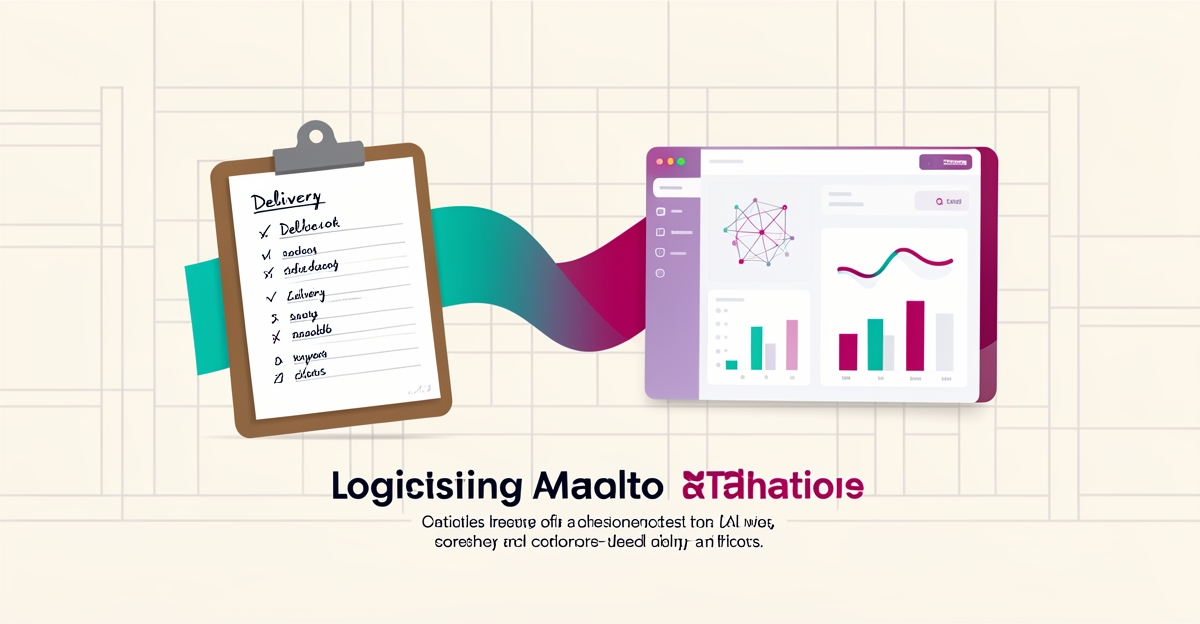
From Manual Logs to AI: Automating Packing Service Delivery Reports
Hire a team member that works 24/7 — for less than a part-time wage.
AI receptionists, SDRs, dispatchers and 99+ roles. Trained on your business, fully managed.
Not sure where to start? Ask our AI planner
The Hidden Cost of Manual Packing Logs in Delivery Operations
Most packing and delivery services still run on paper logs, spreadsheets, or a mix of both. Someone writes down what was packed, when it left, who signed for it, and then someone else types it into a system later, if it gets typed in at all. Each of those handoffs is a place where the process quietly bleeds money.
The costs rarely show up as a line item. They show up as billing disputes you can't settle because nobody can find the record. As hours spent reconciling delivery sheets against invoices at month-end. As customers calling to ask where their shipment is while your dispatcher digs through a binder. And as decisions made on stale data, because the report everyone is working from was compiled last week.
There's also the scaling problem. Manual logging works when you do twenty deliveries a day. It starts to break at fifty and fails outright at a hundred. Hiring more admin staff to keep up is the default fix, but it multiplies the error rate along with the payroll. The real question isn't whether manual logs cost you money, they do, it's how much, and what it would take to replace them.
How AI Transforms Delivery Reporting: Accuracy, Speed, and Real-Time Accountability
AI-driven reporting replaces the copy-it-down-then-type-it-up cycle with capture-once automation. Delivery details are recorded once, by a driver in an app, by an AI receptionist taking a customer call, or pulled directly from your dispatch system, and flow into a report that's current as of five minutes ago, not last Friday.
Three things change immediately:
- Accuracy. Automated capture removes the transcription step where most errors happen. The record that goes into the report is the record that was created at the point of delivery.
- Speed. Reports generate themselves. Instead of a half-day of admin work compiling a weekly delivery summary, it exists continuously, and anyone who needs it can pull it on demand.
- Accountability. When every delivery has a timestamped, attributable record, disputes get shorter. You can answer "where's my shipment" in seconds, and billing questions get resolved with evidence instead of memory.
For teams that can't justify a full-time coordinator role, an AI employee, an AI dispatcher or reporting agent, can handle much of this work at a fraction of the cost of a human hire, working around the clock.
Implementation Path: Integrating AI Reporting with Existing Dispatch and Logistics Tools
The good news: you don't rip anything out. AI reporting layers on top of the tools you already use, your dispatch software, your accounting package, your spreadsheets if that's what you have. The practical path looks like this:
- Find the most expensive workflow. Usually it's the delivery-log-to-invoice chain, because errors there hit revenue directly.
- Rebuild that one workflow first. A focused AI workflow build replaces the manual log-and-reconcile process with automated capture and reporting, at a fixed price, delivered in phases so you see results before committing further.
- Connect the rest over time. Once reporting runs itself, the same layer can extend into dispatch coordination, customer updates, and billing, eventually becoming a connected AI operating system your business owns outright rather than rents.
Payment models matter here too. You can start monthly to prove the value, build in milestones as each phase lands, or own the system outright once it's core to how you operate. What you shouldn't do is sign a multi-year contract for a platform you haven't tested against your actual workflow.
Still paying for 10+ subscriptions that don’t talk to each other?
We build custom AI systems you own outright. No vendor lock-in. Full control.
Not sure where to start? Ask our AI planner
Frequently Asked Questions
How much can AI reduce costs in packing service delivery reporting?
How long does it take to see a return on investment from AI in logistics automation?
Can AI improve the accuracy of delivery time estimates in packing services?
Is AI in logistics only for large companies, or can small packing services benefit too?
What are the main challenges when switching from manual logs to AI-driven delivery reports?
How much faster can deliveries become with AI automation in packing services?
Turning Paper Trails into Real-Time Intelligence
Transitioning from manual packing logs to AI-powered delivery reporting isn't just about digitizing paperwork, it's about unlocking operational clarity that directly impacts your bottom line. Automation removes labor-intensive data entry, improves report accuracy, and delivers real-time insights that strengthen accountability and customer trust. For packing service businesses, that means faster issue resolution, fewer billing disputes, and teams freed to focus on growth rather than grunt work. Ready to see where AI can eliminate your biggest reporting bottleneck? Start with a free two-minute Fit Check to map your current process, then schedule a no-obligation 30-minute strategy call with our team to identify high-ROI automation opportunities tailored to your business, no sales pitch, just a working session to clarify your path forward.
Make AI your competitive advantage — not just another tool.
Strategy, implementation and ongoing optimization. One partner, end to end.
Not sure where to start? Ask our AI planner