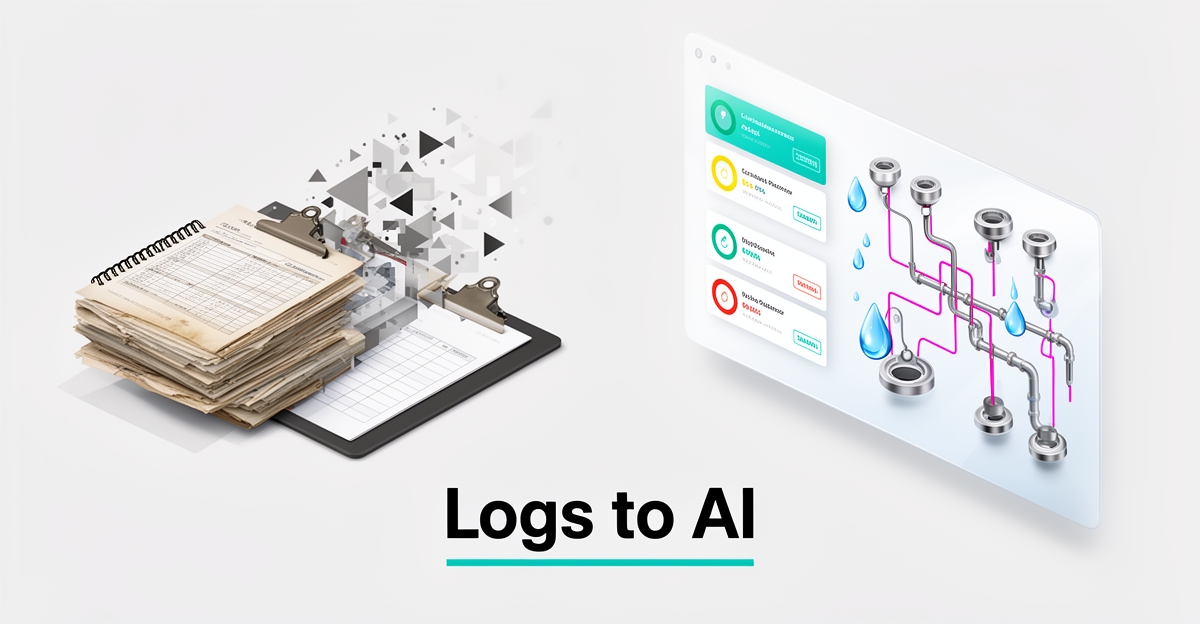
From Manual Logs to AI: Automating Repair Job Tracking in Commercial Plumbing
Key Facts
- Manual job logs cause billing disputes from incomplete time, parts, and scope records
- Dispatcher bottlenecks occur when waiting on technician updates for job status
- AI-driven document processing can dramatically reduce manual data entry for job logging workflows
- Automated job tracking typically eliminates many hours of weekly manual data entry for commercial plumbing teams
- Real-time job status tracking cuts operational errors through automated data validation
- AI systems can extract structured data from voicemails, emails, and handwritten notes using modern OCR and language models
- Integrating AI job tracking with existing software creates a single source of truth across dispatch, CRM, and invoicing systems
Hire a team member that works 24/7 — for less than a part-time wage.
AI receptionists, SDRs, dispatchers and 99+ roles. Trained on your business, fully managed.
Not sure where to start? Ask our AI planner
The Hidden Cost of Manual Job Logs in Commercial Plumbing
Commercial plumbing crews move fast, but job records rarely keep up. Paper logs, spreadsheets, and end-of-day data entry create gaps that show up later as missed details, billing disputes, and dispatcher bottlenecks.
The breakdown is not a people problem. It is a document and data-capture problem. Service notes get handwritten on site, photos stay on phones, and customer emails are never linked to work orders. By the time someone transcribes the information, context is lost and accountability blurs.
Manual logs force dispatchers to chase technicians for updates. That chase creates delays, double work, and errors that compound across a route. When job details are incomplete, invoicing stalls and customers question charges they cannot see documented.
Paper and spreadsheet systems also make real-time visibility impossible. Managers cannot confirm which jobs are in progress, what parts were used, or what promises were made on a call. Decisions are made on stale information, and service quality suffers.
AI-driven document processing changes the capture point. Instead of waiting for manual entry, incoming calls, emails, and field notes can be automatically logged, categorized, and tracked. Modern intelligent document processing pipelines, combining OCR, language models, and workflow orchestration, make this a practical, well-established pattern as of late 2026.
The shift from after-the-fact entry to automatic capture reduces friction for technicians and dispatchers alike. Key failure points of manual logs include:
- Service details missed or summarized incorrectly during hand-off
- Billing disputes from incomplete time, parts, and scope records
- Dispatcher bottlenecks waiting on technician updates
- No real-time job status for customers or internal teams
Automating capture also improves compliance and auditability. When every customer interaction becomes a structured record, teams can trace who said what, when, and what was completed. That traceability is the foundation for accurate, real-time records across the operation.
AIQ Labs builds custom AI systems that integrate with existing software to maintain those records automatically, reducing manual entry and improving accountability without replacing the tools crews already use. With 200+ multi-agent systems deployed, this is work the team does every day.
How AI Captures and Categorizes Jobs from Calls and Emails
AIQ Labs helps commercial plumbing businesses transform how service jobs are captured from unstructured inputs like voicemails, emails, and handwritten notes. Using intelligent document processing (IDP), AI systems extract structured data from these sources, identifying key fields such as customer name, address, issue type, and urgency level. Language models then apply entity recognition and natural language understanding to categorize the job type (e.g., leak repair, drain cleaning) and assess priority from customer language. These insights feed into automated workflows that orchestrate data validation, enrichment, and routing to dispatch systems or CRM platforms in real time. By replacing manual logging with AI-driven IDP, plumbing companies reduce data entry errors and accelerate job initiation, turning scattered communications into traceable, actionable work orders within minutes.
- Extracts text and structured data from diverse document types using AI-powered OCR
- Applies entity recognition to identify key job details like location, service type, and urgency
- Prioritizes high-risk or emotionally charged customer requests automatically
- Orchestrates end-to-end processing via automated workflows for real-time job logging
- Integrates extracted data with dispatch systems and CRMs for seamless tracking
For trades businesses, this means fewer missed calls, faster response times, and a single source of truth for every repair job, from first contact to completion. AIQ Labs builds these custom IDP systems through its AI Workflow Builds, which rebuild the one workflow that costs you the most at a fixed price, in phases. This eliminates manual logs while ensuring every job is accurately categorized, tracked, and actionable from the moment it's reported. Dispatchers can focus on scheduling and field coordination instead of data entry, improving both operational efficiency and customer satisfaction. By grounding job capture in AI-verified data, companies gain auditable records that support compliance, performance analysis, and continuous improvement, all without adding administrative overhead. To explore how AI document processing can automate your job tracking workflow, start with a free strategy call to assess your current systems and identify high-impact automation opportunities.
Real-Time Job Status Tracking: From Data Capture to Accountability
Real-time job status tracking transforms how commercial plumbing teams stay informed and accountable. By automatically writing extracted job data into a live tracker via database, API, and dashboard, AI systems create a single source of truth accessible to dispatchers, technicians, and property managers. This ensures every update, from initial call to final invoice, is instantly visible and auditable, eliminating the delays and errors of manual logbooks.
The process begins when AI captures job details from customer communications and writes them to a secure database, forming the foundation of real-time visibility. Serverless functions and managed databases make it straightforward to build scalable, automated pipelines that write process results efficiently. This backend integration ensures data consistency across systems while maintaining low latency for updates.
Next, the system exposes this data through a secure API gateway, allowing frontend dashboards to pull live statuses without compromising security. Dispatchers see incoming jobs in real time, technicians update progress via mobile interfaces, and property managers monitor completion timelines, all from the same synchronized view.
Finally, a dynamic website front end delivers an intuitive interface where status changes appear instantly. This end-to-end flow, from data capture to dashboard rendering, supports full audit trails by logging every state change with timestamps and user IDs. As a result, teams reduce miscommunication, accelerate response times, and build trust through transparency, turning job tracking into a strategic advantage rather than an administrative burden.
AIQ Labs implements this document status tracker pattern as part of its workflow and operating system builds, ensuring plumbing businesses own a production-ready system that scales with their operations. To explore how real-time automation can eliminate manual tracking in your workflow, start the Fit Check for a free strategy call.
Implementing AI Job Tracking Without Replacing Your Existing Software
Many commercial plumbing companies still rely on manual logs or disconnected spreadsheets to track repair jobs, creating delays and errors that ripple through scheduling and invoicing. Instead of replacing existing CRM, scheduling, or accounting tools, AI can be layered on top to automatically capture job details from customer calls, emails, or texts and sync them directly into your current systems. This approach eliminates duplicate data entry while preserving the workflows your team already knows. AIQ Labs specializes in building these lightweight integrations that connect AI capture to platforms like QuickBooks, HubSpot, or field service software without requiring a rip-and-replace.
The implementation path follows a flexible tiered model designed for real-world constraints. Start with a single workflow fix, such as automating job logging from voicemails or web forms, to immediately cut manual entry. From there, scale to department-level automation (e.g., dispatch and invoicing) or build toward a complete AI Operating System, one connected operating layer, built in phases and owned outright. Each tier can be delivered through any of three payment models: Start Monthly for ongoing support, Build in Milestones for phased approval, or Own It Outright for full code and data ownership. Full details are on the pricing page.
Key integration points include using AI to extract job addresses, issue types, and urgency from unstructured communications, then pushing that data into your CRM as a new ticket or work order. Simultaneously, the system can trigger scheduling updates in Google Calendar or ServiceTitan and prepare invoicing drafts in QuickBooks, all without human intervention. This creates a single source of truth across departments while reducing operational errors through automated data validation. The result is faster job closure, fewer missed follow-ups, and cleaner data for performance reporting, all achieved by enhancing, not overhauling, your existing software stack.
Getting Started: Mapping Your Highest-ROI Tracking Workflow
Every hour your office manager spends re-typing a service call into a spreadsheet is an hour not spent billing, scheduling, or keeping customers informed. The good news: you don't need to automate everything at once. The fastest returns come from mapping your manual entry points first, then targeting the single workflow that bleeds the most time.
Start with a simple audit. For one week, track every place a job detail gets manually copied, from voicemail to paper log, from paper log to software, from software to invoice. Most commercial plumbing operations find three or four of these handoffs, and each one is a chance for data to be delayed, duplicated, or lost.
- Phone and voicemail intake transcribed by hand into a job log
- Email requests copied manually into scheduling or invoicing software
- Technician paperwork re-entered by office staff at day's end
- Status updates tracked separately from the job record itself
Once mapped, estimate the hours. Count the minutes per entry, multiply by daily volume, and the weekly total is usually sobering. Purpose-built systems like AIQ Labs' AI Workflow Builds are designed to eliminate substantial weekly manual data entry while cutting operational errors, because they log, categorize, and track jobs automatically from calls and emails. Your audit will tell you exactly what that's worth in your operation.
The underlying technology is proven. Intelligent document processing platforms use AI to extract structured data from unstructured inputs, orchestrate multi-step workflows, and write results to a single source of truth. The same architectural pattern applies directly to service job tracking: capture the request, extract the details, update the record, and make status visible in real time. If intake is your bottleneck, an AI Employee, such as an AI receptionist or dispatcher, can answer calls and log jobs around the clock at a fraction of the cost of a human hire.
Before committing to any system, validate the fit. Run the numbers on your audit, hours reclaimed, error cost, missed-call risk, and compare them against the workflow you'd automate first. A single high-ROI workflow, like intake logging or dispatch tracking, is the right starting point; a full department or business-wide system can follow once the concept is proven.
The simplest next step is a two-minute Fit Check at aiqlabs.ai/apply, followed by a free 30-minute strategy call at aiqlabs.ai/book. It's a working session, not a pitch: you'll map your biggest bottleneck, identify your highest-ROI automation target, and get real numbers in writing. If there isn't a clear win for your operation, you'll hear that too, no obligation, just clarity on where automation pays for itself first.
Still paying for 10+ subscriptions that don’t talk to each other?
We build custom AI systems you own outright. No vendor lock-in. Full control.
Not sure where to start? Ask our AI planner
Frequently Asked Questions
Will AI job tracking replace our existing CRM or scheduling software?
How does AI actually pull job details from voicemails and emails?
Can we see real-time job status without manual updates?
What kind of time savings can we expect from automating job logs?
How do we start without committing to a full system overhaul?
From Paper Trails to Competitive Advantage
Manual job logs don't just slow down commercial plumbing operations, they create blind spots that cascade into billing disputes, dispatcher bottlenecks, and customer frustration. AI-driven document processing flips the script by capturing service details at the source: voicemails, emails, and field notes become structured, searchable work orders in minutes, not hours. The result is a single source of truth that dispatchers, technicians, and property managers can trust in real time. AIQ Labs builds these systems as lightweight integrations that enhance existing CRMs, scheduling tools, and accounting software, no rip-and-replace required. Teams that automate their highest-friction workflow first typically reclaim substantial hours of weekly manual entry while cutting operational errors. The technology is proven, the integration path is flexible, and the ROI starts at the first handoff you eliminate. Ready to see what your biggest bottleneck is costing you? Start the two-minute Fit Check at aiqlabs.ai/apply and book a free 30-minute strategy call at aiqlabs.ai/book to map your highest-ROI automation target, no pitch, just clarity.
Make AI your competitive advantage — not just another tool.
Strategy, implementation and ongoing optimization. One partner, end to end.
Not sure where to start? Ask our AI planner