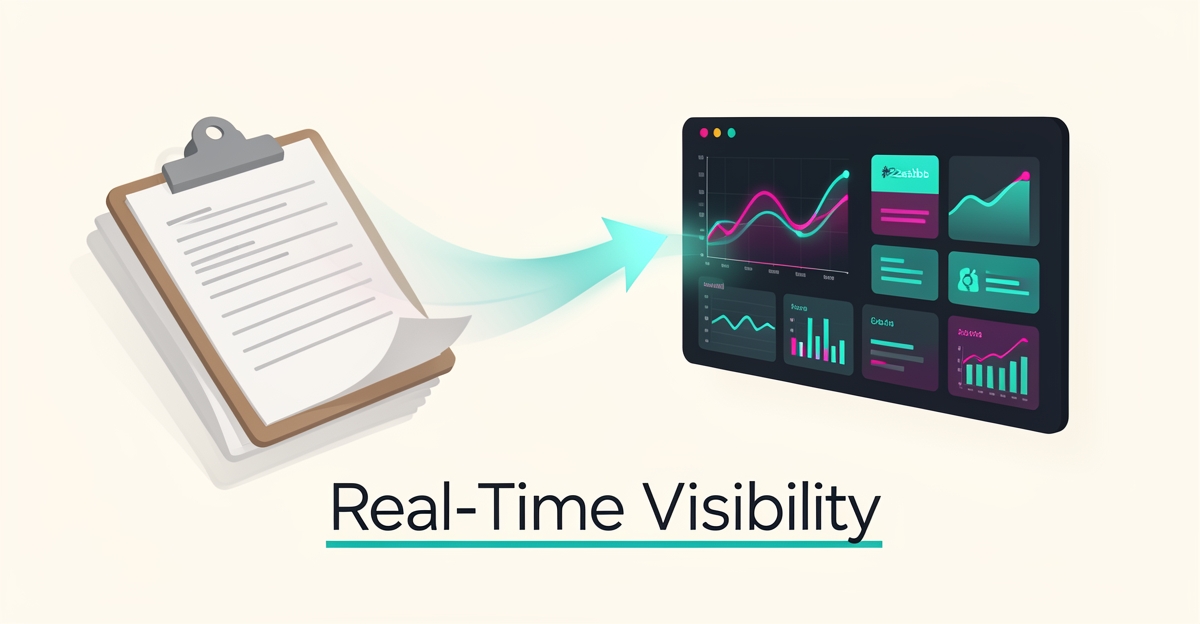
From Manual Logs to AI-Driven Dashboards: Real-Time Visibility for Septic Service Managers
Key Facts
- Manual logs and spreadsheets typically delay operational insights by days or weeks, forcing managers to react instead of anticipate.
- Field service businesses commonly juggle multiple disconnected tools for scheduling, invoicing, GPS, and customer feedback, none of which talk to each other.
- Fragmented data hides early warning signs of equipment failures, seasonal demand shifts, and technician training gaps.
- Real-time dashboards surface response times, job completion rates, and satisfaction trends continuously, without manual reconciliation.
- AIQ Labs has deployed 200+ multi-agent systems and runs four live SaaS products daily, real operational experience, not theory.
- AIQ Labs builds custom AI-driven dashboards for septic companies, transforming raw service logs into unified real-time visibility, with no technical setup required on your end.
Hire a team member that works 24/7 — for less than a part-time wage.
AI receptionists, SDRs, dispatchers and 99+ roles. Trained on your business, fully managed.
Not sure where to start? Ask our AI planner
The Manual Log Trap Slowing Septic Operations
Septic service managers are drowning in paperwork while trying to keep operations running smoothly. Daily logs, service tickets, and maintenance records pile up in binders and spreadsheets, creating a fragmented view of field performance. This manual approach means critical insights emerge days or weeks too late, forcing managers to react instead of anticipate.
As service requests grow and regulatory requirements tighten, once-simple logs turn into unmanageable data mountains. Teams waste hours each week just compiling basic reports instead of analyzing trends. Every hour spent copying numbers into a spreadsheet is an hour not spent on customers, crews, or growth.
Field service businesses commonly juggle several disconnected tools for scheduling, invoicing, customer feedback, and equipment tracking, none talking to each other. As a result, managers struggle to connect delays in pump-outs with customer complaints, or technician performance with repeat service calls. The picture is always incomplete, and always late.
Without integration, septic managers miss early warning signs of system failures, seasonal demand shifts, or technician training gaps. The cost isn't just in lost time, it's in preventable emergencies, dissatisfied customers, and wasted fuel from inefficient routing. These are the losses that compound quietly, month after month.
Delayed insights directly impact decision quality when managers rely on outdated paper trails. By the time a trend surfaces in a monthly spreadsheet review, the opportunity to adjust schedules, dispatch additional crews, or address recurring issues has passed. This lag erodes profitability and lets small problems escalate into costly emergencies that damage both equipment and reputation.
Poor technician visibility compounds the issue when supervisors can't confirm job completion in real time or verify that safety protocols were followed. Without live data, managers rely on end-of-day check-ins or customer calls to learn about missed appointments or incomplete work. This lack of oversight increases liability risks and makes it impossible to recognize top performers or provide timely coaching.
The manual log trap doesn't just slow operations, it actively hides the very insights septic service managers need to grow their businesses smarter and safer. Breaking free requires shifting from reactive documentation to proactive intelligence that surfaces patterns as they happen. AIQ Labs helps septic companies make this shift through AI Workflow Builds that transform scattered logs into unified, real-time dashboards, no spreadsheets required.
Why AI-Driven Dashboards Create Real-Time Visibility
Traditional log management was never designed for the pace of modern field service operations, creating blind spots for septic service managers who need real-time clarity. Managers relying on manual logs or fragmented tools face delays in spotting trends, diagnosing issues, or measuring technician performance, turning data into a liability rather than an asset.
AI-driven dashboards solve this by unifying disparate log sources into a single, real-time view. Instead of juggling separate tools to track service calls, parts usage, or customer feedback, septic companies can ingest and correlate all of it automatically. This eliminates the manual, time-consuming workflows that slow insight extraction and delay decisions.
With AI-powered dashboards, septic service managers gain instant visibility into key metrics like response times, repeat service rates, and satisfaction scores, all updated continuously without spreadsheets or manual reconciliation. AIQ Labs builds these custom dashboards for septic companies, transforming raw service logs into a unified source of truth that enables faster, more confident decisions, no technical setup required on your side.
- Real-time correlation of service logs, technician activity, and customer feedback
- Automated trend detection for seasonal demand and recurring issues
- Instant alerts for performance deviations or service gaps
- Unified view across dispatch, billing, and field operations
- Historical benchmarking to track improvement over time
By replacing siloed logs with AI-driven visibility, septic managers move beyond reactive firefighting to proactive optimization, turning every service call into an opportunity to improve efficiency, trust, and long-term profitability.
From Logs to Decisions Without Excel
Manual logs once meant late nights reconciling spreadsheets and gut-feel decisions. Today, AI-driven dashboards transform that same raw service data into instant clarity, no Excel required. The bottleneck isn't data scarcity; it's fragmentation. When logs live in separate systems, decision speed slows to a crawl.
For septic managers, this means waiting hours or days to spot a technician performance dip or a customer complaint trend, time that directly erodes margins and satisfaction scores. The longer the gap between an event and the insight, the more it costs.
The solution lies in automated ingestion that eliminates rigid schemas and manual processing. When logs flow into a unified platform without anyone touching them, managers gain real-time visibility into every service call, and the platform approach becomes the default rather than the exception.
Consider what happens when your data becomes context-rich insight immediately:
- Technician response times appear on dashboards the moment jobs complete, enabling same-shift coaching
- Customer satisfaction patterns emerge across service types, revealing which offerings need refinement
- Operational costs drop as manual data entry vanishes and error rates decline
- Resource allocation optimizes itself based on live demand signals rather than historical guesses
This shift eliminates the telemetry-to-insight delay that plagues traditional reporting. Instead of exporting CSVs and building pivot tables, dispatchers see live metrics on job completion rates while owners track customer sentiment trends in real time. The data arrives pre-analyzed, contextualized, and ready for action.
AIQ Labs builds these custom dashboards specifically for septic companies, handling the technical integration so managers focus on decisions, not data wrangling. The system ingests logs automatically from your existing tools, applying AI to surface what matters without requiring a single spreadsheet formula. You can see the full range of options, from single workflow rebuilds to a complete AI Operating System, on the pricing page.
The result transforms daily operations from reactive guesswork into proactive strategy. When insights arrive instantly rather than after weekend reporting marathons, managers reduce operational costs, boost customer satisfaction, and finally trust their data enough to act on it immediately.
Implementing AI Dashboards for Septic Teams
Septic service managers are no longer limited by manual logs and delayed reporting. AI-powered dashboards transform fragmented service data into real-time visibility, enabling faster decisions and proactive management. For septic teams, disconnected sources mean wasted time piecing together technician performance, service trends, and customer feedback.
To implement AI dashboards effectively, start by defining the KPIs that matter most, such as average response time, job completion rate, repeat service frequency, and customer satisfaction scores. These metrics become the foundation for meaningful AI-driven insights. Next, unify telemetry from field service apps, GPS tracking, invoicing systems, and customer surveys into a single platform. Integrated data pipelines beat fragmented tools every time.
With unified data in place, deploy AI-powered dashboards that surface trends, anomalies, and opportunities automatically, no spreadsheets or manual analysis required. AIQ Labs builds custom dashboards for septic companies with no technical setup required on your end, and you own the system outright. Finally, establish a rhythm of continuous monitoring: review dashboard alerts weekly, refine KPIs as business goals evolve, and use AI-driven recommendations to optimize routing, staffing, and customer outreach. This closed-loop approach turns data into a continuous improvement cycle, helping septic managers shift from reactive fixes to strategic, AI-augmented operations.
Still paying for 10+ subscriptions that don’t talk to each other?
We build custom AI systems you own outright. No vendor lock-in. Full control.
Not sure where to start? Ask our AI planner
Frequently Asked Questions
Why are manual logs and spreadsheets holding my septic business back?
What exactly is an AI-driven dashboard for septic services?
How do AI dashboards improve visibility into technician performance?
Do I need technical skills or Excel to use these AI dashboards?
What KPIs should septic managers track in real time?
How do I get started with AI dashboards without disrupting current operations?
Turn Service Logs into Your Strategic Advantage
Septic service managers no longer need to choose between operational clarity and spreadsheet overload. Manual systems delay critical insights and hide the patterns that protect margins and customers. By unifying fragmented data from scheduling, invoicing, and field operations into AI-driven dashboards, companies gain real-time visibility into technician performance, customer trends, and service efficiency, turning reactive guesswork into proactive strategy. The result is faster decisions, lower operational costs, and stronger customer trust, all without requiring technical expertise or endless data wrangling. To see how this applies to your specific workflow, start with the free two-minute Fit Check that leads to a no-obligation 30-minute strategy call, where we'll map your biggest bottleneck and identify high-ROI automation opportunities, or tell you honestly if there isn't a clear win.
Make AI your competitive advantage — not just another tool.
Strategy, implementation and ongoing optimization. One partner, end to end.
Not sure where to start? Ask our AI planner