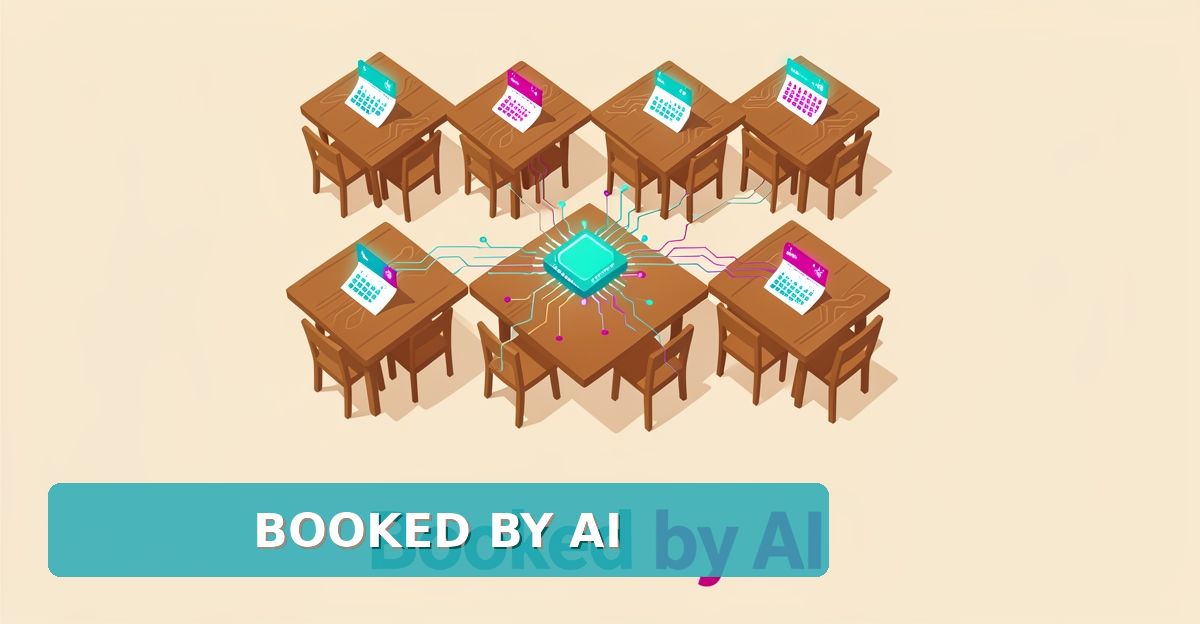
From Manual Logs to AI: How a Gastropub in Nova Scotia Automated Its Event Booking and Table Reservations
Key Facts
- Manual booking administration is reactive and error-prone: disconnected inquiries, double-bookings, and missed follow-ups are the most common failure points.
- An AI booking agent can handle inquiries 24/7 across web, phone, SMS, and email, confirming directly against existing calendars and POS.
- Automated reminders and confirmations typically reduce no-shows without manual follow-up.
- Phased rollouts with human-in-the-loop controls let hospitality teams adopt AI without disrupting service.
- AIQ Labs has deployed 200+ multi-agent systems and runs 4 live SaaS products daily.
Hire a team member that works 24/7 — for less than a part-time wage.
AI receptionists, SDRs, dispatchers and 99+ roles. Trained on your business, fully managed.
Not sure where to start? Ask our AI planner
The Hidden Cost of Manual Booking Logs
Every night, after the last plate is cleared, the manager of a busy gastropub sits down with a paper logbook, a phone full of voicemails, and a growing stack of sticky notes. This is the reality of manual booking administration in the food and hospitality industry.
It's a reactive, error-prone process that consumes valuable time. Staff spend hours deciphering handwriting, playing phone tag to confirm reservations, and manually cross-referencing table availability with event inquiries. This kind of repetitive administrative workflow is one of the most common bottlenecks in small service businesses, it drains resources and prevents teams from focusing on higher-value work like guest experience.
The true cost, however, goes far beyond wasted hours. Manual systems inevitably lead to human error, double-booked tables, lost event details, and forgotten customer requests. These mistakes directly translate into lost revenue and a damaged reputation. The core operational problems are remarkably consistent:
- Inquiries from phone, email, and social media arriving in disconnected silos.
- Staff hours consumed by administrative tasks instead of customer service.
- Double-bookings and scheduling conflicts that erode customer trust.
- Missed event leads that never receive a timely follow-up.
This reactive model is a fundamental business liability. The most significant operational shift happening in service industries today is the move away from reactive workflows toward proactive, insight-driven systems. A paper logbook is the definition of a reactive tool, it can only record what has already happened, offering no intelligence to prevent future errors.
Every missed phone call is a potential booking lost to a competitor. Every mismanaged event inquiry is high-margin revenue walking out the door. The administrative burden isn't just an operational headache; it's a silent revenue killer that actively limits growth.
For the Nova Scotian gastropub at the heart of this story, this daily frustration was the catalyst for change. They recognized the problem wasn't a lack of effort, but a broken system. Shifting to an automated workflow isn't about replacing staff; it's about empowering them, a principle that guides the custom AI systems we build at AIQ Labs. The goal is to transform administrative chaos into a strategic operational asset.
From Reactive to Predictive: Why AI Fits Hospitality
Manual logs, phone calls, and spreadsheet juggling force hospitality teams to react after the problem appears. The shift from reactive firefighting to proactive planning is where AI changes the economics of service businesses.
AI is redefining how modern service industries operate by shifting them from reactive models to proactive, insight-driven systems. Predictive intelligence can replace reactive workflows, allowing teams to anticipate demand rather than chase it.
For a gastropub managing event bookings and table reservations, that means moving from answering “are we full?” to knowing “we will be full.” AI analyzes booking patterns, seasonality, and local events to forecast demand and suggest staffing, seating, and prep levels before the rush hits.
Predictive intelligence also enables data-driven decision making at the point of service. AI can help service providers anticipate problems, allocate resources more effectively, and deliver solutions with greater precision. In hospitality, that translates to proactive table assignments, automated reminders, and smarter event capacity planning.
Automation handles the repetitive work that traditionally pulls staff away from guests. Across service industries, adoption continues to grow in predictive planning, data-driven decision making, and transparent reporting, the broader trend is toward insight-driven operations.
The same principle that transforms high-volume operations applies here: when repetitive triage is automated, people are freed for higher-value judgment. Applied to hospitality:
- Predictive demand signals trigger pre-emptive table holds and staff scheduling
- Automated booking and reminder workflows reduce no-shows without manual follow-up
- Real-time data gives managers visibility to reallocate resources during service
- Transparent reporting builds trust with customers through clear confirmations and updates
This is the reactive to predictive transition AIQ Labs builds for service businesses. By digitizing and automating event bookings, table assignments, and customer reminders, a Nova Scotian gastropub reduces administrative work while staff stay focused on guests. The result is a proactive, insight-driven system rather than a manual one.
Inside the Build: AI-Powered Bookings, Tables, and Reminders
Manual logs and phone tag were costing the Nova Scotia gastropub hours every week. The new system replaces that with an always-on AI employee, a managed booking agent that handles event inquiries and table reservations without adding headcount, typically at a fraction of the cost of a human hire.
The agent lives on the website, phone, SMS and email, and answers 24/7. It qualifies requests, checks availability, and confirms bookings directly against the gastropub's calendar and POS. Automated table assignment follows the same logic, matching party size, time, and preferences to the floor plan in real time to reduce turn time and no-shows.
Integration is built around the tools the team already uses. AIQ Labs connects the AI employee to existing calendars, POS and SMS so data stays synchronized without manual re-entry. That means the team keeps familiar interfaces while the data sync happens behind the scenes.
Reminders are handled automatically and contextually. The system sends confirmations, prep notes for events, and gentle nudges before reservations. Because the workflow is automated, staff get fewer last-minute changes and more time for guest experience.
Human-in-the-loop controls keep complex requests accurate. The build includes configurable escalation for custom menus, private events, or special accommodations, automation handles high-volume tasks while humans make final calls on high-risk issues.
The operational flow looks like this:
- AI booking agent receives inquiry via web, phone or SMS and qualifies intent 24/7
- Real-time check against calendar and POS for availability and table assignment
- Automated confirmation and AI-driven reminders sent by SMS/email
- Complex or exception requests escalate to staff with full context
Predictive intelligence replaces reactive workflows. For a hospitality team, that means fewer missed calls and more consistent booking capture.
The system also improves transparency. Guests receive real-time updates and service histories, while the team gets a single source of truth for reservations and events. AI workflow automation reduces repetitive admin and lets the gastropub scale bookings without adding staff.
Adoption stays practical. Staff review the AI employee's decisions in a simple dashboard, adjust rules for peak periods, and retain full ownership of the custom system. The result is a production-ready automation layer that works alongside the team, not instead of it.
Implementing AI Automation Without Disrupting Service
AIQ Labs helped the gastropub avoid service disruption by starting with its most broken workflow: last-minute event booking changes that caused double-books and staff confusion. Rather than replacing their existing reservation system, the AI solution integrated directly with their current tools using two-way API connections, preserving familiar interfaces while automating data sync behind the scenes. Staff were trained alongside the AI during slow shifts, learning how to monitor its actions and intervene only when exceptions arose, like dietary restrictions or VIP requests requiring human judgment. This approach kept accountability clear: the AI handled routine tasks, but managers retained final oversight through a simple dashboard that flagged any deviations for review. The rollout followed a phased model, beginning with event booking automation before expanding to table assignments and reminders, allowing the team to adapt without overwhelming daily operations. Organizations that implement AI incrementally typically see fewer operational hiccups and higher staff buy-in, especially when the technology augments rather than replaces existing processes. By focusing on one workflow at a time and maintaining human-in-the-loop controls, the gastropub achieved smoother service transitions while building confidence in the system's reliability. This method aligns with best practices for SMBs adopting AI, where starting small and scaling based on proven results reduces risk and maximizes long-term value. AIQ Labs supports this approach through its Workflow Builds model, rebuild the one workflow that costs the most, at a fixed price, delivered in phases, so businesses validate each phase before committing to further investment. The gastropub's experience shows that thoughtful implementation, not just the technology itself, determines whether automation enhances or disrupts the customer experience. For businesses considering similar steps, beginning with a targeted workflow fix offers a low-risk path to measurable efficiency gains. To explore how this could work for your operation, start with the Fit Check to identify your highest-impact automation opportunity.
What Your Restaurant Can Automate Next
Once the booking engine is running, the same automation architecture starts paying dividends across the entire guest experience. Restaurants that digitize reservations typically discover a cascade of manual touchpoints that are ready for the next layer of AI.
The same workflow logic that confirms tables and sends reminders can be extended to predictive operations. AI can help service providers anticipate problems, allocate resources more effectively, and deliver solutions with greater precision. That means fewer no-shows, smarter staffing, and proactive outreach instead of reactive firefighting.
Service businesses are moving from reactive models to proactive, insight-driven systems. For a gastropub, that translates into waitlist management that automatically texts the next party when a table frees up, review responses that are drafted in brand voice within minutes, and inventory forecasting that adjusts for local events and weather.
AIQ Labs builds these extensions as owned systems that integrate with tools you already use, not as another subscription widget. For businesses ready to connect multiple workflows into one layer, an AI Operating System ties bookings, staffing, inventory, and marketing into a single connected system built in phases and owned outright. The architecture is modular, so you can automate one department at a time and keep everything under your control.
What becomes automatable next:
- Waitlist and floor management that moves guests in real time and balances server load
- Review and reputation management with AI drafting and sentiment triage
- Inventory forecasting that anticipates demand and reduces waste
- Marketing automation that turns reservation data into personalized follow-ups
The pattern is the same across service operations: messages, calls, and manual checks pile up faster than any team can process them, and the backlog quietly costs revenue. Automating the repetitive layer is what clears it.
Start the Fit Check at https://aiqlabs.ai/apply and book a free 30-minute strategy call at https://aiqlabs.ai/book to map your biggest bottleneck and see if there is a clear AI win for your business.
Still paying for 10+ subscriptions that don’t talk to each other?
We build custom AI systems you own outright. No vendor lock-in. Full control.
Not sure where to start? Ask our AI planner
Frequently Asked Questions
How can AI help my restaurant manage event bookings and table reservations?
Won't AI automation replace my staff or make the guest experience feel impersonal?
What problems does switching from a manual booking log actually solve?
How do I implement AI in my restaurant without disrupting daily service?
Can AI actually predict demand, or does it just record bookings like my logbook does?
What else can a restaurant automate after reservations are handled?
From Sticky Notes to Strategic Advantage
The Nova Scotia gastropub's story shows how manual logs, phone tag and disconnected inquiries quietly erode revenue through double-bookings, lost leads and staff time pulled from guests. Replacing that reactive cycle with an always-on AI booking agent, handling web, phone, SMS and email inquiries, real-time table assignment against calendar and POS, and contextual reminders, turned administrative chaos into a proactive, insight-driven system. Implemented in phases with human-in-the-loop controls, the automation reduced last-minute errors while letting the team focus on experience, not paperwork. That reactive-to-predictive shift is where hospitality gains real business value, moving from answering “are we full?” to anticipating demand and acting before the rush. For restaurants ready to scale bookings without adding headcount, the next step is identifying the one broken workflow costing the most time today. Start the Fit Check at https://aiqlabs.ai/apply for a free 30-minute strategy call at https://aiqlabs.ai/book to map your highest-impact automation opportunity, and see if there's a clear AI win for your operation.
Make AI your competitive advantage — not just another tool.
Strategy, implementation and ongoing optimization. One partner, end to end.
Not sure where to start? Ask our AI planner