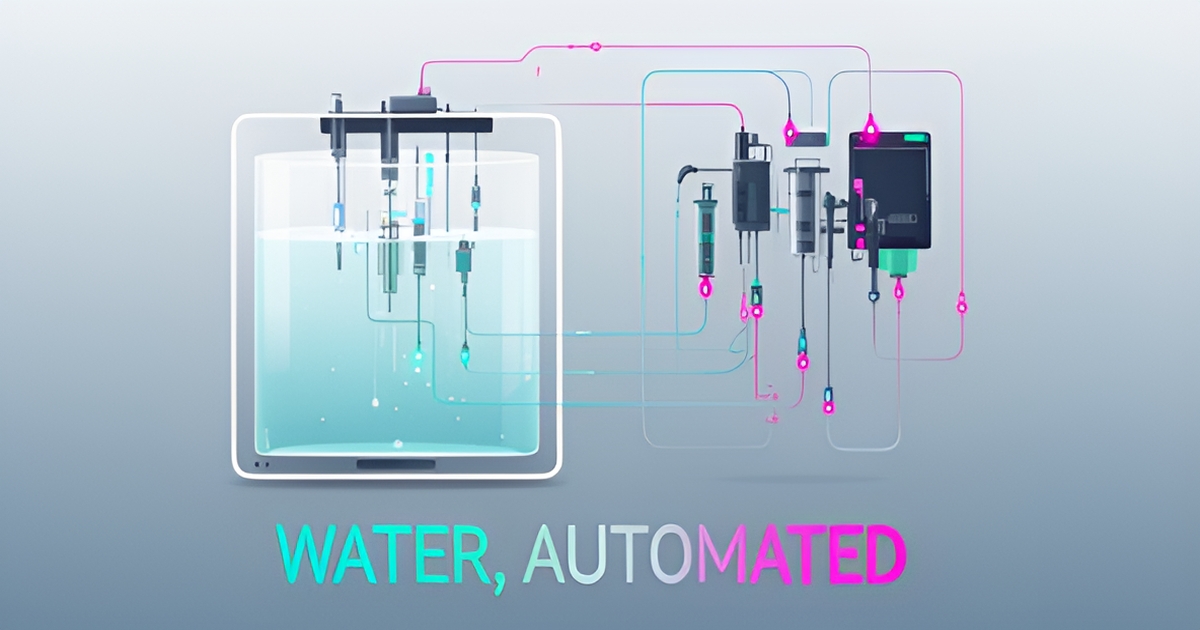
From Manual Logs to AI: How Aquariums Can Automate Water Testing and Maintenance Schedules
Key Facts
- Automated data capture eliminates transcription errors that come with handwritten logs and manual entry.
- AI-driven scheduling correlates equipment runtime with water quality data to predict failures before they happen.
- Production-ready AI agents need defined policy rules, audit logs, and human-in-the-loop safeguards before touching chemical dosing.
- AI automation works best as an enhancement to human judgment, not a replacement for it.
- AIQ Labs has deployed 200+ multi-agent systems and runs 4 live SaaS products daily—the same engineering discipline applies to aquarium operations.
Hire a team member that works 24/7 — for less than a part-time wage.
AI receptionists, SDRs, dispatchers and 99+ roles. Trained on your business, fully managed.
Not sure where to start? Ask our AI planner
The Hidden Cost of Paper Logs and Manual Testing in Aquariums
The daily grind of manual water testing and record-keeping in aquariums places a significant burden on staff and introduces avoidable risks. Technicians spend valuable time collecting samples, performing tests, and logging results by hand, diverting attention from higher-value tasks like animal care and exhibit design. This repetitive work is not only time-consuming but also prone to human error, which can compromise water quality and aquatic health.
Paper-based logs and manual dosing records are inherently fragile systems, susceptible to lost entries, illegible handwriting, and delayed updates. When staff are overwhelmed or fatigued, the likelihood of skipped tests or incorrect chemical additions increases, creating compliance risks and potential harm to sensitive species. These inefficiencies accumulate over time, eroding operational reliability and increasing the chance of costly mistakes.
Automation through AI-driven systems addresses these challenges by replacing error-prone manual processes with consistent, accurate digital workflows. By integrating with existing lab equipment, AI agents can automatically capture test results, log dosing activities, and schedule maintenance tasks without human intervention. This shift not only eliminates transcription errors but also ensures real-time data availability for informed decision-making.
For most facilities, the time reclaimed from routine data entry is substantial—often many staff-hours each week that can be redirected toward proactive habitat management rather than reactive logkeeping. The result is a more resilient, compliant, and efficient operation where technology handles repetition and humans focus on what matters most.
AIQ Labs builds custom systems that transform these manual workflows into reliable, auditable processes—ensuring data integrity while freeing teams to concentrate on aquatic wellness and conservation goals. If water testing is the workflow costing you the most, that's exactly what AI Workflow Builds are designed to rebuild.
- Eliminates hours of manual data entry every week
- Removes transcription errors from handwritten logs
- Scales operations without adding headcount
How AI Turns Disconnected Aquarium Tasks Into Connected Workflows
Most aquarium operations run on a patchwork of clipboards, spreadsheets, and institutional memory—a system that works until it doesn't. When a pH log gets missed or a dosing calculation lives only in a senior aquarist's head, the entire aquatic collection faces unnecessary risk. Modern AI automation eliminates these gaps by combining natural language processing with machine learning to transform isolated tasks into orchestrated workflows that think, act, and adapt.
Unlike simple chatbots that merely respond to prompts, production-ready systems require structured workflows where agents can reason, act, reflect, and escalate when anomalies appear. These systems need memory architecture and real-world tool integration—not just language capabilities—to function reliably in mission-critical environments. For aquariums, this means an AI that doesn't just record a nitrate reading but understands the context, checks historical trends, and determines whether to adjust dosing or flag a technician.
The transformation happens across three core operational layers:
- Intelligent Data Capture: Natural language processing digitizes handwritten logs and verbal observations, converting "slightly cloudy, 82°F" into structured database entries with timestamps and staff attribution.
- Predictive Dosing Control: Machine learning models analyze water chemistry trends to automate chemical adjustments, maintaining precise parameters without manual calculation errors.
- Dynamic Maintenance Scheduling: Instead of static calendar reminders, AI correlates equipment runtime hours with water quality data to predict filter failures before they occur.
This orchestration makes AI the "last mile" connector between backend monitoring systems and the staff who need actionable insights. The technology doesn't replace human judgment—AI enhances decision-making by reducing repetitive work and increasing accuracy, allowing aquarists to focus on animal care rather than data entry.
However, controlled autonomy remains essential. Autonomous agents can cause damage quickly without defined scopes and fallback behaviors. In aquarium contexts, this means implementing human-in-the-loop safeguards where the AI recommends dosing adjustments but requires senior staff approval for significant chemical changes, and where audit trails document every automated decision for compliance review.
AIQ Labs builds these systems using multi-agent architectures that integrate directly with existing lab equipment and monitoring tools. Rather than forcing aquariums to replace their current infrastructure, the approach connects disparate devices—probes, dosing pumps, and HVAC systems—into a unified workflow with validation layers and escalation protocols. For facilities that want water testing, dosing, maintenance, and reporting operating as one connected layer, that's the territory of an AI Operating System, built in phases and owned outright. The result is a self-documenting operation where water quality management becomes proactive rather than reactive, and where institutional knowledge survives staff transitions.
Production-Ready AI for Aquariums: Safety, Integration, and Compliance
An AI agent that adjusts chemical dosing without guardrails can harm livestock in minutes. Moving from manual logs to AI automation demands more than clever prompts—it requires structured workflows where agents reason, act, reflect, and escalate within strict boundaries.
A layered production architecture transforms experimental agents into safe, reliable systems for aquarium operations. This approach ensures that automated water testing and dosing remain observable and controllable at every step.
- Policy rules define exact capabilities for dosing and testing agents
- Data privacy and access controls restrict sensitive water chemistry data
- Model monitoring tracks accuracy and drift in real time
- Audit logs create full traceability for compliance and review
- Human approvals and risk scoring gate sensitive decisions, while incident response contains failures rapidly
Controlled autonomy proves essential for chemical dosing. Autonomous agents can cause damage fast without defined scopes and fallback behaviors. AIQ Labs builds these guardrails into every deployment, ensuring agents operate within hard limits while integrating with existing lab tools for data accuracy.
The broader industry consensus is that AI automation enhances rather than replaces human judgment, reducing manual errors through consistent rule-following and anomaly detection. This approach delivers higher accuracy in compliance documentation while maintaining the audit trails necessary for regulatory review.
By embedding these layers—from policy rules to incident response—aquariums gain AI systems that staff can trust with daily water quality management. The result is not just automation, but accountable automation that protects both livestock and regulatory standing.
Implementation Roadmap From Manual Logs to Owned AI Systems
Transitioning from manual logs to an owned AI system requires a structured, phased approach that aligns with both operational realities and long-term goals. AIQ Labs guides aquariums through four key phases: discovery and architecture, development and integration, deployment and training, and optimization and scale. This roadmap ensures that each step builds on the last, minimizing disruption while maximizing value. By following proven implementation patterns, aquariums can avoid common pitfalls like scope creep or integration failures and instead create systems that are reliable, compliant, and ready for growth.
The discovery phase begins with a thorough analysis of current water testing routines, chemical dosing practices, and maintenance workflows. This includes mapping data sources, identifying pain points in manual logging, and assessing existing lab equipment for integration potential. AIQ Labs designs architectures that enforce structured workflows, ensure data privacy, and enable human oversight where needed—critical for maintaining safety and compliance in aquatic environments. Real-world tool integration, such as API connections to pH monitors or dosing pumps, is planned early to ensure agents can act on insights, not just analyze them. This foundation supports continuous monitoring and historical tracking of water quality parameters, enabling predictive maintenance and proactive adjustments.
Development and integration follow a milestone-based approach, allowing aquariums to validate progress at each stage. Whether you Start Monthly, Build in Milestones, or Own It Outright, teams build and test components like automated log capture, anomaly detection in water parameters, or predictive maintenance schedules in isolation before full integration. During this phase, AI agents are trained on specific aquarium protocols, integrated with lab tools, and validated against accuracy benchmarks—ensuring that automated dosing recommendations stay within safe thresholds and that audit trails are maintained for regulatory compliance. You can review how each payment model works on the pricing page—no invented numbers, just clear terms.
Deployment and training focus on change management and operational readiness. Staff receive role-specific training on interacting with the AI system, reviewing automated logs, and overriding decisions when necessary—reinforcing the principle that AI enhances, rather than replaces, human judgment. Documentation, monitoring dashboards, and alert protocols are delivered alongside the system to support smooth adoption. Once live, the optimization phase begins, where performance data is used to refine models, expand capabilities (such as adding multi-parameter trend analysis), and scale to additional tanks or facilities. Over time, the AI system evolves from a tool for automation into a central intelligence hub that supports strategic decisions about stocking, feeding schedules, and long-term habitat health—all while reducing manual effort and improving consistency.
Still paying for 10+ subscriptions that don’t talk to each other?
We build custom AI systems you own outright. No vendor lock-in. Full control.
Not sure where to start? Ask our AI planner
Frequently Asked Questions
How much time can AI automation actually save my aquarium staff on water testing and data entry?
Is it safe to let AI control chemical dosing in our tanks? What if it makes a mistake?
We already have probes and dosing pumps—do we need to replace all our equipment to use AI?
How does AI maintenance scheduling differ from our current calendar reminders?
What does it cost, and how do we pay for it?
Will this create more compliance headaches with regulators, or help with audits?
From Reactive Logs to Proactive Aquatic Care
Moving from paper logs to AI is about replacing fragile, manual routines with connected, auditable workflows that protect livestock and staff time. When water testing, dosing, and maintenance are captured automatically and correlated over time, aquariums gain real-time visibility, fewer transcription errors, and predictive signals that shift care from reactive to proactive. The result is more reliable compliance, less repetitive data entry, and teams freed to focus on animal wellness and conservation rather than clipboards and spreadsheets. AIQ Labs builds custom systems that integrate with existing lab equipment and monitoring tools to make this transition practical and safe, with human-in-the-loop safeguards and full audit trails for critical decisions—with 200+ multi-agent systems deployed behind the work. If you're ready to map where manual work is costing you time and risk, start with the 2-minute Fit Check at https://aiqlabs.ai/apply, then book a free 30-minute strategy call at https://aiqlabs.ai/book to identify the highest-ROI automation opportunities in your operation. Prefer email? Reach the team at [email protected].
Make AI your competitive advantage — not just another tool.
Strategy, implementation and ongoing optimization. One partner, end to end.
Not sure where to start? Ask our AI planner