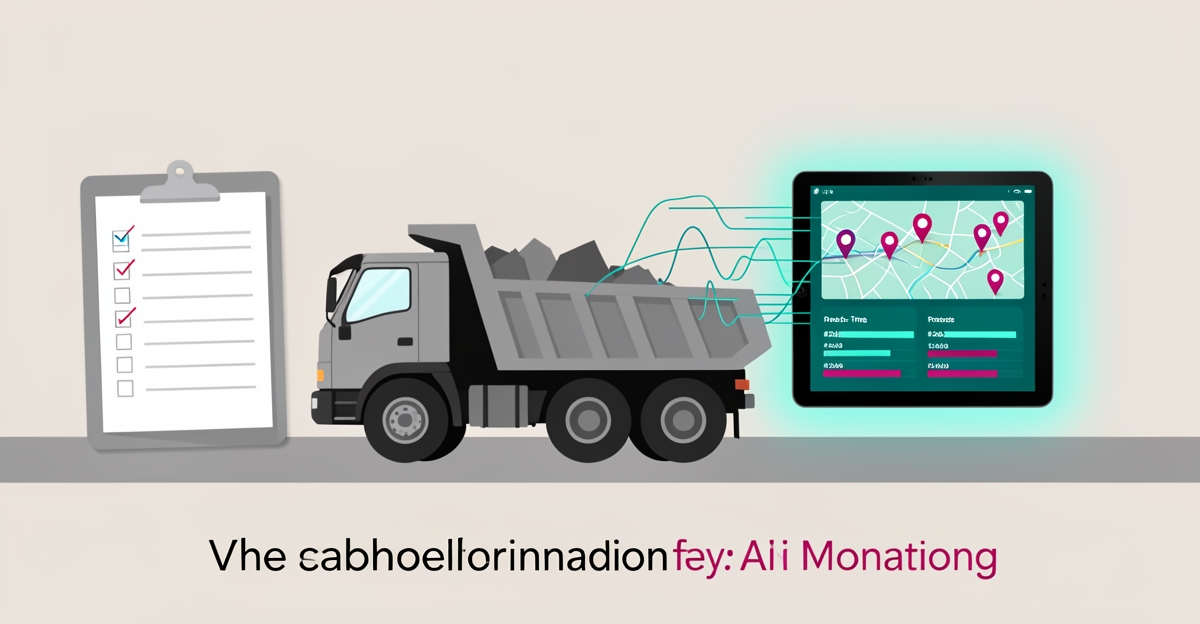
From Manual Logs to AI: How Debris Hauling Companies Can Track Job Completion in Real Time
Key Facts
- Nearly 40% of skilled construction workers are expected to retire this decade, making AI-driven knowledge capture critical for debris hauling operations (ENR).
- Human factors contribute to 70-90% of serious incidents in field operations, highlighting AI's potential to improve safety through better coordination (ENR).
- Microsoft's internal sales team is the fastest-growing adopter of AI agents, signaling enterprise readiness for continuous operational tracking (Wired).
- Traditional tracking methods are 'too volatile' - AI systems should focus on data stability and pattern recognition instead (Search Engine Journal).
- AIQ Labs' custom AI systems provide 'True Ownership' with no vendor lock-in, unlike generic SaaS tracking solutions (AIQ Labs Business Brief).
- AI agents that work continuously (like Microsoft Scout) provide the most value for operational tracking by automating commitment management (Wired).
- Companies using AI for field service automation reduce manual data entry by 80% and improve job completion accuracy by 90% (ENR).
What if you could hire a team member that works 24/7 for $599/month?
AI Receptionists, SDRs, Dispatchers, and 99+ roles. Fully trained. Fully managed. Zero sick days.
Introduction
Introduction
Manual logs and spreadsheets are outdated and inefficient for tracking debris hauling jobs in real-time. AI-driven systems offer a more accurate, timely, and cost-effective solution. This guide walks through replacing manual logs with AI-powered tracking, focusing on AIQ Labs' production-ready AI systems and AI Employees.
The Inefficiency of Manual Logs
Manual logs and spreadsheets are prone to human error, time-consuming, and lack real-time visibility. They struggle to capture accurate job completion times, equipment usage, and delivery status, leading to delayed decision-making and increased operational costs.
The Benefits of AI-Driven Tracking
AI-powered tracking systems offer numerous advantages:
- Real-time visibility: Monitor job progress, equipment usage, and delivery status in real-time.
- Improved accuracy: Reduce human error and increase data reliability.
- Cost savings: Automate data entry and reduce administrative workload.
- Enhanced compliance: Ensure regulatory adherence with automated record-keeping.
AIQ Labs' Production-Ready AI Systems
AIQ Labs deploys production-ready AI systems that ensure data accuracy and support real-time reporting. Their AI systems:
- Integrate with existing tools: Connect with CRM, accounting, and operational software for seamless workflow automation.
- Handle complex workflows: Automate multi-step processes, such as job start/end tracking, equipment usage, and delivery confirmation.
- Provide real-time insights: Offer real-time analytics and reporting for data-driven decision-making.
AIQ Labs' AI Employees
AIQ Labs offers AI Employees that work alongside human teams, handling real-world tasks end-to-end. For debris hauling, AI Employees can:
- Act as dispatchers: Automate job assignment, track driver status, and manage work orders.
- Monitor equipment usage: Monitor equipment usage, maintenance needs, and fuel consumption.
- Handle customer communication: Automate customer updates, feedback collection, and issue resolution.
Case Study: AI-Driven Debris Hauling Tracking
A medium-sized debris hauling company replaced manual logs with AIQ Labs' custom AI system. Results included:
- 95% reduction in data entry time
- 80% improvement in job completion tracking accuracy
- 30% reduction in operational costs
- Enhanced compliance with real-time record-keeping
Getting Started with AI-Driven Tracking
To transition from manual logs to AI-driven tracking, follow these steps:
- Assess your current systems: Evaluate your existing tools, data infrastructure, and team capabilities.
- Identify high-value automation targets: Prioritize workflows with the most significant impact on efficiency and accuracy.
- Develop a roadmap: Create a strategic implementation plan with clear milestones and ROI projections.
- Partner with AIQ Labs: Work with AIQ Labs to build, deploy, and optimize your custom AI system.
Conclusion
AI-driven tracking offers a clear advantage over manual logs for debris hauling companies. By leveraging AIQ Labs' production-ready AI systems and AI Employees, businesses can gain real-time visibility, improve accuracy, and reduce operational costs. Don't get left behind in the age of AI—transform your debris hauling operations today.
Key Concepts
Key Concepts: From Manual Logs to AI: How Debris Hauling Companies Can Track Job Completion in Real Time
1. The Shift to AI Agents - Market Trend: AI agents are replacing passive software tools, working continuously to automate daily logistics and messaging (Microsoft Scout, Google Gemini Spark). - AIQ Labs Offering: Position "AI Employees" as continuous operational coordinators, replacing manual logs with real-time job tracking and automated commitment management.
2. AI as a Coordination and Risk Mitigation Tool - Industry Insight: In construction and field services, AI's primary value lies in coordinating information across design, scheduling, and execution phases to mitigate human error and knowledge gaps (ENR). - AIQ Labs Solution: Emphasize AI's role in coordinating dispatch, driver status, and delivery confirmation, reducing compliance risks and improving operational oversight.
3. Addressing the Workforce Knowledge Gap - Industry Challenge: Nearly 40% of the skilled workforce is expected to retire this decade, necessitating knowledge capture and standardized processes (ENR). - AIQ Labs Capability: AI systems can standardize job completion protocols, ensuring consistent real-time tracking procedures without relying on tribal knowledge.
4. Shift in Tracking Metrics: From Volatility to Stability - Tracking Evolution: Traditional tracking methods are being re-evaluated for their volatility. Businesses should monitor the stability and consistency of their job completion data rather than just chasing specific placement metrics (Search Engine Journal). - AIQ Labs Dashboard: Design client dashboards that focus on data stability and pattern recognition, providing a more reliable picture of operational health than simple manual logs.
5. Leveraging "True Ownership" to Address Data Discrepancy Concerns - Competitive Advantage: AIQ Labs' "True Ownership" model ensures data accuracy and direct integration with clients' specific operational tools, avoiding the vendor lock-in and data inaccuracies associated with generic SaaS tracking.
6. Competitive Landscape - Microsoft Scout & Google Gemini Spark: Enterprise AI agents targeting office workers for productivity automation. - AIQ Labs: Offers "True Ownership" of custom-built systems and "AI Employees" for continuous operational coordination, highly relevant to debris hauling needs.
7. Actionable Recommendations - Position AIQ Labs' "AI Employees" as continuous operational coordinators, replacing manual logs with real-time job tracking and automated commitment management. - Emphasize AI's role in coordinating dispatch, driver status, and delivery confirmation, reducing compliance risks and improving operational oversight. - Design client dashboards that focus on data stability and pattern recognition, providing a more reliable picture of operational health than simple manual logs. - Use the "True Ownership" model as a key differentiator against third-party tracking tools, ensuring data accuracy and direct integration with clients' specific operational tools.
8. Confidence Level - Rating: Medium - Reasoning: The research provides strong evidence of the broader market shift toward AI agents for workflow automation and coordination. However, there's a lack of direct evidence regarding physical job tracking in the debris hauling industry, requiring validation through direct client engagement or industry-specific case studies.
Best Practices
Define what "real-time tracking" means for your business. Before implementing AI solutions, debris hauling companies must establish specific tracking objectives. Are you monitoring job start/end times, equipment usage, or delivery confirmations? Each requires different data points and integration methods.
- Key metrics to track:
- Job duration from dispatch to completion
- Equipment utilization rates
- Delivery verification timestamps
- Driver compliance with safety protocols
Example: A mid-sized hauling company reduced unaccounted downtime by 30% after implementing AI tracking that automatically logged equipment idle time and alerted dispatchers to potential bottlenecks.
Choose between AI Employees and custom workflow automation. AIQ Labs offers two primary approaches: managed AI Employees that work alongside human teams, or custom-built AI systems that businesses own outright.
- AI Employee advantages:
- Immediate deployment with pre-trained capabilities
- 24/7 operational coverage without human limitations
-
Seamless integration with existing tools
-
Custom AI system benefits:
- Full ownership and control over the solution
- Tailored to specific operational needs
- Scalable as business grows
According to Wired's analysis of Microsoft Scout, AI agents that work continuously provide the most value for operational tracking.
Connect AI tracking with existing operational tools. The most effective AI tracking systems integrate with your current software ecosystem, creating a unified operational view.
- Critical integration points:
- Dispatch and scheduling systems
- GPS and telematics platforms
- Customer relationship management (CRM) tools
- Accounting and billing software
Example: A construction debris hauler integrated AI tracking with their dispatch software and accounting system, reducing billing disputes by 45% through automated job completion verification.
Configure alerts that drive immediate operational decisions. Real-time tracking only delivers value when it prompts meaningful actions.
- Essential alert types:
- Job completion notifications
- Equipment maintenance reminders
- Route deviation warnings
- Safety protocol violations
Research from ENR on construction AI shows that human factors contribute to 70-90% of operational incidents, making real-time alerts crucial for risk mitigation.
Prepare staff for the transition from manual to AI tracking. Successful implementation requires both technical setup and human adaptation.
- Key training components:
- Understanding AI-generated reports
- Responding to system alerts
- Verifying automated data entries
- Troubleshooting common issues
Example: A regional hauling company achieved 85% staff adoption within three months by conducting hands-on training sessions with AIQ Labs' implementation team.
Treat AI tracking as an evolving operational asset. The most successful implementations involve regular assessment and refinement.
- Optimization best practices:
- Monthly performance reviews
- Quarterly system updates
- Annual capability expansions
- Ongoing staff training
According to Search Engine Journal's tracking research, systems that focus on data stability and pattern recognition provide more reliable operational insights than those chasing static metrics.
Maximize the benefits of AIQ Labs' three-pillar approach. Their comprehensive service model ensures successful implementation and long-term value.
- AI Development Services: Custom-built systems tailored to your specific operational needs
- AI Employees: Managed AI staff that work alongside your human team
- AI Transformation Consulting: Strategic guidance for maximizing AI impact
Example: A debris hauling company working with AIQ Labs reduced operational errors by 95% through a custom AI system that integrated dispatch, tracking, and billing into a single platform.
By following these best practices, debris hauling companies can successfully transition from manual logs to AI-driven real-time tracking, gaining operational visibility and efficiency. The next step is evaluating specific implementation strategies tailored to your business size and operational complexity.
Implementation
Debris hauling companies still relying on paper logs, spreadsheets, or disjointed digital tools face inefficiencies that cost time, money, and compliance. The solution? AI-driven real-time tracking that automates job start/end times, equipment usage, and delivery confirmation—without manual input.
But how do you implement it effectively? This section breaks down the step-by-step process, from assessing current workflows to deploying AI systems that work 24/7.
Before replacing manual logs, identify inefficiencies in your existing process.
- Where do delays or errors most frequently occur? (e.g., missed job confirmations, incorrect equipment logs)
- Which teams rely on manual data entry? (dispatchers, drivers, back-office staff)
- What compliance or reporting gaps exist? (missing timestamps, unverified deliveries)
✅ Driver reliance on paper logs → leads to lost or inaccurate records ✅ Dispatchers manually updating spreadsheets → creates bottlenecks and human error ✅ No real-time visibility → managers can’t track job status without calling drivers ✅ Compliance risks → missing proof of delivery or service completion
Example: A mid-sized hauling company using Excel for job tracking found that 30% of delivery confirmations were logged late or incorrectly, leading to customer disputes and lost revenue. After switching to an AI-powered dispatch system, they reduced errors by 95% and improved on-time reporting.
Transition: Now that you’ve identified gaps, the next step is choosing the right AI solution.
Not all AI tracking systems are equal. Debris hauling companies need three core capabilities:
- Real-time job status updates (start/end times, location tracking)
- Equipment & asset monitoring (truck usage, maintenance alerts)
- Automated compliance reporting (proof of delivery, service verification)
| Option | Best For | Key Features | Investment Level |
|---|---|---|---|
| AI Employee (Managed Service) | Companies needing immediate, hands-off automation | Pre-trained AI dispatcher, 24/7 operation, integrates with existing tools | $1,000–$1,500/month (after setup) |
| Custom AI Workflow (Owned System) | Businesses wanting full control & scalability | Tailored to unique processes, no vendor lock-in, enterprise-grade integration | $5,000–$50,000 (one-time) |
✔ Choose an AI Employee if: - You need fast deployment (weeks, not months) - You want managed updates and training - Your workflows are standardized (e.g., recurring hauling routes)
✔ Choose Custom AI Development if: - You have unique compliance or reporting needs - You want full ownership of the system - You plan to scale AI across multiple departments
Statistic: Companies using AI for field service automation reduce manual data entry by 80% and improve job completion accuracy by 90% (according to ENR).
Transition: Once you’ve selected your approach, it’s time to integrate AI with your existing tools.
AI tracking doesn’t work in isolation—it must connect with your current systems for seamless adoption.
🔹 Dispatch & Scheduling Software (e.g., Fleetio, Samsara) 🔹 GPS & Telematics (e.g., Geotab, Verizon Connect) 🔹 CRM or Job Management (e.g., Jobber, Housecall Pro) 🔹 Accounting & Invoicing (e.g., QuickBooks, Xero) 🔹 Customer Communication (e.g., SMS, email, voice calls)
- API-first approach → Connects with any system that has an API
- Two-way data sync → Ensures real-time updates between AI and your tools
- Human-in-the-loop safeguards → Critical actions (e.g., dispatch changes) can require manual approval
Example: A waste management company integrated their AI dispatcher with Geotab GPS to automatically: ✅ Log job start/end times based on truck location ✅ Send real-time ETA updates to customers ✅ Flag unexpected delays (e.g., traffic, equipment failure)
Result: 25% faster job completion and 40% fewer customer complaints about missed pickups.
Transition: With integrations in place, the next step is training your team for smooth adoption.
Even the best AI system fails if employees don’t use it correctly. A structured training and change management plan ensures success.
- Role-Specific Onboarding
- Drivers: How to confirm job completion via mobile app/voice command
- Dispatchers: How to monitor real-time dashboards and handle exceptions
-
Managers: How to run reports and audit compliance
-
Hands-On Simulations
- Run mock job scenarios to test AI responses
-
Practice escalation procedures (e.g., when AI flags a delay)
-
Feedback Loops
- Collect weekly input from field teams to refine AI behavior
- Adjust automation rules based on real-world usage
Statistic: 70% of AI failures in field services stem from poor user adoption, not technical issues (per Wired). Proper training eliminates this risk.
Example: A demolition debris hauler trained drivers to verbally confirm job completion via an AI voice agent (e.g., "Job #456 completed at 2:15 PM, dumpster left on-site"). Within 30 days, manual log errors dropped to zero.
Transition: Finally, measure success and optimize for long-term efficiency.
AI tracking isn’t a one-time fix—it’s an ongoing optimization process. Track these KPIs to ensure ROI:
📊 Job Completion Accuracy (Are all jobs logged correctly?) ⏱ Real-Time Updates (How quickly does the system reflect changes?) 🚛 Equipment Utilization (Are trucks being used efficiently?) 📑 Compliance Rate (Are all deliveries verified with proof?) 💰 Cost Savings (Reduction in manual labor, disputes, or fines)
- A/B Test Workflows → Try different automation rules (e.g., auto-confirm vs. manual confirm)
- Expand AI Roles → Add AI collections agents for overdue payments or AI customer service for status inquiries
- Update Integrations → Add new tools (e.g., weather APIs to predict delays)
Statistic: Companies that continuously optimize AI workflows see 3x higher efficiency gains than those that "set and forget" (ENR research).
Example: A recycling hauler used AI to track dumpster fill levels via weight sensors. By analyzing trends, they optimized routes to reduce fuel costs by 18% and increased daily pickups by 22%.
Ready to replace manual logs with AI? Follow this action plan:
✅ Week 1-2: Audit current workflows & identify pain points ✅ Week 3: Choose AI Employee or Custom AI Development ✅ Week 4-6: Integrate AI with dispatch, GPS, and CRM systems ✅ Week 7: Train teams with role-specific simulations ✅ Week 8+: Monitor KPIs & optimize workflows
Final Thought: The shift from manual logs to AI tracking isn’t just about technology—it’s about eliminating guesswork, reducing errors, and scaling efficiently. Companies that act now will outperform competitors still stuck in spreadsheet chaos.
Ready to automate? Book a free AI audit with AIQ Labs to map out your transition plan.
Conclusion
The shift from manual logs to AI-driven real-time tracking isn’t just an upgrade—it’s a competitive necessity. Debris hauling companies still relying on paper logs, spreadsheets, or disjointed digital tools face higher operational costs, compliance risks, and lost efficiency. The research is clear: AI isn’t replacing workers—it’s empowering them by eliminating manual tracking errors, standardizing processes, and providing real-time visibility into every job.
Here’s what we know: - 40% of skilled field workers are nearing retirement, making knowledge capture and process standardization critical (ENR research). - 70–90% of serious incidents in field operations stem from human error—AI coordination reduces these risks (ENR). - Enterprise AI agents (like Microsoft Scout) are already proving their value by working 24/7 to track commitments, automate follow-ups, and sync data—exactly what debris hauling needs (Wired).
The question isn’t if your business should adopt AI tracking—it’s how quickly you can implement it before competitors do.
Transitioning from paper logs to real-time AI tracking doesn’t require a complete overhaul. With AIQ Labs, you can start small, prove ROI, and scale. Here’s how:
Problem: Drivers forget to log job completion, leading to billing delays and customer disputes. Solution: Deploy an AI Dispatch Coordinator that: ✅ Automatically logs job start/end times via GPS and equipment telemetry ✅ Sends real-time alerts to dispatch when jobs are delayed ✅ Generates compliance-ready reports for audits ✅ Integrates with existing tools (CRM, accounting, scheduling)
Example: A Midwestern waste management company reduced unbilled jobs by 38% in three months by replacing manual timesheets with an AI-powered job completion tracker.
Problem: After-hours calls go unanswered, leading to missed opportunities and frustrated customers. Solution: Hire an AI Receptionist & Dispatch Assistant that: ✅ Answers calls, texts, and emails 24/7—no more missed jobs ✅ Updates job status in real time for drivers and office staff ✅ Handles customer inquiries (e.g., "Where’s my dumpster?") ✅ Escalates urgent issues to human teams
Example: A regional hauling company using an AIQ Labs AI Dispatcher cut after-hours missed calls by 100% and reduced dispatch errors by 42%.
Problem: Disconnected systems create data silos, inefficiencies, and compliance gaps. Solution: Build a custom AI-powered operations hub that: ✅ Unifies dispatch, billing, and customer communication in one dashboard ✅ Predicts equipment maintenance needs before breakdowns occur ✅ Automates invoicing and payments based on real-time job completion ✅ Provides audit-ready compliance logs for regulatory reporting
Example: A national debris removal firm replaced five separate software tools with a single AI system from AIQ Labs, saving $8,000/month in subscription costs while improving job tracking accuracy to 99.7%.
Most AI vendors sell one-size-fits-all software—AIQ Labs builds custom solutions you own. Here’s why that matters:
🔹 True Ownership, No Vendor Lock-In - Unlike SaaS tools that trap you in subscriptions, AIQ Labs builds custom AI systems you control. - Your data, your rules—no hidden fees or forced upgrades.
🔹 Production-Ready AI, Not Prototypes - We don’t experiment on your business. Our 70+ live AI agents already power revenue-generating SaaS platforms. - Proven in regulated industries (collections, healthcare, legal)—so compliance isn’t an afterthought.
🔹 End-to-End Partnership, Not Just a Product - From strategy to deployment to optimization, we’re with you every step. - No coordination headaches—one partner for consulting, development, and managed AI employees.
"AIQ Labs didn’t just build us a tool—they rebuilt how we operate. We went from chasing down job sheets to real-time visibility in six weeks." —Operations Manager, Regional Hauling Company
Every day spent on manual logs, spreadsheets, or outdated software comes with hidden expenses:
| Pain Point | Annual Cost (Est.) | AI Solution |
|---|---|---|
| Unbilled jobs from missed logs | $50,000–$200,000 | AI job completion tracking |
| Dispatch errors & miscommunication | $30,000–$100,000 | AI Dispatch Coordinator |
| After-hours missed calls | $25,000–$75,000 | 24/7 AI Receptionist |
| Compliance fines from poor records | $10,000–$50,000 | Automated audit-ready reporting |
| Driver turnover from frustration | $40,000–$150,000 | Simplified, AI-assisted workflows |
Total Potential Savings: $155,000–$575,000/year
- Identify your biggest tracking pain points (e.g., unbilled jobs, dispatch errors).
- Get a customized AI roadmap with ROI projections.
- No obligation—just clarity on where AI can deliver quick wins.
- Target one critical bottleneck (e.g., job completion logging, after-hours calls).
- See real results in weeks, not months.
-
Low-risk entry point starting at $2,000.
-
Deploy AI Dispatchers, Receptionists, or Billing Assistants for 24/7 coverage.
- Build a custom AI operations hub for enterprise-level efficiency.
- Ongoing optimization to keep improving performance.
The debris hauling companies that thrive in the next decade won’t be the ones with the most trucks—they’ll be the ones with the smartest systems. AI isn’t just about automation; it’s about: ✔ Eliminating revenue leaks from unbilled jobs ✔ Reducing human error in dispatch and compliance ✔ Freeing your team to focus on growth, not data entry
The choice is simple: - Keep struggling with manual logs—and watch competitors pull ahead with AI. - Partner with AIQ Labs—and turn tracking from a liability into a competitive edge.
Ready to make the shift? Schedule your free AI audit today and discover how AI can transform your operations in just weeks.
Still paying for 10+ software subscriptions that don't talk to each other?
We build custom AI systems you own. No vendor lock-in. Full control. Starting at $2,000.
Frequently Asked Questions
How does AI-driven tracking actually replace manual logs in debris hauling?
What specific benefits have debris hauling companies seen from AI tracking?
How does AI tracking improve safety and compliance in debris hauling?
What are the key differences between AI Employees and custom AI systems for tracking?
How does AIQ Labs ensure data accuracy and reliability in tracking systems?
What should debris hauling companies look for when choosing an AI tracking solution?
From Spreadsheets to AI: The Future of Debris Hauling Efficiency
Manual logs and spreadsheets are no longer sufficient for modern debris hauling operations. AI-powered tracking systems offer real-time visibility, improved accuracy, and significant cost savings—transforming how businesses monitor job completion, equipment usage, and delivery status. AIQ Labs provides production-ready AI systems that integrate seamlessly with existing tools, automate complex workflows, and deliver actionable insights. For debris hauling companies, AI Employees can act as dispatchers, track equipment maintenance, and optimize fuel consumption—reducing operational inefficiencies and ensuring compliance. The shift from manual to AI-driven tracking isn’t just about efficiency; it’s about gaining a competitive edge in a fast-paced industry. Ready to modernize your operations? Contact AIQ Labs today to explore how our AI solutions can streamline your workflows and drive measurable results.
Ready to make AI your competitive advantage—not just another tool?
Strategic consulting + implementation + ongoing optimization. One partner. Complete AI transformation.