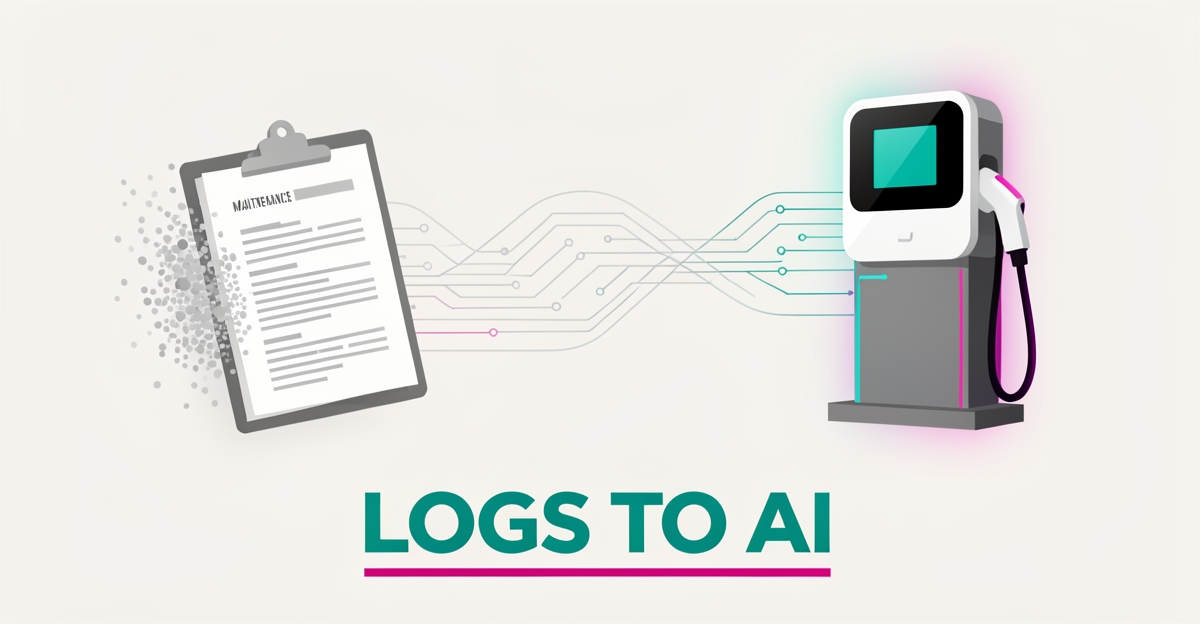
From Manual Logs to AI: How EV Charging Networks Can Automate Maintenance Tracking
Key Facts
- Roughly 80% of charging happens at home per Department of Energy reporting
- About 20% of public charging is free to use according to Alternative Fuels Data Center
- Average maintenance runs roughly $400 annually per charger per Alternative Fuels Data Center data
- DC fast charger extended warranties can reach $800 per charger per year per Alternative Fuels Data Center
- AI predictive maintenance has been reported to cut unplanned failures by up to 50% per LinkedIn research
- AI predictive maintenance has been reported to extend asset lifespans by up to 30% per LinkedIn research
- AI-powered document processing can automate maintenance tracking per EV charging software analysis
Hire a team member that works 24/7 — for less than a part-time wage.
AI receptionists, SDRs, dispatchers and 99+ roles. Trained on your business, fully managed.
Not sure where to start? Ask our AI planner
Manual Logs Are Costing EV Networks Uptime and Revenue
Paper logs and spreadsheets were built for a slower era of fleet maintenance, not for EV networks where every minute offline hits revenue. When technicians write down inspections by hand, issues sit in notebooks until someone remembers to type them in.
That delay is expensive. Alternative Fuels Data Center data puts average maintenance at roughly $400 annually per charger, with annual extended warranties for DC fast chargers reaching around $800 per charger per year. Those numbers assume work gets done on time, not lost between a clipboard and a shared drive.
Reliability pressure is intensifying because public charging carries outsized expectations. Department of Energy reporting shows roughly 80% of charging happens at home, leaving public sites to handle the critical share of use. Industry operation guidance notes about 20% of public charging is free to use, which compresses margins further and makes uptime the main lever for revenue.
Manual tracking creates three compounding losses for operators:
- Delayed fault visibility as handwritten notes wait for manual entry before triggering work orders
- Missed service windows when spreadsheets are out of sync with field teams
- Revenue leakage from chargers offline longer than necessary during peak demand
Without real-time capture, teams react to failures instead of preventing them. Spreadsheets also fragment history, so patterns across sites, vendors, and components never surface. That makes it impossible to prioritize the per-charger spend where it prevents downtime.
The business impact shows up in utilization and trust. Drivers remember a failed session and choose another network next time. For operators managing free or low-margin public sites, reputation risk compounds financial risk.
AI-powered document processing changes the workflow by turning maintenance records into live data. AIQ Labs builds production-grade systems that integrate with existing IoT and asset management tools, automatically tracking equipment health, generating maintenance alerts, and logging technician visits without manual re-entry.
With automated capture, a service note, photo, or work order becomes an immediate update to asset history and scheduling. Teams stop chasing paper and start acting on current equipment health instead of last week's log. That visibility is what lets networks protect uptime and revenue under constant public scrutiny.
How AI Document Processing Enables Real-Time Monitoring and Predictive Maintenance
Manual logs and spreadsheet checklists leave EV charging operators blind to equipment degradation until a station goes dark. AI-powered document processing replaces paper trails with continuous, automated health tracking that turns service reports, IoT alerts, and technician notes into real-time visibility.
When maintenance records are captured automatically, networks can spot anomalies before they become failures. Real-time data integration is essential for spotting problems early and scheduling repairs before they interrupt operations. That shift from reactive ticketing to proactive monitoring is the foundation of predictive maintenance.
Predictive maintenance delivers measurable uptime gains. Reported figures include up to 50% fewer unplanned failures and up to 30% longer asset lifespans with AI predictive maintenance. For charging networks facing roughly $400 annually per charger in average maintenance costs, extending asset life and avoiding unplanned downtime directly protects revenue.
AI document processing automates the entire maintenance loop. AI-powered document processing can automate maintenance tracking, reducing downtime and improving overall network performance. Service forms, work orders, and inspection photos are parsed, categorized, and logged without manual entry, creating a living equipment history.
Automated fault detection closes the gap between alert and action. Automated fault detection and categorization can help charging networks identify and address issues quickly, reducing downtime and improving overall network performance. Alerts are translated into clear work instructions that fit existing technician workflows.
Operators can replace paper logs with AI-powered document processing that automatically tracks equipment health, generates maintenance alerts, and logs technician visits. AIQ Labs builds production-grade systems that integrate with existing IoT and asset management tools, enabling full visibility and proactive maintenance.
Real-time monitoring and predictive maintenance work best when insights are actionable:
- Integrate real-time data from sensors and maintenance platforms to monitor equipment continuously
- Align repairs with schedules by bundling tasks into planned service windows or off-hours
- Use actionable insights that translate AI alerts into practical steps for technicians
The result is real-time monitoring that reduces downtime, and predictive maintenance that reduces unplanned failures and increases asset lifespan. With data-driven decision-making, operators can prioritize high-impact repairs, optimize technician routes, and extend the useful life of chargers across the network.
Data-Driven Operations: From Utilization Insights to Proactive Repairs
Charging networks generate vast amounts of utilization data that, when analyzed, reveal patterns critical to pricing and infrastructure planning. For instance, operators can track how often each charger is used, peak demand times, and session durations to determine whether current pricing structures encourage turnover or deter usage, insights directly tied to revenue optimization. Utilization data can be used to track progress toward energy goals, determine if a certain pricing structure is successful, and evaluate the need for additional charging infrastructure in the area. This transforms raw usage metrics into strategic levers for investment, such as deploying more units in high-demand zones or adjusting rates during off-peak hours to balance load.
Integrating real-time data from chargers into a centralized platform enables proactive maintenance by flagging anomalies before they cause failures. Sensors monitoring voltage fluctuations, connector wear, or cooling system performance feed into AI models that predict degradation trends. Real-time data integration is essential for spotting problems early and scheduling repairs before they interrupt operations. With predictive maintenance reported to reduce unplanned failures by up to 50% and extend asset lifespans by up to 30%, networks avoid costly emergency dispatches and maintain higher availability, directly impacting user satisfaction and uptime metrics.
To operationalize these insights, teams should follow a structured workflow: first, integrate real-time telemetry from chargers into a unified dashboard; second, align AI-generated maintenance alerts with existing service windows to avoid disrupting peak charging periods; and third, translate those alerts into clear, step-by-step tasks that match technicians' current routines, such as generating work orders in their familiar CMMS without requiring new logins or retraining. This approach ensures AI enhances, not disrupts, established workflows, turning data into action without adding cognitive load. AIQ Labs specializes in building such integrated systems that connect IoT streams with existing asset management tools, enabling seamless adoption.
Building an Owned AI Maintenance System for EV Networks
The difference between a vendor demo and a working maintenance system is whether it survives contact with real technicians, real chargers, and real paperwork. That's where the build decisions matter most.
For EV charging operators ready to move beyond paper logs and spreadsheets, the goal isn't another dashboard subscription, it's a system that reads technician reports, warranty documents, and inspection records automatically, then turns them into structured maintenance data. This is the core of AI-powered document processing: capturing what's already being written down and logging technician visits without anyone changing their routine. The technicians don't need to learn a new tool, the system works around the notes and photos they already produce.
The economics justify the effort. Operators spend an average of roughly $400 annually per charger on maintenance, and up to $800 per charger per year on extended warranties for DC fast chargers, according to the Alternative Fuels Data Center. AI predictive maintenance has been reported to deliver up to 50% fewer unplanned failures and up to 30% longer asset lifespans, returns that compound across a network of dozens or hundreds of stations.
What separates a production-grade system from a prototype is integration. The system needs to connect with the IoT telemetry and asset management tools already running the network, so fault detection, work orders, and utilization data flow into one place rather than fragmenting across platforms. Utilization data then feeds directly into decisions about pricing structures and where additional charging infrastructure makes sense.
This is the approach AIQ Labs takes with EV charging operators: custom-built document processing systems that integrate with existing IoT and asset management infrastructure, with full ownership transferring to the client, no vendor lock-in, no per-seat subscription treadmill. AIQ Labs has deployed 200+ multi-agent systems and runs four live SaaS products daily, so these builds are production-tested, not prototypes. The build can be structured three ways:
- Start Monthly, setup plus a flat monthly plan covering the build, training, integrations, monitoring, and improvements; pause or adjust anytime.
- Build in Milestones, the system ships in phases, approved and paid for as each one lands; stop anytime and keep everything built so far.
- Own It Outright, one project price or a monthly Build Partnership, with full ownership of code, agents, and data when complete.
The practical sequence mirrors what the research recommends: integrate real-time data so problems surface early, align repairs into planned service windows, and translate AI alerts into steps technicians can act on without friction. The result is a maintenance tracking system the operator owns outright, one that delivers full visibility across the network and shifts the operation from reactive repairs to proactive maintenance. If this kind of build fits your operation, AI Workflow Builds rebuild the one workflow that costs you the most, at a fixed price and in phases.
Still paying for 10+ subscriptions that don’t talk to each other?
We build custom AI systems you own outright. No vendor lock-in. Full control.
Not sure where to start? Ask our AI planner
Frequently Asked Questions
How much does it actually cost to maintain EV charging stations?
Can AI really reduce charger downtime and equipment failures?
Will technicians have to learn a new system or change how they work?
Why is charger uptime so critical for public charging networks?
How does automated maintenance tracking work with our existing systems?
Do we have to buy another software subscription, or can we own the system?
Own Your Uptime, Not Your Paperwork
Manual logs were built for a slower era. For EV charging networks, every minute a charger sits offline hits revenue, and paper-to-spreadsheet delays turn small faults into lost sessions and eroded trust. Automating maintenance tracking with AI-powered document processing changes the loop: service notes, photos and work orders become live asset history, alerts become scheduled repairs, and utilization data informs where to invest next. The shift from reactive ticketing to proactive monitoring is measurable, with AI predictive maintenance reported to cut unplanned failures by up to 50% and extend asset lifespans. The next step is to integrate real-time telemetry with your existing IoT and asset management tools, align repairs to planned service windows, and translate alerts into technician-friendly actions without changing their routine. AIQ Labs builds production-grade, owned systems that do exactly that, with full ownership and no vendor lock-in. Start the 2-minute Fit Check at https://aiqlabs.ai/apply, then book a free 30-minute strategy call to map your biggest bottleneck.
Make AI your competitive advantage — not just another tool.
Strategy, implementation and ongoing optimization. One partner, end to end.
Not sure where to start? Ask our AI planner