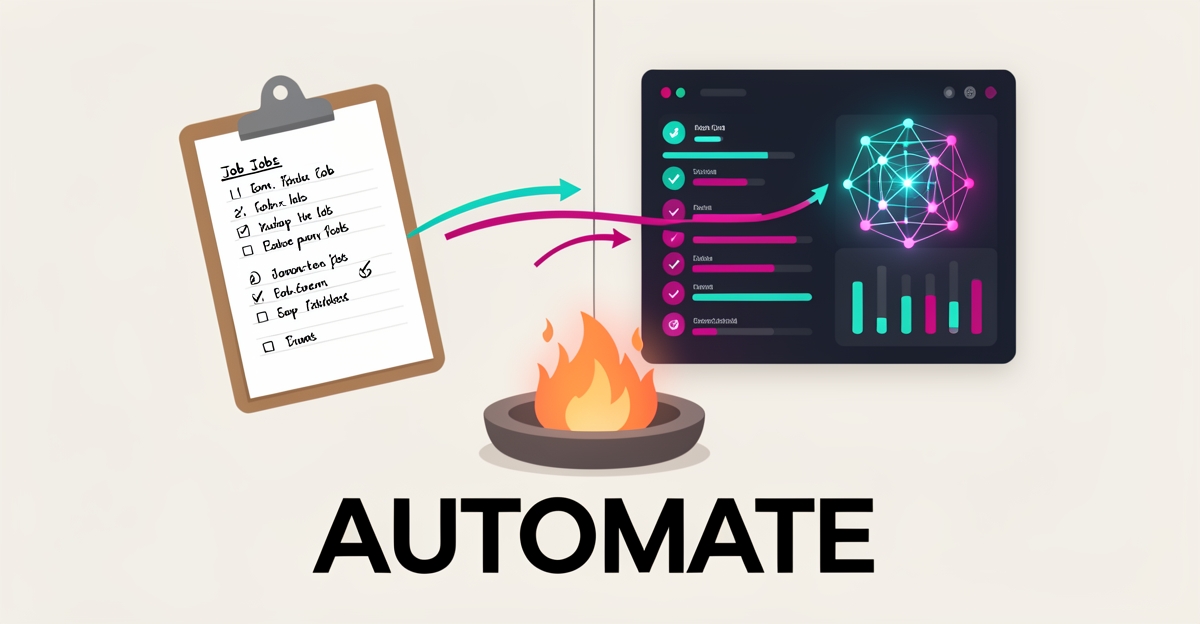
From Manual Logs to AI: How Fire Pit Installers Can Track Job Progress Automatically
Key Facts
- Manual job tracking typically costs trade teams several hours a week in administrative work, logging progress, updating schedules, and chasing missing information
- Most organizations have now automated at least one business function, making manual tracking a competitive disadvantage for small trades
- AI workflow automation reduces tracking errors and accelerates project cycles by syncing job status across every tool in your stack
- Automated client updates at every milestone reduce anxiety and build trust without adding administrative work for your crew
- A phased approach, automate one workflow, test it, then expand, keeps risk low and results verifiable
Hire a team member that works 24/7 — for less than a part-time wage.
AI receptionists, SDRs, dispatchers and 99+ roles. Trained on your business, fully managed.
Not sure where to start? Ask our AI planner
The Cost of Manual Job Tracking in Fire Pit Installation
The reliance on paper-based job logs creates significant operational drag for fire pit installers, directly impacting project timelines and profitability. Manual data entry consumes valuable hours that could be spent on actual installation work or client engagement. Trade businesses using manual tracking typically lose several hours per week to administrative tasks like logging job progress, updating schedules, and chasing down missing information, a substantial burden for small teams. This inefficiency is compounded when installers must physically return to the office or make multiple phone calls just to confirm basic job details, delaying responses to client inquiries and slowing decision-making on-site.
Communication delays further exacerbate these challenges, as paper logs create information silos between field crews, office staff, and clients. Without real-time updates, miscommunications about material deliveries, schedule changes, or client preferences become common, leading to rework or dissatisfied customers. With most organizations having automated at least one business function, reliance on manual methods puts trade businesses at a competitive disadvantage. For fire pit installers specifically, these delays often result in missed opportunities to upsell additional features or address concerns before they escalate into costly problems.
Perhaps most critically, paper-based tracking introduces unacceptable risks to project timeline accuracy. Handwritten logs are prone to illegibility, loss, or delayed transcription, making it difficult to maintain a reliable single source of truth for job progress. This lack of real-time visibility prevents installers from identifying bottlenecks early, such as waiting on permits or material shipments, until delays have already impacted the schedule. Inaccurate timelines not only frustrate clients but also disrupt crew planning and equipment allocation, creating a ripple effect of inefficiency across multiple jobs. As automation adoption grows across sectors, trade businesses that continue relying on paper logs risk falling further behind in operational maturity and client satisfaction.
How AI Workflow Automation Eliminates Tracking Errors and Delays
Manual job tracking leaves fire pit installers vulnerable to costly errors and delays that erode client trust and project profitability. Paper logs get misplaced, status updates slip through the cracks, and timelines drift without real-time visibility into each phase of installation. This reactive approach forces teams to spend hours chasing information instead of focusing on quality workmanship.
AI workflow automation tools like Zapier, Gumloop, and Make eliminate these pain points by creating self-updating systems that synchronize job status across every tool in an installer's tech stack. When a crew marks a task complete in their project management app, the automation instantly triggers client notifications, updates scheduling calendars, and adjusts downstream task dependencies, all without manual intervention. The result is fewer tracking errors, faster project cycles, and a single source of truth for every job.
The impact extends beyond internal efficiency to transform the client experience. Automated workflows ensure homeowners receive timely updates at every milestone, from permit approval to final cleanup, reducing anxiety and building confidence in the installer's professionalism. Fire pit installers who adopt these tools position themselves to capture significant operational advantages as automation becomes standard across the trades. AIQ Labs helps trades businesses implement these systems through AI Workflow Builds that integrate with existing field service tools, turning fragmented processes into a unified, error-resistant operation.
Implementing AI Job Tracking: A Step-by-Step Guide for Fire Pit Installers
Fire pit installers often juggle multiple job sites, client updates, and scheduling changes while relying on manual logs that are prone to errors and delays. Automating job tracking with AI eliminates these inefficiencies and creates a reliable, real-time view of project progress.
Begin by identifying repetitive, time-consuming tasks that consume valuable field time, such as updating job status, sending client progress messages, or rescheduling due to weather or material delays. These are ideal candidates for automation because they follow predictable patterns and generate consistent data points. Since most organizations have already automated at least one business function, targeting high-impact, repeatable workflows is a proven starting point.
Next, select an AI workflow automation tool that aligns with your technical comfort and integration needs. Platforms like Make offer visual scenario builders with operations-based pricing and native AI capabilities, while Gumloop provides language model nodes for more advanced AI-driven logic. Zapier remains a strong option for its extensive library of connected apps, enabling fast deployment even for non-technical teams. Once chosen, configure the tool to sync with your calendar (e.g., Google Calendar) and CRM (such as HubSpot or Salesforce) to trigger actions based on job milestones or client interactions.
Test each workflow in a controlled environment, start with one active job site, to validate accuracy in status updates, message timing, and data synchronization. Monitor error rates and response delays, then refine triggers and actions as needed. Finally, establish a monthly review cadence to assess time saved, client feedback, and workflow efficiency, adjusting automations as your business scales or processes evolve. AIQ Labs supports this journey through its Build in Milestones model, allowing installers to implement and validate each phase before moving forward, so you're never paying for a big-bang build you haven't seen work yet.
Still paying for 10+ subscriptions that don’t talk to each other?
We build custom AI systems you own outright. No vendor lock-in. Full control.
Not sure where to start? Ask our AI planner
Frequently Asked Questions
How much time do fire pit installers typically lose each week to manual job tracking tasks?
What returns can fire pit installers expect from implementing AI workflow automation for job tracking?
How does AI workflow automation improve client communication for fire pit installers?
What are the first steps a fire pit installer should take to automate job tracking with AI?
Is AI workflow automation only for large companies, or can small fire pit installation teams benefit too?
What risks do paper-based job logs pose to fire pit installation projects beyond inefficiency?
Your Next Job Site Doesn't Need a Clipboard
Manual job logs cost fire pit installers hours every week in administrative drag, introduce communication silos, and put accurate timelines at risk. As this article showed, AI workflow automation tools like Zapier, Make, and Gumloop can eliminate those problems by syncing job status, triggering client updates, and adjusting schedules automatically. You don't have to automate everything at once. Start with one repetitive workflow, like client status updates for a single job site, test it, refine it, and expand from there. That's exactly the phased approach AIQ Labs uses with trades businesses through its Workflow Builds and Build in Milestones model, where you approve each phase as it ships and keep everything built along the way. With most organizations already automating at least one business function, the question isn't whether to modernize your job tracking, it's how soon. If you want clarity on where automation would deliver the biggest win for your installation business, take the two-minute Fit Check at aiqlabs.ai/apply and book a free 30-minute strategy call. No obligation, just a real working session to map your opportunity.
Make AI your competitive advantage — not just another tool.
Strategy, implementation and ongoing optimization. One partner, end to end.
Not sure where to start? Ask our AI planner