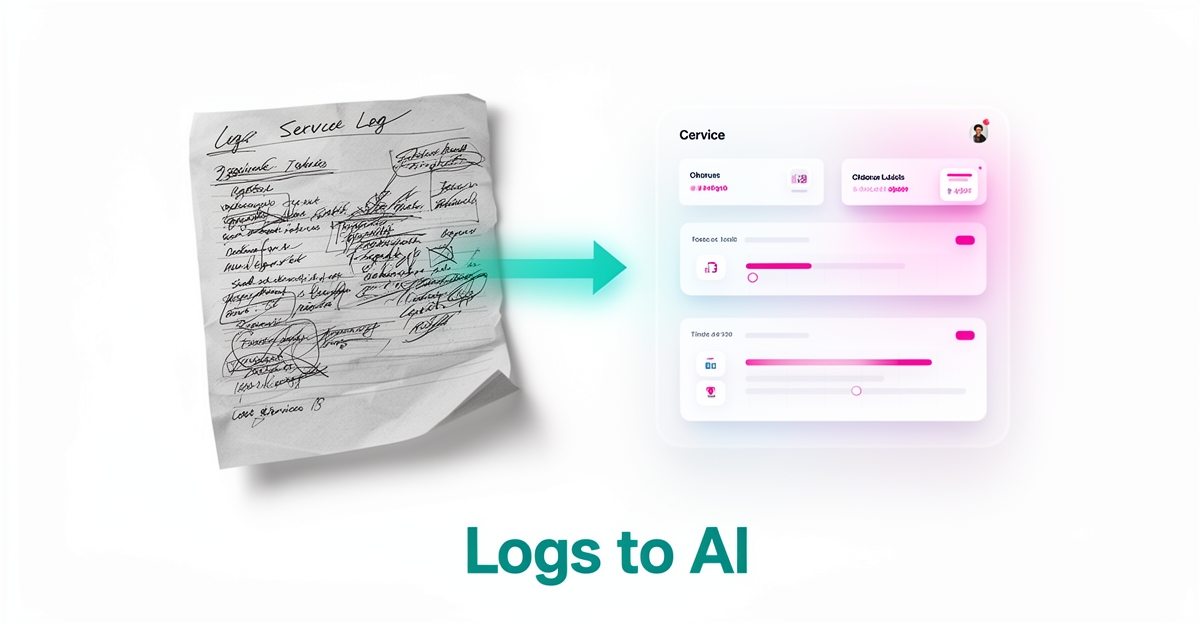
From Manual Logs to AI: How Generator Installers Can Automate Service History Tracking
Key Facts
- A large share of business knowledge, industry analyses commonly put it around 70%, sits in unstructured formats like paper logs, photos, and notes.
- Modern AI document processing can automate the bulk of routine data entry, typically the majority of transcription work tied to service records.
- AI is not a replacement for human judgment but a tool to augment decision-making.
- Successful AI adoption starts with the business problem, not the technology itself.
- Manual service logs create data entry errors, lost records, and slow client reporting for installers.
Hire a team member that works 24/7 — for less than a part-time wage.
AI receptionists, SDRs, dispatchers and 99+ roles. Trained on your business, fully managed.
Not sure where to start? Ask our AI planner
The Manual Log Problem Costing Generator Installers Time and Accuracy
Somewhere in a filing cabinet, a truck clipboard, or a half-maintained spreadsheet sits the complete service history of every generator you've ever installed, and finding it when a client calls takes longer than it should.
That's the reality for most generator installers still relying on paper logs, phone photos, and scattered spreadsheets. Each service visit generates handwritten notes, inspection checklists, and maybe a few images that someone eventually has to transcribe into a system, or more often, never does. The result is a service history that exists everywhere and nowhere at once.
The scale of the problem is bigger than most shop owners realize. Industry analyses have long estimated that a large majority of business knowledge, often cited around 70%, remains trapped in unstructured formats: documents, notes, and images that no system can easily search or analyze. Field service businesses like generator installers sit squarely in that gap, with critical maintenance data locked in formats designed for humans, not databases.
This unstructured chaos creates three compounding costs:
- Data entry errors: Manual transcription of handwritten service notes introduces mistakes that compound over years of maintenance records.
- Lost records: Paper logs get damaged, misplaced, or leave with departing technicians, taking institutional knowledge with them.
- Slow client reporting: Compiling a warranty claim, compliance report, or maintenance summary means hours of digging through files instead of minutes.
When a client asks for proof of a load bank test from a few years back, or a warranty dispute hinges on a specific inspection date, the manual system fails precisely when accuracy matters most. And because the data lives in fragments, no one can spot patterns, like a unit that keeps throwing the same fault code, until the problem repeats itself.
The good news is that this is a solvable problem. Modern AI document processing can automate the bulk of routine data entry, transforming handwritten logs and inspection photos into structured, searchable records. These systems digitize service logs, maintenance records, and inspection reports automatically, reducing errors and making client reporting a matter of a few clicks rather than an afternoon of file hunting. It's exactly the kind of workflow AIQ Labs builds for field service businesses through AI Workflow Builds: rebuild the one workflow that costs you the most, record capture and reporting, in this case, at a fixed price, in phases, with no disruption to the rest of your operation.
The shift from manual to automated tracking isn't about chasing technology for its own sake. The key to successful AI adoption is focusing on the business problem, not the technology itself. For generator installers, the business problem is clear: every hour spent transcribing logs and reconstructing histories is an hour not spent installing, servicing, and winning new work.
How AI Automates Service History Capture and Analysis
Paper service logs, carbon-copy inspection sheets, and handwritten maintenance notes hide most of what generator installers actually know about the equipment they service. Field service records are a textbook example of unstructured data, designed to be read by a person, not searched by a system.
AI document processing changes that equation. Modern systems can handle the bulk of routine data entry automatically: technicians photograph a work order or inspection report, and the system extracts, structures, and files the details on its own. That eliminates the manual transcription step where most errors creep in.
The right type of AI matters, though. Not every task calls for the same technology:
- Nongenerative AI produces consistent, repeatable outputs from structured inputs, making it well-suited for accuracy-critical work like anomaly detection, flagging a generator whose fuel consumption or runtime pattern deviates from its history.
- Generative AI produces outputs that can vary even for the same input, which suits tasks requiring flexibility, such as drafting client-facing service summaries or maintenance recommendations from raw logs.
- Pattern detection across historical service data helps installers spot recurring issues by unit, site, or model, supporting more informed decisions about preventive maintenance scheduling.
The distinction matters because service history tracking demands precision. A maintenance record with the wrong serial number or an incorrectly logged oil change isn't just an inconvenience, it can void warranties or complicate compliance audits. Nongenerative approaches keep structured documentation consistent, while generative tools handle the flexible, language-heavy work of turning rough technician notes into polished client reports.
Implementation success depends on three factors: data quality, integration with existing systems, and security. AI is only as accurate as the records it learns from, so digitizing clean, well-organized data comes first. Integration matters because service history should flow into the systems your team already uses, not live in another disconnected tool. And because these records often contain customer site details and equipment specifications, secure storage and regulatory compliance are non-negotiable.
It's also worth remembering what the technology can and can't do. AI is not a replacement for human judgment, but rather a tool to augment and support human decision-making. The AI processes and organizes; the installer still makes the call on whether a unit needs attention.
This is the approach behind AIQ Labs' custom systems, which process and store service records securely, giving generator installers faster compliance reporting, cleaner audit trails, and a searchable service history for every unit they've ever touched. If you'd rather have an AI dispatcher or service coordinator handling intake and follow-up day to day, AI Employees cover that too, at a fraction of the cost of another hire.
Implementation Considerations for Secure and Integrated AI Tracking
Implementing AI for secure and integrated service history tracking requires careful attention to several critical factors. Generator installers must first assess their data quality, as AI systems require accurate, consistent inputs to deliver reliable results, with so much service knowledge sitting in unstructured formats, proper data preparation is essential for effective automation. Integration with existing workflows and systems is equally vital; AI solutions should complement current CRM, scheduling, and reporting tools rather than disrupt them, ensuring seamless adoption across teams.
Security and compliance cannot be overlooked, particularly when handling sensitive client and equipment data. AI systems must adhere to industry regulations and include robust access controls, encryption, and audit trails to protect information integrity. Additionally, bias risks in training data must be actively monitored, as flawed or unrepresentative datasets can lead to inaccurate service predictions or missed maintenance patterns. Addressing these considerations upfront enables a smoother transition and stronger long-term outcomes.
AIQ Labs supports this process by building custom, owned AI systems designed for secure integration and compliance from the ground up. Rather than relying on third-party platforms that create dependency, the AI Operating Systems approach ensures businesses retain full control over their data, models, and infrastructure, built in phases, owned outright. This foundation allows generator installers to scale confidently while maintaining accuracy, security, and operational continuity. And because payment models range from starting monthly to owning the system outright, you can match the commitment to the stage your business is at, see pricing for how that works in practice.
A Practical Roadmap from Logs to Automated Service History
Generator installers still relying on manual logs face a hidden cost: most of their service knowledge sits trapped in unstructured formats, making it nearly impossible to analyze trends or ensure compliance. This gap between paper trails and actionable insight is where AI begins to deliver real value, not by replacing technicians, but by freeing them from repetitive data entry so they can focus on what they do best. The shift starts with identifying exactly where automation will have the greatest impact, such as digitizing handwritten service reports or extracting key details from inspection forms.
Choosing between generative and nongenerative AI depends on the task at hand. For service history tracking, nongenerative AI is often the better fit because it delivers consistent, repeatable outputs from structured inputs, ideal for accurately capturing service dates, parts replaced, and technician notes without variation. Generative AI, while powerful for creative tasks like drafting client summaries, introduces unnecessary complexity when precision and auditability are the priorities. AIQ Labs helps installers evaluate which approach aligns with their specific workflows, ensuring the solution matches the problem rather than forcing a fit.
Implementation begins with integrating the chosen AI system into existing tools like scheduling software or CRM platforms, creating a single source of truth through two-way connections. Once live, performance must be monitored regularly, tracking reductions in manual entry time, improvements in data accuracy, and faster report generation for clients. With the bulk of routine data entry automated, that translates directly into fewer errors and more reliable service histories. By following this roadmap, identify use cases, select the right AI type, implement with integration, and continuously evaluate, generator installers transform static logs into dynamic assets that support better decisions, stronger client trust, and smoother audits.
Still paying for 10+ subscriptions that don’t talk to each other?
We build custom AI systems you own outright. No vendor lock-in. Full control.
Not sure where to start? Ask our AI planner
Frequently Asked Questions
How much time can AI save generator installers on data entry tasks?
How much business knowledge sits in unstructured formats like paper logs and photos?
What's the difference between generative and nongenerative AI for service history tracking?
Can AI replace human judgment in generator service decisions?
Why is data quality important when implementing AI for service history tracking?
How does AI integration improve service history tracking for generator installers?
Turning Paper Logs into Predictive Power
For generator installers still wrestling with manual logs, the path forward isn't about adopting AI for its own sake, it's about reclaiming time lost to data entry, eliminating costly errors, and turning scattered service records into a strategic asset. By automating the bulk of routine documentation with the right AI approach, prioritizing nongenerative models for accuracy-critical tracking, businesses can shift focus from reconstructing histories to preventing failures, strengthening client trust, and streamlining compliance. The real value emerges when service history becomes instantly searchable, audit-ready, and insight-rich, enabling smarter maintenance decisions and faster responses to warranty or service inquiries. If you're ready to move beyond filing cabinets and fragmented spreadsheets, the first step is identifying where automation will deliver the greatest impact in your workflow. Take the two-minute Fit Check to see how a custom AI system built for your operations can transform service history from a liability into a competitive advantage.
Make AI your competitive advantage — not just another tool.
Strategy, implementation and ongoing optimization. One partner, end to end.
Not sure where to start? Ask our AI planner