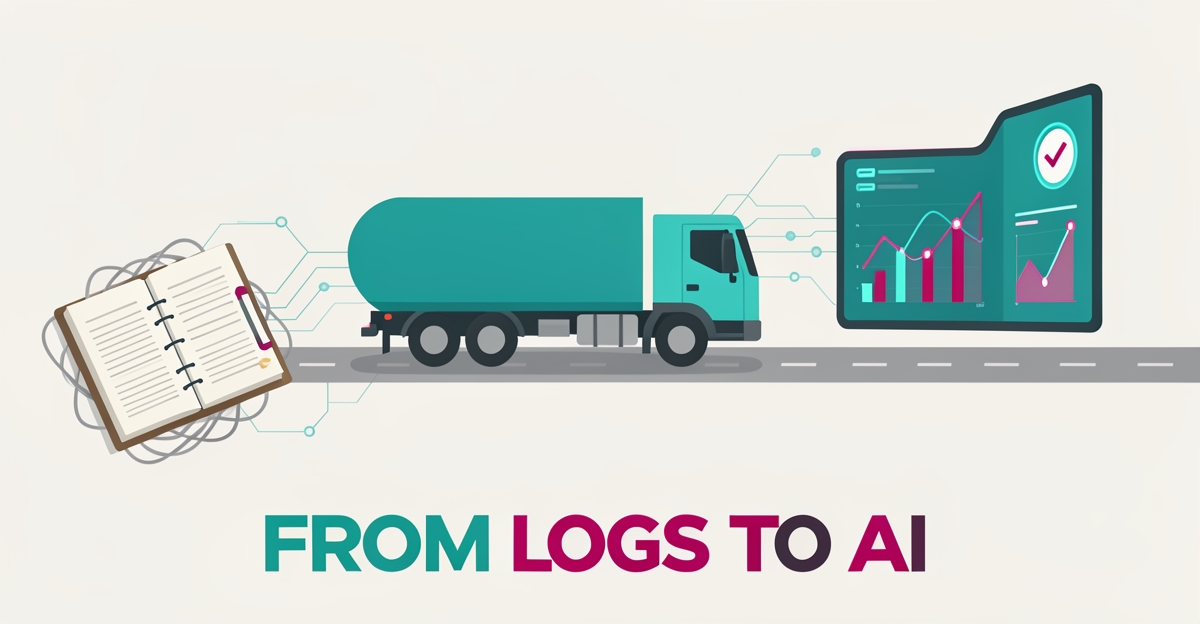
From Manual Logs to AI: How Heating Oil Delivery Companies Can Automate Fuel Delivery Tracking
Key Facts
- Automating routine tracking tasks can typically reduce the manual workforce needed for them by roughly a third in heating oil delivery operations
- Automated data capture generally increases throughput and improves quality consistency by removing manual re-entry from repetitive processes
- AI-powered systems provide real-time delivery visibility, flagging missing deliveries instantly rather than discovering them days later
- Automation doesn't magically fix problems, it makes them visible, enabling immediate action on exceptions
- AI document processing replaces paper logs with automatic capture of delivery data, signatures, and meter readings from photos or forms
- Real-time dashboards show on-time performance, truck utilization, and customer exceptions by driver, route, and territory
- A phased rollout with parallel pilot testing for 2-3 weeks limits risk while proving value before scaling
Hire a team member that works 24/7 — for less than a part-time wage.
AI receptionists, SDRs, dispatchers and 99+ roles. Trained on your business, fully managed.
Not sure where to start? Ask our AI planner
The Hidden Costs of Manual Delivery Tracking in Heating Oil Operations
Paper logs and spreadsheets feel cheap until the missed deliveries start costing real money. In heating oil operations, manual delivery tracking creates a cascade of small errors that compound into delayed invoicing, fuel waste, and driver burnout.
Drivers write times on clipboards, office staff re-enter them into spreadsheets, and dispatchers chase missing signatures by phone. That handoff is where accuracy breaks down. Automation research consistently shows that manual processes surface problems too late to recover revenue, the errors are already invoiced by the time anyone notices them.
The labor burden is immediate and persistent. Teams spend hours reconciling routes, correcting gallons delivered versus gallons invoiced, and answering customer calls about deliveries that were made but not recorded. Industry analyses of automation impacts typically document reductions of roughly a third in workforce needs for routine tracking tasks when data capture is automated, freeing staff for exception handling instead of data entry.
Throughput and quality also suffer under manual systems. Without real-time confirmation, a truck can leave a stop unrecorded, a tank can be underfilled, and a customer can be billed incorrectly. Case studies of automated capture in field operations generally report meaningful throughput gains and higher quality consistency when operations move from paper to automated capture.
Hidden costs show up across the business:
- Missed or duplicate deliveries that require costly re-runs and damage trust
- Delayed invoicing from transcription lags that compress cash flow
- Workforce strain from repetitive data entry and after-hours reconciliation
- Compliance risk when delivery records are incomplete or illegible
These issues are not unique to heating oil, but they hit seasonal businesses hard. Peak winter demand magnifies every delay, and a single dispatcher managing paper logs cannot scale with call volume.
Automation shifts the model from reactive cleanup to real-time visibility. AI-powered systems can replace paper logs and spreadsheet tracking with automatic capture of delivery data, flag missing deliveries, and generate reports without manual re-entry. AIQ Labs builds these systems through AI Workflow Builds, rebuilding the one workflow that costs you the most, at a fixed price and in phases, so it integrates with your existing field operations rather than replacing them.
The result is less time spent chasing paperwork and more time protecting margins. Manual tracking hides cost until it is invoiced, while automated tracking makes performance visible at the point of delivery.
How AI-Powered Systems Transform Fuel Delivery Accuracy and Visibility
Manual logs hide problems until a missed delivery becomes a customer call. AI-powered fuel delivery tracking makes those problems visible in real time and corrects them before they cost revenue.
AI document processing replaces paper tickets and spreadsheet entries with automatic capture at the point of delivery. Drivers confirm stops, gallons, and signatures through mobile workflows that feed a central system without re-keying. Dispatchers see live status instead of waiting for end-of-day reports, and managers get accurate performance data without chasing paperwork.
Research on automation in field operations shows measurable operational gains that translate directly to services like heating oil delivery. Case studies generally report throughput increases from automated data capture and decision support, along with higher quality consistency when manual entry is removed from repetitive processes. Workforce needs for routine logging can fall substantially as those tasks shift to the system.
That visibility changes how heating oil companies run routes. Discrepancies are flagged instantly rather than discovered days later. Missing signatures, mismatched gallons, and skipped stops trigger immediate alerts to dispatch. Real-time dashboards show on-time performance, truck utilization, and customer exceptions by driver, route, and territory.
AIQ Labs builds these systems as part of its AI Workflow Builds, a fixed-price, phased rebuild of the specific workflow that costs your business the most. The approach replaces paper logs and spreadsheet tracking with automated capture, discrepancy flagging, and live reporting without forcing a full tech overhaul.
Typical transformation elements include:
- Automatic extraction of delivery data from tickets, photos, and driver inputs with validation rules
- Instant alerts for missing deliveries, quantity mismatches, and overdue confirmations
- Live dashboards for dispatchers and managers with route progress and exception queues
- Audit-ready reports generated from captured data instead of manual compilation
Accuracy improves because the system enforces structure at capture. Automation doesn't magically fix problems, it makes them visible. Once visible, teams can act on exceptions immediately rather than reconciling them retroactively.
The result is fewer billing disputes, faster invoicing, and clearer accountability across the fleet. Companies gain reliable data for capacity planning and customer service while reducing the administrative load on office staff.
Practical Implementation: Integrating AI Tracking Without Disrupting Field Operations
Field crews shouldn't have to choose between keeping trucks moving and keeping logs accurate. A phased rollout lets heating oil companies add AI tracking without stopping deliveries.
Start with a workflow assessment of the current manual process. Map how paper logs, spreadsheets, and phone calls move from dispatch to driver to office. The goal is to see where data drops, duplicates, or delays before any technology is added. Automation doesn't magically fix problems, it makes them visible, and the assessment is where that visibility starts.
Integration comes next, and it stays close to existing tools. Connect GPS telematics, CRM, and accounting so delivery data flows once and updates everywhere. AI document processing can capture delivery confirmations, signatures, and meter readings from photos or forms, replacing paper logs with structured records. This is exactly the kind of workflow AIQ Labs rebuilds, with 200+ multi-agent systems deployed, the team designs delivery tracking that fits your current field operations instead of forcing a rip-and-replace.
Staff training is built into the pilot, not added after launch. Drivers learn to confirm stops with a single tap, dispatchers review exception alerts instead of chasing paperwork, and office staff validate AI-flagged missing deliveries. Training reduces resistance and surfaces practical adjustments early.
Pilot testing limits risk to one route or crew. Run the AI tracking in parallel with manual logs for 2-3 weeks, compare accuracy, and refine rules for flagging missed or incomplete deliveries. A milestone-based approach mirrors AIQ Labs' Build in Milestones payment model, where each phase is approved before the next begins, no surprise costs, no all-or-nothing commitment.
Automation in similar field environments generally shows measurable gains: throughput improvements from real-time tracking, reduced workforce needs for repetitive logging tasks, and better quality consistency once manual entry is removed.
A low-risk rollout typically follows this sequence:
- Workflow assessment and data mapping of current delivery logs
- Tool integration for GPS, CRM, and accounting with AI document capture
- Role-based training and parallel pilot with one crew
- Review, refine, and expand to additional routes
Keeping the first phase narrow protects daily operations while proving value. Once the pilot confirms accurate, real-time delivery visibility, the system scales without retraining the whole fleet at once. The Start Monthly model supports this pace, allowing build, training, and integrations to proceed with the ability to pause or adjust anytime. For companies that want the full connected layer, dispatch, delivery tracking, invoicing, and customer communication in one system, the longer-term path is an AI Operating System, built in phases and owned outright.
The result is a system that captures delivery data automatically, flags missing deliveries, and generates reports without adding admin work for drivers.
Still paying for 10+ subscriptions that don’t talk to each other?
We build custom AI systems you own outright. No vendor lock-in. Full control.
Not sure where to start? Ask our AI planner
Frequently Asked Questions
Will automating delivery tracking disrupt my drivers and field crews?
How much time and staff does manual fuel delivery tracking really waste?
Can AI actually improve delivery accuracy and throughput for heating oil?
What happens to missed deliveries and billing errors with AI tracking?
Do we need to replace our existing GPS, CRM, and accounting tools?
How do we start without big risk or upfront cost?
Your Paper Logs Are Costing More Than You Think, Here's the Way Out
Manual delivery tracking doesn't just create paperwork, it quietly drains margin through missed deliveries, delayed invoicing, and hours of after-hours reconciliation. As this article showed, AI-powered tracking flips that model: delivery data is captured automatically at the source, discrepancies trigger instant alerts, and dispatchers get real-time visibility instead of chasing clipboards. And as the phased rollout approach demonstrated, you don't need to disrupt field operations to get there: assess your workflow, integrate with the tools you already use, pilot with one crew, then scale. If you're ready to see what that looks like for your routes, start with the two-minute Fit Check at aiqlabs.ai/apply and book a free 30-minute strategy call with AIQ Labs, a real working session with an AI engineer to map your biggest bottleneck and identify high-ROI automation opportunities. If there isn't a clear win, we'll tell you that too. You can reach the team anytime at [email protected].
Make AI your competitive advantage — not just another tool.
Strategy, implementation and ongoing optimization. One partner, end to end.
Not sure where to start? Ask our AI planner