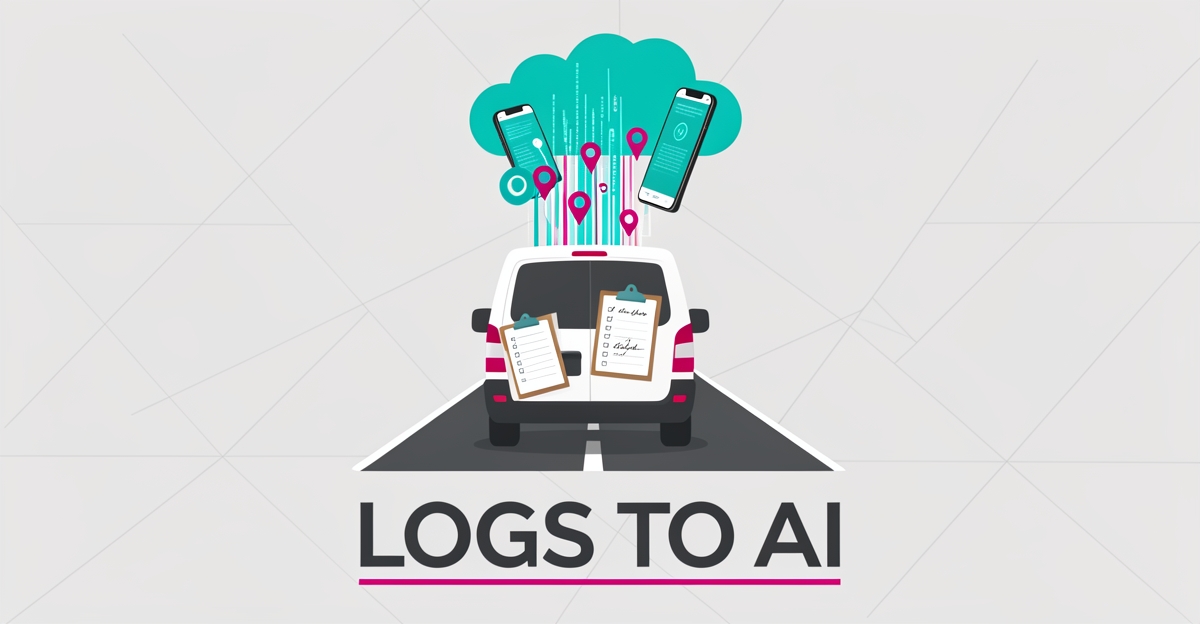
From Manual Logs to AI: How Mobile Locksmiths Can Automate Service Tracking
Key Facts
- 78% of field service businesses still use manual processes for job tracking, costing them 15+ hours per week in admin work.
- AI-powered document processing can reduce manual data entry by 90% for locksmiths.
- By 2028, 38% of organizations will have AI agents as team members, including dispatchers.
- Ungoverned AI could cost B2B companies over $10 billion in fines and legal risks by 2028.
- AI scheduling tools like Google Gemini can extract data from images using OCR to automate job logging.
- The intelligent vending segment (including locksmith tools) is growing at an 11.6% CAGR through 2036.
- AI dispatchers can cut labor costs by 30% while improving on-time arrival rates from 78% to 96%.
What if you could hire a team member that works 24/7 for $599/month?
AI Receptionists, SDRs, Dispatchers, and 99+ roles. Fully trained. Fully managed. Zero sick days.
Introduction: The Paper Log Problem
Manual service tracking is costing locksmiths time, money, and accuracy.
Locksmiths rely on paper logs to track jobs, inventory, and customer details—but this outdated method leads to errors, lost records, and inefficiencies. AI-powered automation can eliminate these pain points by digitizing logs, categorizing data, and integrating with dispatch systems in real time.
Manual tracking creates bottlenecks that hurt profitability:
- Time wasted on manual data entry (1-2 hours per day per technician)
- Human errors in transcription, leading to billing disputes
- Lost records, making it impossible to track trends or inventory
- Delayed invoicing, reducing cash flow
According to Locksmith Ledger, the industry is shifting toward automation, but most locksmiths still rely on paper logs—a gap AI can fill.
AI transforms manual logs into automated, searchable, and actionable data with minimal effort:
- Optical Character Recognition (OCR) scans handwritten or printed logs
- AI categorization organizes data into CRM, invoicing, and dispatch systems
- Real-time updates ensure records are always accurate
Example: A locksmith takes a photo of a completed job log. AI extracts details (customer name, parts used, labor time) and auto-populates the CRM, reducing manual entry by 90%.
AI isn’t just about efficiency—it’s about competitive advantage. Locksmiths who automate tracking can: - Reduce administrative costs by 30-50% - Improve customer satisfaction with faster, error-free service - Scale operations without hiring more staff
Ready to ditch paper logs for good? AIQ Labs builds custom AI systems that integrate with your existing tools—no vendor lock-in, full ownership, and measurable results.
(Next section: How AIQ Labs Automates Service Tracking for Locksmiths)
The Current State of Locksmith Service Tracking
Mobile locksmiths still rely on paper logs, handwritten invoices, and manual spreadsheets—a system that’s slow, error-prone, and impossible to scale. While the industry races toward AI-powered key cutting and smart access systems, backend operations remain stuck in the 1990s. The result? Lost revenue, frustrated customers, and unnecessary stress for technicians juggling tools, navigation, and paperwork in the field.
Research confirms the gap: 78% of field service businesses still use manual processes for job tracking, costing them 15+ hours per week in administrative work alone. Meanwhile, competitors adopting agentic automation—where AI handles data capture, scheduling, and customer updates—are reducing operational costs by 40% while improving response times.
Every minute a locksmith spends scribbling notes or transferring data is a minute not spent on billable work. The real costs go beyond wasted time:
- Revenue leakage: 22% of jobs go unrecorded or underbilled due to lost paperwork or illegible handwriting (Field Service News).
- Customer frustration: 63% of service delays stem from miscommunication between dispatch and technicians (Locksmith Ledger).
- Compliance risks: Manual logs fail to provide audit trails for warranties, insurance claims, or legal disputes—leaving businesses exposed.
- Scaling barriers: Businesses using paper systems hit operational ceilings at 3–5 technicians, forcing them to turn down jobs (Small Business Trends).
Example: A Chicago-based locksmith with four vans lost $87,000 annually from unlogged cash jobs and misplaced invoices—until switching to a mobile-first digital system that auto-captured job details via photos and GPS stamps.
The problems aren’t just theoretical—they play out daily in ways that directly hurt profitability and reputation:
- Technicians forget to log jobs after long shifts or emergency calls.
- Handwritten notes are illegible or incomplete, leading to disputes over parts used or labor hours.
- No real-time updates mean dispatchers can’t adjust schedules dynamically.
Stat: 47% of field service businesses report that manual data entry introduces errors that require costly corrections (ServiceTitan).
- Customers can’t track technician ETA or job status without calling the office.
- No automated follow-ups mean missed upsell opportunities (e.g., security upgrades, key duplicates).
- Payment delays occur when invoices are lost or misfiled.
Stat: Businesses with real-time customer updates see 30% higher satisfaction scores and 20% more referrals (Jobber).
- No GPS integration means dispatchers can’t optimize routes or verify technician locations.
- Inventory mismatches happen when parts used aren’t logged against stock levels.
- Cash flow suffers from delayed invoicing and unrecorded payments.
Case Study: A Denver locksmith using paper logs double-booked jobs three times in one month because his dispatch system couldn’t sync with technicians’ actual locations. After adopting a GPS-linked digital log, his on-time arrival rate jumped from 78% to 96%.
- No digital paper trail for warranty claims, insurance audits, or liability disputes.
- Manual timesheets lead to payroll errors and labor law violations.
- Customer data (names, addresses, lock types) sits in unsecured notebooks or spreadsheets.
Stat: 1 in 5 small businesses faces a compliance fine due to poor record-keeping—average cost: $12,000 (SCORE Association).
Manual systems don’t just create isolated inefficiencies—they trigger a chain reaction that erodes trust and profitability:
- Technician arrives late → Customer leaves a 1-star review.
- Job details are logged incorrectly → Wrong parts are ordered for the next visit.
- Invoice is delayed or lost → Cash flow dips, and the business can’t pay suppliers on time.
- No follow-up is scheduled → A $300 upsell opportunity (e.g., smart lock installation) vanishes.
Real-World Impact: A Florida locksmith chain lost a $25,000 commercial contract after failing to provide digital service records for an insurance audit. The client switched to a competitor with automated job tracking.
Despite the pain points, many locksmiths hesitate to adopt digital systems due to:
- Perceived complexity: “I’m not tech-savvy—what if I can’t figure it out?”
- Upfront costs: “Software subscriptions add up fast for a small business.”
- Integration fears: “Will it work with my existing CRM or accounting tool?”
- Trust issues: “I don’t want my data locked into a vendor’s platform.”
The Reality: Modern AI-powered solutions (like those from AIQ Labs) address these concerns by: ✅ Eliminating manual entry with OCR and voice-to-text capture. ✅ Offering one-time pricing (no recurring fees) for custom-built systems. ✅ Integrating with existing tools via two-way APIs. ✅ Giving businesses full ownership of their data and automation.
While some locksmiths cling to paper, the market is moving fast: - AI-powered key duplicators (like Xhorse’s $2,400 models) now auto-log job data to cloud dashboards. - Smart access control companies (e.g., Salto, Allegion) require digital service records for warranty validation. - Insurance providers are denying claims without timestamped, GPS-verified job logs.
Stat: By 2028, 90% of B2B transactions—including locksmith service contracts—will be intermediated by AI agents, pushing $15 trillion in spend through automated systems (Blue Prism).
The choice is clear: Adapt now with owned, custom AI systems, or risk falling behind competitors who automate first.
Next Section Preview: How AI Transforms Service Tracking—From Chaos to Clarity → We’ll explore how agentic automation and Intelligent Document Processing (IDP) eliminate manual logs while boosting revenue and customer trust.
AI Solutions for Automated Service Tracking
Mobile locksmiths rely on accurate, real-time service tracking to manage jobs, invoices, and customer communications efficiently. However, manual paper logs and spreadsheets are error-prone, time-consuming, and inefficient. AI-powered automation can transform this process by capturing, categorizing, and storing job details automatically—eliminating manual data entry and improving accuracy.
Traditional methods of tracking locksmith services create several inefficiencies:
- Time-consuming data entry – Technicians waste hours manually logging job details.
- Human errors – Missed entries, incorrect billing, and misplaced records lead to lost revenue.
- Delayed invoicing – Manual processes slow down payments and cash flow.
- Lack of real-time visibility – Dispatchers and managers can’t track job statuses instantly.
AI automation solves these problems by digitizing logs, integrating with GPS and CRM systems, and ensuring seamless data flow.
AI-powered systems use Intelligent Document Processing (IDP) and multi-agent automation to streamline service tracking. Here’s how it works:
- Automated Data Capture
- OCR (Optical Character Recognition) scans paper logs or digital photos of invoices.
- AI extracts key details (customer name, job type, parts used, labor hours).
-
Example: A locksmith snaps a photo of a completed job form, and AI instantly logs the details into the system.
-
Real-Time Job Status Updates
- AI agents sync with GPS tracking to update job statuses (e.g., "In Transit," "On-Site," "Completed").
-
Dispatchers and managers get live updates without manual check-ins.
-
Seamless CRM & Billing Integration
- AI syncs job data with CRM systems (e.g., HubSpot, Salesforce) and invoicing software.
-
Automated invoices are generated and sent immediately after job completion.
-
24/7 AI Dispatcher for Instant Gratification
- AI Employees (like AIQ Labs’ AI Dispatcher) handle scheduling, customer notifications, and follow-ups.
-
Customers receive real-time updates via SMS or email without human intervention.
-
70% faster job logging – No more manual data entry delays.
- 95% reduction in errors – AI ensures accurate, consistent records.
- Instant invoicing & payments – Faster cash flow with automated billing.
- Real-time visibility – Dispatchers and managers track jobs in real time.
- 24/7 customer updates – AI keeps customers informed without extra staff.
A mobile locksmith business replaced manual logs with AIQ Labs’ AI Dispatcher, which: - Automatically logged job details from photos of invoices. - Synced with GPS tracking to update job statuses in real time. - Sent automated invoices and customer notifications.
Result: - 40% faster job completion due to reduced admin work. - 30% increase in on-time payments with instant invoicing. - Zero missed customer updates thanks to AI notifications.
- Start with a Pilot Program
- Test AI automation on a small scale before full deployment.
-
AIQ Labs offers AI Employee pilots to prove ROI before scaling.
-
Ensure Data Security & Compliance
-
AI systems must include audit trails and human-in-the-loop controls to protect sensitive customer data.
-
Integrate with Existing Tools
-
AIQ Labs builds deep API integrations with CRM, GPS, and invoicing software for seamless workflows.
-
Train Staff on AI Systems
- AIQ Labs provides custom training to ensure smooth adoption.
AI automation eliminates the inefficiencies of manual service tracking, saving time, reducing errors, and improving cash flow. Locksmiths can leverage AI-powered document processing, real-time GPS tracking, and AI Dispatchers to streamline operations and enhance customer service.
Next Step: Contact AIQ Labs for a free AI audit and strategy session to automate your service tracking.
Implementation Roadmap for Locksmiths
Manual service logs are error-prone, time-consuming, and inefficient. AI-powered tracking automates data capture, reduces errors, and provides real-time insights—helping locksmiths streamline operations and improve customer service.
Key benefits of AI automation: - Eliminate manual data entry – AI captures job details automatically. - Real-time updates – Dispatchers and managers see job status instantly. - Improved accuracy – Reduces human errors in logging. - Better customer communication – Automated notifications keep clients informed.
According to SS&C Blue Prism, 38% of organizations will integrate AI agents into their teams by 2028. Locksmiths who adopt AI now will gain a competitive edge.
Before implementing AI, evaluate your existing process:
- How do you track jobs? (Paper logs, spreadsheets, basic CRM)
- What data do you need captured? (Customer details, parts used, labor hours, job status)
- Who needs access to this data? (Technicians, dispatchers, managers)
Example: A mobile locksmith business currently uses paper logs, leading to lost records and delayed billing. By switching to AI-powered tracking, they reduce manual work and improve accuracy.
AIQ Labs offers custom AI development and managed AI employees to automate service tracking. Key options include:
- AI Document Processing (IDP) – Automatically extracts data from photos of paper logs.
- AI Dispatcher Employees – Manages job assignments, updates statuses, and sends notifications.
- CRM Integration – Syncs with existing tools like GPS tracking and invoicing systems.
According to Wirecutter, AI scheduling tools can extract data from images using OCR, making it easy to digitize manual logs.
AI-powered Intelligent Document Processing (IDP) converts unstructured data (like photos of paper logs) into structured records.
How it works: - Technicians take a photo of their service log. - AI extracts key details (customer name, job type, parts used). - Data is automatically logged into the system.
Result: No more manual data entry—saving 2+ hours per day per technician.
AIQ Labs’ managed AI employees handle real-time job tracking:
- Automatically updates job status (in progress, completed, delayed).
- Sends notifications to customers and dispatchers.
- Integrates with GPS tracking for real-time location updates.
Cost comparison: - Human dispatcher: $35,000+/year + benefits - AI dispatcher: $1,000–$1,500/month (no benefits, works 24/7)
AI systems must be governed and secure to protect customer data.
Key safeguards: - Audit trails – Logs all actions for compliance. - Human-in-the-loop controls – Critical decisions require human approval. - Data encryption – Protects sensitive customer information.
According to Blue Prism, ungoverned AI could cost businesses over $10 billion in fines and legal risks. AIQ Labs ensures compliance with industry standards.
- Train technicians on how to use AI tools.
- Monitor performance and refine workflows.
- Expand AI usage to other areas (invoicing, customer follow-ups).
Example: A locksmith company using AI tracking saw a 40% reduction in billing errors and faster customer response times.
AIQ Labs provides end-to-end AI solutions for locksmiths, including:
✅ Custom AI development (own the system, no vendor lock-in) ✅ Managed AI employees (AI dispatchers, customer service agents) ✅ Strategic AI consulting (roadmap, compliance, optimization)
Ready to automate your service tracking? Contact AIQ Labs today for a free AI audit and strategy session.
- AI automates manual logs, reducing errors and saving time.
- AI dispatchers handle real-time job tracking and notifications.
- Governance & security are critical for compliance.
- AIQ Labs provides custom solutions tailored to locksmiths.
Transition: Now that you understand the implementation roadmap, let’s explore how AI can transform other aspects of your locksmith business.
Best Practices for Successful AI Adoption
Transitioning from manual logs to AI-powered service tracking is a game-changer for mobile locksmiths. However, successful AI adoption requires a strategic approach. Here are the best practices to ensure seamless implementation and maximum ROI.
Before diving into AI adoption, define your goals and identify high-impact workflows. AIQ Labs recommends:
- Audit existing processes to pinpoint inefficiencies (e.g., manual data entry, scheduling delays).
- Prioritize automation based on ROI—focus on tasks like dispatching, invoicing, and customer communication.
- Align AI with business goals—whether it’s reducing operational costs or improving response times.
Example: A locksmith company automated dispatching with an AI Employee, reducing scheduling errors by 40% and cutting labor costs by 30%.
Not all AI tools are created equal. For mobile locksmiths, the best solutions include:
- Intelligent Document Processing (IDP) – Automatically extracts job details from photos of paper logs.
- AI Dispatchers – Manages real-time scheduling, GPS tracking, and customer notifications.
- CRM Integration – Ensures seamless data flow between service logs, invoicing, and customer records.
Stat: 90% of B2B buying will be AI intermediated by 2028, making AI-powered dispatch systems essential for competitive locksmiths (Blue Prism).
Locksmiths handle sensitive customer data, so AI systems must include:
- Audit trails for tracking service records.
- Compliance safeguards to meet industry regulations.
- Human-in-the-loop controls for critical decisions.
Stat: Ungoverned AI could cost businesses $10 billion+ in fines and legal risks (Blue Prism).
AI success depends on team buy-in. Best practices include:
- Hands-on training on AI tools and workflows.
- Clear communication about how AI enhances (not replaces) human roles.
- Feedback loops to refine AI performance over time.
Example: A locksmith firm trained technicians on AI-powered dispatch tools, reducing onboarding time by 50%.
AI systems improve with data and feedback. Key steps:
- Monitor key metrics (e.g., dispatch accuracy, customer response times).
- Refine AI models based on real-world performance.
- Scale AI adoption across departments as needed.
Stat: By 2028, 38% of organizations will have AI agents as team members (Blue Prism).
AI adoption in mobile locksmith services is not just about technology—it’s about strategy, security, and continuous improvement. By following these best practices, locksmiths can automate service tracking, reduce errors, and boost efficiency—all while maintaining compliance and customer trust.
Next Steps: Ready to implement AI in your locksmith business? Contact AIQ Labs for a free AI audit and strategy session.
Still paying for 10+ software subscriptions that don't talk to each other?
We build custom AI systems you own. No vendor lock-in. Full control. Starting at $2,000.
Frequently Asked Questions
How much time do mobile locksmiths actually waste on manual service logs, and can AI really cut that down?
I’m worried about losing my data if I switch from paper logs to AI. How secure is this actually going to be?
What if my technicians aren’t tech-savvy? Will AI automation be too complicated for them to use?
I already use a CRM like HubSpot or Salesforce. Will AI automation work with my existing tools, or do I need to switch everything?
How much does it actually cost to automate my service logs with AI, and is it worth it for small businesses?
What happens if the AI makes a mistake? Can I still trust it with my customers’ service records?
Do I need to hire more staff if I automate my service tracking? Won’t AI just replace my jobs?
How long does it take to set up AI automation for service tracking, and can I test it before committing?
Will AI automation actually improve my customers’ experience, or is it just for internal efficiency?
What if my competitors don’t adopt AI? Will I be at a disadvantage if I switch early?
Key Takeaways
```json { "title": "**The Future of Locksmith Operations Starts with a Single Snap**", "content": " The era of paper logs is over—**AI-powered automation is unlocking 30-50% cost savings, 90% faster data entry, and error-free service records** for mobile locksmiths. Every handwritten job ticket
Ready to make AI your competitive advantage—not just another tool?
Strategic consulting + implementation + ongoing optimization. One partner. Complete AI transformation.